Table of Contents
- The Dawn of a Nation’s Trial: July 10, 1940
- Britain on the Brink: A Nation Steeped in Tension
- Into the Skies: The Opening Moves of the Battle of Britain
- The Luftwaffe’s Strategy: Breaking the British Spirit
- RAF’s Resolute Defense: Courage Above the Clouds
- Radar and Innovation: The Invisible Shield
- The Human Face of Aerial Warfare: Pilots, Civilians, and Heroes
- The Turning Tide: From Bombers to Blitz
- The Role of Intelligence and Counterintelligence
- London Under Siege: The Blitz Commences
- Churchill’s Defiant Voice: “Never in the Field of Human Conflict…”
- International Resonance: Allies and Adversaries Watching Closely
- The Psychological Battlefield: Fear, Morale, and British Resilience
- Technological Rivalry: Spitfires Versus Messerschmitts
- The Aftermath of July 10: Building Momentum Amid Chaos
- The Battle’s Place in the Larger War Effort
- Lessons Etched in History: Strategy and Sacrifice
- Cultural Memory: How the Battle Shaped British Identity
- Testimonials from the Skies: Voices of RAF Pilots
- The Battle Beyond Borders: Impact on Global WWII Dynamics
- Preparing for the Storm: Civilian Mobilization and Community Spirit
- The Legacy of July 10: A Symbol of Defiance and Hope
- Reflections on Air Warfare: The Battle's Influence on Modern Combat
- The Myth and Reality of the ‘Few’: Heroism in Context
- Enduring Inspirations: Battle of Britain in Literature and Media
1. The Dawn of a Nation’s Trial: July 10, 1940
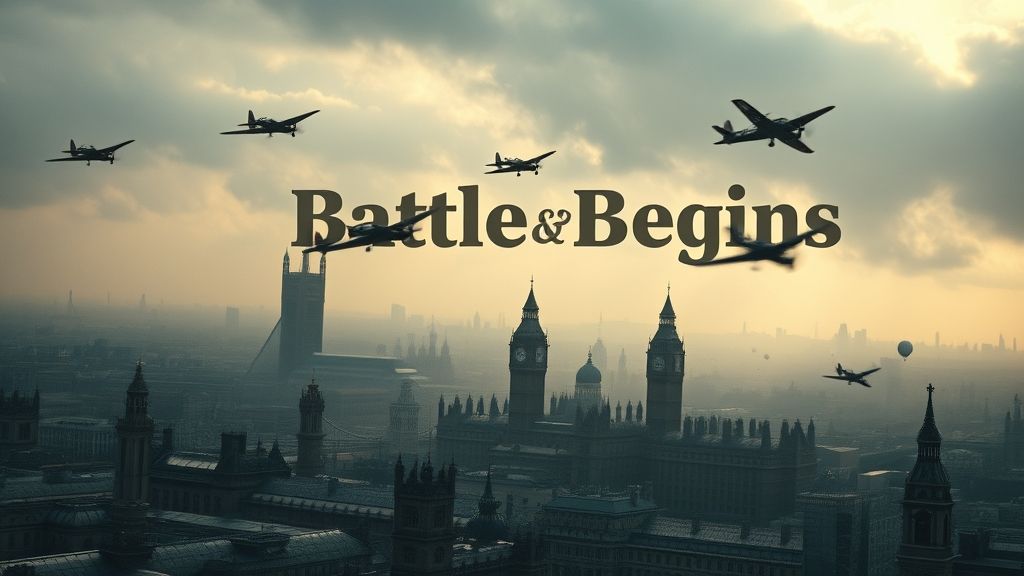
The sun had barely crested the horizon over southern England when the first droning engines sliced through the fragile calm. July 10, 1940 – a date etched into the annals of history as the day Britain’s skies became a battleground, a crucible where the fate of a nation—and indeed, the free world—hung precariously in the balance. London awoke to an uncertain day, its citizens unaware that the quiet fields and serene countryside above would soon transform into a theater of fire and steel, where the Royal Air Force (RAF) and the German Luftwaffe would wage a desperate struggle for supremacy.
The air was thick with tension, the ominous hum of approaching aircraft signaling that the idyllic summer was shattered by the storm clouds of war. It was more than a military engagement; it was the beginning of a symbolic fight for survival, freedom, and the very soul of Britain. The Battle of Britain had begun.
2. Britain on the Brink: A Nation Steeped in Tension
To understand the enormity of July 10, 1940, one must grasp the perilous position in which Britain found itself at that moment. The fall of France just weeks earlier had left the United Kingdom isolated and vulnerable, standing defiant yet exposed against the seemingly unstoppable tide of Nazi Germany’s conquest across Europe. For months, the world watched as Hitler’s Wehrmacht swept through nations with breathtaking speed; now the UK was under direct threat.
The German High Command, emboldened by swift victories and confident air superiority, had set their sights on gaining control over the English Channel and the skies above Britain, a necessary prelude to any hoped-for invasion. The Luftwaffe, the formidable air force of Nazi Germany, planned to crush British morale and destroy the RAF on the ground. The stakes were clear: Britain’s military resilience—and, by extension, its political independence—depended on the skies.
Government leaders and military strategists debated intensely, knowing the survival of British democracy hinged on the outcome of this aerial contest. The RAF, though outnumbered, was determined to resist, driven by the knowledge that failure would open the door to an invasion that could spell the end of Britain as a free nation.
3. Into the Skies: The Opening Moves of the Battle of Britain
The first attacks on July 10 were carefully calculated probes, reconnaissance mixed with intermittent strikes aimed to test Britain’s air defenses. German formations of Dornier and Heinkel bombers, escorted by swarms of Messerschmitt Bf 109 fighters, sought to probe RAF Fighter Command’s readiness. But Britain’s defenses, organized under the command of Air Chief Marshal Hugh Dowding, were ready.
Radar stations along the coast detected incoming raids, triggering rapid alerts across the airfields. Fighter squadrons scrambled, their Spitfires and Hurricanes climbing eagerly into the morning sky. The initial engagements were chaotic but telling — the superior German numbers clashed against the RAF’s strategic use of radar intelligence and tightly coordinated fighter deployments.
By the end of the first day’s fighting, both sides had sustained damage, yet it was clear this was no mere skirmish—it was the opening salvo of a prolonged and brutal air war.
4. The Luftwaffe’s Strategy: Breaking the British Spirit
The German air strategy was built around the concept of air superiority as a cornerstone for invasion—the feared Operation Sea Lion. To achieve this, the Luftwaffe aimed to dismantle British air defenses, infrastructure, and industry. The initial focus was on attacks against coastal targets and RAF airfields, to cripple Fighter Command’s ability to respond.
Adolf Hitler and his commanders believed that sustained aerial bombardments would demoralize the civilian population, leading to political pressure on the British government to surrender. The Luftwaffe sought to harness the terror of modern warfare to fracture the British will.
But the strategy, though ruthless, did not anticipate the extraordinary resilience of Britain’s people or the ingenuity of RAF leadership. Instead of capitulation, the attacks forged a collective determination; every bombed airfield, every damaged radar station became a rallying point.
5. RAF’s Resolute Defense: Courage Above the Clouds
Against overwhelming odds, the RAF mounted a defense marked by ingenuity, bravery, and sheer determination. Pilots, many barely out of training, some barely of age, took to the skies in aircraft like the Hawker Hurricane and the Supermarine Spitfire, their machines lightweight but nimble, and in the hands of skilled pilots, deadly.
The RAF’s command structure was a marvel of efficiency. Utilizing early warning systems and a centralized control room, sectors were able to direct fighters precisely to where they were needed most, conserving precious fuel and pilot energy.
Stories flood the historical record of pilots who soared into battle again and again, knowing each mission could be their last. One of Fighter Command’s leaders, Keith Park, exemplified this spirit: pragmatic and alert, he balanced aggressive defense with preservation of his squadrons. It was a human tapestry of heroism played out at dizzying altitudes, often against overwhelming numerical superiority.
6. Radar and Innovation: The Invisible Shield
One of the most revolutionary elements to emerge from the Battle of Britain was the use of radar technology, known as Chain Home. This network of early warning stations along the British coast provided unprecedented intelligence on incoming German formations.
British air defense integrated radar data with human observation posts and a command-and-control system, transforming a patchwork of defenses into a coordinated shield. This meant fighters could be vectored efficiently, intercepting enemy planes before they reached their targets.
The psychological impact was profound. RAF pilots and commanders had a window—a precious advantage that turned an otherwise impossible fight into one of hope and calculated resistance. “We never dreamed we could have this kind of technology,” recalled a radar operator decades later, “it was like having eyes that saw through the night.”
7. The Human Face of Aerial Warfare: Pilots, Civilians, and Heroes
While the machines and tactics shaped the battle, it was the human element that gave it soul. Young fighter pilots faced terrifying odds and brutal losses. Among them were men from Britain’s Commonwealth and even overseas volunteers — Poles, Canadians, Czechs, and Americans answering the call for freedom.
Civilians, too, bore the brunt of the Luftwaffe’s raids. Air raid sirens became daily music to the ears; families huddled in shelters, and children were evacuated to the countryside. Yet the stoic British “stiff upper lip” endured. Londoners chalked “Keep Calm and Carry On” on walls, smiles persisted despite the smoke and ruins.
The Battle was not just fought above, but in the streets below, where resolve was as vital as any fighter squadron.
8. The Turning Tide: From Bombers to Blitz
As July faded into August and September, the battle escalated in ferocity and scope. The Luftwaffe shifted tactics, moving from daylight airfield attacks to indiscriminate bombing of cities—launching the infamous Blitz.
This new phase was designed to crush morale through relentless night raids on London and other urban centers. But it also gave the RAF some breathing space during the day, allowing regrouping and repairs.
Yet, the strain on Britain was immense. Infrastructure was destroyed, thousands of civilians perished, but the British spirit, bolstered by leaders and common citizens alike, refused to bow.
9. The Role of Intelligence and Counterintelligence
Behind the scenes, the intelligence war played a crucial role. British codebreakers at Bletchley Park worked feverishly to decipher German communications, feeding vital information to RAF planners.
Simultaneously, British counterintelligence efforts sought to mislead and confuse the Luftwaffe about British defense capabilities. Disinformation campaigns and radio decoys created false targets and diverted attacks.
This hidden war demonstrated the complexity of modern conflict — where victory relied not just on guns and bombs, but on secrets and deception.
10. London Under Siege: The Blitz Commences
The night of September 7, 1940, marked the beginning of The Blitz—weeks upon weeks of nightly bombings. For London, the skies turned into a living nightmare. Fires burned fiercely, and the city’s heartbeat seemed to falter beneath the ceaseless thunder of bombs.
Yet, evocative images survive of Londoners dancing in rubble-strewn streets, musicians continuing concerts in shelters, and children playing amid desolation—signifying defiant normality.
Prime Minister Churchill’s words rang clear throughout the crisis: “London can take it, and London can give it.”
11. Churchill’s Defiant Voice: “Never in the Field of Human Conflict…”
Winston Churchill’s speeches and unwavering leadership became the emotional backbone of Britain’s resistance. His declaration in August 1940 that “Never in the field of human conflict was so much owed by so many to so few” immortalized the RAF pilots’ contribution.
Churchill’s rhetoric gave courage both on the front lines and in bombed-out homes. His ability to articulate the stakes and spirit of the battle forged a united front, extending beyond military tactics into the realm of national identity.
12. International Resonance: Allies and Adversaries Watching Closely
The Battle of Britain was not fought in isolation. Around the world, governments and populations followed the aerial conflict with bated breath. For the United States, still officially neutral, the battle underscored the peril democracy faced under the Nazi juggernaut.
Across occupied Europe, resistance movements found hope in British endurance. For Axis powers, the Battle’s outcome was a crucial data point shaping further campaigns and strategies.
The skies over Britain thus became a focal point of global forces contending for watchers' hopes or fears.
13. The Psychological Battlefield: Fear, Morale, and British Resilience
War is not only fought with weapons but with minds and psyches. The British populace faced the sustained terror of nightly raids, loss of homes, and loved ones. Yet, the collective morale remained remarkable—a testament to community spirit, shared purpose, and leadership.
Cultural outlets—radio broadcasts, newspapers, church sermons—nurtured resolve. Anecdotes of kindness and bravery found their way into popular consciousness, creating a narrative of endurance.
Psychologists later pointed to the Battle of Britain as a case study of societal resilience amid trauma.
14. Technological Rivalry: Spitfires Versus Messerschmitts
The dogfights carried out in the Battle’s initial phases showcased not only pilot skill but the intense technological competition between Britain and Germany. The Supermarine Spitfire, with its sleek design and agility, became emblematic of British engineering prowess.
Against it, the Messerschmitt Bf 109 represented the cutting edge of German fighter design. The intricate dance of these aircraft—turns, dives, and rises—was an aerial chess match of life and death.
The advantages and flaws of each plane influenced battle tactics and outcomes, underscoring the importance of innovation in warfare.
15. The Aftermath of July 10: Building Momentum Amid Chaos
July 10 was only the beginning, a spark within a fierce inferno of air warfare. The RAF’s successful defense that day injected hope and confidence into British command and public alike.
With every interception and every downed bomber, the balance edged a fraction away from German dominance. Though losses were severe, the British refusal to surrender airspace proved decisive.
This momentum carried Britain forward into the grueling months ahead.
16. The Battle’s Place in the Larger War Effort
The Battle of Britain was more than a defensive campaign; it was a turning point. Its outcome prevented Operation Sea Lion and bought precious time for Britain to rebuild and for the Allies to prepare.
It symbolized that Hitler’s campaign of conquest was not invincible, shattering the myth of Nazi supremacy.
Historians widely consider the battle a crucial chapter that helped shape the eventual Allied victory.
17. Lessons Etched in History: Strategy and Sacrifice
Military scholars extract enduring lessons from the battle: the value of integrated air defense networks, the necessity of technological innovation, and the critical role of morale.
The sacrifices of flawed human beings operating beyond their limits created a blueprint for modern air warfare—and the necessity of national will.
18. Cultural Memory: How the Battle Shaped British Identity
The Battle of Britain carved its place in British collective memory as a defining moment of resilience and unity. It is commemorated with solemn reverence, museums, memorials, and annual ceremonies.
In literature and film, it has inspired narratives of heroism and grit that echo through generations, forging a national myth that continues to inspire pride and reflection.
19. Testimonials from the Skies: Voices of RAF Pilots
Personal accounts bring the battle’s narrative into vivid focus. Pilots spoke of adrenaline-fueled scrambles, the camaraderie of squadrons, loss of friends, and surreal moments under fire.
For one Spitfire pilot, Geoffrey Wellum, the battle was “terrifying, exhausting—but the sheer determination to survive and protect made it all worthwhile.”
Their stories humanize the vast-scale conflict.
20. The Battle Beyond Borders: Impact on Global WWII Dynamics
The battle sent shockwaves across continents. It demonstrated that even a small island nation could stand against fascist aggression with unity and resolve.
For Axis powers, it was a costly setback that shifted strategic priorities toward the Eastern Front. For the Allies, it signaled that Nazi domination could be checked and eventually broken.
21. Preparing for the Storm: Civilian Mobilization and Community Spirit
Britain’s home front mobilization was extraordinary. Air raid wardens, firefighters, medics—all formed an essential shield. Civilians were taught first aid, blackout procedures, and evacuation strategies.
This collective effort softened the blow of bombing. Community spirit flourished in hardship, knitting a social fabric that shared pain and hope.
22. The Legacy of July 10: A Symbol of Defiance and Hope
The first day of the Battle of Britain stands as a symbol—not just of military conflict, but of human endurance and defiance against tyranny.
It reminds us that courage and innovation, combined with unity, can turn the darkest hour into a beacon of hope.
23. Reflections on Air Warfare: The Battle's Influence on Modern Combat
Beyond history, the battle shaped notions of air power and its centrality in modern warfare. Commanders worldwide studied the campaign for lessons in strategy, technology integration, and psychological warfare.
It was an early example of networked defense, with implications for decades of military doctrine.
24. The Myth and Reality of the ‘Few’: Heroism in Context
While the phrase “The Few” mythologizes the RAF pilots, it is essential to remember the broader network of personnel—maintenance crews, command staff, radar operators, and civilians—whose combined efforts forged victory.
Heroism was collective: shared across air and land, day and night.
25. Enduring Inspirations: Battle of Britain in Literature and Media
The battle has inspired countless works—from the solemn reverence of Churchill’s speeches to wartime documentaries, novels, films like “The Battle of Britain” (1969), and continuing retellings.
It resonates as a story of courage, sacrifice, and triumph against the odds, continuing to captivate hearts and minds worldwide.
Conclusion
The Battle of Britain, ignited on that fateful day of July 10, 1940, was more than an aerial confrontation: it was a saga of indomitable human spirit, innovation, and collective endurance. In the crucible of bomb-filled skies and blazing cities, Britain found not only the means to defend itself but also a symbol of hope for oppressed peoples worldwide.
It is a story that transcends machines of war—a narrative of courage and unity that echoes through history, inspiring each generation to remember that even in the darkest hour, the light of resilience can shine brightest.
FAQs
Q1: What triggered the start of the Battle of Britain on July 10, 1940?
A1: The Battle officially began as the Luftwaffe sought to destroy the RAF to pave the way for a German invasion of Britain. July 10 featured the first massive air raids targeting British air defenses and infrastructure.
Q2: How did radar technology impact the Battle of Britain?
A2: Radar provided early warnings of incoming attacks, allowing RAF fighters to be dispatched efficiently, significantly improving Britain’s defensive response despite being outnumbered.
Q3: Who were "The Few" and why are they significant?
A3: “The Few” refers to the RAF pilots who fought in the battle, immortalized by Churchill’s tribute. Their skill and bravery were crucial in denying the Luftwaffe air superiority.
Q4: What role did civilians play during the battle and Blitz?
A4: Civilians supported the war effort through civil defense duties, maintaining morale, participating in evacuations, and enduring the hardships of bombing raids with resilience.
Q5: How did the Battle of Britain influence World War II’s broader course?
A5: The RAF’s victory prevented German invasion plans and sustained Britain as a vital base for Allied operations, marking the first major defeat of Hitler’s forces.
Q6: Why did the Luftwaffe shift from targeting airfields to bombing cities?
A6: After failing to destroy the RAF’s fighting capabilities, the Luftwaffe began bombing cities to break civilian morale in the Blitz, though this shift ultimately allowed RAF recovery.
Q7: What is the significance of Churchill’s speech related to the Battle?
A7: Churchill’s speeches rallied the nation with powerful rhetoric, reinforcing hope and courage; his phrase “Never in the field of human conflict…” became emblematic of the battle’s heroic narrative.
Q8: How is the Battle of Britain remembered today?
A8: It is commemorated through memorials, museums, annual events, and cultural works that honor the bravery and sacrifice of those who fought and endured through this pivotal moment.