Table of Contents
- The Morning Mist over Brunanburh: Dawn of a Defining Clash
- The Uniting Kingdoms: England on the Brink of Fragmentation
- Æthelstan’s Rise: The First King of All England
- The Gathering Storm: Alliances That Shattered Peace
- The Viking Shadow: Norse Threats from the North Sea
- Olaf Guthfrithson’s Ambitions and the Alliance with Scots and Strathclyde
- The Battlelines Drawn: Warrior Preparations in the Wirral Peninsula
- Clash at Brunanburh: The Battle That Echoed Across Kingdoms
- The Fury of War: Tactics, Weapons, and the Tide of Combat
- An Epic English Victory: Æthelstan’s Triumph Sealed
- Eyewitness Voices: The Battle Through the Annals and Poems
- Brunanburh's Political Aftermath: Cementing English Unity
- The Scandinavian and Celtic Kingdoms’ Setbacks and Responses
- Cultural Reverberations: From Oral Traditions to Written History
- The Modern Search for Brunanburh: Archaeology and Debate
- How Brunanburh Shaped England’s Future and Identity
- Myths and Legends: The Battle in English Cultural Memory
- Lessons from Brunanburh: Power, Alliance, and Nationhood
- Conclusion: The Lasting Legacy of England’s Defining Battle
- FAQs: Understanding the Battle’s Key Facets
- External Resource
- Internal Link
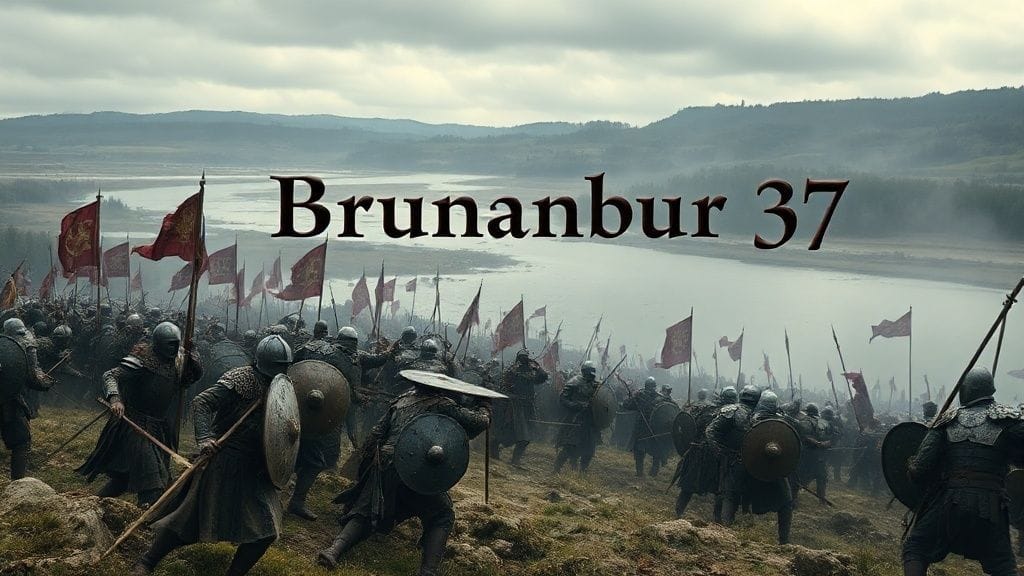
On an unusually chill morning in the year 937, the lowlands near the Wirral Peninsula stirred awake beneath a dense, swirling fog. The dew weighed heavy on blades and shields, mingling with the salt air wafting from the nearby Irish Sea. From the rising sun’s timid glow emerged thousands of warriors, standing resolute upon a battlefield whose name—Brunanburh—would be etched into the fabric of English history forever. This was not merely a clash of armies; it was a moment where the soul of England was betwixt survival and dissolution.
For Æthelstan, the ruler poised to become the first undisputed King of all England, Brunanburh was a crucible—a decisive martial engagement to unify warring factions under a single banner. For his adversaries—the Viking-Gaelic king Olaf Guthfrithson of Dublin, Constantine II of Scotland, and Owain of Strathclyde—it was an audacious coalition aimed at dismantling Æthelstan’s expanding dominion. The battle would scar the earth and redefine the political map of the British Isles.
Yet, to truly grasp the seismic importance of this confrontation, we must journey back to the storms stirring England’s fractured kingdoms and the tumult of competing sovereignties that rippled across northern Europe.
The early 10th century England was a mosaic of competing kingdoms and a contested legacy of Viking incursions. Following Alfred the Great’s defense against Norse invasions late in the 9th century, his successors worked to stitch together a unified realm. It was a Herculean task—one that involved not just military prowess but deft diplomacy among often fractious Anglo-Saxon nobles.
Æthelstan, Alfred’s grandson, inherited this mantle of unification. Rising quickly as a formidable ruler, he navigated the interlocking web of allegiances from Mercia to Wessex, extending his authority decisively even into Northumbria. His reign embodied a new England—one designed to withstand the external Viking threat and internal fracturing aristocracy alike.
However, England’s ambitions set off alarm bells beyond its borders. In Dublin, Olaf Guthfrithson eyed Æthelstan’s territorial expansions with mounting concern. Not merely a Viking warlord, Olaf was a shaper of Norse-Gaelic identity, seeking leverage to reinforce his own dominion on Irish and British coasts. To this end, he forged a tripartite alliance with Constantine II, the King of Scotland, whose own kingdom bristled with desires to check the burgeoning power of the English crown, and Owain, the king of the Brittonic kingdom of Strathclyde. Together, they envisioned an intervention that might recalibrate the balance of power and fracture Æthelstan’s hegemony.
The stage was set on the windswept plains of Brunanburh—thought likely near the modern Wirral area, where rivers met sea and armies could muster with strategic ample space.
Æthelstan’s preparation for the forthcoming conflict was meticulous—every spear tipped, every forming shield-wall drilled under his watchful eye. Chronicles tell of warriors arriving from across his kingdom: Englishmen sworn to their king’s cause, their faces drawn yet resolute in the early dawn. The ragged banners of the allies fluttered from the Scottish woods, Norse ships bristled with dark-haired invaders, their eyes alight with battle fury, and the compact formations of Strathclyde’s foot soldiers steadied.
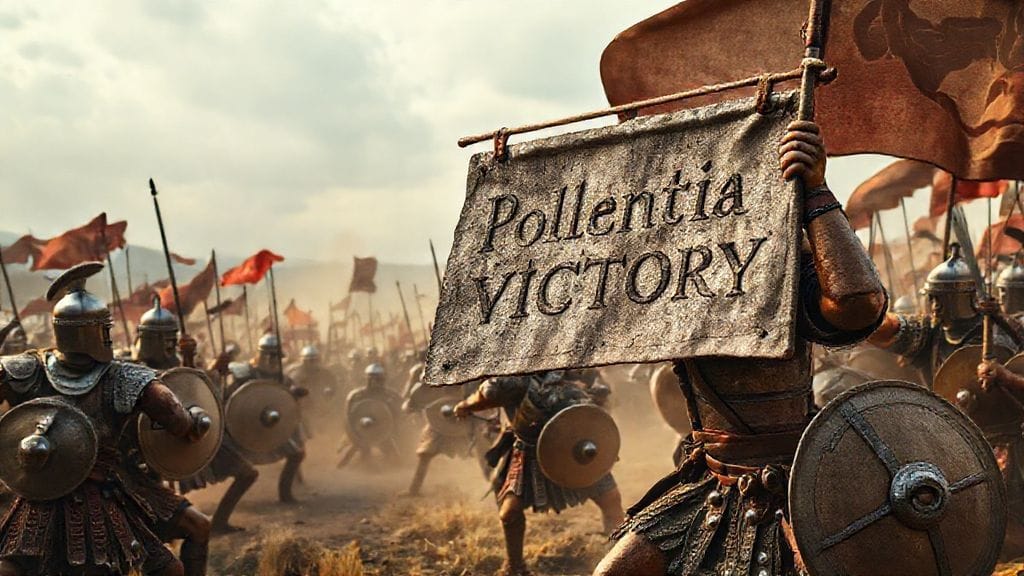
The battle itself was savage and uncompromising. Medieval witnesses speak of relentless waves crashing against one another like the storm-swept seas that skirted their encampments. Spears broke, horses fell, and the thunderous clamor of iron meeting iron echoed through the day. According to the Anglo-Saxon Chronicle, “there was slaughter on every side” and the battle was the “greatest slaughter of the men of all England,” highlighting its ferocity and scale.
Yet, behind the smoke and blood, tactical brilliance favored the English. Æthelstan’s forces, well-coordinated and steeped in the leadership forged by decades of localized warfare, were able to withstand the initial ferocity of the coalition’s attack. The Viking and Celtic forces, despite their combined might, were repelled in a costly retreat that would echo through the annals of history.
Contemporary poetry gives voice to the tenor of the day—the Battle of Brunanburh poem, part of the Anglo-Saxon Chronicle, extols Æthelstan’s victory as a seminal moment of unity and strength: “at Brunanburh, the kings themselves fell, the Welshman and the Scots fought alongside the Norsemen; many a noble thane was killed.”
The repercussions of the Battle of Brunanburh were monumental and enduring. Æthelstan’s crushing victory suppressed rival claims and established a precedent for the idea of a united England—one kingdom under one monarch. This triumph reverberated beyond the battlefield, ushering a period where English royal authority was less frequently challenged by northern or western neighbors. Scandinavian incursions would not disappear, but the unity forged by Æthelstan gave England the political and military infrastructure to withstand future tides.
Meanwhile, the coalition’s defeat fractured the uneasy alliances between Scots, Britons, and Norse, altering decades of power balancing on the British Isles. The Kingdom of Strathclyde would be increasingly subsumed into the Scottish sphere, and Norse influence in England would wax and wane but never again coalesce as it had at Brunanburh.
Culturally, the battle was immortalized through oral histories, songs, and later medieval chronicles that shaped English national identity. It was not just a clash of armies but a story of emergence—England defining itself in opposition and triumph over its multifaceted rivals.
And yet, the precise location of Brunanburh remains fiercely debated among historians and archaeologists. While the Wirral Peninsula remains the leading candidate—with its strategic coastal position and connection to Viking-age shipping routes—other theories contest sites across northern England and southern Scotland. Each archaeological dig, each medieval manuscript closer exhumed, reignites the passionate quest to pinpoint where this monumental battle reshaped history’s course.
But beyond mere geography, Brunanburh’s ongoing legacy reminds us that nationhood is a palimpsest—a living narrative written in blood, courage, political will, and cultural memory. It is incredible, no? How one day’s clash can define the future of an entire nation for centuries to come.
The battle teaches us timeless lessons about power: coalitions may form, factions may challenge, but unity and steadfast leadership can forge paths through seemingly impenetrable conflict. Æthelstan’s legacy as a unifier is the ramifying thread weaving through English history—its first great monarch in a lineage that would ultimately shape modern Britain.
From the misty plains near the Wirral where warriors once stood, to modern England’s conception of itself, Brunanburh stands as a monumental testament to the forging of empire and identity through war and resolution.
Conclusion
Brunanburh was far more than a medieval battlefield conjuring images of swords and bloodied shields; it was the forge in which the concept of England was tempered. Æthelstan’s victory secured not only a temporary military triumph but planted the seeds of a unified English kingdom that would endure and evolve into a nation’s soul. The story of that fog-laden dawn is emblematic of the fragile but potent forces that birth nations—conflict, alliance, vision, and above all, resilience.
Today, when we reflect on the Battle of Brunanburh, we engage with a story of profound human gravitas—a testament to courage, ambition, and the tumultuous birth of identity. It echoes through the corridors of history as a stirring reminder that from the chaos of conflict can come unity, and from victory, the blueprint of a nation.
FAQs
Q1: Why was the Battle of Brunanburh so important for English history?
A1: The battle marked the consolidation of Æthelstan's rule as the first king to unify various English kingdoms, solidifying England’s political unity and resisting Viking and Celtic ambitions.
Q2: Who were the main combatants in the Battle of Brunanburh?
A2: Æthelstan’s English army faced a coalition of Vikings led by Olaf Guthfrithson of Dublin, Scottish forces under King Constantine II, and Britons from Strathclyde under King Owain.
Q3: Where exactly did the battle take place?
A3: The exact location is debated, but the Wirral Peninsula near northwestern England is the most widely accepted site owing to historical and geographical clues.
Q4: What were the immediate political consequences after the battle?
A4: Æthelstan’s victory cemented English hegemony, weakened Viking and Scottish influence, and diminished the power of fractious northern and western kingdoms.
Q5: How is the Battle of Brunanburh remembered in English culture?
A5: It is celebrated as a foundational moment for England’s unity, immortalized in Anglo-Saxon poetry, later chronicles, and cultural narratives about nationhood.
Q6: Did this battle end Viking incursions into England?
A6: No, Viking raids and settlements continued, but Brunanburh significantly curtailed large-scale coalition invasions and established a stronger English defense.
Q7: What makes Brunanburh unique compared to other medieval battles?
A7: Its scale, coalition of opposing forces, and lasting impact on national identity make it a singular event in British medieval history.
Q8: How have archaeologists attempted to find the battlefield?
A8: Through surveys, excavations, analysis of topography, and even metal-detecting finds, teams continue to search for artefacts and features that might pinpoint the site.