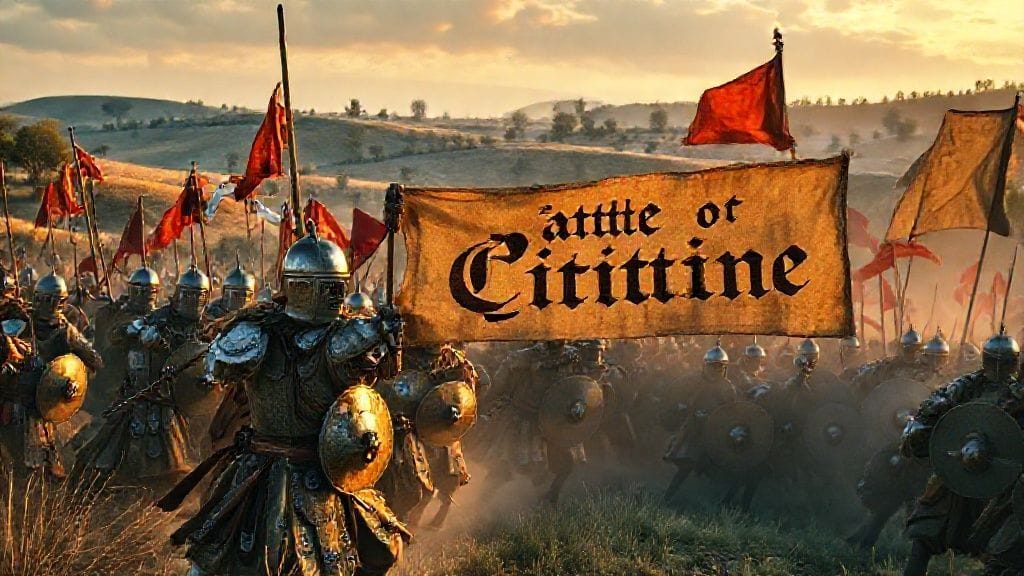
Table of Contents
- The Dawn of a New Era: Europe on the Brink in 1053
- The Normans in Southern Italy: From Mercenaries to Masters
- The Papal States and Lombard Princes: Uneasy Allies
- The Rise of the Normans: A Challenge to Papal Authority
- Setting the Stage at Civitate: Geography and Stakes
- June 18, 1053: The Battle Begins
- Clash of Titans: Norman Tactics vs. Papal–Lombard Forces
- The Turning Point: The Death of Pope Leo IX’s Envoys
- The Aftermath on the Battlefield: Casualties and Captives
- The Capture of Pope Leo IX: A Moment of Humiliation
- Political Reverberations: The Papacy’s Dilemma
- The Lombards’ Shifting Loyalties
- The Norman Consolidation of Power in Apulia
- The Battle’s Impact on Papal and Imperial Relations
- Legacy of Civitate: Foundations of Norman Sicily
- How the Battle Reshaped Church and State in Medieval Italy
- Voices from the Past: Chroniclers and Their Perspectives
- The Battle in Art and Memory
- Modern Interpretations: Revisionist Views on Civitate
- Conclusion: The End of an Old Order and Dawn of a New
- FAQs
- External Resource
- Internal Link
On a blistering June day in 1053, the rolling hills near the town of Civitate in Apulia, southern Italy, became the stage for a conflict that would reverberate far beyond its sunbaked soil. The earth, dried by early summer heat, trembled under clashing steel and thunderous hooves. The battle lines were drawn between a formidable Norman host, fierce and battle-hardened, and a motley coalition led by the Papacy itself, bolstered by Lombard allies determined to curb Norman expansion. It was a collision of ambitions, faith, and raw power—a moment when medieval Europe’s fate hung precariously in balance.
Sweat mingled with the dust as hundreds of knights and infantry threw themselves into the deadly mêlée. Shouting commanders sought to rally faltering lines while the sun bore down mercilessly on young warriors with fear and hope alike in their eyes. And in the noble tents nearby, Pope Leo IX, aged yet resolute, awaited news that would forever mark his papacy and the Norman legacy in Italy. This was no mere skirmish; it was a defining battle whose echoes would shape the future of the Mediterranean world.
The Dawn of a New Era: Europe on the Brink in 1053
The mid-11th century was a time of seismic shift across Western Europe. The patchwork of kingdoms, duchies, and city-states wrestled endlessly with questions of power and allegiance. The old Carolingian structures had crumbled, giving rise to regional potentates eager to carve their domains. The Papacy, long a religious beacon, sought temporal authority with renewed vigor. Meanwhile, a dynamic Norman culture was extending its reach, forged in the crucible of conquest and adaptation.
Normans—descendants of Viking warriors who had settled in northern France—had transformed rapidly from invaders to feudal lords, merging martial prowess with savvy diplomacy. Yet, their arrival in southern Italy was viewed with suspicion and hostility by established powers, including the Lombard princes who had ruled much of the region and the Papal States whose spiritual and political domains overlapped in complex ways.
The Normans in Southern Italy: From Mercenaries to Masters
The arrival of Normans in Italy began as mercenary service, as local players sought their famed battle skills to tip internal conflicts. At first, these roving bands fought for pay, pledging temporary allegiance to kings and princes. However, their ambitions outgrew mere hirelingship as they realized the fragmented Italian landscape was ripe for conquest.
By the early 1050s, Norman leaders such as Humphrey of Hauteville and Richard of Aversa had carved out significant territories in Apulia and Calabria. Their success was due not only to superior tactics and martial culture but also their ability to meld Norman strategies with Italian political realities. Yet, their rise was uneasy, especially in the eyes of Pope Leo IX, who viewed this Norman encroachment as a threat to papal influence and to the established order of the Lombard principalities.
The Papal States and Lombard Princes: Uneasy Allies
The papacy, under Leo IX, was determined to reassert control over the southern peninsula—a region where spiritual authority too often clashed with secular power. Leo IX was a reformist pope, invested in strengthening papal governance and curbing simony and secular interference in church affairs. The Normans’ aggressive expansion unsettled this vision.
To counter the Norman threat, Pope Leo IX forged an alliance with several Lombard princes, whose own domains lay threatened. This uneasy coalition was marked by mistrust and diverging goals: Lombard leaders wanted to preserve their lands, while the pope sought to enhance church power. Yet, necessity bound them together against a common foe.
The Rise of the Normans: A Challenge to Papal Authority
Norman conquests challenged the principle of Papal oversight in southern Italy. Their independence and military success meant a diminution of both papal and imperial influence. Leo IX viewed the situation as a holy mission to restore order and rid Italy of what he saw as foreign usurpers.
The pope’s decision to lead a campaign personally against the Normans was unprecedented in several ways. It was a rare instance of a pope mobilizing armed forces and stepping into the military arena. The campaign was intended not just to defeat the Normans but to send a message of papal supremacy. Yet, the Normans were seasoned warriors who fought with a passion and discipline that belied their outsider origins.
Setting the Stage at Civitate: Geography and Stakes
Civitate, today known as San Paolo di Civitate, was strategically significant. Nestled in a fertile plain of Apulia, it formed a crossroads between key Norman possessions and Lombard territories. Control of Civitate meant dominance over communication and supply routes.
With the battlefield chosen, both sides gathered their forces—Papal knights, Lombard levies, and allied troops arrayed in multiple banners; against a formidable Norman army of mounted knights and foot soldiers renowned for their aggressive charges and tactical flexibility.
The nervous tension in camps was palpable. For the pope’s coalition, this was a defining moment to halt Norman expansion once and for all. For the Normans, victory promised further consolidation and recognition.
June 18, 1053: The Battle Begins
Under a brooding June sky, as dawn broke, Norman scouts spotted the advancing Papal–Lombard forces. The Normans prepared quickly, forming battle lines that had proved effective elsewhere.
The battle opened with skirmishes—arrows darkening the horizon, men-at-arms clashing with shields and swords. From the outset, the Normans employed heavy cavalry charges that shattered weaker Lombard infantry lines. Their discipline and commitment turned the tide early on.
Despite staunch resistance, the Papal forces were pushed back, the bonds of alliance straining under the pressure of combat.
Clash of Titans: Norman Tactics vs. Papal–Lombard Forces
Norman warfare emphasized the shock of cavalry combined with infantry support. Their knights wore heavy mail and wielded powerful lances, charging in tight formations to break enemy cohesion. The Papal forces, largely relying on levies and less unified command, struggled to maintain coordinated defense.
The Lombard princes fought valiantly, but their troops were unevenly trained and deployed. The papal contingent, many of whom were clergy or poorly equipped knights, found themselves outmatched in combat intensity.
In the heat of battle, commanders shouted orders over clanging steel and cries of the wounded. The Normans sensed victory and pressed relentlessly.
The Turning Point: The Death of Pope Leo IX’s Envoys
A critical moment came when key papal envoys and commanders fell. These losses disoriented the coalition forces and gave the Normans psychological advantage.
One chronicler noted the “shattering roar” as the Papal banner faltered—a symbolic and tactical blow. The pope himself was not on the field but was close enough to feel the shock of his army’s collapse.
This rupture led to the fragmentation of the Papal–Lombard army, with many fleeing into nearby hills while others were captured or killed.
The Aftermath on the Battlefield: Casualties and Captives
The blood-soaked fields bore witness to heavy losses. Contemporary reports estimate hundreds of casualties, though figures are debated. The Normans counted their dead carefully, but their overall cohesion remained intact.
Most notably, Pope Leo IX was captured—not dead but held prisoner—a humiliation for the pontificate that stunned Christendom. This marked one of the rare instances where a reigning pope became a prisoner of war.
The capture led to intense negotiations, and the pope was eventually released after several months, but the event shook the Papal prestige deeply.
The Capture of Pope Leo IX: A Moment of Humiliation
Though treated with respect, Pope Leo IX’s captivity was a diplomatic catastrophe. It exposed the limitations of papal power and forced a reassessment of strategies toward the Normans.
Accounts suggest that the pope’s capturers treated him with courtesy, reflecting the chivalric norms of the age. Still, this episode underscored the growing strength of Norman power in Italy.
Upon his release, Leo IX retired from active politics, his death two years later symbolically closing a papal chapter.
Political Reverberations: The Papacy’s Dilemma
The defeat at Civitate forced the papacy to reconsider its approach to Italy’s southern question. Leo IX’s successors pursued a more pragmatic policy toward the Normans, eventually leading to alliances and recognition.
The battle marked a turning point from direct confrontation to engagement through diplomacy and accommodation. The papal stance gradually shifted toward legitimizing Norman rule in southern Italy in exchange for loyalty and protection of church interests.
The Lombards’ Shifting Loyalties
The Lombard princes, shaken by defeat and pope’s captivity, found themselves negotiating with their former enemies. Some submitted to Norman overlords, while others retained limited autonomy.
This realignment altered the political map of southern Italy, paving the way for a more centralized Norman kingdom that would emerge by the late 11th century.
The Norman Consolidation of Power in Apulia
In the wake of victory at Civitate, the Normans consolidated control over Apulia, Calabria, and eventually Sicily, whose conquest would follow decades later.
Their administration combined Norman military aristocracy with local customs and Byzantine influences, creating a hybrid polity admired for its relative stability and prosperous trade.
Civitate was thus a foundational moment in the rise of Norman dominion in the Mediterranean.
The Battle’s Impact on Papal and Imperial Relations
Beyond Italy, Civitate affected broader relations between the papacy and the Holy Roman Empire. The German emperor, vested in curbing papal ambitions, watched Normandy’s rise warily.
The shifting alliances and emergence of a strong Norman kingdom played into the complex dance of power between emperor, pope, and local rulers—a dynamic that would shape medieval European politics for centuries.
Legacy of Civitate: Foundations of Norman Sicily
The battle set the stage for the Normans’ crowning achievement: the creation of the Kingdom of Sicily under Roger II in the 12th century. This multicultural kingdom blended Latin, Greek, Arab, and Norman elements, becoming a beacon of medieval civilization.
Without Civitate’s decisive victory, this future may never have materialized.
How the Battle Reshaped Church and State in Medieval Italy
Civitate marked a decisive evolution in church–state relations. The papacy realized that spiritual authority alone did not guarantee political control and that military realities had to be acknowledged.
It also demonstrated the emergence of feudal powers outside traditional imperial or papal control, heralding a more fragmented yet dynamic political landscape in Italy.
Voices from the Past: Chroniclers and Their Perspectives
Medieval chroniclers such as Amatus of Montecassino and Hugh of Flavigny provide vivid, sometimes contradictory, accounts of Civitate. Their narratives convey the drama and tragedy, highlighting divergent interpretations.
Amatus praised Norman valor, while papal sympathizers lamented the “defeat of Christendom.” These voices enrich our understanding of the event’s complexity.
The Battle in Art and Memory
Though not as famous as other medieval battles, Civitate influenced local art and historiography. Manuscripts, illustrated chronicles, and later historical works memorialized the event as a clash between emerging Norman vigor and waning papal ambitions.
In Apulia, monuments and place names keep the memory alive, a testament to its enduring significance.
Modern Interpretations: Revisionist Views on Civitate
Contemporary historians reconsider Civitate less as a mere military defeat or papal humiliation, and more as a transformative moment of cultural fusion and political reformation.
Revisionist scholarship emphasizes the Normans’ role as agents of change rather than mere usurpers, highlighting their contribution to Mediterranean history.
Conclusion: The End of an Old Order and Dawn of a New
The Battle of Civitate was more than a fight for territory; it was a crucible where the old medieval order confronted new forces. The Normans, once outsiders, seized their place in history, challenging the might of the pope and reshaping southern Italy forever.
The drama of June 18, 1053, with its clanging swords and captured pope, underscored a fundamental truth—that history is often written not by those who claim divine authority, but by those who wield the sword.
FAQs
1. What caused the Battle of Civitate?
The battle stemmed from tensions over Norman expansion in southern Italy, seen as a threat by the Papacy and Lombard princes. Pope Leo IX sought to halt this growing power militarily.
2. Who were the main parties involved?
The primary combatants were the Normans led by Humphrey of Hauteville, against a coalition of Papal forces and Lombard allies under Pope Leo IX's guidance.
3. Why was the battle significant for the Papacy?
The battle resulted in the unprecedented capture of a pope (Leo IX), significantly undermining papal prestige and forcing a reassessment of its political-military strategies.
4. How did the Normans succeed militarily?
Their disciplined cavalry charges, tactical acumen, and cohesion contrasted with the less coordinated Papal–Lombard forces, enabling them to dominate the battlefield.
5. What were the consequences for the Lombards?
Many Lombard princes were compelled to submit to Norman authority or seek accommodation, losing much of their previous autonomy.
6. How did the battle influence southern Italy’s future?
Civitate paved the way for Norman consolidation in Apulia and Calabria, leading to the eventual establishment of the Kingdom of Sicily, a major medieval power.
7. How was Pope Leo IX treated during captivity?
Though humbled, Leo IX was treated with respect consistent with chivalric norms; he was eventually released after several months in captivity.
8. What legacy did Civitate leave for church-state relations?
The battle highlighted the limits of papal temporal power and the need for negotiation and political pragmatism, influencing church-state dynamics for decades.

