Table of Contents
- A Scorching Morning on the Hills of Hattin: The Calm Before the Storm
- The Kingdom of Jerusalem in Turmoil: Seeds of a Catastrophe
- Saladin’s Rise: Uniting the Muslim World Against the Crusaders
- The Tensions That Ignited the Conflict
- The Crusaders’ Strategy: Marching Into the Crucible
- The Dry Earth and Scorched Throats: Environmental Challenges of the Campaign
- The Encirclement Begins: The Trap Tightens Around Tiberias
- The Horns of Hattin: The Crusader Forces Pinned Down
- The Battle’s Crescendo: Arrows, Swords, and the Clash of Faiths
- Saladin’s Masterstroke: Psychological and Tactical Genius at Play
- The Aftermath on the Battlefield: Death, Captivity, and Despair
- The Fate of King Guy and the Fall of the True Cross
- The Impact on the Crusader States: A Kingdom Shattered
- Muslim Triumph and Its Reverberations Across the Levant
- The Road to Jerusalem: Saladin’s Campaign Continued
- The Shockwave Through Christendom: Calls for a New Crusade
- Legends Born at Hattin: Memory, Myth, and History Collide
- The Long Shadow of Hattin: How It Changed Medieval Warfare
- Human Stories Amidst the Ruins: Courage, Betrayal, and Survival
- Saladin’s Legacy: The Man Behind the Victory
- Lessons from Hattin: Conflict, Faith, and the Limits of Power
- Conclusion: The Day the Crescent Triumphed Over the Cross
- FAQs: Understanding the Battle and Its Legacy
- External Resource
- Internal Link
A Scorching Morning on the Hills of Hattin: The Calm Before the Storm
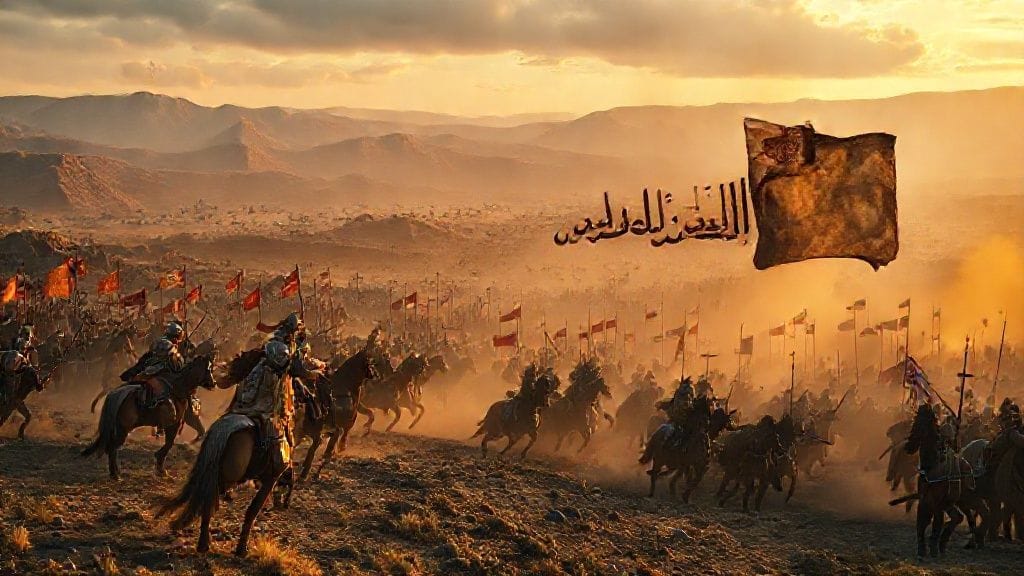
The Levant sun rose mercilessly on July 4, 1187. The dry wind stirred dust across the rolling hills near the serene waters of Lake Tiberias. Soldiers—knights encased in shining mail, footmen gripping swords and spears, and archers nervously scanning the horizon—awaited an inevitable reckoning. The air hung heavy with anticipation and thirst, yet no one seemed to grasp fully the storm about to break upon them. This was the day of the Battle of Hattin, when Saladin, leader of Muslim forces, would deliver a decisive blow to the Crusader states in their heartland. It was a clash of worlds, faiths, and ambitions that would ripple across history.
The Kingdom of Jerusalem in Turmoil: Seeds of a Catastrophe
To understand the battle, we must peer into the fragile political tapestry of the Kingdom of Jerusalem. The Crusader states, carved out by Western knights after the First Crusade nearly a century earlier, had long survived by an uneasy alliance of European knights, local lords, and often, tenuous truces with Muslim neighbors. However, internal divisions, corruption, and exhaustion from constant skirmishes sapped their strength. King Baldwin IV's death in 1185, known as the "Leper King," left a power vacuum—his young nephew Guy of Lusignan ascended amid controversy and factionalism, weakening unity at a critical time.
Saladin’s Rise: Uniting the Muslim World Against the Crusaders
Meanwhile, far beyond the borders of Jerusalem, Saladin, or Ṣalāḥ ad-Dīn Yūsuf ibn Ayyūb, had cultivated a formidable reputation. Born in Tikrit in 1137, Saladin rose through the ranks of the Zengid dynasty before founding the Ayyubid dynasty. His charisma, military acumen, and political skill enabled him to unify Egypt and Syria, rallying Muslim factions under one banner with a renewed zeal to reclaim lands held by the Crusaders. His vision was not merely conquest but the reassertion of Islamic sovereignty and restoring the honor of the Ummah.
The Tensions That Ignited the Conflict
Relations between Crusader lords and Saladin’s forces had been precarious for years. Smaller confrontations, raids, and broken truces became daily occurrences. The situation intensified when Reynald de Châtillon, a fierce and often reckless Crusader lord notorious for attacking Muslim caravans and pilgrims, violated sacred accords by assaulting a Muslim caravan en route to Mecca. This act galvanized Saladin’s determination for a decisive confrontation—one that would punish the Crusaders severely and send a message across the region.
The Crusaders’ Strategy: Marching Into the Crucible
In late June 1187, news reached King Guy that Saladin was threatening Tiberias, a strategic city near the Sea of Galilee. With his nobles divided and counsel fragmented, Guy resolved to march his army out, despite warnings of the dangers posed by the approaching summer heat and lack of water sources. His intent was to relieve the siege and confront Saladin in open battle, reclaiming territory and affirming Crusader credibility. But this would turn out to be a fateful miscalculation.
The Dry Earth and Scorched Throats: Environmental Challenges of the Campaign
The landscape itself played a formidable role. The battle unfolded amid blistering heat, and the Crusader army’s march was grueling. They suffered from dehydration, fatigue, and dwindling supplies. The Muslim forces, well-acquainted with the terrain and experienced in desert warfare, exploited this advantage with relentless harassment, cutting off access to water and forcing the Crusaders to march through barren expanses toward Hattin.
The Encirclement Begins: The Trap Tightens Around Tiberias
By early July, the Crusader forces found themselves circled near the Horns of Hattin — twin hilltops that dominated the plain. Saladin’s army, larger and better rested, had positioned itself to seize control of water sources and prevent any Crusader escape. The trap was closing cruelly, and the sunset of July 3 brought with it dread and the ominous realization that hope was faltering amidst the glaring skyline.
The Horns of Hattin: The Crusader Forces Pinned Down
When dawn broke on July 4, the knights’ armor gleamed dully beneath the harsh sun. But thirst and exhaustion gnawed relentlessly at their resolve. Saladin’s horsemen attacked decisively, cutting off any retreat and encircling the Crusader infantry and cavalry. The knights formed defensive formations, but fatigue rendered them sluggish. The battle was fierce and desperate.
The Battle’s Crescendo: Arrows, Swords, and the Clash of Faiths
The air thundered with the clash of steel and the screams of the fallen. Muslim archers showered the Crusader ranks with arrows; cavalry charged with disciplined fury. Saladin’s forces demonstrated tactical superiority, breaking the Crusader lines with coordinated strikes and relentless pressure. The symbolically charged struggle reached a fever pitch as the Crusader army gradually crumbled beneath the weight of their enemy and the elements.
Saladin’s Masterstroke: Psychological and Tactical Genius at Play
Saladin’s command was not merely martial. He understood the psychological dimension of warfare. Offering quarter to noble prisoners, showing mercy selectively, and leveraging religious fervor among his troops boosted morale and fractured the resolve of his foes. His ability to integrate military strategy with chivalric codes and religious legitimacy was unprecedented at the time.
The Aftermath on the Battlefield: Death, Captivity, and Despair
When the dust settled, most of the Crusader army lay dead or captured. The regimental banners were lost, the True Cross relic, carried proudly into battle, was seized. Nearly 15,000 Crusaders were killed or taken prisoner, including many nobles and knights. The battlefield was littered with broken arms, shattered swords, and the anguished cries of the defeated.
The Fate of King Guy and the Fall of the True Cross
King Guy himself was captured but spared largely due to Saladin’s respect for chivalry. The loss of the True Cross, a holy artifact revered by Crusaders, was a symbolic blow that reverberated throughout Christendom. It represented not just a material defeat but a spiritual and cultural humiliation for the Crusaders.
The Impact on the Crusader States: A Kingdom Shattered
The defeat at Hattin exposed the fragile foundations of the Crusader realms. It shattered the morale of the Frankish lords and precipitated the rapid loss of key cities, including Jerusalem itself just months later. The battle irreversibly altered the political landscape of the Holy Land, ushering in a period of Muslim dominance.
Muslim Triumph and Its Reverberations Across the Levant
For the Muslim world, the victory was jubilant and profound. Saladin’s triumph unified diverse populations, reinforcing the legitimacy of his rule and inspiring Islamic resurgence. The victory also sent a clear message that the Crusader presence was no longer invincible, energizing further campaigns to reclaim all occupied lands.
The Road to Jerusalem: Saladin’s Campaign Continued
Hattin was the opening salvo in Saladin’s master campaign to recapture Jerusalem. By October 1187, Jerusalem fell without large-scale bloodshed, a testament to both Saladin’s military strength and political acumen. The city’s recapture became a defining moment in the centuries-long Christian-Muslim conflict.
The Shockwave Through Christendom: Calls for a New Crusade
The news of Hattin and the fall of Jerusalem sent shockwaves through Europe. Pope Gregory VIII called for the Third Crusade, one of the largest military-religious expeditions of the Middle Ages, drawing legendary leaders like Richard the Lionheart, Philip II of France, and Emperor Frederick Barbarossa. The battle set the tone for renewed conflict and prolonged strife.
Legends Born at Hattin: Memory, Myth, and History Collide
The Battle of Hattin entered the annals of history as a symbol of divine judgment and military genius. Medieval chroniclers on both sides spun tales of heroism, betrayal, and miraculous intervention. Over time, the site transformed into a totemic locus for debates about faith, destiny, and the complex clash of civilizations.
The Long Shadow of Hattin: How It Changed Medieval Warfare
Hattin showcased a shift in medieval warfare tactics, emphasizing mobility, intelligence, and logistics over traditional heavy cavalry charges. Saladin’s use of diverse troops, including archers, light cavalry, and psychological warfare, foreshadowed future battlefield innovations beyond the Levantine theater.
Human Stories Amidst the Ruins: Courage, Betrayal, and Survival
Amidst the sweeping narratives of kings and generals were individual stories of bravery and tragedy. Knights like Reynald de Châtillon met brutal ends. Ordinary foot soldiers faced brutal choices. Noblewomen, clergy, and civilians endured sieges and captivity. These human dimensions bring vivid color to an often monolithic historical event.
Saladin’s Legacy: The Man Behind the Victory
Saladin emerged as a legendary figure, admired even by his enemies for his honor, generosity, and leadership. His conduct after Hattin—showing mercy to captives, protecting Christian holy sites, and governing wisely—cemented his reputation as one of history’s great statesmen and warriors. His legacy continues to influence both Eastern and Western cultural memory.
Lessons from Hattin: Conflict, Faith, and the Limits of Power
The Battle of Hattin reminds us that warfare is as much about leadership, unity, and environment as sheer force. It highlights how religious fervor can both inspire and destroy, and how political intrigue can weaken even the strongest kingdoms. Its lessons resonate beyond the medieval battlefield into discussions on power and human resilience.
Conclusion
On a blistering July morning in 1187, the hills of Hattin bore witness to a monumental confrontation that reshaped the medieval world. Saladin’s victory symbolized more than a military triumph; it was the embodiment of a broader movement—one fueled by faith, leadership, and the quest for sovereignty. The defeat of the Crusader army signaled the twilight of an era and the dawn of new power dynamics across the Levant and Christendom. Yet, beneath the clamor of battle and politics, the story speaks to eternal human struggles: pride and humility, courage and despair, unity and division. The legacy of Hattin endures not only in history books but in the enduring images of a world forever changed at that dusty crossroads between sea and desert.
FAQs
Q1: What were the main causes leading to the Battle of Hattin?
A1: The battle was primarily caused by ongoing conflicts between the Crusader Kingdom of Jerusalem and Saladin’s Muslim forces. Key factors included political instability within the Crusader states, aggressive actions by Crusader lords like Reynald de Châtillon, and Saladin’s ambition to unify and reclaim Muslim lands.
Q2: How did the environment impact the outcome of the battle?
A2: The harsh summer heat and desert terrain severely weakened the Crusader army. Saladin’s forces cut off access to water sources, causing dehydration, fatigue, and lowered morale, which critically undermined the Crusader army’s effectiveness.
Q3: Who was King Guy of Lusignan and what happened to him?
A3: King Guy was the monarch of Jerusalem during the battle. He was captured by Saladin’s forces but treated with relative mercy due to chivalric codes. His kingship ended in defeat and imprisonment.
Q4: What was the significance of the True Cross in the battle?
A4: The True Cross was a revered Christian relic that the Crusaders believed protected their army. Its capture by Saladin was a symbolic and psychological blow, undermining Crusader morale and faith in divine protection.
Q5: How did the Battle of Hattin affect the Crusader states?
A5: The battle dramatically weakened the Crusader states, leading to the rapid loss of key territories, including Jerusalem, altering the balance of power in the Holy Land in favor of Muslim control.
Q6: What were the immediate consequences of Saladin’s victory?
A6: Saladin’s victory led to the end of Crusader dominance in much of the Levant, the Fall of Jerusalem in October 1187, and the initiation of the Third Crusade by European powers.
Q7: How is Saladin remembered in history?
A7: Saladin is remembered as a model of chivalry, military genius, and just leadership. Both Muslim and Western sources praise his conduct in war and diplomacy, making him a respected figure across cultures.
Q8: Did the Battle of Hattin change medieval military tactics?
A8: Yes, it highlighted the importance of mobility, intelligence, and environmental factors in warfare, signaling a shift from heavily armored cavalry dominance to more diverse and flexible military strategies.

