Table of Contents
- A Frozen Moment Amidst the Pampas: The Eve of the Battle of Ituzaingó
- The Roots of Conflict: South America’s Post-Independence Turmoil
- The Cisplatine War: Struggle Over a Land in Between
- Rival Visions: Argentina and Brazil on Collision Course
- Commanders of Destiny: Juan Lavalleja and Carlos de Alvear Meet Their Opponents
- The March to Ituzaingó: Strategies and Maneuvers Leading to Battle
- Dawn of February 20, 1827: The Battlefield Comes Alive
- Clash of Armies: The Relentless Combat of Ituzaingó
- Turning Tides: Breaking Points and Heroic Feats
- The Art of War in the Pampas: Tactics, Terrain, and Technology
- The Human Cost: Stories of Courage and Tragedy Amidst the Carnage
- Victory and Pyrrhic Triumph: The Outcome of Ituzaingó
- Diplomatic Ripples: How the Battle Reshaped Regional Politics
- The Battle’s Legacy in Uruguay’s National Identity
- A Battlefield Remembered: Commemoration and Historical Memory
- The Cisplatine War’s Endgame: Steps Toward Uruguayan Independence
- Echoes Through Time: Ituzaingó in Literature and Art
- Lessons of Ituzaingó: Reflections on Nationalism and War
- Conclusion: The Battlefield That Shaped a Nation’s Destiny
- FAQs: Understanding the Battle of Ituzaingó
- External Resource
- Internal Link
1. A Frozen Moment Amidst the Pampas: The Eve of the Battle of Ituzaingó
On a crisp late summer morning of February 20, 1827, the vast plains of Uruguay bore witness to a moment destined to carve its name into the annals of South American history. The sun had only just begun its gentle climb over the horizon when two great armies—one Argentine, the other Brazilian—prepared to collide near the tranquil town of Ituzaingó. The air buzzed with tension, the ground trembled beneath thousands of boots and hooves, and somewhere in the quiet before the storm, soldiers exchanged nervous glances, grips tightening on muskets and sabers.
An observer standing in that moment would have seen more than just soldiers; they would have perceived the weight of nascent nations grappling for identity, sovereignty, and survival. What unfolded was not merely a battle on a map, but a tempest of ambitions, betrayals, dreams, and despair that would echo for generations.
2. The Roots of Conflict: South America’s Post-Independence Turmoil
The early 19th century was a cauldron of change across South America. The towering Iberian empires had crumbled under relentless waves of revolution, leaving behind fragmented, fragile states struggling to find their footing. The United Provinces of the Rio de la Plata (modern-day Argentina), the Empire of Brazil, and the small but fiercely contested Banda Oriental (today’s Uruguay) found themselves enmeshed in a web of unsettled borders, contested sovereignties, and clashing visions for the continent’s future.
It was a period when allegiances were as fluid as the rivers crisscrossing the pampas, and each provincial caudillo or imperial prince sought to claim his piece of a great, unruly puzzle. The Banda Oriental was particularly coveted; a narrow strip along the Atlantic coast, it had been a prize for Spaniards, Portuguese, and local gauchos for centuries. Now, newly independent but vulnerable, the region’s fate hung precariously between the ambitions of Buenos Aires and Rio de Janeiro.
3. The Cisplatine War: Struggle Over a Land in Between
The Battle of Ituzaingó was a crucial episode in the Cisplatine War (1825–1828), itself a reflection of the intense tussle over the fate of the Banda Oriental, also called the Cisplatina Province by the Brazilians. After the region declared independence from Spanish colonial rule, it soon fell into the orbit of the United Provinces. However, the Empire of Brazil, with a powerful navy and a vast army, coveted the territory and was determined to secure it as part of its southern domain.
This war, often overshadowed by the more dramatic independence campaigns, was a grueling contest—one marked by guerilla warfare, raids, and major battles—that tested the limits of both empires and ignited fierce patriotism on all sides. The fight was not simply about land; it was a battle for identity and survival in a world where new nations rose precariously from colonial ashes.
4. Rival Visions: Argentina and Brazil on Collision Course
The ideological and political stakes behind the battle were immense. Argentina, turbulent and fragmented yet fiercely guarding its revolutionary ideals, saw the Banda Oriental as an inseparable extension of its revolutionary promise. It was a land echoing the spirit of José Gervasio Artigas, the revered leader who championed federalism and the empowerment of local provinces.
Brazil, on the other hand, was a budding monarchy under Emperor Pedro I, keen to expand its vast territory and secure its southern frontiers against the unpredictable currents of republicanism. For Brazilians, holding the Banda Oriental was both a practical necessity—to safeguard its borders—and a symbol of imperial strength.
These clashing destinies—federalism versus monarchy, revolution versus empire—were the tinder that ignited confrontations like the Battle of Ituzaingó.
5. Commanders of Destiny: Juan Lavalleja and Carlos de Alvear Meet Their Opponents
The stage was set by towering military figures whose personal histories intertwined with national aspirations. On the Argentine side, generals such as Carlos María de Alvear brought years of fighting experience from earlier independence campaigns. Meanwhile, the Banda Oriental’s heroic sons like Juan Antonio Lavalleja embodied the fierce determination of local fighters defending their homeland.
Opposing them were Brazilian commanders like Field Marshal Francisco de Paula Santander, veterans who believed in the rigid discipline and strength of imperial forces. These leaders, stalwart and charismatic, understood fully the symbolic and material implications of the battle before them.
Their decisions on that fateful day would ripple through the decades.
6. The March to Ituzaingó: Strategies and Maneuvers Leading to Battle
Leading up to February 20, both armies engaged in a tense game of positioning and reconnaissance. The vast, open pampas, though seemingly featureless, offered subtle advantages and traps—river crossings, patches of woods, and rolling hills. Commanders sought to exploit these to outflank or surprise the enemy.
The Argentine-Bando Oriental coalition moved with swift cavalry and strategically placed infantry, seeking to disrupt the well-led but cumbersome Brazilian columns. Scouts reported movements, campfires were monitored, and alliances tested in a prelude of cat-and-mouse, mirroring the uncertain loyalties of the continent itself.
7. Dawn of February 20, 1827: The Battlefield Comes Alive
With predawn light seeping across the eastern sky, the battlefield was suddenly alive with the hum of anticipation. The Brazilian battalions were arrayed with imperial precision, muskets gleaming, flags snapping in the gentle breeze. Opposite them, the Argentine and Oriental forces moved with the vitality of men fueled by a keen sense of purpose and the desperation that only a fight for survival can inspire.
The ground trembled under thousands of horses as the cavalry prepared their charges. Commanders shouted orders, artillery crews took their positions, and a pervasive silence took hold, broken only by the low neighing of horses and the occasional murmur of prayer.
8. Clash of Armies: The Relentless Combat of Ituzaingó
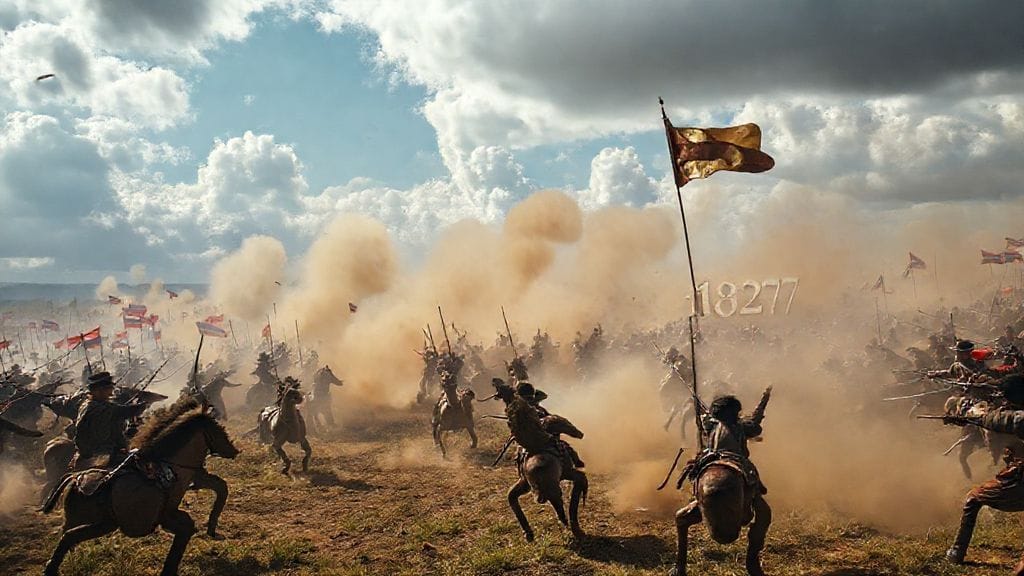
When the cannon fire shattered the stillness, the battle erupted into a superlative display of violence and valor. Infantry lines advanced amid clouds of smoke, the sharp crack of muskets echoed, and the thunder of cavalry charges swept across the plains. Ituzaingó was no mere engagement but a crescendo of martial fury.
Men fell, some clutching wounds silently, others shouting defiance even as life ebbed away. The terrain itself seemed to join the fury, mud sucking boots, and horses stumbling against the relentless tide of battle.
9. Turning Tides: Breaking Points and Heroic Feats
Despite momentary setbacks, the Argentine forces found openings. The famed gaucho cavalry, swift and ferocious, executed charges that scattered the Brazilian lines. Soldiers like Colonel Manuel Oribe and General Juan Lavalleja emerged as heroes; their daring and leadership stitched together fractured units and inspired renewed efforts.
The Brazilian army, surprised and battered, struggled to maintain cohesion. Yet the battle was fiercely contested until late afternoon, with neither side willing to concede ground easily.
10. The Art of War in the Pampas: Tactics, Terrain, and Technology
The Battle of Ituzaingó offers a fascinating study in early 19th-century warfare adapted to South American landscapes. Unlike European arenas of war, the vast grasslands demanded mobility, flexibility, and intimate knowledge of the environment.
Cavalry dominated the fight, and guerrilla tactics mingled with traditional formations. Both sides used artillery sparingly given the open terrain, with musketry and saber confrontations shaping the conflict’s ebb and flow.
11. The Human Cost: Stories of Courage and Tragedy Amidst the Carnage
While the strategic outcome was paramount, the battle’s human toll lurks in the silent stories of soldiers—young men torn from farms, indigenous allies fighting for promises of respect, families watching from afar, and the wounded left to the mercy of primitive medical care.
One tale tells of a Brazilian drummer boy, barely thirteen, who kept the rhythm despite wounds, fueling the courage of hesitant comrades. Another recalls a gaucho who reportedly saved a Brazilian officer’s life, a quiet testament to the blurred lines of enmity.
12. Victory and Pyrrhic Triumph: The Outcome of Ituzaingó
By the day’s end, the Argentine-Oriental coalition claimed a decisive victory. Brazilian forces retreated in disarray, their pride bruised and their grip on the contested region loosened. Yet, this triumph was bittersweet; casualties were high on both sides, and the war itself would continue for another year, draining young nations of treasures and lives.
13. Diplomatic Ripples: How the Battle Reshaped Regional Politics
The shockwaves from Ituzaingó reverberated beyond the battlefield. The Brazilian Empire, recognizing the resilience and determination of its adversaries, began to reconsider the cost of its southern ambitions. The victory raised Argentine political hopes and fueled calls for the Banda Oriental’s autonomy.
International actors—namely Britain and France—watched closely, concerned about stability in this torrid corner of South America essential to global trade.
14. The Battle’s Legacy in Uruguay’s National Identity
For Uruguay, born of struggle, the Battle of Ituzaingó became a symbol of independence and pride. It embodied the spirit of resistance against imperial domination, a founding myth woven into national consciousness. Celebrations, monuments, and literature have perpetuated its memory, transforming the battlefield into hallowed ground.
15. A Battlefield Remembered: Commemoration and Historical Memory
Through monuments, plaques, and annual commemorations, Ituzaingó remains enshrined in public memory as a defining moment. History textbooks, oral traditions, and popular culture preserve the stories of heroism and sacrifice, ensuring that future generations grasp the cost of freedom.
16. The Cisplatine War’s Endgame: Steps Toward Uruguayan Independence
Though the Battle of Ituzaingó did not end the war, it significantly shifted momentum. The conflict concluded with the Treaty of Montevideo in 1828, brokered under British mediation, which created the independent nation of Uruguay—a buffer state between Argentina and Brazil.
Ituzaingó’s outcome proved pivotal in forcing the warring powers to negotiate and recognize a new political reality.
17. Echoes Through Time: Ituzaingó in Literature and Art
Artists, poets, and writers have long grappled with the Battle’s grandeur and tragedy. From stirring sonnets memorializing fallen heroes to evocative paintings capturing the clash of sabers and smoke clouds, Ituzaingó has inspired creative works that probe the meaning of patriotism, struggle, and fate.
18. Lessons of Ituzaingó: Reflections on Nationalism and War
Examining Ituzaingó today reveals enduring themes: the complex cause-and-effect of armed conflict, the power of national identity, and the human cost of striving for sovereignty. It warns of the dangers of imperial ambition and the unpredictable nature of war but also celebrates resilience and unity forged in adversity.
19. Conclusion: The Battlefield That Shaped a Nation’s Destiny
The Battle of Ituzaingó was more than a violent encounter; it was a crucible in which the identity of Uruguay and the futures of Argentina and Brazil were tested and transformed. The echoes of that February day continue to resonate, reminding us that the borders and freedoms we inherit were often forged in moments of formidable courage and sacrifice.
Conclusion
The vast pampas of Ituzaingó bore witness on February 20, 1827, not only to a fierce clash of armies but to a historic turning point in South America's tumultuous journey toward self-determination. Within the thunder of muskets and the fury of cavalry charges, the battle etched itself into the heart of a nation struggling to emerge.
Its legacy endures not solely in military history but within the soul of Uruguay, a testament to resilience and the ceaseless human quest for freedom. Ituzaingó reminds us that history’s grand narrative is written as much by the mundane footsteps of thousands of soldiers as by the commanding voices of generals—each playing a part in shaping a nation’s destiny. Through reflection on this epic conflict, we gain insight into the forces that have shaped modern South America and the profound costs of forging a nation.
FAQs
Q1: What was the strategic significance of the Battle of Ituzaingó?
A1: The battle was crucial in halting Brazilian advances during the Cisplatine War, boosting Argentine-Banda Oriental morale and paving the way for Uruguay’s eventual independence.
Q2: Who were the key commanders at Ituzaingó?
A2: Argentine and Banda Oriental leaders like Juan Antonio Lavalleja and Carlos María de Alvear opposed Brazilian commanders such as Francisco de Paula Santander and Pedro de Abreu.
Q3: How did the battle affect Uruguay’s path toward independence?
A3: The victory weakened Brazilian control, encouraged diplomatic pressure, and contributed to the 1828 Treaty of Montevideo, which recognized Uruguay as an independent state.
Q4: What were the main tactics used during the battle?
A4: The combat relied heavily on cavalry charges, skirmishes, and infantry formations, adapted to the open pampas terrain that favored mobility and speed over heavy artillery.
Q5: How is the battle remembered today?
A5: Ituzaingó is commemorated as a symbol of national pride in Uruguay, with monuments, annual ceremonies, and cultural references preserving its memory.
Q6: Were there any notable personal stories from the battle?
A6: Yes, stories like that of a young Brazilian drummer boy who continued his post despite injury, and a gaucho’s rescue of a fallen enemy officer highlight the human dimension.
Q7: What larger geopolitical context influenced the battle?
A7: The struggle reflected post-colonial power dynamics between emerging South American republics and the Brazilian empire, each vying for sovereignty and regional dominance.
Q8: How did international powers respond to the Cisplatine War?
A8: European powers, primarily Britain, monitored the conflict closely due to trade interests and eventually mediated peace that led to Uruguay’s independence.