Table of Contents
- The Dawn of October 16, 1813: A City on the Brink of Fate
- Setting the Stage: Europe in the Aftermath of Napoleonic Dominance
- The Grand Coalition Formed: Allies Unite Against the French Emperor
- Napoleon’s Strategy: A Gambit to Retain Control of Central Europe
- The Armies Converge: Forces Mobilize Around Leipzig
- The Opening Salvo: First Clashes and Tactical Maneuvers
- The Swirling Chaos: Fog, Smoke, and the Fury of Battle
- The Role of Terrain and Urban Combat within Leipzig
- The Turning Point: Allied Reinforcements and French Exhaustion
- The Heroism and Tragedy on Both Sides
- The Death Toll and Its Immediate Human Cost
- The French Retreat: Collapse of the Grande Armée’s Hegemony
- Political Reverberations Across Europe
- The Battle’s Impact on the German States and Saxony
- The Decline of Napoleon’s Empire: Prelude to Waterloo
- Cultural Reflections: How Leipzig Became a Symbol of Resistance
- Testimonies from Soldiers and Civilians: Voices from the Battlefield
- Legacy in Military Doctrine: Lessons from the “Battle of Nations”
- Commemorations and Memorials in Leipzig and Beyond
- Conclusion: The Battle of Leipzig as a Turning Point in European History
- FAQs: Key Questions about the Battle of Leipzig
- External Resource
- Internal Link
The Dawn of October 16, 1813: A City on the Brink of Fate
The mist hung low over the city of Leipzig in the early morning hours of October 16, 1813. What was an ordinary day to its merchants and townsfolk would soon become a thunderous symphony of cannon fire, clashing steel, and desperate cries. The autumn chill could not quench the fierce tension that gripped the air—this was no mere skirmish but the gathering storm of what would become the largest battle in Europe prior to World War I. Leipzig, known as the “City of Music,” would witness the clash of empires, the hopes of nations, and the fate of a continent.
Citizens peered cautiously from behind shuttered windows, already aware that their city had transformed into a sprawling battlefield. Thousands of soldiers, belonging to a coalition of nations determined to end Napoleon’s relentless expansion, braced themselves for days of fighting that would leave scars not only on the land but in the hearts of all who endured it. The Battle of Leipzig was about to unfold—a conflict whose scale and significance shaped the course of history.
Setting the Stage: Europe in the Aftermath of Napoleonic Dominance
The early 19th century was a Europe under duress—pulled and battered by the ambitions of one man: Napoleon Bonaparte. Following a series of sweeping victories that redefined warfare and reshuffled borders, the French Emperor had cast a shadow from the Iberian Peninsula to the steppes of Russia. However, the disastrous Russian campaign of 1812 had marked a turning point. Napoleon’s Grand Armée, once deemed invincible, was shattered by the bitter cold, starvation, and relentless Russian harassment—a catastrophe that reverberated throughout Europe.
This defeat invigorated the opposition. Prussia, Austria, Russia, and Sweden forged a grand coalition together, united not only by a hatred of French occupation but by a vision to restore balance to the continent. The old European order, threatened by years of revolutionary upheaval and imperial conquest, sought redemption through arms.
In the months leading to Leipzig, the political and military climate was fraught with intrigue, shifting alliances, and desperate calculations. Napoleon, aware of his weakened position but ever defiant, massed his forces in Saxony, determined to hold the strategic crossroads that Leipzig represented.
The Grand Coalition Formed: Allies Unite Against the French Emperor
What made the Battle of Leipzig extraordinary was not merely the size of the armies arrayed but the unprecedented multinational cooperation on the Allied side. Over 350,000 troops comprised the coalition—Russians, Prussians, Austrians, Swedes, Germans from various states, and others—vastly outnumbering Napoleon’s roughly 195,000 men.
This unwieldy coalition was led by commanders of formidable skill and determination: Prince Karl Schwarzenberg of Austria, General Gebhard Leberecht von Blücher of Prussia, and the Russian General Michael Barclay de Tolly, among others. Their shared goal was clear—to crush Napoleon once and for all—but coordinating such diverse forces presented its own challenges, from linguistic barriers to contrasting military traditions.
Yet under the looming threat of continental domination by the French, cooperation prevailed. The coalition’s name in history is telling: the “Battle of the Nations.” It was not just France facing a fragmented Europe—it was a moment when many nations aligned their destinies against a common foe.
Napoleon’s Strategy: A Gambit to Retain Control of Central Europe
Despite being outnumbered, Napoleon was not a man to simply yield the field. His strategy was audacious and hinged on divide and conquer tactics. He aimed to prevent the coalition armies from uniting fully, to strike quickly and decisively at their flanks before they could amass overwhelming force. To achieve this, he deployed his forces around Leipzig, protecting vital communication lines and key crossings over the Pleisse, Elster, and Pleiße rivers.
Napoleon’s confidence was rooted in his belief in the superiority of his veteran troops and his own tactical genius. Yet the realities of extended supply lines, fatigue, and the increasingly nationalist fervor of German states complicating his recruitment meant his army was not the same force that had swept Europe years before.
Still, the Emperor’s presence on the field galvanized his men. They would fight with desperation, aware that defeat here would be catastrophic.
The Armies Converge: Forces Mobilize Around Leipzig
In the week before October 16, tens of thousands of soldiers maneuvered into position. Leipzig, often a peaceful trade and cultural hub, had become a fortress under siege. The streets echoed with the sounds of artillery being positioned, drums beating out orders, and the heavy march of boots. The coalition forces stretched from the north and east, while French troops solidified their western and southern defenses.
The city's topography played a critical role—the surrounding rivers and ridges created natural defensive lines and obstacles. For the French, controlling Leipzig was vital for maintaining communications with France and protecting the southern German states still loyal to Napoleon.
The tension before the battle was palpable. Soldiers wrote hurried letters to loved ones; commanders weighed the fates of thousands in their hands.
The Opening Salvo: First Clashes and Tactical Maneuvers
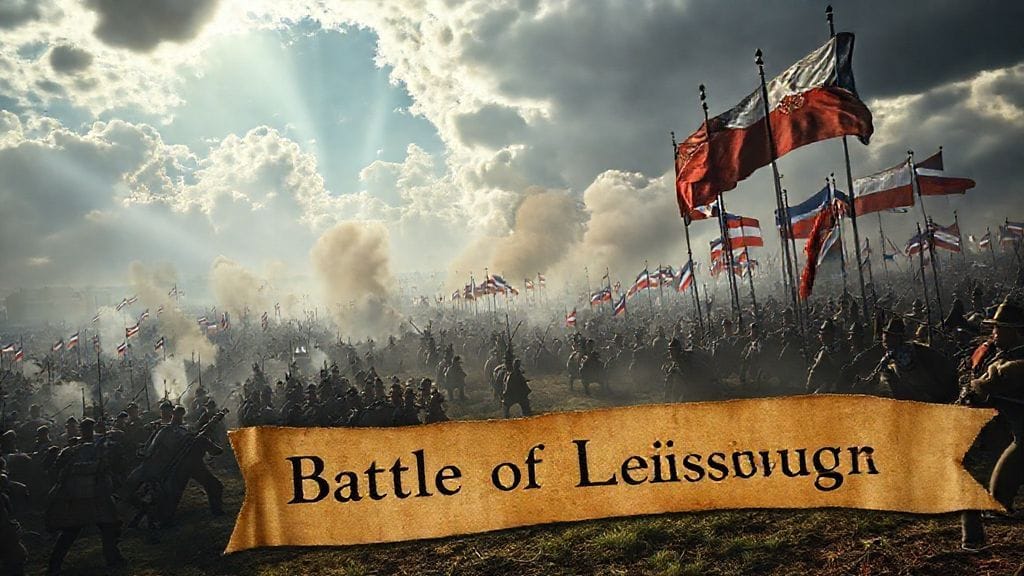
On October 16, the battle began with fierce artillery duels and probing attacks. Coalition forces launched simultaneous assaults on French positions, attempting to test the defenses and find weaknesses. The French counterattacked with their characteristic aggressiveness.
The fighting was intense and brutal, with units pushing and pulling control over key villages surrounding Leipzig — including Probstheida, Liebertwolkwitz, and Wachau. The scale of the conflict was extraordinary: nearly half a million men engaged across a sprawling battlefield.
What distinguished the Battle of Leipzig was the fluidity and complexity of the engagement—moving front lines, rapid redeployments, and the interplay between infantry, cavalry, and artillery created a dynamic and often chaotic spectacle.
The Swirling Chaos: Fog, Smoke, and the Fury of Battle
As cannonballs tore through the air and muskets cracked relentlessly, the battlefield descended into a maelstrom of confusion. Dense smoke obscured vision, cries of the wounded filled the air, and the ground trembled beneath the trample of thousands.
Soldiers fought street to street, house to house within Leipzig itself, transforming the city into an urban battlefield fraught with peril. Medical services were overwhelmed, and the suffering was immense.
Amid the chaos, moments of valor stood out: officers rallying their men under fire, cavalry charges breaching lines, and common soldiers enduring unimaginable hardship. It was at once terrifying and awe-inspiring.
The Role of Terrain and Urban Combat within Leipzig
Leipzig’s unique geography shaped the battle’s character. The city's rivers—White Elster, Pleiße, and Parthe—provided both natural defenses and strategic choke points. Bridges were fiercely contested, as their control was essential for movement and reinforcement.
Urban combat introduced a new dimension—snipers operated from rooftops, barricades clogged streets, and trenches marred public squares. For the first time on such a scale, the horrors of close-quarter fighting in a city would signal future modes of warfare.
Both sides suffered heavily in this unforgiving environment, with entire regiments lost or captured amid the labyrinth of streets.
The Turning Point: Allied Reinforcements and French Exhaustion
After days of relentless fighting, the weight of numbers began to tell. The arrival of fresh coalition troops, especially the Prussian cavalry under Blücher, tipped the balance. The French forces, already stretched thin and depleted, began to falter.
Napoleon attempted localized counterattacks, but exhaustion and dwindling supplies eroded their effectiveness. Attrition, disorder, and mounting casualties sapped the fighting spirit.
By October 19, the French lines broke, and Napoleon ordered a retreat—an arduous withdrawal marked by further skirmishes and chaos.
The Heroism and Tragedy on Both Sides
The Battle of Leipzig was not only a military contest but a human drama writ large. Stories emerged of extraordinary bravery: a single regiment holding a critical bridge under overwhelming odds, medics risking their lives to save the wounded, commanders facing death in the line of duty.
Yet there was also despair—the city’s populace bore the scars; homes were burned, and an estimated 100,000 soldiers died, were wounded, or captured.
Among the fallen was General Jean-Baptiste Bessières, a close friend of Napoleon, whose loss was deeply mourned. Meanwhile, morale on the coalition side soared, convinced that this was the beginning of the end for the French Emperor.
The Death Toll and Its Immediate Human Cost
The magnitude of carnage stunned contemporaries and historians alike. More than 80,000 French soldiers perished, along with approximately 100,000 coalition troops—overall, nearly 400,000 men were engaged, making it the largest and deadliest battle of the Napoleonic Wars.
The urban setting exacerbated suffering; hospitals overflowed, civilians were caught in crossfire, and famine and disease shadowed the aftermath.
The scale of loss would have profound emotional and demographic effects across Europe, forever coloring memories of the conflict.
The French Retreat: Collapse of the Grande Armée’s Hegemony
Napoleon’s withdrawal signaled a definitive shift. The Battle of Leipzig shattered the myth of French invincibility. Forced back across the Rhine, the “Grande Armée” faced a slow unravelling of its power.
In the months following, Austria and Prussia re-entered the war fully, and uprisings spread through French-occupied territories. It was a domino effect that would culminate in Napoleon’s abdication in 1814.
Leipzig was the fulcrum—where over two decades of revolution, empire-building, and resistance reached a crescendo.
Political Reverberations Across Europe
The coalition’s triumph galvanized political changes. The Congress of Vienna, already convening to redraw Europe’s map, gained momentum and legitimacy from military success.
Napoleon’s defeat encouraged nationalist movements in Germany, Italy, and beyond, sowing seeds for future unification and independence struggles.
For the aristocracies of Europe, Leipzig vindicated the restoration of monarchical order but also foreshadowed the tensions that would erupt later in the century.
The Battle’s Impact on the German States and Saxony
As the battlefield itself, Saxony felt the immediate impact. The Electorate of Saxony, allied to Napoleon but surrounded by coalition forces, faced occupation and political upheaval.
For many Germans, Leipzig symbolized a turning point towards self-determination. The idea of “German nationalism” gained force, blending a desire for sovereignty with resistance against foreign domination.
Economically and socially, the war left deep wounds—destroyed infrastructure, disrupted trade, and displaced populations.
The Decline of Napoleon’s Empire: Prelude to Waterloo
Leipzig marked the beginning of the end. Napoleon’s subsequent campaigns could not reverse the tide. The emperor’s aura of invincibility cracked, emboldening his enemies and weakening his allies.
The battle’s psychological effect was monumental—it shattered confidence not only in France but throughout occupied territories.
Within less than two years, Waterloo would finalize what Leipzig had heralded—Napoleon’s final fall and exile.
Cultural Reflections: How Leipzig Became a Symbol of Resistance
Beyond military history, Leipzig entered cultural consciousness as more than a battlefield. It inspired paintings, literature, and commemorations that reflected Europe’s struggle between empire and freedom.
The city’s museums and monuments, such as the Monument to the Battle of the Nations, stand as lasting tributes to sacrifice and the complex interplay of nationalism and imperialism.
The battle became a lens through which succeeding generations interpreted conflict, heroism, and the cost of war.
Testimonies from Soldiers and Civilians: Voices from the Battlefield
Diaries and letters provide piercing insight into the human dimension of Leipzig. A Russian infantryman described the “endless roar of battle” and the “brotherhood of those who stood against the French.” Meanwhile, a Leipzig merchant lamented the devastation of his city and the suffering of innocent families caught in the crossfire.
These voices remind us that history is lived by individuals—from the highest general to the common soldier and civilian—and that their experiences shape our understanding of past events.
Legacy in Military Doctrine: Lessons from the “Battle of Nations”
Military historians regard Leipzig as a study in coalition warfare, the challenges of coordinating multinational forces, and the evolution of combined arms tactics. The battle foreshadowed future large-scale conflicts, where logistics, communication, and manpower would decide outcomes as much as bravery.
Napoleon’s attempt at maneuver warfare met the realities of massed armies and extended battle zones, contributing to the transition toward modern warfare.
Commemorations and Memorials in Leipzig and Beyond
The Monument to the Battle of Nations, completed in 1913—the centenary of the battle—is one of Europe’s largest war memorials. It embodies remembrance, national pride, and reconciliation.
Every October, Leipzig hosts events honoring those who fought and died. These commemorations link past and present, fostering reflection on the costs of war and the value of peace.
Conclusion: The Battle of Leipzig as a Turning Point in European History
The Battle of Leipzig was not merely a clash of armies—it was the pivot upon which 19th-century Europe turned. It shattered illusions of imperial invincibility and revealed the power of alliances and determination in the face of domination.
Yet beyond strategy and politics lies the human story—the sacrifice, courage, and suffering of countless individuals. Leipzig reminds us that history is more than dates and outcomes; it is lived experience, fraught with hope and tragedy.
As nations remember the “Battle of Nations,” they acknowledge a complex legacy: one of conflict, change, and ultimately, the enduring quest for freedom and stability in Europe.
FAQs
Q1: Why was the Battle of Leipzig called the “Battle of Nations”?
A1: Because it involved the largest coalition of nations against Napoleon’s France up to that time, including Austria, Prussia, Russia, Sweden, and various German states, reflecting a pan-European alliance.
Q2: What were the main causes leading to the Battle of Leipzig?
A2: The key causes were Napoleon's failed Russian campaign in 1812, the formation of the Sixth Coalition aiming to end French domination, and strategic control over Central Europe, with Leipzig’s location making it a critical military objective.
Q3: How did the battle influence the German nationalist movement?
A3: The battle energized German nationalism by fostering a sense of unity among disparate German states resisting French control, laying groundwork for later movements seeking German unification.
Q4: What was the human cost of the battle?
A4: Estimated casualties exceeded 100,000 killed, wounded, or captured, making it one of the bloodiest battles of the Napoleonic Wars and causing extensive suffering among combatants and civilians.
Q5: How did Napoleon respond to the defeat at Leipzig?
A5: He ordered a retreat across the Rhine and attempted to regroup, but his forces never fully recovered; the defeat triggered rapid political and military decline culminating in his abdication.
Q6: What role did the terrain of Leipzig play during the battle?
A6: The rivers and urban environment created strategic bottlenecks and fierce street fighting, complicating maneuvers and contributing to high casualties.
Q7: How is the battle commemorated today?
A7: Through monuments like the Monument to the Battle of Nations, annual ceremonies, and extensive historical research, Leipzig honors those who fought and preserves the memory of this pivotal event.
Q8: What lessons did military leaders derive from the battle?
A8: The battle illustrated the complexities of coalition warfare, the limits of maneuver tactics against huge armies, and foreshadowed modern warfare’s logistical and communication challenges.