Table of Contents
- The Last Stand by Vesuvius: Setting the Stage for Mons Lactarius
- Ostrogoths and Byzantines: Two Worlds on Collision Course
- Gothic Italy on the Brink: Political and Military Context
- Justinian’s Ambitions: Restoring the Roman Glory
- The Fall of Ravenna: Prelude to the Final Confrontation
- The Battlefield Emerges: Geography and Strategy near Vesuvius
- The Gothic King Teia: A Leader’s Final Gamble
- The Byzantine Commander Narses: Strategist and Emperor’s Instrument
- The Clash Unfolds: The Battle of Mons Lactarius in Narrative
- Fighting Amidst Fire and Stone: Tactical Movements and Brutality
- The Turning Point: How the Byzantines Seized Victory
- The Death of Teia and the Collapse of Ostrogothic Command
- Aftermath of Battle: The End of Ostrogothic Resistance
- The Lombard Invasion: A New Era in Italy’s Turmoil
- Justinian’s Italy: The Cost of Reconquest
- Cultural and Social Impacts: Gothic Legacy in Italy’s Transformation
- Mons Lactarius in Historical Memory and Myth
- Modern Archaeology Sheds Light on the Hidden Battlefield
- The Battle’s Place in the Larger Gothic War (535-554)
- Lessons from Mons Lactarius: Empire, War, and Identity
- Conclusion: The Sunset of a Kingdom and the Dawn of Change
- FAQs About the Battle of Mons Lactarius
- External Resource
- Internal Link
In the shadow of the looming, smoking cone of Mount Vesuvius, the air was thick with more than just the sulfurous scent of past eruptions. The skies over southern Italy in October of 552 AD bore witness to the brutal struggle for dominion between rival empires and fading kingdoms. There, amidst rocky heights and volcanic slopes, the final chapter in the saga of the Ostrogoths unfolded—a desperate, fierce battle that would decide the fate of Gothic Italy and mark the twilight of an era.
The Last Stand by Vesuvius: Setting the Stage for Mons Lactarius
The quiet foothills surrounding Mount Vesuvius had long been a witness to history’s tides—here, Romans once toasted victories and emperors. Now, this ancient land was the theater for an ultimate contest of wills: the Battle of Mons Lactarius, fought in the autumn of 552. The very name "Mons Lactarius," translated loosely as "Milky Mountain," evokes images of stark white cliffs battered by an unforgiving struggle, as bloodied warriors clashed for survival beneath the watchful eye of the volcanic giant.
This was no ordinary battle. It was the culmination of decades-long conflict—the Gothic War—that pitted the remnants of Ostrogothic rule against the resurgent might of the Byzantine Empire’s ambition to reclaim the Western Roman heartlands. For the Ostrogoths, Mons Lactarius was the de facto endgame, the last desperate act to preserve sovereignty over a homeland slipping away like volcanic ash in wind.
Ostrogoths and Byzantines: Two Worlds on Collision Course
The Ostrogothic kingdom in Italy was a hybrid beast — one foot in the fading world of classical Rome, the other entrenched in Germanic tribal tradition. Rooted in the vision of Theodoric the Great, the Goths had sought not mere conquest but a synthesis of Roman civilization and Gothic identity. Yet by the mid-sixth century, this delicate balance was unraveling.
Opposing them stood the Byzantine Empire under Emperor Justinian I, a man obsessed with restoring the glories of Rome’s former grandeur. He saw the Gothic realm as illegitimate usurpers—an obstacle to the resurrection of Roman authority across the Mediterranean.
This ideological chasm fueled a decade-long, exhausting war. Beyond the swords and shields, it was a collision of cultures—a fading Gothic world struggling to survive and an imperial might attempting to reverse history itself.
Gothic Italy on the Brink: Political and Military Context
By 552, Italy was a fragmented, weary land. The war had devastated cities, the countryside, and populations alike. Ravenna, the old Ostrogothic capital, fell two years earlier after a prolonged siege. The Gothic king Totila had died in battle, and his successor Teia inherited a shattered kingdom with few resources and fewer allies.
Internal dissensions plagued the Goths, while Byzantines, under capable generals and fueled by imperial reinforcements, pressed relentlessly. The Ostrogoths took their final stand near Mount Vesuvius, leveraging the difficult terrain in hope that the gods, or at least the earth itself, might shield them from extinction.
Justinian’s Ambitions: Restoring the Roman Glory
Justinian I's reign is a remarkable saga of ambition, brilliance, and hubris. His vision to reclaim the lost Western provinces consumed vast financial and human resources. Italy, the heartland of the “Old Empire,” was pivotal.
The Gothic War (535-554) was part of this grand design. Justinian’s forces had recaptured North Africa before turning east. His commitment to Italy was both political and symbolic—the peninsula was meant to serve as a testament to the revival of Roman order and law, including the codification of Roman law in the “Corpus Juris Civilis.”
Yet, this grand intention was not unchallenged. Teia, the Ostrogothic king, represented the last flame of a people whose roots ran deeper than Justinian’s imperial mandates.
The Fall of Ravenna: Prelude to the Final Confrontation
In 540, Ravenna's fall to the Byzantines delivered a crushing blow. Once the ostentatious capital of the Western Emperor Honorius, it was a crown jewel of Gothic power and culture. Its loss forced the Goths into tactical retreat and psychological despair.
Nevertheless, Teia rallied what remained of his forces, determined to resist internment or exile. He gathered loyal warriors, tribal chiefs, and veterans. The stage was set for the final duel—a battle that would either exterminate or immortalize the Gothic presence in Italy.
The Battlefield Emerges: Geography and Strategy near Vesuvius
Mons Lactarius was no random battlefield. Located near the slopes of Vesuvius and the Bay of Naples, it offered natural defensive advantages: rugged terrain, steep ridges, and narrow passes that could stymie larger armies.
The Gothic forces entrenched themselves on the high ground, prepared to use the terrain to compensate for their numerical inferiority and the waning quality of their troops.
Narses, the Byzantine general of Armenian origin and one of Justinian’s most trusted commanders, approached the confrontation with caution and tactical ingenuity. His plan had to neutralize the Gothic advantage without repeating previous costly frontal assaults.
The Gothic King Teia: A Leader’s Final Gamble
King Teia was a figure forged in crisis. Historical sources portray him as proud, resolute, and aware that this battle would seal the fate of his people. He knew well the price of failure—the obliteration of noble Gothic heritage in Italy.
Teia’s leadership was not merely military; it was symbolic. When he exhorted his men, it was not only for land but for honor, history, and survival. “We fight for the memory of those who fell before us,” he reputedly declared, embodying a poignant sense of duty and desperation.
The Byzantine Commander Narses: Strategist and Emperor’s Instrument
Narses was no ordinary general; a eunuch and former palace official, he emerged as a gifted tactician in the field. His background—far removed from the Gothic tribal warriors—reflected Byzantine complexities: a mixture of bureaucracy and military genius.
Narses’ approach to Mons Lactarius was methodical, combining patience, reconnaissance, and manipulation of terrain and logistics. He had famously outmaneuvered Gothic forces before, notably at the Battle of Taginae, and Mons Lactarius would prove another testament to his skill.
The Clash Unfolds: The Battle of Mons Lactarius in Narrative
The battle commenced in early October 552 AD. Dawn broke with heavy mist over the hills, concealing lines poised for combat. Gothic warriors in grim silence awaited the signal, their faces hardened by months of hardship.
Narses advanced cautiously, testing Gothic defenses with skirmishes. He feigned retreats and ambushes, forcing the Goths to abandon high ground temporarily, creating openings.
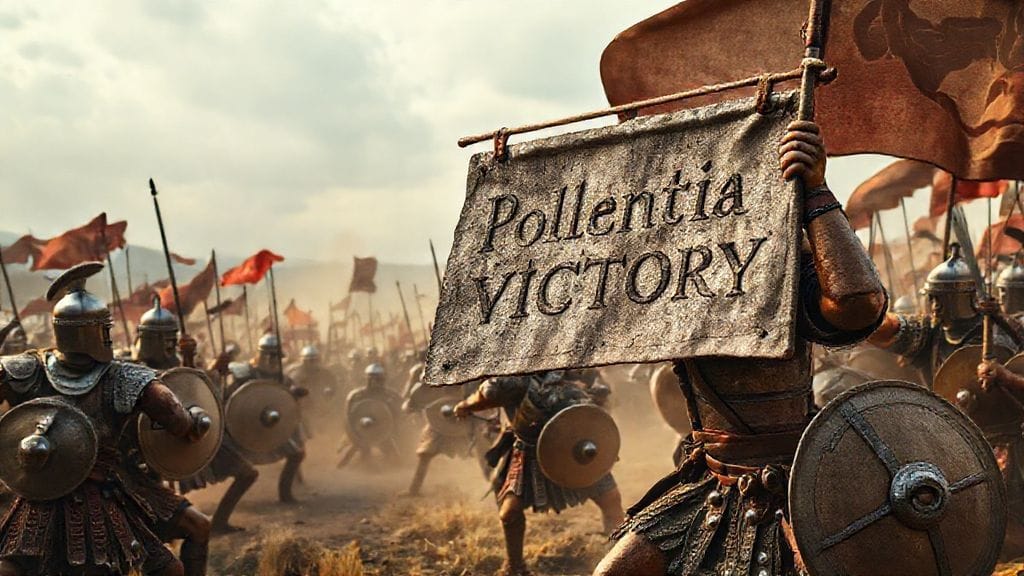
Yet the Goths fought fiercely. Shields crashed, spears shattered, and war cries pierced volcanic winds. The battle raged for hours, neither side yielding easily. In the constricted mountain passes, the chaos was total, with brutal hand-to-hand combat.
Fighting Amidst Fire and Stone: Tactical Movements and Brutality
The volcanic landscape added unique ferocity. Jagged rocks served as both obstacles and weapons. Some soldiers slipped into hidden crevices; others used the terrain to launch arrows and javelins.
According to the Byzantine chronicler Procopius, the battle was marked by equal parts heroism and horror. At one point, Gothic warriors managed to repel several Byzantine assaults, but the constant pressure and superior numbers told in the end.
The Turning Point: How the Byzantines Seized Victory
Crucially, Narses' use of cavalry flanking maneuvers overwhelmed the Gothic flanks. The Byzantines also controlled supply lines better, slowly starving the defenders of ammunition and morale.
As the sun climbed, Gothic lines broke. The death toll mounted. Teia was reportedly struck down during the chaos, his death shattering Gothic command and cohesion.
The Death of Teia and the Collapse of Ostrogothic Command
King Teia’s death was both symbolic and practical—the final severing of Gothic leadership in Italy. With their king gone, the Gothic forces fractured.
Some survivors fled into the mountains; many surrendered or were absorbed into Byzantine ranks. The Ostrogothic kingdom ceased to exist as an organized power.
Aftermath of Battle: The End of Ostrogothic Resistance
The Battle of Mons Lactarius decisively concluded the Gothic War, sealing Byzantine control over Italy. For the first time in over a century, the peninsula was nominally reunited under Roman rule—albeit under Constantinople’s distant authority.
Yet victory was pyrrhic. The war had devastated Italy’s infrastructure and population, leaving the land vulnerable to new threats and internal turmoil.
The Lombard Invasion: A New Era in Italy’s Turmoil
Barely a decade after Mons Lactarius, the Lombards invaded Italy. Their arrival shattered Byzantine dominance and introduced a new political landscape.
The Lombard Kingdom would define much of the medieval history of Italy, but none of it would happen without the catastrophic vacuum created by Gothic removal and Byzantine exhaustion.
Justinian’s Italy: The Cost of Reconquest
Justinian’s dream of restoring Rome came at immense cost: tens of thousands dead, cities razed, economies wrecked. The Gothic War—and its bloody conclusion at Mons Lactarius—exposed the limits of imperial power.
Though Italy was “reclaimed,” it was no longer the jewel of the empire but a fragmented, beleaguered province. Still, the Byzantine administration endured for nearly a century in parts of Italy.
Cultural and Social Impacts: Gothic Legacy in Italy’s Transformation
The Ostrogoths may have been militarily vanquished, but their cultural footprints lingered. Gothic law codes influenced medieval law, and intermarriage with local populations blurred identities.
Mons Lactarius thus represents not just a military defeat but a turning point in Italy’s ethno-cultural evolution, where the old Roman-Gothic synthesis dissolved into new medieval forms.
Mons Lactarius in Historical Memory and Myth
For centuries, Mons Lactarius was a symbol of lost kingdoms and heroic resistance. Medieval chroniclers often romanticized Teia, depicting him as a martyr king defending his people.
In modern times, historians reevaluate this battle not simply as an endpoint but as a testament to the resilience and tragedy of post-Roman Europe’s transformation.
Modern Archaeology Sheds Light on the Hidden Battlefield
Despite its significance, the exact site of Mons Lactarius remained elusive for ages. Recent archaeological efforts near Vesuvius have uncovered weapon fragments, fortifications, and mass graves, corroborating written accounts.
These findings have reignited interest in understanding Gothic military culture and the brutal realities of sixth-century warfare.
The Battle’s Place in the Larger Gothic War (535-554)
Mons Lactarius was the final act in a conflict that lasted nearly two decades. The Gothic War was one of the early medieval world’s defining struggles—shaping medieval Italy’s political fragmentation and signaling the waning influence of Byzantium in the West.
It epitomizes the era’s volatility, a world balancing on the knife-edge between antiquity and the Middle Ages.
Lessons from Mons Lactarius: Empire, War, and Identity
This battle teaches us about more than tactics and kings—it reveals eternal themes of human history: the clash between fading powers and emerging orders, the costs of imperial ambition, and the resilience of cultural identities even in defeat.
Mons Lactarius stands as a powerful historical mirror—reflecting the complexities of power, loyalty, and transformation.
Conclusion
The Battle of Mons Lactarius near Vesuvius was not only a military engagement but the moment where history turned a decisive page. The fall of Ostrogothic resistance marked the end of a unique chapter blending Roman and Germanic legacies, while setting the stage for Italy’s future in the hands of Byzantines and soon thereafter the Lombards.
Yet beyond death tolls and shifting borders, Mons Lactarius is a stirring human story. It is the story of leaders like Teia and Narses—of warriors fighting for survival and empire, of landscapes scarred by conflict, and peoples caught in the overwhelming currents of history.
Through the volcanic mists of southern Italy, the echoes of this battle remind us that civilizations rise and fall, but history—and human spirit—endure.
FAQs About the Battle of Mons Lactarius
Q1: What was the main cause of the Battle of Mons Lactarius?
A1: The battle stemmed from the protracted Gothic War, initiated by Emperor Justinian’s ambition to reclaim Italy from Ostrogothic control, leading to a final confrontation near Vesuvius.
Q2: Who were the principal leaders involved?
A2: King Teia led the Ostrogoths, fighting desperately to preserve his kingdom, while the Byzantine forces were commanded by General Narses, a brilliant strategist and imperial agent.
Q3: Why was Mons Lactarius chosen as the battlefield?
A3: The natural defensive terrain near Mount Vesuvius offered a strategic advantage to the numerically weaker Goths hoping to hold off Byzantine advances.
Q4: What were the consequences of the Gothic defeat at Mons Lactarius?
A4: The defeat ended organized Ostrogothic resistance, completing Byzantine reconquest of Italy but also laying groundwork for later Lombard invasions due to the region’s destabilization.
Q5: How did this battle affect the local population?
A5: The continuous warfare devastated Italy’s urban centers and countryside, leading to population decline, economic disruption, and cultural changes.
Q6: How is the Battle of Mons Lactarius remembered today?
A6: While not as famous as other ancient battles, it holds significant historical value as the final Gothic stand in Italy and features prominently in studies of late antique warfare.
Q7: What does Mons Lactarius teach about Byzantine and Gothic relations?
A7: It illustrates deep cultural, political, and military tensions between a fading Gothic world and the determined Byzantine Empire seeking to reassert control.
Q8: Are there archaeological remains related to the battle?
A8: Yes, recent excavations near Vesuvius have uncovered artifacts such as weapons and fortifications that offer tangible evidence of the battle’s violent occurrence.