Table of Contents
- The Dawn of a Crusade: Europe’s Call to Arms
- A Continent on Edge: Political and Religious Tensions in Late 14th Century Europe
- The Ottoman Ascendancy: A New Power on the Danube
- The Crusading Forces Assemble: Nobles, Knights, and Hope
- The March to Nicopolis: Dreams of Glory and Devotion
- The Battlefield Landscape: The Narrow Plains above the Danube
- September 25, 1396, Morning: The Clash Begins
- The Charge of the French Knights: Valor Meets Misdirection
- The Ottoman Response: Strategy and Discipline in Action
- The Collapse of the Crusader Front: Chaos and Despair
- The Aftermath of the Battle: Massacre and Captivity
- Political Reverberations Across Europe: Shockwaves from Nicopolis
- The Ottoman Empire Consolidates Power: The Road to Empire
- Chivalry Questioned: The Death of Medieval Knightly Ideals
- The Legacy of Nicopolis in European Memory and Myth
- Lessons Learned and Forgotten: The Battle’s Place in History
- The Battle in Art and Literature: Romanticizing Defeat
- Why Nicopolis Matters Today: Reflections on Conflict and Faith
1. The Dawn of a Crusade: Europe’s Call to Arms
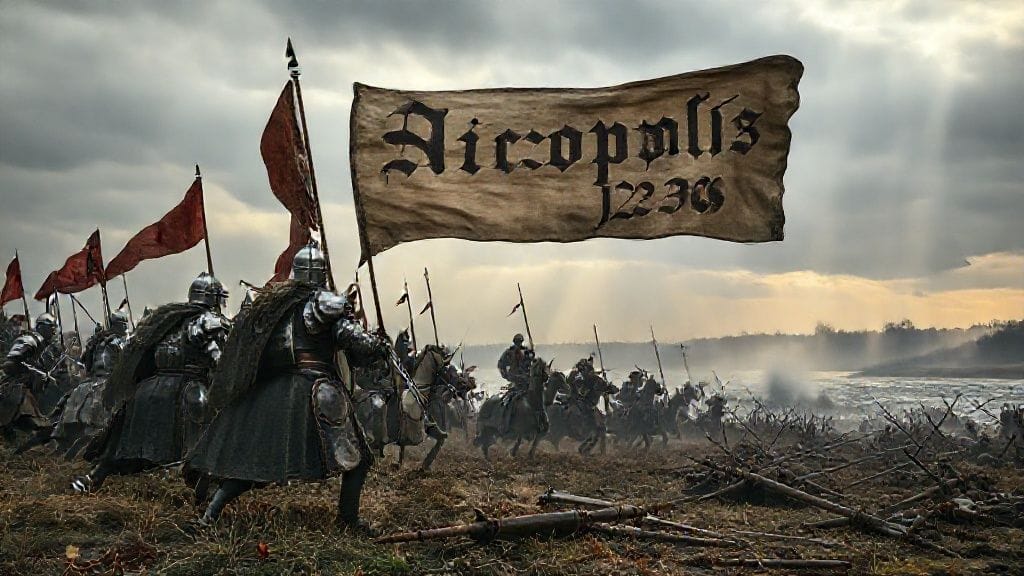
It was a brisk morning on the banks of the Danube, near the city of Nicopolis, where the air hung heavy with anticipation, dread, and the sharp scent of steel. Across the plains stretched a host of armored knights, banners fluttering defiantly under the piercing September sun. The year was 1396, and Europe was bracing itself for a decisive face-off against an Ottoman tide that seemed unstoppable. What was supposed to be a noble expedition, a righteous crusade to defend Christianity, would soon turn into a devastating lesson in hubris and harsh new realities.
This was no ordinary battle—it was the last great crusade of the Middle Ages, a moment where the old world’s ideals clashed brutal and irrevocably with the relentless rise of a new empire. The Battle of Nicopolis etched itself into the annals of history, not only as a military catastrophe but as a profound marker of the changing order between East and West.
2. A Continent on Edge: Political and Religious Tensions in Late 14th Century Europe
By the late 14th century, Europe was fraught with fragmentation and fragile alliances. The Hundred Years’ War had exhausted France and England, while the Holy Roman Empire remained a labyrinth of competing principalities. The papacy’s influence waned, challenged both by internal corruption and the growing assertiveness of burgeoning nation-states.
Religious fervor still burned brightly, however, especially in the face of the Ottoman Empire’s rapid and unsettling advances into the Balkans. The fall of Constantinople was still decades away, but the Ottomans had already annexed important Christian strongholds and threatened Vienna’s gates, fueling widespread alarm. In many courts, hope for reclaiming lost lands and halting the Ottoman tide merged with a rekindling of crusading zeal—a mixture of piety, politics, and prestige.
The call for a new crusade was therefore both a spiritual rallying cry and a desperate geopolitical gambit. Yet underneath the surface, competing ambitions and divided leadership foreshadowed the difficulties that awaited the armies gathering at Nicopolis.
3. The Ottoman Ascendancy: A New Power on the Danube
The Ottoman Empire, under Sultan Bayezid I—known as Bayezid the Thunderbolt—was a formidable force. Since the mid-14th century, the Ottomans had transformed from a regional power in Anatolia to a vast empire stretching across the Balkans.
Their military prowess lay not only in their disciplined infantry and elite Janissaries but in Bayezid’s strategic genius. The Ottomans excelled in rapid movement, flexible tactics, and the effective integration of diverse troops. By 1396, Bayezid had established a near-continuous front along the Danube, poised to confront any European coalition.
Despite European fears, the Ottomans’ confidence was high. They had repeatedly outmaneuvered fragmented Christian states, and their leaders were acutely aware that the upcoming battle would be pivotal to securing their dominance in Southeast Europe.
4. The Crusading Forces Assemble: Nobles, Knights, and Hope
In response to Pope Boniface IX’s call, a coalition of European nobles gathered, drawn by a mixture of devotion, honor, and personal ambition. King Sigismund of Hungary took a central role, leading a diverse force comprised of Hungarian, French, German, and Wallachian knights, among others. It was a cavalcade of chivalry, glittering mail, and ancient vows.
But beneath the surface of glittering armor lay fractures. Mistrust brewed among commanders. The French knights, led by the valiant but impetuous John of Nevers, carried their pride fiercely and distrusted their Hungarian allies. The army’s chain of command was tenuous, and their logistical preparations uneven.
Still, the rhetoric of a united Christendom fighting against a common foe stirred the hearts of many. Letters, sermons, and songs galvanized the idea that the battle at Nicopolis would be a glorious crusade, a chance to stem the Ottoman tide and reclaim Christian honor.
5. The March to Nicopolis: Dreams of Glory and Devotion
The march north towards Nicopolis was a campaign filled with hopeful anticipation. Across rivers, forests, and villages, Crusader banners flew high. Local populations in the Balkans, weary of Ottoman rule and oppression, looked hopefully to this force as liberators.
Yet, as they approached the city, the logistical realities settled in. Supply lines were stretched, horses tired, and commanders grew uneasy. Still, the notion of an imminent battle against a “heathen” foe spurred morale. The knights sharpened their blades, priests offered last rites and blessings, and the campfires flickered with prayers and strategizing.
Dreams of victory mingled with the intuition that the day would be unforgiving.
6. The Battlefield Landscape: The Narrow Plains above the Danube
The chosen battleground was the rolling plains just above the Danube, near Nicopolis—a strategic location offering room for cavalry charges but also dangerous, narrow approaches. The terrain offered both opportunity and peril; its openness was suited to the heavily armored knights, but its narrowness could also become a deadly trap.
Bayezid’s forces had prepared carefully, using terrain and intelligence to their advantage. They positioned archers and infantry to disrupt the Crusader charge, and their cavalry was ready to exploit any breach.
Both sides understood that this confrontation would be decisive, and the landscape itself seemed to hold its breath before the storm.
7. September 25, 1396, Morning: The Clash Begins
As dawn broke on September 25, a tense silence settled. Then the battle erupted in a thunder of hooves and clanging steel. The Crusaders advanced boldly, seeking to use the shock of their heavy cavalry to shatter Ottoman lines quickly.
The French knights, in particular, led a fierce charge, their lances leveled and standards flying. The initial moments saw swift cavalry engagements and desperate skirmishes among infantry units.
But it soon became clear that the Crusaders were facing a well-prepared and tactically sophisticated enemy.
8. The Charge of the French Knights: Valor Meets Misdirection
The French knights’ charge was a spectacle of raw martial valor—and tragic miscalculation. Led by John of Nevers, they aimed to break the Ottoman army with a singular, decisive blow.
However, their impetuosity meant that they surged ahead without proper coordination with the rest of the army. Ignoring warnings and the evolving battlefield situation, they overextended into a trap.
Ottoman archers rained arrows upon them, while nimble Turkish horse archers harried their flanks. The once unbreakable knightly formation began to fragment under pressure and exhaustion.
9. The Ottoman Response: Strategy and Discipline in Action
Bayezid’s army displayed remarkable discipline and strategic mastery. His Janissaries held firm, engaging in steady volleys of arrows and missiles, while elite cavalry units executed rapid cavalry counterattacks.
The Ottomans exploited every moment of French disarray, encircling and wearing down the Crusaders. Their familiarity with the terrain and superior coordination turned the tide against the heavy but unwieldy Europeans.
It was a dramatic reversal: the Crusaders’ chivalric confidence clashed headlong with the Ottomans' modern military efficiency.
10. The Collapse of the Crusader Front: Chaos and Despair
As the day wore on, the Crusader army’s cohesion unraveled. Panic rippled through the ranks. Knights fell one after another, banners were captured or abandoned, and cries of anguish pierced the smoke-filled air.
King Sigismund narrowly escaped capture, while many others were taken prisoner or slaughtered. The battlefield was littered with the bodies of the fallen—a tragic testament to hubris and underestimation.
The defeat was not merely military but existential: it shattered the dream of a unified Christian defense and exposed the vulnerability of medieval chivalric warfare.
11. The Aftermath of the Battle: Massacre and Captivity
The Ottomans exacted a harsh reckoning. Many prisoners faced execution, some were ransomed, and others enslaved. The massacre that followed left a permanent scar in European memory—a brutal lesson in the unforgiving nature of this new conflict.
Reports tell of grim executions, including the ransacking of captured nobles, and the defiant suicides of some who refused slavery. Yet Bayezid’s clemency towards certain key captives hinted at a calculated strategy of power and diplomacy.
The human cost was staggering and echoed far beyond the Danube’s banks.
12. Political Reverberations Across Europe: Shockwaves from Nicopolis
News of the defeat spread swiftly, sending waves of shock and mourning through Europe. The loss undermined the credibility of crusading efforts, weakened Hungary’s regional standing, and rattled France and England still embroiled in their own wars.
The battle exposed fractures in Christian unity and forced a reevaluation of military strategy. The papacy’s inability to muster effective support tarnished its moral authority.
Nicopolis marked a turning point where Europeans had to face the rising Ottoman threat in new, pragmatic ways.
13. The Ottoman Empire Consolidates Power: The Road to Empire
For the Ottomans, Nicopolis was a grand triumph. It secured their hold on the Balkans and opened the path for further expansion into Europe.
Bayezid I’s reign saw the consolidation of an empire that blended military innovation, administrative sophistication, and religious zeal. The victory boosted Ottoman confidence and reshaped European diplomacy for decades.
Nicopolis was not just a battle won—it was a milestone in the Ottoman rise to imperial dominance.
14. Chivalry Questioned: The Death of Medieval Knightly Ideals
The battle symbolized more than military defeat; it questioned the relevance of medieval chivalry itself. The heavily armored knights, once invincible and revered, had been outmaneuvered by a more modern, flexible military order.
The ideals of honor, glory, and individual valor collided with the realities of evolving warfare. This moment presaged the slow decline of knightly dominance and the rise of professional armies in Europe.
It was an epochal shift etched in blood and broken swords.
15. The Legacy of Nicopolis in European Memory and Myth
Nicopolis entered European history as a symbol of tragic defeat but also of heroic resistance. Chronicles and ballads memorialized the fallen knights, weaving their story into the mythic fabric of Christendom.
Yet the memory was ambivalent: heroism mingled with cautionary tale, pride with regret. Nicopolis became a somber reminder of the dangers of division and arrogance in the face of existential threat.
Its legacy endures in historical consciousness, art, and literature as a fulcrum of medieval and early modern change.
16. Lessons Learned and Forgotten: The Battle’s Place in History
Historians debate the lessons of Nicopolis: the necessity of unity, the evolution of warfare, the limits of religious zeal, and the rise of emerging powers.
Some argue that Europe failed to fully grasp these lessons, leading to centuries of struggle against the Ottomans. Others highlight how Nicopolis foreshadowed the modern encounter between Western Christendom and the Ottoman Empire.
Whatever the interpretation, the battle remains a key episode in understanding the shifting tides of medieval history.
17. The Battle in Art and Literature: Romanticizing Defeat
Over time, Nicopolis inspired artists and writers fascinated by its drama and pathos. Tapestries, poems, and later historical novels captured the scene—glittering armor gleaming against a crimson sunset, noble knights falling with honor.
This romanticization helped preserve the memory but also sometimes obscured the complexity of political failures and strategic miscalculations.
Yet, it is precisely this blend of grandeur and tragedy that has ensured Nicopolis’ place in cultural imagination.
18. Why Nicopolis Matters Today: Reflections on Conflict and Faith
More than six centuries later, the Battle of Nicopolis still resonates. It speaks to timeless themes: the clash of civilizations, the consequences of disunity, the evolution of warfare, and the human cost of ideological conflict.
Its story challenges us to look beyond simple narratives of heroism or villainy, urging a deeper understanding of history’s complexities.
Nicopolis reminds us that history is not merely past but a living dialogue with our present and future.
Conclusion
The Battle of Nicopolis stands as a somber monument in the tapestry of history—a moment when medieval Europe’s crusading dreams collided catastrophically with the emerging Ottoman reality. The clash was not just a military defeat but a symbol of a world in transition, of ideals confronted by raw power and changing tactics.
Behind the steel and blood lay stories of hopeful ambition, profound bravery, tragic misjudgment, and irrevocable loss. The knights who rode to Nicopolis carried the weight of centuries of chivalry, faith, and identity—but the plains whispered a harsh truth: valor alone could not reverse the currents of history.
Yet from this tragedy arose lessons, legacies, and reflections that continue to inspire and warn. Nicopolis teaches us about the fragility of alliances, the perils of underestimating one’s adversary, and the enduring human spirit that, even in defeat, reaches toward hope and meaning.
In remembering Nicopolis, we glimpse a world at a crossroads, and perhaps find our own place in the long, unfolding story of human struggle and resilience.
FAQs
Q1: What caused the Battle of Nicopolis?
The battle was triggered by a call for a crusade to halt Ottoman expansion into Europe. Rising fear of Ottoman control over the Balkans and desire to defend Christian lands united European nobles, though political rivalry and fractured leadership plagued the Crusader camp.
Q2: Who were the key figures at Nicopolis?
King Sigismund of Hungary led the Crusader forces, with French knights under John of Nevers playing a notable role. Sultan Bayezid I commanded the Ottoman army, employing superior tactics and discipline.
Q3: Why did the Crusaders lose at Nicopolis?
Poor coordination, overconfidence—especially among the French knights—and underestimation of Ottoman military tactics led to a decisive defeat. The Crusaders failed to unite their forces effectively and fell into Ottoman traps.
Q4: What were the broader consequences of the battle?
Nicopolis accelerated Ottoman domination in Southeast Europe, weakened Christian alliances, and challenged the viability of traditional chivalric warfare. It reshaped European diplomacy and military strategy for decades.
Q5: How did the battle affect medieval knighthood?
The defeat exposed the limitations of armored cavalry relying on straightforward charges, signaling a decline in medieval knightly dominance as new military forms took precedence.
Q6: Is Nicopolis remembered in European culture?
Yes, through chronicles, poems, and artwork, the battle became a symbol of heroic but tragic defeat, influencing European cultural memory about the dangers of division and pride.
Q7: What lessons does the Battle of Nicopolis teach today?
It highlights the importance of unity, adaptability in warfare, and nuanced understanding of cultural and political conflict. Its story resonates as a caution against underestimating change and adversaries.
Q8: Where can I learn more about the Battle of Nicopolis?
The Wikipedia page offers detailed information and resources about the battle, its context, and aftermath.

