Table of Contents
- The Dawn Before the Storm: Persia on the Eve of Nihawand
- Ancient Empires in Collision: The Sassanian Kingdom and the Rising Caliphate
- The Caliphate’s Conquest Ambitions: A New Power on the Horizon
- Prelude to Conflict: The Campaigns That Led to Nihawand
- The Battlefield of Nihawand: Geography and Strategic Importance
- Leadership in the Crucible: Key Commanders and Their Legacies
- The Clash Unfolds: Tactical Movements and Combat Chronicles
- Turning Points and Decisive Moments in the Battle
- The Role of Cavalry, Infantry, and Siege Warfare
- The Collapse of Sassanian Resistance: From Defiance to Defeat
- Aftermath on the Battlefield: Casualties, Captives, and Chaos
- The Fall of an Empire: Political Reverberations Across Persia
- Religious and Cultural Consequences: From Zoroastrian Stronghold to Islamic Expansion
- The Battle's Place in Islamic Conquest Narratives: “Victory of Victories”
- Legacy and Memory: Nihawand in Historical and Popular Imagination
- Lessons from Nihawand: Military and Strategic Insights
- The Ripple Effects: How Nihawand Shaped Medieval Middle Eastern History
- Contested Histories: Perspectives from Persian, Arab, and Western Sources
- The Battle in Art and Literature: Myth, Memory, and Monument
- Conclusion: Nihawand, A Turning Point in World History
- FAQs: Answering Key Questions on the Battle of Nihawand
- External Resource: Further Reading on Wikipedia
- Internal Link: Explore More at History Sphere
The ancient plains near the town of Nihawand, nestled in the heart of Iran’s rugged landscape, bore witness in the year 642 to what many historians would herald as the “Victory of Victories.” As the sun rose over this contested land, a storm of iron and faith was about to erupt—a climax to a brutal confrontation between the Sassanian Empire, the last bastion of Persian imperial grandeur, and the rapidly expanding Arab Muslim forces eager to carve their place in history. The Battle of Nihawand would determine not just the fate of a dynasty, but the spiritual and political architecture of the Middle East for centuries to come.
1. The Dawn Before the Storm: Persia on the Eve of Nihawand
Imagine Iran during the first decades of the 7th century—a land steeped in millennia of imperial innovation, Zoroastrian tradition, and martial pride. The Sassanian Empire, stretching from the Tigris to the Indus, was in a twilight struggle against internal decay and external pressure. The once-mighty royal houses, nobility, and priesthood balanced fraying alliances and resource shortages, even as whispers of a new adversary from the Arabian Peninsula swept across their borders.
Yet, despite signs of weakness, the Sassanians viewed their empire as the enduring guardian of Persian civilization. The stage was set for a culminating battle that would echo across history as a final desperate stand.
2. Ancient Empires in Collision: The Sassanian Kingdom and the Rising Caliphate
The Sassanian Empire, heir to the Achaemenid and Parthian legacies, was no stranger to warfare. Its legions had for centuries clashed with the Eastern Roman (Byzantine) Empire, defending fertile lands and the pride of a resurgent Persian identity. But the 7th century brought a novel challenge: the Arab-Muslim armies galvanized by the recent establishment of Islam and united under the banner of the Rashidun Caliphate.
This new power combined religious zeal with remarkable military mobility, forging a force that would soon sweep across the Arabian deserts into the Persian frontier. The collision of these two worlds—orthodox imperial tradition and dynamic religious revolution—was as much ideological as martial.
3. The Caliphate’s Conquest Ambitions: A New Power on the Horizon
Following the death of Prophet Muhammad in 632, the Rashidun Caliphate found itself steered by capable leaders like Abu Bakr and Umar ibn al-Khattab, whose vision was nothing less than the unification of the Arabian Peninsula and beyond under Islamic rule. The conquest of Persia was no mere territorial grab; it was presented as a holy mission, a divine mandate to spread the faith and create a just order.
Arab armies, light on armor but heavy with conviction and led by skillful generals, had already toppled Sassanian garrisons at key locations. The Battle of Qadisiyyah in 636 had shattered many illusions about Persian invincibility. Yet, the empire still clung fiercely to its heartland.
4. Prelude to Conflict: The Campaigns That Led to Nihawand
After the devastating defeat at Qadisiyyah, the Sassanian ruler Yazdegerd III retreated eastward, rallying scattered forces. The war was far from over. The Sasanians sought to marshal resources, levy new troops, and reclaim lost prestige. Meanwhile, the Arabs pressed onwards, sensing the unraveling of Persian authority.
The campaigns leading to Nihawand were marked by calculated advances, defections, and skirmishes. Both sides understood that a decisive engagement was inevitable—a battle that would either stop Islamic expansion or cement it forever.
5. The Battlefield of Nihawand: Geography and Strategic Importance
Nihawand was more than a place; it was a strategic chokepoint nestled in western Iran's mountainous terrain. The region’s rugged hills offered defensive advantages but also challenged deeply entrenched armies.
For the Sasanians, defending Nihawand meant protecting the western frontier and safeguarding the empire’s core. For the Arabs, victory here would open the floodgates to the Persian plateau. The landscape set the stage for a dramatic confrontation—where strategy, terrain, and morale would intertwine.
6. Leadership in the Crucible: Key Commanders and Their Legacies
On the Sassanian side, the general Farrukhzad and other noble leaders represented the twilight of an era. They carried the weight of defending an empire’s honor against overwhelming odds.
Opposing them stood the formidable Arab commander Nu'man ibn Muqarrin, a veteran of many campaigns, revered for his tactical acumen and leadership under siege.
Their decisions—on where to position troops, when to strike, and how to respond to the evolving battle—shaped not only the fate of the day but the history that followed.
7. The Clash Unfolds: Tactical Movements and Combat Chronicles
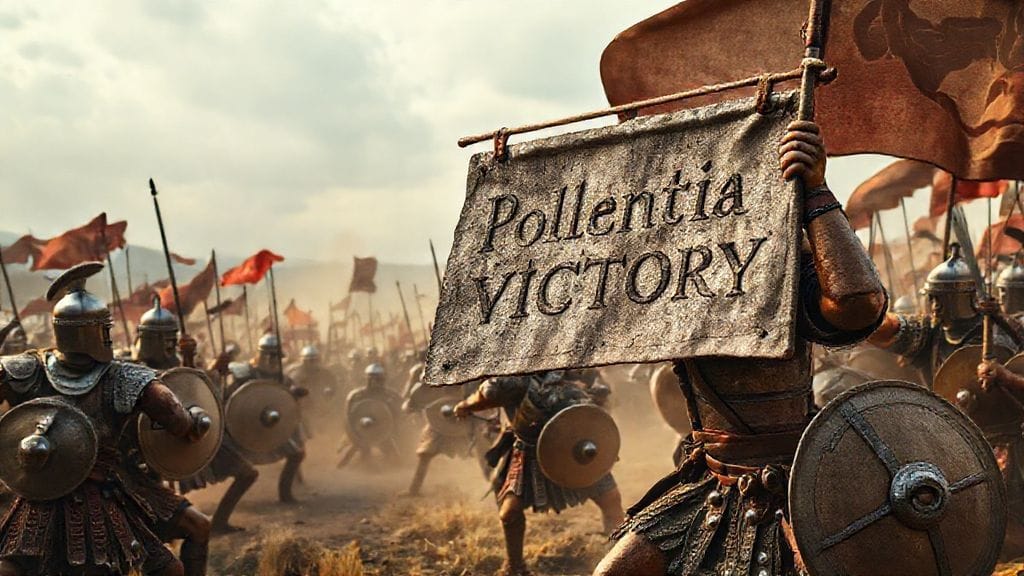
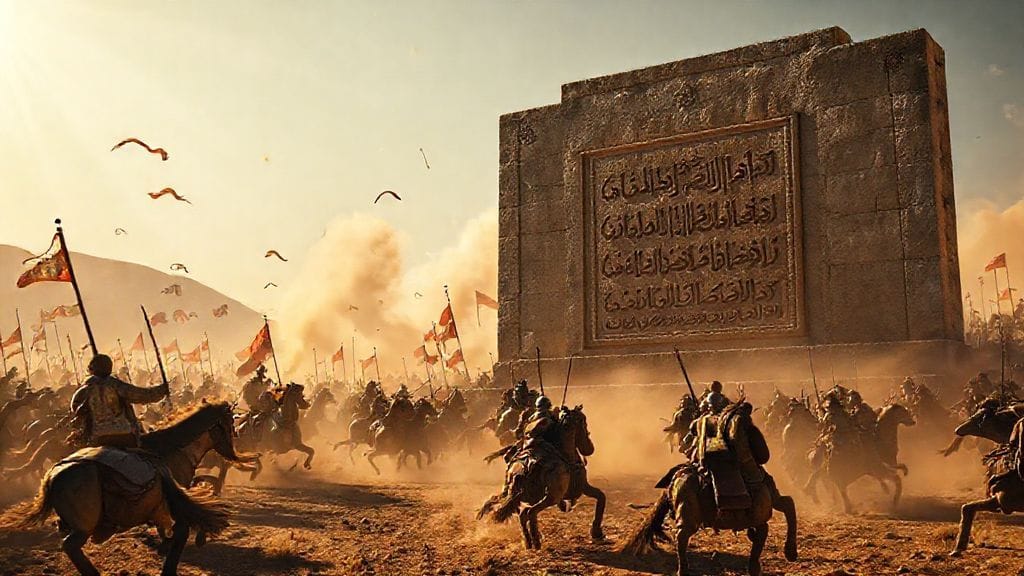
The battle commenced with cautious probing and maneuvers, each side testing the other’s strengths. Initial skirmishes gave way to full-mounted charges and fiercely contested infantry pushes. The heavy cavalry of the Sassanians attempted to break the Arab lines, but the Muslims’ use of light cavalry, archery, and disciplined formations thwarted these efforts.
As the day wore on, fierce hand-to-hand combat erupted, the ground soaked with blood and soaked further with determination.
8. Turning Points and Decisive Moments in the Battle
The pivotal moment came when the Arab commanders executed a feigned retreat, drawing the Sassanian forces out from their strong positions into less favorable terrain. This classic tactical ploy confused and exhausted the Persian troops.
When the Arabs counterattacked with renewed vigor, the Sassanian lines fractured. Panic rippled through the ranks, and order collapsed into chaos. It was a moment where centuries of imperial might met the unstoppable momentum of a new era.
9. The Role of Cavalry, Infantry, and Siege Warfare
Sassanian forces had relied heavily on their renowned cavalry—armored horsemen capable of devastating charges. However, their overreliance without adequate infantry support became a vulnerable point against the nimble and versatile Arab soldiers.
The Muslim forces exploited speed and flexibility, applying pressure at critical points. Their ability to adapt to the battlefield, using both archers on camels and swift horsemen, was a crucial element that contrasted with the more rigid Sassanian formations.
10. The Collapse of Sassanian Resistance: From Defiance to Defeat
As dusk approached, the Sassanian army disintegrated into fleeing bands. Even their noblest warriors could not restore the shattered morale. Emperor Yazdegerd III was forced into full retreat, effectively signaling the end of organized resistance.
The battle was not just military defeat—it was the symbolic fall of an empire that had thrived for over four centuries. Persia’s proud tradition faced an irrevocable break.
11. Aftermath on the Battlefield: Casualties, Captives, and Chaos
Accounts vary, but contemporary sources suggest immense casualties on both sides, with Persian losses particularly catastrophic. The battlefield became a grim tableau of the costs of empire and faith clashing.
Prisoners were taken, many nobles perished or were forced into exile, and the land itself seemed to mourn the loss of its sovereignty.
12. The Fall of an Empire: Political Reverberations Across Persia
With Nihawand’s defeat, the Sassanian Empire teetered on the edge of collapse. Governance structures crumbled, and local rulers scrambled to negotiate terms with the Arabs or vanish into obscurity.
This defeat accelerated the Arab Muslim conquest of Persia, eventually leading to the province’s incorporation into the growing Islamic world. The old aristocratic order was dismantled, making way for new administrative and social realities.
13. Religious and Cultural Consequences: From Zoroastrian Stronghold to Islamic Expansion
The Sassanian state had long been a bastion of Zoroastrianism, the ancient Iranian religion. Nihawand’s fall initiated the gradual but inexorable spread of Islam into Persia—transforming religious life, customs, and cultural identities.
Over decades, Persian traditions were woven into Islamic civilization, producing a rich hybrid that would influence art, science, and politics across the Muslim world.
14. The Battle's Place in Islamic Conquest Narratives: “Victory of Victories”
Arab historians commemorated Nihawand as the “Fath al-Nihawand,” the “Victory of Victories.” It was depicted as a divine triumph for Islam and a pivotal point in fulfilling divine destiny.
The battle became a cornerstone in Islamic historiography, elevating the Rashidun Caliphate’s legitimacy and inspiring later generations.
15. Legacy and Memory: Nihawand in Historical and Popular Imagination
Though shrouded in the mists of time, Nihawand’s legacy endures in both Persian and Arab traditions. Persian literature often laments the loss and tragedy, while Islamic texts celebrate the conquest.
Archaeological interest and modern historiography have sought to reconstruct the battle, balancing myth, memory, and material evidence.
16. Lessons from Nihawand: Military and Strategic Insights
Military scholars analyze Nihawand for its lessons in adaptability, leadership, and the dangers of complacency. The Arabs’ innovative use of maneuver warfare and psychological tactics exemplify the evolution of warfare in the post-classical world.
The battle also warns of the fragility of even the mightiest empires when confronted with internal decay and external innovation.
17. The Ripple Effects: How Nihawand Shaped Medieval Middle Eastern History
Beyond Persia, Nihawand’s victory reshaped regional politics—altering Byzantine calculations, encouraging further Arab expansion, and setting the stage for the later Umayyad and Abbasid caliphates that would dominate the medieval Middle East.
The incorporation of Persia enriched Islamic civilization, merging Greek, Persian, and Arab knowledge systems into a golden age.
18. Contested Histories: Perspectives from Persian, Arab, and Western Sources
History is often a dialogue between narrators. Persian chronicles mourn a lost world, Arab sources eulogize triumph, and later Western historians strive for balance.
Differences in numbers, motives, and interpretations abound, illustrating how history itself can be a battlefield of memory.
19. The Battle in Art and Literature: Myth, Memory, and Monument
Across centuries, Nihawand inspired poets, painters, and chroniclers. Its themes of heroism, loss, and transformation resonate in Persian epic poetry and Islamic historiography alike.
Though no grand monuments remain at the site, its story lives on in cultural memory, a somber reminder of the costs of epochal change.
20. Conclusion: Nihawand, A Turning Point in World History
The Battle of Nihawand was far more than a clash of armies; it was a crossroads of civilizations, an intersection where ancient empires met rising powers. Its outcome reshaped the cultural, religious, and political map of the Middle East and beyond.
From the dust and blood of that fateful day emerged a new world—complex, hybrid, and vibrant—where Persian and Islamic identities intertwined to craft a legacy that still echoes through time.
Conclusion
In the annals of history, some battles stand as milestones marking the birth or demise of epochs. Nihawand is one such event. It embodied the relentless momentum of change, the collision of faith and empire, and the fragile human hopes tangled in the sweep of history. Studying this battle invites us not only to understand a distant past but to reflect on the enduring dynamics of power, identity, and resilience that shape our world today.
FAQs
1. What were the main causes leading to the Battle of Nihawand?
The battle was a culmination of the Arab Muslim expansion following the death of Prophet Muhammad and the decline of the Sassanian Empire due to internal strife, prior military losses, and difficulty in regrouping effectively against the Rashidun Caliphate’s forces.
2. Who were the key commanders at Nihawand, and what roles did they play?
On the Sassanian side, commanders like Farrukhzad led the defense, while the Arabs were commanded by Nu'man ibn Muqarrin, whose tactical skill and leadership were critical in orchestrating the decisive maneuvers that won the battle.
3. How did the terrain influence the battle's outcome?
Nihawand’s rugged terrain favored defensive positions, but the Arabs’ successful use of feigned retreats and mobile cavalry negated these advantages, drawing Sassanian forces into vulnerable positions off the high ground.
4. What were the immediate political consequences of the battle?
The defeat effectively ended organized Sassanian resistance, accelerated Arab conquest of Persia, and facilitated the region’s integration into the Islamic Caliphate, altering political power dynamics for centuries.
5. How did Nihawand affect religious demographics in Persia?
The battle paved the way for the gradual Islamization of Persia—transitioning the region from Zoroastrian dominance to Islamic faith, profoundly influencing culture, law, and society.
6. Why is Nihawand called the “Victory of Victories” in Islamic tradition?
Because it decisively broke the last major Sassanian army and paved the way for Muslim control of Persia, the victory was seen as divinely sanctioned and pivotal in the expansion of Islam.
7. How is the Battle of Nihawand remembered differently in Persian and Arab histories?
Persian narratives often view it as a tragic loss marking the fall of their empire, while Arab sources celebrate it as a glorious triumph granted by God, reflecting contrasting perspectives shaped by culture and identity.
8. What is the significance of Nihawand in military history?
It is studied for its display of tactical innovation, the use of psychological warfare, and lessons about the impact of leadership and morale in determining the fate of empires.