Table of Contents
- The Dawn Before the Storm: Anatolia in the Early 14th Century
- Byzantine Empire’s Waning Glory: Seeds of Decline
- The Rise of the Ottoman Beylik: Osman I and His Heirs
- Anatolia’s Shifting Power Balance: A Precarious Landscape
- The Road to Pelekanon: Strategic Stakes and Initial Clashes
- June 10, 1329: The Battle Unfolds on the Fields of Anatolia
- Commanders and Warriors: Byzantine Leadership vs Ottoman Strategy
- The Clash of Armies: Tactics, Terrain, and Turning Points
- The Aftermath: Retreat, Losses, and the Fracturing of Byzantine Authority
- The Battle’s Psychological Impact: Fear and Hope in Equal Measure
- Ottoman Consolidation: How Pelekanon Foreshadowed Greater Conquests
- Byzantine Internal Struggles: Politics and Desperation Post-Pelekanon
- The Role of Anatolian Local Powers and Mercenaries
- Cultural and Religious Undertones: Christian Byzantines vs Muslim Ottomans
- The Legacy of Pelekanon: A Historical Turning Point Remembered
- Lessons from Pelekanon: Military, Political, and Symbolic
- Pelekanon in Contemporary Chronicles and Later Historiography
- The Battle’s Place in Ottoman Expansion Narratives
- The Symbolism of Anatolia’s Conquest in Later Ottoman Identity
- Remembrance and Memory: Pelekanon’s Echo in Modern Histories
- Conclusion: The Final Blow that Reshaped Anatolia’s Destiny
- FAQs
- External Resource
- Internal Link
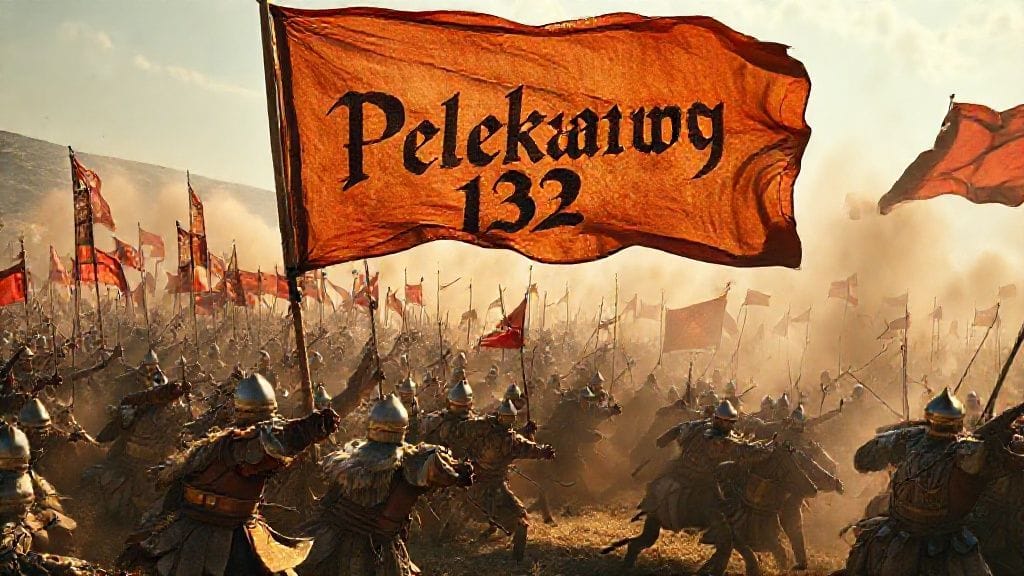
On a scorching June morning in 1329, the fields near Pelekanon in Anatolia bore witness to a confrontation that would irrevocably alter the fate of an empire and the course of history. Beneath an unrelenting sun, two worlds—the twilight Christian Byzantine Empire and the ascendant Muslim Ottoman Beylik—collided in a struggle for survival and supremacy. The earth itself seemed to tremble beneath the thunder of hooves and the clash of steel, as armies faced not merely each other, but the weight of centuries bearing down upon their shoulders. This was the Battle of Pelekanon—a moment woven into the fabric of a changing era, where the old world was forced to relinquish its grasp, and the new plunged toward ascendancy.
The Dawn Before the Storm: Anatolia in the Early 14th Century
Anatolia, the vast peninsula bridging Europe and Asia, had once been the thriving heart of Roman and Byzantine civilization. Yet by the early fourteenth century, this land was a patchwork quilt of fragmented powers and contested territories. The once-unified Byzantine Empire was now a shadow of itself, its dominion slashed by internal strife, foreign invasions, and the relentless pressure of rising Turkish beyliks that cropped up amid the ashes of the Seljuk Sultanate of Rum.
To the west, the Latin states still clung tenuously to footholds established during the Fourth Crusade’s partitioning of Byzantine lands. To the east and south, numerous Turkish principalities competed viciously for influence, with the Ottomans emerging as the most formidable among them. Anatolia was a chessboard of power plays, espionage, and shifting allegiances—a volatile landscape primed for conflict.
Byzantine Empire’s Waning Glory: Seeds of Decline
The Byzantine Empire in the early 1300s was a realm haunted by memories of past grandeur and the sharp sting of ongoing decline. Reduced largely to Constantinople and scattered territories, its splendor faded beneath a veneer of political chaos and economic exhaustion. The formidable armies and bureaucratic prowess of the Komnenian and Palaiologan eras had withered, while a series of civil wars and ineffective emperors eroded trust at home and respect abroad.
Emperor Andronikos III Palaiologos, who ruled from 1328 until his death in 1341, inherited a fractured empire desperate to hold on to its remaining dominions. Despite earnest attempts to revitalize the military and administrative apparatus, the Byzantines faced threats on multiple fronts, chief among them the relentless advance of Turkish forces hungry to carve their own empire from Byzantine lands.
The Rise of the Ottoman Beylik: Osman I and His Heirs
While the Byzantine world grappled with internal wounds, an ambitious new power was taking shape in northwest Anatolia. Founded by Osman I around the start of the 14th century, the Ottoman Beylik capitalized on the political vacuums left by fractured Seljuk and declining Byzantine authorities. Osman’s leadership combined tribal prowess, strategic marriages, and deft diplomacy, setting the stage for his successors to expand steadily.
By 1329, under Orhan Gazi, Osman’s son and successor, the Ottomans were poised to cross from mere beylik into empire. Their forces, seasoned by raiding and battlefield experience against rival Turkish clans and Byzantines alike, were no longer fighting for survival but for dominion, with Constantinople—and what remained of Byzantine Anatolia—in their sights.
Anatolia’s Shifting Power Balance: A Precarious Landscape
The stakes of confronting the rising Ottoman power were clear to the Byzantines. Anatolia was no longer a secure hinterland but a contested zone where control meant political survival. The Byzantine strategy involved trying to halt or at least slow Ottoman advances by marshaling remaining forces and seeking alliances. But with limited manpower and fractured resources, this was a Herculean challenge.
The Ottomans, aware of Byzantine weakness, grew bolder year by year. Their cavalry was feared for lightning raids; their infantry, hardy and disciplined. And behind the fighting men, a network of intelligence, local support, and strategic vision positioned them as more than just conquerors—they were future empire builders.
The Road to Pelekanon: Strategic Stakes and Initial Clashes
In the spring of 1329, Byzantine commanders assembled their forces to meet the Ottoman challenge head-on near the village of Pelekanon, close to the shore of the Sea of Marmara. The Byzantines sought to regain the initiative, hoping that a decisive victory over the Ottomans would stabilize their eastern front and prevent further incursions into their Anatolian heartlands.
Orhan’s army had occupied and fortified key positions, threatening to sever Byzantine control over remaining routes linking Constantinople to Asia Minor. The Byzantines, including notable generals of noble descent and veteran soldiers, recognized the severe risk—their empire hung in the balance.
June 10, 1329: The Battle Unfolds on the Fields of Anatolia
As dawn broke on June 10, the armies arrayed themselves with determination. The Byzantines formed a traditional battle line, heavily armored infantry supported by cavalry, facing the agile and tactically flexible Ottoman forces. The terrain, a mixture of low hills and gentle plains, favored the Ottomans’ mobility.
The battle opened with probing attacks. Byzantine archers attempted to disrupt the Ottoman advance, while cavalry units sought to flank their foes. Yet the Ottomans launched disciplined counterattacks, drawing upon their experience in swift maneuver warfare and exploiting gaps weakly held by the Byzantines.
According to the chronicler Nikephoros Gregoras, "The Ottoman horsemen rode like storms upon the Byzantine ranks… relentless and unyielding." The battle was fought with ferocity, each side aware that the outcome would decide the future of Anatolia.
Commanders and Warriors: Byzantine Leadership vs Ottoman Strategy
The Byzantine forces were commanded by Andronikos III himself, who reportedly took direct part in the battle. His presence indicated the importance placed on this confrontation. However, the Byzantines suffered from coordination challenges, split loyalties among nobility, and slightly outdated battle doctrines.
Opposite them, Orhan’s leadership was pragmatic and adaptive. Ottoman commanders blurred the lines between formal army units and tribal irregulars, creating a force that combined discipline with fluid tactics. Their use of light cavalry to harass and outflank Byzantine infantry proved decisive.
The Clash of Armies: Tactics, Terrain, and Turning Points
The battle’s initial hours seemed balanced, with both sides exchanging blows and probing each other’s defenses. But the tide shifted when Ottoman cavalry outmaneuvered heavy Byzantine units, sowing confusion and breaking formations. The Byzantines, unaccustomed to the Ottomans’ diverse fighting style, found it difficult to regroup.
The heat and exertion took their toll, and injuries forced leaders to the sidelines. Emperor Andronikos III himself was wounded and had to be evacuated, a blow to the morale of Byzantine troops. Seeing their emperor incapacitated, Byzantine resistance faltered, and a retreat was ordered, marking the first major defeat of the empire to the Ottomans on Anatolian soil.
The Aftermath: Retreat, Losses, and the Fracturing of Byzantine Authority
The defeat at Pelekanon was more than a lost battle—it was a piercing wound to Byzantine pride and military capability. The retreat hastened the loss of key Anatolian fortresses in the following years, effectively sealing the empire’s fate east of the Bosporus.
The losses included many experienced soldiers and officers, further weakening Byzantine defenses. More critically, the battle shattered the illusion that the Ottomans could be contained, marking a psychological turning point in the region’s power dynamics.
The Battle’s Psychological Impact: Fear and Hope in Equal Measure
For the Byzantines, Pelekanon was a grim confirmation of decline, instilling a deep sense of vulnerability and fatalism. Conversely, for the Ottomans and their subjects, it was a letter of promise—a bold announcement that a new empire was rising in the east.
The battle echoed through the chronicles and oral memories of the age as a symbol of transformation, a moment when the old world’s fate was irrevocably intertwined with the ambitions of a youthful, determined adversary.
Ottoman Consolidation: How Pelekanon Foreshadowed Greater Conquests
Pelekanon’s victory provided the Ottomans with momentum to consolidate control over Bithynia and expand further into Byzantine lands. It empowered Orhan and his successors to continue building political alliances, strengthening administrative structures, and expanding military capacities.
Historians view this battle as a critical stepping stone toward the eventual conquest of Constantinople in 1453, illustrating how small victories accumulate into epochal transformations.
Byzantine Internal Struggles: Politics and Desperation Post-Pelekanon
In the wake of the defeat, Byzantine politics grew even more fractious. Factions within the court debated whether to appease the Ottomans or continue resisting. Emperor Andronikos’ injury and eventual death just over a decade later added to the instability, fueling civil wars and diplomatic missteps.
The empire’s capacity to muster effective responses diminished, while Ottoman confidence—and their grip over Anatolia—grew almost unchallenged.
The Role of Anatolian Local Powers and Mercenaries
Anatolia was not merely a binary battlefield between Byzantines and Ottomans. Local Turkish beyliks, Armenian principalities, and Latin mercenaries added complexity. Some switched allegiances; others exploited the turmoil.
Mercenaries hired by Byzantines sometimes lacked loyalty and were expensive burdens. The Ottoman ability to incorporate local forces and tribes into their expanding realm proved more sustainable.
Cultural and Religious Undertones: Christian Byzantines vs Muslim Ottomans
Beyond politics and military strategy, Pelekanon represented a deeper cultural and religious fault line: the Christian Orthodox Byzantines facing the Muslim Turks. This clash was not only about territory but identity, faith, and civilization.
While alliances occasionally transcended faith lines, the psychological framing of the battle echoed through subsequent decades, feeding narratives that lasted for centuries on both sides.
The Legacy of Pelekanon: A Historical Turning Point Remembered
Though often overshadowed by the dramatic fall of Constantinople, the Battle of Pelekanon remains a pivotal moment. It was the first large-scale demonstration of Ottoman military might against Byzantine forces, signaling a shift from the latter’s defensive posture to the Ottomans’ aggressive expansion.
This battle is a window into the slow unraveling of one empire and the calculated rise of another—a study in historical inevitability and the cruel arithmetic of power.
Lessons from Pelekanon: Military, Political, and Symbolic
Strategically, Pelekanon reveals the importance of adaptability in warfare, the perils of complacency, and the necessity of cohesion in command. Politically, it highlights how internal weakness invites external conquest. Symbolically, it serves as a metaphor for change—how empires rise and fall not merely through battles but through leadership, vision, and resilience.
Pelekanon in Contemporary Chronicles and Later Historiography
Accounts by Byzantine chroniclers such as Nikephoros Gregoras offer vivid descriptions filled with pathos and urgency. Ottoman sources, though sparser from this early period, retrospectively celebrate Pelekanon as a foundation stone of empire.
Later historians have used the battle as a landmark example in the narrative of Ottoman ascendancy and Byzantine decline, often drawing lessons about the broader transformation of medieval Anatolia.
The Battle’s Place in Ottoman Expansion Narratives
For the Ottomans, Pelekanon was more than a battlefield victory; it was part of a sacred mission to establish dominion. The story was woven into the lineage of Osman I’s heirs as proof of divine favor and military genius, reinforcing ideological legitimacy.
This narrative helped cement Ottoman identity as a rising power destined to bridge continents and cultures.
The Symbolism of Anatolia’s Conquest in Later Ottoman Identity
Anatolia became not just a geographical possession but a core element of Ottoman self-understanding. The conquest was mythologized as a return of rightful rule and a triumph of a new faith and culture, shaping centuries of empire-building and collective memory.
Remembrance and Memory: Pelekanon’s Echo in Modern Histories
Today, Pelekanon is studied by historians and enthusiasts as a key turning point in medieval history. Though less famous globally than Constantinople’s fall, the battle teaches us about resilience, adaptation, and the slow, inevitable march of history’s tides.
Monuments and local traditions in Turkey and Greece preserve fragments of this memory, ensuring that the echoes of Pelekanon continue to speak to new generations.
Conclusion
The Battle of Pelekanon was far more than a clash of swords on a summer day; it was a powerful symbol of an empire’s twilight and another’s dawn. In its dust and blood, the shifting contours of power in Eurasia became plain to see. The Byzantine Empire, a titan of the medieval world, faltered under the rising tide of Ottoman ambition, a tide that would reshape lands, peoples, and histories in the centuries to come.
This confrontation captures the essence of history’s relentless flow—where empires must renew or perish, where leadership and strategy determine fate, and where the courage of men and nations is tested beneath unforgiving skies. Pelekanon reminds us that history is never just about dates and battles—but about human struggle, hope, and transformation.
FAQs
Q1: What were the main causes that led to the Battle of Pelekanon?
A1: The battle resulted from the Ottoman expansion into Byzantine Anatolia and the Byzantine empire’s desperate efforts to defend its remaining territories amid political and military decline.
Q2: Who were the key figures in the Battle of Pelekanon?
A2: On the Byzantine side, Emperor Andronikos III Palaiologos played a leading role, while the Ottoman forces were commanded by Orhan Gazi, Osman I’s son and the Ottoman Beylik’s ruler.
Q3: How did the Battle of Pelekanon influence the future of the Byzantine Empire?
A3: The defeat significantly weakened Byzantine military presence in Anatolia, accelerating the empire’s territorial losses and undermining morale and political stability.
Q4: What tactical differences characterized the two armies at Pelekanon?
A4: The Byzantines relied on heavy infantry and traditional battle lines, while the Ottomans emphasized mobility, light cavalry, and flexible strategies better suited to the Anatolian terrain.
Q5: What was the long-term impact of Pelekanon on the rise of the Ottoman Empire?
A5: Pelekanon marked the first major Ottoman victory against Byzantines, paving the way for further expansion into Asia Minor and eventually Europe, culminating in the conquest of Constantinople in 1453.
Q6: Are there surviving contemporary accounts of the Battle?
A6: Yes, Byzantine chroniclers like Nikephoros Gregoras provide detailed narratives, though Ottoman records from the time are more fragmentary and retrospective.
Q7: How is Pelekanon remembered in modern Turkish and Greek historical memory?
A7: It is seen as a symbol of shifting power—Turkish historiography often highlights it as a foundational victory, while Greek narratives recall it as a poignant example of Byzantine decline.
Q8: Did regional powers besides Byzantine and Ottoman participate in or influence the conflict?
A8: Various Anatolian beyliks, local Christian and Muslim lords, and mercenaries played complex roles, sometimes aligning with or opposing the main forces depending on shifting interests.

