Table of Contents
- The Summer Morning Before the Storm
- From Marathon to Thermopylae: The Road to Plataea
- Xerxes Withdraws, Mardonius Remains
- Greece Divided: Allies, Traitors, and the Politics of Survival
- Assembling the Allied Army on the Boeotian Plain
- The Land and the City: Plataea’s Fragile Stage
- Champions of Either Side: Pausanias, Aristides, and Mardonius
- Nights of Skirmishes: Cavalry Raids and a Broken Spring
- The Failed Midnight Withdrawal
- The Clash of Hoplites: The Battle of Plataea Unfolds
- A Spartan Stand and the Death of Mardonius
- Athenians on the Right: Fighting Theban Neighbors
- Rout, Slaughter, and the Fall of the Persian Camp
- After the Dust: Counting the Dead and Measuring the Victory
- Plataea’s Oath and the Politics of Memory
- Winners, Losers, and the Seeds of a New Greek Order
- From Heroic Legend to Historical Inquiry
- Echoes Through the Centuries: Why Plataea Still Matters
- Conclusion
- FAQs
- External Resource
- Internal Link
Article Summary: On a late summer day in 479 BC, on the undulating fields near the small Boeotian city of Plataea, tens of thousands of Greeks and Persians faced each other in a confrontation that would decide the fate of the ancient Mediterranean. This article follows the full arc of the battle of plataea, from its roots in earlier clashes like Marathon and Thermopylae to the tense political maneuvers that shaped both Persian resolve and Greek resistance. It traces the assembling of the allied contingents, the anxieties among Spartans and Athenians, and the fearful nights of skirmishes that led to a confused midnight withdrawal. In those chaotic hours, miscommunication almost doomed the Greek cause, yet on the following day disciplined hoplite lines turned near-disaster into decisive victory. Through narrative detail and analysis, we see how the battle of plataea shattered the illusion of Persian invincibility, humbled collaborators, and raised new questions about Greek unity. The story does not end on the field itself: the article explores how memory of the battle of plataea was forged into oaths, festivals, monuments, and later propaganda. Considering testimonies from Herodotus and others, it weighs legend against evidence and shows how the battle of plataea became a turning point that cleared the way for the rise of classical Greece. Ultimately, the article invites reflection on how one day’s fighting near a modest city reshaped power, identity, and imagination for generations.
The Summer Morning Before the Storm
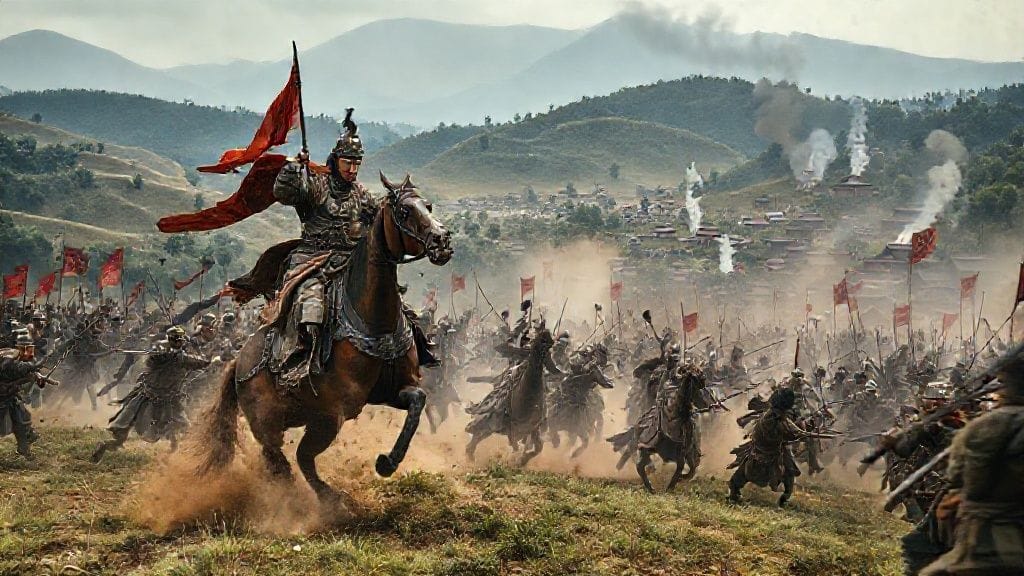
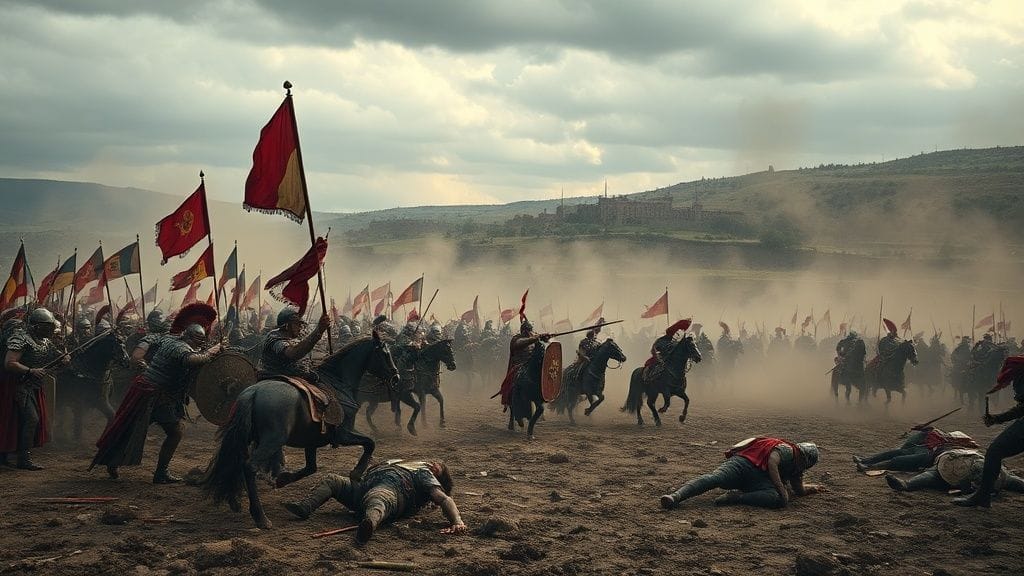
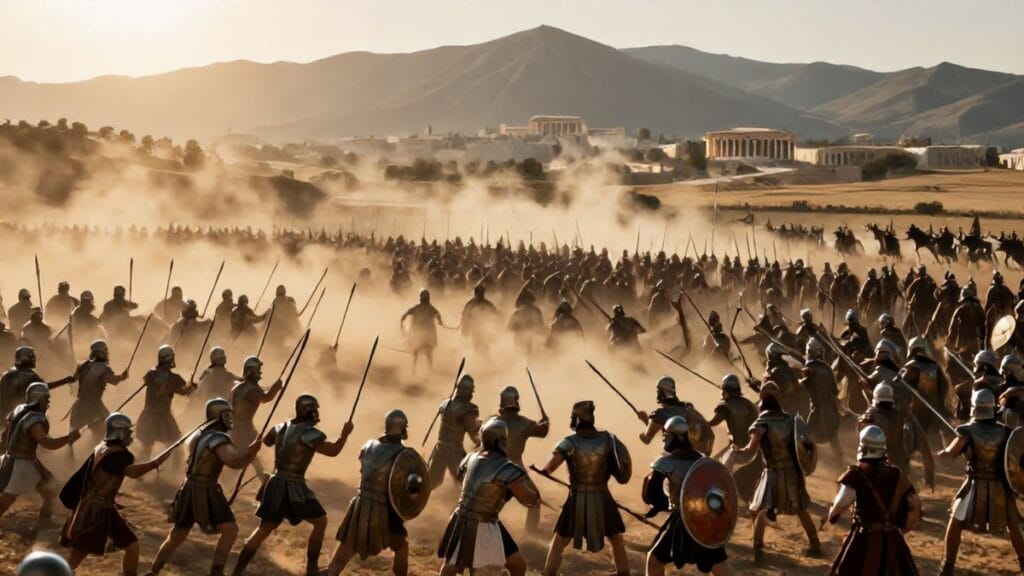
The sun rose over the Boeotian plain in a haze of dust and anticipation. In the distance, the low hills around Plataea glowed amber, and a light breeze pressed ripples through the ripening grain. All along the slopes and fields, men in bronze waited—some sharpening spearheads with shaking hands, others leaning silently on their shields, listening to the muffled, restless animal sounds of a crowded army. It was here, near the modest city of Plataea in Boeotia, that the final act of a grinding, terrifying struggle between Persia and the Greek city-states would unfold. The battle of Plataea was not merely another clash of armies; it was the reckoning after years of burning temples, shattered alliances, and desperate resistance. On this morning in 479 BC, few of those who tightened their cuirasses or touched the edges of their spear shafts could truly imagine how completely their world would change in a single day.
Across the plain, on more open ground, the Persian camp was already alive with shouting. Horses whinnied, chariots creaked, and officers barked orders in languages many Greeks had never heard before. From Asia Minor, from the heartland of Persia, from the river plains of Mesopotamia, from the rugged highlands further east, thousands had been drawn into this great imperial enterprise. They had followed the king’s banner, crossed seas and mountains, and now stood poised to crush a stubborn cluster of small, argumentative cities that dared to defy the Great King’s will. For them, this battlefield at Plataea was just another frontier, another patch of soil to be mastered. For the Greeks, it was their last chance to prove that freedom, in all its tangled, contentious forms, could stand against organized imperial might.
But this was only the beginning of that fateful day. To understand why an army of allied Greek hoplites and light troops gathered here at all, why a Persian general named Mardonius risked the remnants of Xerxes’ vast expedition, we must step backward in time. The dust on the plain of Plataea carried echoes: from Marathon, where Athenians first humiliated a Persian landing force; from Thermopylae, where Leonidas and his Spartans died holding a narrow pass; from Salamis, where Greek triremes splintered the pride of a fleet. The battle of Plataea was the last great land confrontation of this Persian invasion, and beneath its clamor lay a decade of fear, revenge, and calculation. The men poised to clash beneath the Boeotian sun were the heirs of those earlier struggles—and their decisions that day would close one chapter of history and open another.
From Marathon to Thermopylae: The Road to Plataea
Ten years before the battle of Plataea, the world of the Greek poleis had already felt the shadow of Persia looming from the east. In 490 BC, Darius I sent an expedition across the Aegean to punish Athens and Eretria for their role in supporting the Ionian Revolt. The Persians landed at Marathon, a broad coastal plain northeast of Athens, expecting quick victory. Instead, in a moment that would reverberate down the centuries, an outnumbered Athenian army—after days of tense waiting—charged headlong into the invaders and drove them back to their ships. It was a stunning triumph for hoplite warfare and civic courage, but it did not end the conflict. It merely bought time.
Darius died before he could answer the insult of Marathon. His successor, Xerxes I, resolved to finish what his father had begun. He prepared for years: building bridges across the Hellespont, digging canals through the Athos peninsula, gathering contingents from across a sprawling empire that stretched from Egypt to India. When his invasion came in 480 BC, it seemed irresistible—hundreds of thousands of men, if Herodotean figures are even partly believed, and a fleet so large that its ships darkened the seas along the Greek coast. Against such force, the quarrelsome Greek city-states could easily have shattered. Many did surrender or “medize,” offering earth and water in submission. Others hesitated, frightened or calculating. Only slowly did an alliance congeal around a core of determined states, above all Sparta and Athens.
The defense at Thermopylae, with Leonidas and his Spartans making a heroic last stand, has become legendary. In reality, it was a grim delaying action, born of desperate strategy. By holding a narrow coastal pass, the Greeks aimed to blunt the Persians’ numerical advantage. Although the pass was eventually betrayed and the defending force annihilated, the battle left a scar on Persian prestige and a scar deeper still on Greek memory. At Artemisium and Salamis, Greek fleets tested and then broke the Persian naval arm, culminating in the ambush at Salamis where Themistocles’ cunning lured Xerxes into a chaotic, fatal engagement in cramped waters. The Great King, watching from his golden throne on a hillside, saw his armada torn apart.
Yet even after Salamis, the war was not over. Xerxes retreated to Asia, but he left behind a powerful army under his kinsman, Mardonius. With this force he intended either to finish the conquest of mainland Greece or, failing that, to negotiate a settlement favorable to Persian interests. Between Salamis and the battle of Plataea stretched a tense interlude: winter diplomacies, threats, bribes, and the slow gathering of will on both sides. Plataea would be the moment when all these strands—Marathon’s defiance, Thermopylae’s sacrifice, Salamis’ cunning—would converge in a final, brutal test.
Xerxes Withdraws, Mardonius Remains
Following the shattering naval defeat at Salamis in 480 BC, Xerxes faced a hard choice. His supply lines west of the Aegean were overextended, his fleet crippled, and the onset of winter threatened any large-scale operations. Fearing that another disaster might endanger his throne, he decided to withdraw the bulk of his forces back toward Asia. The story told by Herodotus, in which Xerxes’ counselors argued for and against this retreat, has a theatrical quality, but the underlying logic is clear: the risk of remaining in force on the Greek mainland outweighed the possible rewards.
Mardonius, Xerxes’ cousin and trusted general, saw things differently. He believed the Greek alliance to be fragile, held together by fear and temporary necessity. To him, the Athenians and Spartans were natural rivals whose cooperation would crumble under pressure. If he could maintain a substantial Persian presence in central Greece, applying military threat alongside offers of lenient peace, he hoped to separate these key powers. Xerxes allowed him to try. Taking perhaps 70,000 to 120,000 men—estimates vary wildly and are the subject of modern debate—Mardonius stayed behind in Thessaly with a mission: break Greek unity, punish Athens, and secure a political solution that preserved Persian dignity.
During the winter, Mardonius opened negotiations. He sent envoys to Athens promising generous terms: rebuilt temples, autonomy under the Great King’s protection, even territorial gains. For a city whose lands had been twice ravaged and whose sacred sites lay in ruins, the offer was tempting. But Athens, led by figures like Aristides and influenced by the memory of Marathon and Salamis, refused. They sent the Persian envoys away, choosing continued resistance over comfortable subjugation. Sparta, too, wavered but ultimately recommitted itself to the struggle, though not without hesitation. It is astonishing, isn’t it, that so much of what we now call the freedom of the Greek world hinged on this precarious winter of decisions, arguments in smoky council chambers, and the resolve of men who had seen their homes burned yet still said “no.”
Greece Divided: Allies, Traitors, and the Politics of Survival
The battlefield of Plataea did not simply pit Greeks against Persians. It also showcased the deep fractures within the Greek world itself. While Sparta, Athens, and a network of smaller allies stood in the allied camp, many city-states chose the other side—some willingly, some under duress. Chief among these were Thebes and much of Boeotia, whose elites openly aligned with Persia. For them, the imperial presence offered a chance to curb Athenian power and perhaps to reshape the political landscape at home. The Greeks who marched to Plataea thus faced not only distant eastern invaders but also the uncomfortable reality of Greek against Greek, neighbor against neighbor.
This internal division shaped every stage of the campaign. Thebes provided Mardonius with valuable local knowledge and a convenient base of operations in central Greece. Its support legitimized the Persian presence in the eyes of some Greek communities, making resistance look less like a sacred cause and more like a factional struggle. Meanwhile, the allied camp itself was far from harmonious. Spartans distrusted Athenian ambitions; Athenians chafed under Spartan leadership, especially when they felt the Spartans were dragging their feet.
In the months leading to Plataea, envoys passed between cities, not only to coordinate military movements but to secure political loyalty and prevent last-minute betrayals. Stories circulated of cities that considered medizing, of aristocrats tempted by Persian gold. Some communities hedged their bets, sending token forces to the allied army while keeping channels open to Mardonius. Survival, after all, was as much a political calculation as a military one. This atmosphere of suspicion and fragile alliance gives the battle of Plataea its particular tension. The men who would soon clash in the dust of Boeotia did so knowing that unity was a thin, fraying cloak thrown hastily over profound rivalries.
Assembling the Allied Army on the Boeotian Plain
When Mardonius marched south again in 479 BC, burning what remained of Athens and entrenching near Thebes, it became clear that a final confrontation was inevitable. The Greek allies resolved to meet him in the field, away from the narrow straits where the navy had already proven its worth. This would be a land battle, hoplites against the diverse contingents of the Persian army. Sparta took the lead in mustering a large hoplite force, sending King Pausanias as commander-in-chief of the allied land forces. Though an inexperienced leader compared to some older generals, he carried with him the prestige of Spartan arms and the legacy of Leonidas’ sacrifice.
The muster that followed was one of the largest Greek armies yet assembled. According to Herodotus, the core of heavily armed infantry—the hoplites—numbered around 38,700 men, accompanied by tens of thousands of lighter-armed troops and servants. Modern historians debate these figures, but even conservative estimates suggest a remarkable concentration of manpower. Spartans and their perioikoi allies formed the largest single contingent. Athenians, hardened by years of shipboard service and the defense of their ruined city, brought another formidable block of troops. Corinth, Megara, Tegea, and a host of smaller Peloponnesian and central Greek states filled out the ranks.
As they marched north, the Greeks were keenly aware they were entering hostile territory. Thebes and much of Boeotia stood with Persia; local guides might be unreliable, supplies scarce. Yet as they approached Plataea, the geography seemed to offer a measure of safety. The city lay near the foothills of Mount Cithaeron, where streams trickled down from the highlands to water the plain below. Here, the Greeks reasoned, they could camp with their backs to the hills and key springs at their disposal, while the Persians, with their cavalry and archers, would be forced into less favorable ground if they tried to attack uphill. It was a calculated risk, but there seemed no better alternative if they meant to challenge Mardonius’ army head-on.
For the Plataeans themselves, this arrival was both hope and tragedy. Their small city, already scarred by previous campaigns, now became the host of an enormous military presence and the potential ground zero of a devastating clash. They could do little but offer what support they could—food, guides, perhaps men to fill out the ranks—and watch as their fields, soon to be watered with blood, filled with the tents and fires of the greatest army Greece had yet set in motion.
The Land and the City: Plataea’s Fragile Stage
The choice of Plataea as the battleground was not entirely accidental, nor was it entirely deliberate. The city lay on the southwestern edge of the Boeotian plain, backed against the rising slopes of Mount Cithaeron. To the east and north, the land opened into broader, flatter stretches better suited to the sweeping maneuvers of cavalry and massed archery—the strengths of the Persian army. To the west and south, the terrain grew more broken, carved by ravines and foothills, more favorable to heavy infantry like the Greek hoplites.
Crucially, the area around Plataea was watered by several small rivers and springs, including the Asopus and its tributaries. In late summer, when the battle of Plataea took place, access to reliable water for men and animals was both a tactical and a strategic concern. The Greeks initially took up position closer to the Asopus, but constant harassment by Persian and allied cavalry, combined with the vulnerability of that more open ground, convinced them to fall back nearer to the Cithaeron slopes—safer, but further from the main water sources. The landscape itself thus joined the list of silent participants in the coming clash, offering advantages but also imposing hard constraints.
Plataea, though never a major power, had long been entangled in the politics of Boeotia. Often at odds with Thebes, it had looked to Athens for support, tying its fate to that city’s fortunes. Now, as the Persian-allied Thebans stood ready to fight on the opposite side of the plain, Plataea’s identity as a small, loyal ally of Athens took on epic dimensions. In later years, this would be woven into a narrative of noble steadfastness, the humble city that hosted the defense of Greek liberty. On the eve of the battle, however, the reality was more stark: houses might be looted, fields trampled, shrines violated. The people of Plataea faced the possibility that, regardless of who won, their homeland would not emerge unscathed.
Champions of Either Side: Pausanias, Aristides, and Mardonius
Every great battle is remembered through the figures who command and inspire, and the battle of Plataea is no exception. On the Greek side, King Pausanias of Sparta—technically regent for the young king Pleistarchus—held supreme command. He inherited not only the mantle of Spartan leadership but also the expectation that he would avenge Thermopylae and Leonidas’ death. Yet Pausanias was no Leonidas. Herodotus hints at a man capable of both resolute action and hesitant caution, a leader who could be paralyzed by bad omens yet also capable of seizing fleeting opportunities.
Beside him stood Aristides of Athens, sometimes called “the Just.” In contrast to his great rival Themistocles, Aristides projected a quieter authority—less flamboyant, more rooted in a reputation for fairness and integrity. At Plataea, he commanded the Athenian hoplites and played a crucial role in maintaining cooperation between Athens and Sparta. When disputes arose over who should hold what sector of the line, Aristides was the man who negotiated, soothed tempers, and kept the alliance intact. Without his diplomatic steadiness, the frictions in the allied camp might have boiled over at the worst possible moment.
On the Persian side, Mardonius embodied imperial determination. A seasoned commander who had earlier been involved in campaigning in Greece, he was both ambitious and ideologically committed to proving the superiority of Persian arms. He understood the value of Greek allies and cultivated Theban support, but he also retained a fundamental faith in Persian cavalry, archers, and the terror of a massed imperial host. His decision to offer generous peace terms to Athens, and then to march south again when those were rejected, shows a man willing to mix negotiation and force. At Plataea, he would bet everything on one climactic engagement.
Each of these leaders carried not only weapons and armor but also memories, fears, and expectations. Pausanias knew that a defeat here would expose the Peloponnese and perhaps Sparta itself to Persian invasion. Aristides saw behind him a ruined Athens and a citizenry hungry for defensible land, honor, and a future. Mardonius, far from the Persian heartland, commanded an army whose defeat would mean the end of Persia’s grand design in Greece. The plain beneath Plataea thus became their shared stage, the place where their reputations would be made or broken forever.
Nights of Skirmishes: Cavalry Raids and a Broken Spring
Once the two armies had taken up their rough positions near Plataea, days passed in a grim stalemate. The Greeks anchored themselves nearer to the Cithaeron slopes, forming a long line of hoplites with various allied contingents occupying different sectors. The Persians drew up on the more open ground closer to the Asopus, with their cavalry deployed as a roving threat. Neither side wished to commit too recklessly. The Greeks preferred to fight in firm, controlled formation on ground that limited Persian mobility; Mardonius hoped to use his cavalry to disrupt them, disrupt supplies, and force them into a disadvantageous movement.
Under the hot late-summer sun, tensions rose. Persian cavalry, perhaps led in part by the bold commander Masistius, harassed Greek positions. They galloped close to the lines, loosing arrows, probing for weaknesses. In one notable engagement, the cavalry attacked the Megarian contingent, putting them under severe pressure. The Megarians appealed for help, and Athenian hoplites responded, advancing to drive off the horsemen. During the clash, Masistius was thrown from his horse and killed—a loss that deeply pained the Persian side. Herodotus paints a vivid image of Persian soldiers mourning him, shaving their heads, and wailing in grief over his body.
Yet such skirmishes, while bloody and emotionally charged, did not decide the campaign. Instead, they formed a pattern of attritional pressure. One of the most effective Persian moves was the targeting of Greek water supplies. Cavalry raids made it dangerous for Greek troops to approach the Asopus, and at one point the Persians managed to capture and destroy a key spring that fed the Greek camp. Suddenly, what had seemed a secure position near the hills became precarious. Men and animals grew thirsty; daily operations became agonizingly complicated. The Greeks found themselves in an impossible dilemma: hold their ground and risk dehydration and morale collapse, or move at night to a better-watered but more exposed location—and in so doing, risk chaos.
Behind the celebrations of small successes and the apparent calm of the drawn-out standoff, hunger and thirst gnawed at discipline. Fires burned on either side of the plain into the night, soldiers speaking in low voices about omens, allies, and the gods. Priests sacrificed animals to seek divine guidance, reading entrails for signs of favor or warning. Each sunrise that did not bring battle also brought greater strain. For the Greeks, it became increasingly clear that they could not simply sit and wait. A decision, and a dangerous movement, would soon be necessary.
The Failed Midnight Withdrawal
At last, the strain proved too great. Pressed by cavalry harassment and dwindling access to water, the Greek commanders resolved to shift their line during the night, withdrawing to new positions closer to Plataea itself. Here, several springs and wells would sustain the army, and the broken terrain nearer the city’s outskirts would still favor hoplite combat. The plan required discipline: individual contingents would move in a coordinated fashion under cover of darkness, preserving cohesion and presenting a united front by dawn.
What happened next has become one of the most debated episodes of the battle of Plataea. According to Herodotus, miscommunication and fear turned a carefully chosen maneuver into near-disaster. Some contingents, notably the Spartans, were reluctant to move without clearer omens; Pausanias reportedly delayed, worried by unfavorable sacrificial readings and fearful of being attacked while on the march. The Athenians and other allies, less inclined to wait, began to withdraw sooner. Units drifted apart, spacing between them widening. Some, misunderstanding the timing, headed not to the agreed defensive line but all the way back toward the city of Plataea and beyond. Others halted halfway.
By the first grey light of dawn, what had been a continuous, formidable line of Greek hoplites had dissolved into a scattered patchwork of isolated contingents. Gaps yawned between them. Some units had yet to move from their original positions; others had reached the new ground; still others were caught somewhere in between. From the Persian camp, watchful eyes noted the shifting shapes on the hillside with growing excitement. To Mardonius, it must have looked exactly like what he had hoped for: the Greeks abandoning their positions, retreating in confusion, ripe for a crushing blow on the open plain.
It is astonishing to consider how close the allied army came to catastrophe before the main fighting even began. A single misinterpreted order, a slightly more aggressive Persian cavalry raid at that moment, or a greater panic among certain contingents might have turned the midnight withdrawal into a rout. Instead, the very unevenness of the Greek response—some units holding, others only partially shifted—created a fragile, improvised line on which the fate of Greece would soon rest. As the sun climbed and the air warmed, dust clouds to the north announced that Mardonius was seizing his chance.
The Clash of Hoplites: The Battle of Plataea Unfolds
At sunrise, Mardonius ordered his forces forward. He believed he was attacking an enemy on the verge of disintegration. The Persian army poured across the Asopus, battle standards glittering in the light, cavalry surging ahead to harry the disordered Greeks. But as they advanced, they found that not all of their opponents were fleeing. Pockets of determined resistance emerged among the Greek units that had not fully withdrawn or had halted in good order. Most important of all, the Spartans and their allies, though late in moving from their original positions, now began to form up decisively near a small shrine of Demeter, anchoring the left-center of the eventual Greek line.
The opening phase of the battle of Plataea was thus a contest of improvisation. As Persian infantry and archers advanced, they encountered the Athenians and several other contingents forming up on the Greek right, closer to the city itself. Farther to the left, the Spartans, Tegeans, and others began to brace for impact. In the center, confusion reigned; certain contingents had marched past their assigned spots, others had not yet emerged from the hills. Still, slowly, like a jagged wall of bronze and wood, the Greek line began to take shape under pressure.
For the men in the ranks, there was little time to contemplate the larger pattern. They felt rather the dry heat, the weight of the aspis shield on their arm, the steady drum of their own heartbeat. Commands were shouted, horns blared, and then the distant shapes of the advancing enemy resolved into men: archers stringing bows, spearmen in colorful garments, cavalry sweeping around the flanks. The dust rose around them, stinging eyes and throats. Just as at Marathon, just as at countless lesser engagements across the Greek world, the decisive moment would come when shield met shield and spear met flesh.
On the Persian side, Mardonius committed heavily against the Spartans. He knew that if he could break the symbolic core of the Greek resistance, the rest might crumble. Persian and allied infantry surged forward, supported by archers whose volleys shook the Greek shields with a hail of arrows. Mardonius also attempted to use his cavalry to disrupt the Spartan formation, though the more broken ground and the resolute hoplite wall limited their effectiveness. Meanwhile, on the Greek right, Athenians prepared to face not the Persians directly but their Theban and Boeotian counterparts—neighbors and often rivals now turned open enemies.
A Spartan Stand and the Death of Mardonius
At the heart of the field near the shrine of Demeter, the clash between Spartan-led forces and the Persian infantry reached a brutal crescendo. The Persians, more lightly armored but mobile and numerous, pressed into a storm of bronze spearheads. Archers drove shafts into the gaps between shields, into thighs, arms, and faces. The Spartans and their allies held their ground, but the pressure was immense. According to Herodotus, Pausanias repeatedly sought favorable omens before ordering a full counterattack; the sacrifices refused to yield the right signs. Arrows fell in dark clouds among his men as they crouched behind their shields, waiting.
Finally, the signs—or perhaps Pausanias’ own resolve—shifted. A signal went down the line, shields were adjusted, and the Spartans began to advance, first walking, then moving more forcefully, spears leveled. The Persian front ranks must have felt the ground tremble as the bronze-clad wall bore down on them. Where before they had peppered the stationary Greeks with arrows, now they had only heartbeats to switch from missile to hand-to-hand weapons. The resulting collision was savage. Greek spears, longer and sturdier than most Persian infantry weapons, found purchase in cloth armor and wicker shields. Men stumbled, slipped on blood-slick earth, and died in tangled heaps.
In the midst of this chaos, Mardonius is said to have ridden conspicuously, perhaps on a white horse, rallying his men. His presence might have spurred the Persians to redoubled effort, but it also made him a target. A Spartan, perhaps from the small city of Sparta’s ally Tegea according to one tradition, hurled a stone that struck Mardonius on the head, or else a spear found its mark—accounts differ, as so often in ancient battle narratives. What matters is that Mardonius fell, and with him fell the heart of Persian resistance on that part of the field.
News of his death spread quickly among Persian ranks, carried by rumor and the suddenly sagging lines of men who had moments before seemed unbreakable. The sight of their commander’s body—trampled, bloodied, perhaps lying amid shattered armor and torn banners—must have sent a chill through the army. In imperial warfare, the general often embodied not merely tactical command but also the king’s distant authority. To see Mardonius dead was, in some sense, to see Xerxes’ will broken on the soil of Boeotia.
The Spartans, sensing a shift, pressed harder. Their formation rolled forward, step by pounding step, pushing the Persians back toward their camp. Resistance did not end immediately; pockets of determined fighters stood and died. But momentum now lay firmly with the hoplites. The battle of Plataea was tipping, slowly but inexorably, in favor of the Greeks.
Athenians on the Right: Fighting Theban Neighbors
While Spartans and Persians grappled near the Demeter shrine, the Greek right wing waged a bitter struggle of its own. The Athenians, supported by allied contingents, faced the Thebans and other Boeotians who had thrown in their lot with Persia. Here, the battle lines were more symmetrical: hoplite against hoplite, heavy armor against heavy armor, long spear against long spear. And unlike the central clash, which pitted men from different cultures and continents against each other, this was a civil war in miniature—Greeks killing Greeks beneath the same harsh sun.
The Athenians fought not merely for survival but with an added edge of anger. Thebes’ decision to side with Persia was seen in Athens as a betrayal of Hellenic solidarity, a stain on Boeotian honor. For Theban elites, on the other hand, the Athenian rise in influence and naval dominance posed a threat to their own regional ambitions. On the field of Plataea, these abstract resentments became personal. Men shouted insults as they clashed, calling out city names, ancestral grievances, and perhaps even individual enemies recognized beneath helmets and crests.
The fighting here was grueling and uncertain. Without the decisive mismatch in armor seen in the Spartan-Persian engagement, neither side could easily gain the upper hand. Lines wavered, shields locked and broke apart, small units enveloped and then relieved by reinforcements. Herodotus claims that the Athenians slowly gained ground, pushing the Thebans back and inflicting heavy casualties. Eventually, some Thebans broke and fled, while others fought on stubbornly until surrounded. For the Athenians, victory on this flank meant not only securing the overall Greek position but also exacting a symbolic punishment on those they deemed traitors to the common cause.
Yet behind the celebrations that would later surround this episode, one should also hear a quieter note of sorrow. Greek against Greek combat at Plataea foreshadowed the larger, more disastrous internecine wars to come—above all the Peloponnesian War, in which Athens and Sparta would turn their weapons on each other with devastating consequences. In 479 BC, however, on that dusty plain, the Athenians fought side by side with Spartans, Corinthian, and others, and for one crucial day, Greek rivalry transformed into a rough, imperfect unity against an external threat.
Rout, Slaughter, and the Fall of the Persian Camp
With Mardonius dead and the Spartan-led line driving forward, the center of the Persian army began to buckle. What had started as an aggressive advance amid apparent Greek confusion now turned into a struggle simply to hold ground. Some units on the Persian side fought on bravely, clinging to their positions even as the Greeks encircled them. But the cohesion that had made Persian imperial armies so formidable across Asia and into Egypt began to fray. Signals were lost in the dust and din; officers fell; fear spread like a stain through the ranks.
Retreat slowly shaded into rout. Units that might have withdrawn in good order, preserving some semblance of discipline, instead broke apart into streams of fleeing men. The more lightly armed among them, once an advantage in mobility, now rendered them vulnerable to hoplite pursuit. Greek spearmen, tasting victory, surged after them, striking down those who stumbled. The plain around Plataea turned into a killing ground. Estimates from antiquity speak of tens of thousands of Persian dead—a number surely exaggerated, yet even a fraction would represent a catastrophe for the expeditionary force.
The final act of the battle of Plataea came at the Persian camp itself, a fortified enclosure constructed with palisades and perhaps even shallow ditches. Many Persians and their allies fell back here, hoping to make a stand behind defensive works. For a brief moment, it seemed possible they might hold, at least long enough to negotiate or retreat under cover of darkness. But the Greeks, inflamed by the victory already won on the open field, were in no mood to allow an orderly Persian escape.
The assault on the camp, in which Athenians were particularly prominent, was brutal and chaotic. Fighting shifted from the clear geometry of a battle line to the messy confusion of close-quarters combat in narrow spaces. Men clambered over fortifications, hacked at defenders on the walls, and forced gates under a rain of missiles. Once inside, the camp became a maze of tents, baggage, and terrified soldiers. Herodotus describes the slaughter that followed as relentless: Persians cut down between their own rich furnishings, among the gold and silver of imperial wealth brought so far from home.
By the end of that day, the Persian presence on the Boeotian plain lay shattered. Those who survived fled northward, toward Thessaly and beyond, or tried to melt into the countryside. For the Greeks, the victory was overwhelming—greater even than Marathon, for it had destroyed not merely an expeditionary landing force but the main land army left in Greece by the Great King. The battle of Plataea, together with the naval victory at Mycale on the very same day or soon after, broke the back of Persian ambitions on the Greek mainland.
After the Dust: Counting the Dead and Measuring the Victory
When the noise of battle finally subsided and the sun tilted westward, the plain near Plataea fell into a ghastly stillness. Bodies lay where they had fallen, clustered in drifts around the shrine of Demeter, strewn in long lines where formations had collided and broken, and heaped against the remnants of the Persian camp. Survivors moved among the dead, searching for friends and kin, checking for signs of life amid the blood and dust. The smell—metallic, sour, overpowering—hung over the field, mingling with the smoke of smoldering tents and broken siegeworks.
Ancient sources offer astonishing numbers for the losses. Herodotus speaks of over 250,000 Persian dead, figures that modern historians generally view as inflated rhetoric. Yet even scaled down, the casualties were enormous. Tens of thousands, perhaps, lay dead or dying; for many Greek communities and Asian provinces alike, the men who had gone to war would never return. On the Greek side, Herodotus gives the number of fallen hoplites as just over 1,300—modest in comparison to the supposed Persian losses, but still a profound wound for small city-states where every male citizen counted deeply.
In the days that followed, the Greeks turned from destruction to ritual and recompense. They gathered their dead and buried them with honors, erecting tumuli and grave markers for the various contingents. A mound for the Spartans, another for the Athenians, others for different allies—these burial sites transformed the battlefield into a sacred landscape of memory. Treasures looted from the Persian camp—gold cups, ornate weapons, colorful garments—were dedicated to sanctuaries at Delphi, Olympia, and elsewhere. One famous dedication was the Serpent Column, a twisted bronze pillar listing the names of the Greek cities that had fought at Plataea, later moved to Constantinople, where fragments of it can still be seen.
Measuring the victory meant more than tallying the dead or counting loot. Diplomats and generals weighed what this triumph allowed them to attempt next. With the Persian land army broken and their fleet weakened, the Greeks had gained the strategic initiative. Some argued for consolidating defenses at home; others dreamed of carrying the war across the Aegean, liberating the Greek cities of Asia Minor from Persian rule. The battle of plataea opened possibilities as well as closing a chapter. The question was not only how Persia would respond, but how the newly confident Greek alliance would define itself in the absence of an immediate existential threat.
Plataea’s Oath and the Politics of Memory
In the immediate aftermath of the fighting, a powerful story took shape about what the Greeks had promised themselves and the gods before the battle of Plataea. According to a later tradition, they swore an oath before taking the field: to destroy any Greek city that betrayed the common cause to Persia, and, more dramatically, never again to rebuild the temples that the Persians had burned, leaving them as eternal ruins to remind future generations of the barbarian sacrilege. Whether this “Oath of Plataea” was truly sworn as described or elaborated later is still contested by historians. Some, drawing on epigraphic and literary evidence, see it as at least partly a later invention, a retroactive attempt to frame Greek unity in lofty moral terms.
Yet whether literally sworn or not, the idea of such an oath reflects how the Greeks came to interpret Plataea. This was not just a victory in battle but a moral watershed. The ruined temples on the Athenian Acropolis—blackened stones, toppled columns—became symbols of what had been risked and what had been saved. The decision of some Athenians, decades later, to leave certain ruins standing even as they rebuilt others gave visual form to the story. It reminded citizens and visitors alike that, as one could imagine an orator saying, “Here the barbarians came; here they thought to erase us; here we chose to remember instead of forget.”
Plataea itself was woven into this memory politics. The city received honors, and its territory became the site of recurrent commemorations. Annual sacrifices, games, and gatherings were reportedly held to honor those who had fallen. Over time, the battle’s story took on the contours of legend—simplified, moralized, tidied at the edges. Herodotus, writing within a few generations, captured many details but also shaped the narrative to highlight the themes of courage, betrayal, and divine favor. Later authors, such as Plutarch, revisited the scene with their own agendas and interpretive frameworks.
In one sense, the battle of plataea was too large an event to be contained in any simple story. It meant different things to Spartans and Athenians, to Thebans and Plataeans, to later Romans who would look back on Greek resistance to Persia as a precursor of their own struggles. But the impulse to create an oath, a set of shared words and promises tied to this place and time, reveals a deeply human need: to make sense of chaos, to bind a community together through ritualized memory in the wake of terrible violence.
Winners, Losers, and the Seeds of a New Greek Order
The immediate winners of Plataea were obvious: the Greek alliance had secured not just survival but a decisive strategic advantage. Persia, still immense and powerful, had suffered a humiliation that curtailed its western ambitions. Yet within this apparent clarity lay subtler shifts that would reshape the Greek world. Sparta and Athens emerged as the twin poles of post-war power, each with its own vision of hegemony. Sparta, whose hoplites had anchored the victory on land, claimed leadership of a land-based alliance rooted in the Peloponnese and traditional aristocratic values. Athens, with its navy that had turned the tide at Salamis and would soon spearhead campaigns across the Aegean, looked outward, toward maritime empire and democratic assertion.
For smaller allies, the outcome was more ambiguous. Cities like Plataea could bask in reflected glory and enjoy a period of protection under Athenian sponsorship, but they also became pawns in larger geopolitical games. Thebes, which had bet on Persia, faced suspicion and sanctions; its elites’ choices at Plataea would cast long shadows over Boeotian politics. Other medizing cities likewise had to reckon with the consequences of having chosen the losing side. Punishments, fines, and loss of prestige were common, though the Greeks stopped short of annihilating major centers—pragmatism tempered vengeance.
The seeds of future conflict were already visible. The collaboration between Athens and Sparta, so crucial at Plataea, rested on deep fissures. Athens’ democratic politics, naval orientation, and restless energy contrasted sharply with Sparta’s oligarchic, land-focused conservatism. As the shared Persian enemy receded, so did the urgency that had held these contrasting powers together. Within a generation, disputes over control of the Aegean and the treatment of allied cities would erupt into the Peloponnesian War, a conflict that some Greeks might later look back upon with bitter nostalgia for the unity of the Persian Wars era.
Still, for a brief time after the battle of Plataea, there was a sense—however naïve—that a new Greek order rooted in collective triumph might take shape. Festivals celebrated common victories; dedications named multiple cities; poets sang of Hellenes as a single people who had stood against overwhelming odds. In the interplay between that ideal and the hard realities of ambition and fear lay the complicated legacy of Plataea.
From Heroic Legend to Historical Inquiry
Our understanding of what happened at Plataea comes primarily from one towering figure: Herodotus of Halicarnassus, often called the “Father of History.” Writing in the later fifth century BC, he gathered testimonies, stories, and battlefield lore to weave a narrative of the Persian Wars that has shaped perceptions ever since. His account of the battle of plataea is rich in detail—lists of contingents, speeches, dramatic omens—but it is also colored by his own aims: to explore the causes of conflict, the interplay of character and fate, and the workings of the gods in human affairs.
Modern historians have both leaned on and argued with Herodotus. Archaeology on the plains near modern Plataies, careful study of topography, and comparative analysis of battle narratives have all shed new light and raised new questions. Were Persian numbers as huge as reported, or did Herodotus succumb to the ancient tendency to inflate enemy forces to magnify Greek heroism? Did the Greeks truly swear the famous oath as he describes, or did later generations, perhaps in the context of the Peloponnesian War, project their own ideological needs backward in time? Scholars like Hans Delbrück in the early twentieth century already criticized the enormous figures, while more recent work has refined our sense of likely troop strengths and movements.
Yet even when critical, historians cannot fully detach themselves from Herodotus’ narrative power. His description of Mardonius’ death, of Pausanias anxiously consulting omens under fire, of the Athenians and Thebans grappling on the right flank—these episodes carry a weight that mere numbers and maps cannot. Other ancient authors, such as Plutarch, revisited the battle with different emphases, often to make moral points about leadership and character. Plutarch’s “Life of Aristides,” for example, highlights the Athenian’s calm fairness amid the tensions of the allied camp, reinforcing an image of him as a model statesman.
In examining Plataea today, historians navigate between respect for these literary witnesses and the demands of critical method. The field itself has changed in two and a half millennia, but traces of fortifications, pottery fragments, and landscape features still offer clues. Some have suggested alternative reconstructions of troop deployment or the sequence of maneuvers, challenging Herodotus’ version. Yet no matter how far scholarship advances, the core significance of the battle—its role in ending the Persian invasion of mainland Greece, and its powerful afterlife in Greek and Western memory—remains firmly anchored in the story first told by the man from Halicarnassus.
Echoes Through the Centuries: Why Plataea Still Matters
In the grand sweep of world history, the clash on the fields near Plataea might seem like just one among many ancient battles—bloody, decisive in its way, but distant. And yet its echoes have been surprisingly long-lived. To later Greeks, Plataea, together with Marathon, Thermopylae, and Salamis, formed a sacred quartet of resistance against despotism. Orators invoked it to stir civic pride; artists and playwrights alluded to its heroes and its fallen. The idea that free Greek citizens had stood against a mighty oriental empire became a powerful element of Greek self-understanding.
Centuries later, as Rome rose and then looked back upon Greek culture as its teacher, the story of Plataea took on new resonances. Roman authors saw in the defeat of Persia a kind of precedent for their own contests with Carthage and eastern monarchies. Much later still, in early modern Europe, the Greco-Persian wars—and the battle of plataea in particular—were sometimes cast as an early chapter in a supposed civilizational struggle between “East” and “West.” Such readings often say as much about the concerns of those later eras as they do about the realities of 479 BC, but they underscore how enduringly Plataea has functioned as a symbol.
Today, historians are more cautious about drawing simple lines from antiquity to modern conflicts. They emphasize the complexity of both Greek and Persian societies, the diversity within each, and the dangers of romanticizing one side as pure defenders of “freedom” and the other as monolithic “despotism.” Yet even with this necessary nuance, the battle remains a vivid case study in how small, divided communities can, under extraordinary pressure, unite enough to change the trajectory of an age. It shows the interplay of leadership, chance, terrain, logistics, and morale in determining outcomes that later seem almost inevitable.
Standing on the quiet fields near modern Plataies, where farmers now work soil once churned by bronze-clad feet, it is difficult to imagine the screaming tumult of 479 BC. But that is precisely the challenge and the allure of such a place. The battle of Plataea invites us not merely to admire distant heroism but to consider how our own societies react under existential strain, how we remember trauma, and how we transform bloody necessity into stories of purpose, identity, and—sometimes—myth.
Conclusion
The battle of Plataea, fought in the late summer of 479 BC near a modest Boeotian city, was the culminating land engagement of the Greek struggle against Xerxes’ invasion. It did not arise in isolation but grew out of a decade of tensions and clashes—Marathon’s unexpected victory, Thermopylae’s defiant sacrifice, Salamis’ cunning naval ambush. On the plains below Mount Cithaeron, these earlier stories converged in a final reckoning between a resilient but fragile Greek coalition and the remnants of a mighty empire determined not to leave in humiliation. The confused midnight withdrawal, the Spartan stand under a hail of arrows, the deadly duel between hoplite spear and Persian agility, and the eventual death of Mardonius all contributed to an outcome that reshaped the balance of power in the eastern Mediterranean.
Yet the significance of Plataea reaches beyond the immediate military result. It exposed the fissures within the Greek world—Theban collaboration, Athenian-Spartan rivalry—even as it momentarily transcended them. The victory emboldened Athens and Sparta, setting them on diverging paths toward future conflict, even as smaller states like Plataea basked in reflected honor. Through oaths, monuments, and annual rituals, the Greeks turned a day of horror into a foundational memory, a story about courage, betrayal, and the defense of home and gods. Later generations, from Roman historians to modern scholars, have continued to revisit this battlefield, arguing over numbers and narratives, symbols and realities.
In the end, the battle of Plataea matters not simply because it checked Persian imperial ambition in Greece, but because it crystallized ideas that would become central to the self-image of the classical world: that free, quarrelsome communities could, under dire threat, unite enough to defy a larger power; that memory and myth-making are as much part of war’s legacy as treaties and borders; and that a single day’s fighting can echo for millennia. The dust has long since settled on the Boeotian plain, the tumuli weathered, the ruins scattered, but the questions raised by Plataea—about unity, courage, compromise, and the costs of survival—remain as haunting and relevant as ever.
FAQs
- What was the Battle of Plataea and when did it take place?
The Battle of Plataea was the decisive land engagement of the second Persian invasion of Greece, fought in 479 BC near the city of Plataea in Boeotia. It pitted an alliance of Greek city-states, led by Sparta and Athens, against a Persian army commanded by Mardonius, cousin of King Xerxes I. - Why was the Battle of Plataea so important?
Plataea was crucial because it destroyed the main Persian land army left in Greece after Xerxes’ partial withdrawal following Salamis. Along with the near-contemporary naval victory at Mycale, it effectively ended Persian hopes of conquering mainland Greece and allowed the Greek states, especially Athens, to go on the offensive in the Aegean. - Who commanded the armies at Plataea?
The Greek forces were commanded by the Spartan regent Pausanias, with key subordinate leaders like Aristides of Athens. The Persian army was led by Mardonius, a prominent noble and close relative of Xerxes, who had remained in Greece after the king’s return to Asia. - How large were the armies involved?
Ancient sources give enormous figures—hundreds of thousands for the Persians and tens of thousands for the Greeks—but modern historians generally consider these exaggerated. A reasonable estimate is that the Greeks fielded around 35,000–40,000 hoplites plus additional lighter troops, while the Persians may have deployed a somewhat larger but not overwhelmingly massive force. - What tactics decided the outcome of the battle?
The battle was decided largely by the effectiveness of Greek hoplite infantry fighting at close quarters on terrain that blunted Persian cavalry and missile superiority. Once the Spartans and their allies were able to withstand the initial arrow fire and close with Persian infantry, their heavier armor and longer spears gave them a decisive edge. The death of Mardonius further undermined Persian morale and organization. - Did all Greek city-states fight against Persia at Plataea?
No. While many Greek states joined the allied army, others, including Thebes and much of Boeotia, sided with Persia. This internal division meant that Greeks fought on both sides of the battle, with Athenians and Thebans, for example, facing each other directly on one flank. - What happened to Plataea after the battle?
In the aftermath, Plataea enjoyed a period of prestige and protection as the symbolic host of the decisive victory. The city’s territory became the site of commemorative rituals and monuments. However, in later conflicts—especially during the Peloponnesian War—Plataea suffered sieges and destruction, illustrating the fragility of small states caught between greater powers. - What is the “Oath of Plataea” and is it historical?
The “Oath of Plataea” is a tradition that the Greek allies swore, vowing to punish traitorous cities and to leave temples destroyed by the Persians in ruins as permanent memorials. Some ancient sources refer to it, but many modern historians suspect it was embellished or even composed after the fact to express later ideals about unity and remembrance. - How reliable is Herodotus’ account of the battle?
Herodotus is our main narrative source and provides invaluable detail, but his work mixes careful inquiry with dramatic storytelling. Modern historians cross-check his claims against archaeological evidence, topography, and common sense, adjusting numbers and interpreting episodes critically while still relying heavily on his overall framework. - Did the Battle of Plataea end the Greco-Persian Wars?
Plataea, together with the naval battle of Mycale, ended the immediate threat of Persian conquest of mainland Greece, but hostilities did not cease entirely. In the decades that followed, Athens and its allies carried the war into the Aegean and Asia Minor, gradually shifting from defensive coalition to something closer to an Athenian maritime empire.
External Resource
Internal Link
Other Resources
- Encyclopaedia Britannica – general search for the exact subject
- Google Scholar – academic search for the exact subject
- Internet Archive – digital library search for the exact subject