Table of Contents
- The Dawn of a Fateful Expedition: Charlemagne’s March into Hispania
- The Political Chessboard of 8th Century Europe and al-Andalus
- Charlemagne’s Ambition: Seeking Alliances and Glory in the South
- The March through the Pyrenees: Geography, Tension, and Uncertainty
- The Basque Country: Fierce Independence and Mountainous Strongholds
- The Calm Before the Storm: Chronicles of an Uneasy Advance
- The Ambush Unfolds: The Roncevaux Pass and the Clash of Mountains and Men
- Roland and the Legendary Last Stand: Heroism in the Mist
- The Aftermath of Blood and Dust: Losses and Retreats
- The Frankish Court in Mourning: Charlemagne’s Response and Legacy
- The Ambush in Myth and Legend: “The Song of Roland” and Cultural Memory
- Political Ripples: The Impact on Frankish-Hispanic Relations
- Basque Autonomy Reinforced: The Victory that Carved Identity
- The Pyrenees as a Barrier: Strategic Implications for Centuries to Come
- Battles Between Fact and Legend: Historical Truths and Medieval Fabrications
- The Basque Ambush in Modern Historiography: Debates and Discoveries
- Military Tactics in Mountain Warfare: Lessons from Roncevaux
- Charlemagne’s Iberian Policy Revisited: Failures and Foreshadowings
- The Role of Local Knowledge and Terrain in Medieval Combat
- The Enduring Legacy of Roncevaux in European Cultural Imagination
- Memorializing the Fallen: Monuments, Literature, and Memory
- Synthesis: Roncevaux as a Crossroads of History, Myth, and Identity
- Conclusion: Lessons from the Basque Ambush for Understanding History’s Layers
- FAQs: Key Questions About the Battle of Roncevaux Pass
- External Resources and Further Reading
In the dusky shadows of the Pyrenees, where rugged cliffs claw at restless skies and narrow paths wind like serpents through wilderness, a clash took place that would echo through history—not only as a battlefield engagement but as a crucible of myth and legend. It was the summer evening of August 15, 778, when the rearguard of Charlemagne’s army, laden with the spoils of a hard-fought campaign, was caught in a deadly snare. The battle at Roncevaux Pass, or the Basque Ambush, was not merely a skirmish over a mountain pass but a profound collision of culture, ambition, and survival—a moment forever captured in the melancholic strains of “The Song of Roland,” one of medieval Europe’s greatest epic poems.
What truly transpired in that narrow defile where cries of valor and panic mingled with the mountain winds? How did a seemingly minor defeat come to symbolize ideals of loyalty, heroism, and tragedy for generations? Beyond the poetic veil lies a story of political complexities, mountain warfare, and cultural friction at the crossroads between the Frankish Empire and a fiercely independent Basque people.
The Dawn of a Fateful Expedition: Charlemagne’s March into Hispania
Charlemagne, the crowned King of the Franks and new Holy Roman Emperor, embarked on his campaign into the Iberian Peninsula amid a swirl of grand designs and fragile alliances. His intentions were layered: securing his southern borders, expanding Christendom, and asserting influence over the fractious territories of the Muslim-controlled al-Andalus. In 778, he led an army across the Pyrenees, a force of overwhelming ambition but vulnerable logistics.
This campaign was not simply a march of conquest; it was shaped by diplomacy attempted and betrayal feared. Charlemagne’s trust in local lords, including Muslim and Basque leaders, was put to the test as alliances shifted like mountain mists. The final tragedy in the mountain pass, where a few hundred Frankish soldiers faced thousands of Basque warriors, was the bitter fruit of these tangled politics.
The Political Chessboard of 8th Century Europe and al-Andalus
Europe and the Iberian Peninsula in the late 8th century formed a patchwork of competing powers. The Carolingian dynasty, freshly crowned by Pope Leo III, was ambitiously seeking its place as the defender of Christendom. Meanwhile, al-Andalus, ruled by the Umayyad Emirate, was a land rich in culture and religious tension, with Muslim authorities and Christian and Basque minorities jockeying for survival.
The Basques, or Vascones as chroniclers would call them, occupied the borderlands—mountains and valleys where authority was fluid and fiercely defended. Neither fully Muslim nor Christian, neither subjects of the empire nor outright rebels, they were the wild card, their allegiance unpredictable.
Charlemagne’s Ambition: Seeking Alliances and Glory in the South
Charlemagne’s push into Hispania was fueled in part by reports of rebellion within the Umayyad emirate and the hope of allying with local Christian and Muslim factions opposed to Cordoba’s rule. The emperor’s vision was an extension of his sacred mission: uniting Christian Europe under his crown while carving out new lands for his dynasty.
His army was a mixture of seasoned Frankish knights, foot soldiers, and retinues from allied regions. It carried hopes of easy victory, only to find a landscape where barriers were not just stone and earth, but language, custom, and centuries of independent will.
The March through the Pyrenees: Geography, Tension, and Uncertainty
The ascent into the Pyrenees was more than a military maneuver; it was a test of endurance and resolve. The mountain passes were narrow, twisting corridors where visibility was limited and the threat of ambush constant. Supplies ran short, morale fluctuated, and the sense of peril grew with every step.
The Basque fighters knew these mountains intimately. To them, these passes were hunting grounds; to Charlemagne’s army, traps waiting to spring.
The Basque Country: Fierce Independence and Mountainous Strongholds
The Basques were among Europe’s last free peoples in this era, their identity forged in rugged terrain and defiant spirit. Their society was clan-based, with a deep-rooted tradition of resisting outside rule—from Romans, Visigoths, Franks, or Muslims alike.
Their knowledge of the land was unparalleled. Using guerrilla tactics, they were able to disrupt larger, less nimble forces. For the Basques, the passing Frankish army was not just invaders but a direct threat to their survival and autonomy.
The Calm Before the Storm: Chronicles of an Uneasy Advance
As Charlemagne’s army descended from the mountains, the atmosphere was taut with suspicion. Contemporary chroniclers hint at foreboding signs ignored or misunderstood—a local guide’s warning, subtle shifts in the behavior of troops, flickers of movement in the forest shadows.
British monk Einhard, Charlemagne’s biographer, writes sparingly of the incident but conveys the grave surprise and loss felt by the emperor and his men.
The Ambush Unfolds: The Roncevaux Pass and the Clash of Mountains and Men
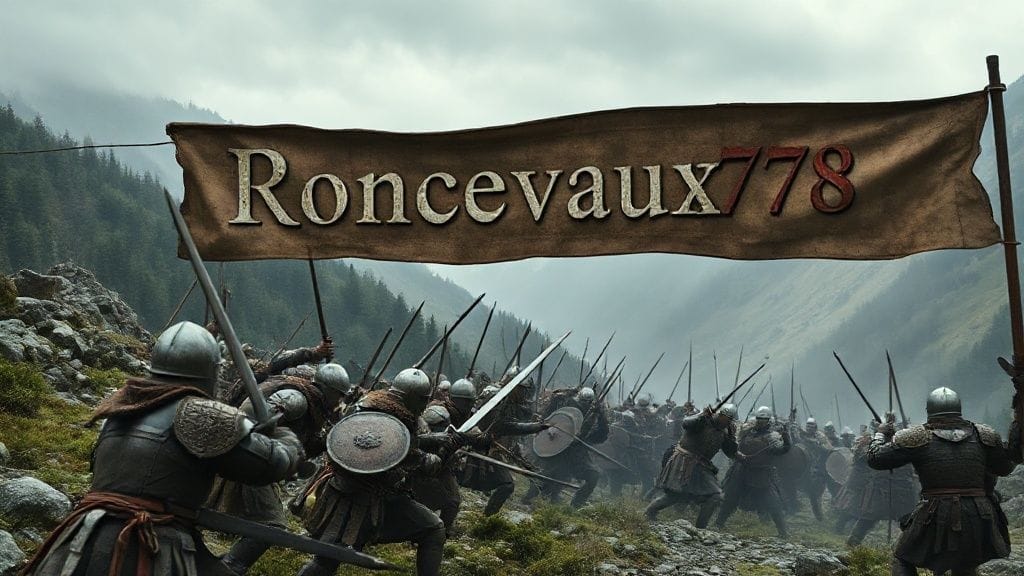
On August 15, as the rearguard traversed the steep, narrow Roncevaux Pass, Basque warriors struck from concealed positions along the heights. The Frankish soldiers, hampered by the difficult terrain and burdened with loot, were caught off guard.
It was a massacre. Shield clashed against stone, swords flashed under the fading sun, and cries of anguish pierced the mountain air. The smaller Frankish force fought desperately, led by Roland, the prefect of the palace and Charlemagne’s nephew, who blew his oliphant horn to call for aid—a call that came too late.
Roland and the Legendary Last Stand: Heroism in the Mist
Roland’s role transcends the battle itself. In the centuries that followed, his story became a symbol of chivalry and ultimate sacrifice. “The Song of Roland,” an epic of around 4000 lines, immortalized his valor: blowing his horn until his temples burst, fighting to his last breath, refusing to call for help until it was too late.
Though shaped by legend, this depiction reflects the era’s values—honor, loyalty, courage in the face of overwhelming odds.
The Aftermath of Blood and Dust: Losses and Retreats
The Frankish loss was significant: hundreds perished, and the army’s supplies were plundered, forcing a costly retreat. Charlemagne’s dream of a swift, decisive campaign was shattered as the surviving troops limped back north through the mountains.
This defeat humiliated the emperor but also hardened his resolve to expand and secure his empire’s borders more effectively.
The Frankish Court in Mourning: Charlemagne’s Response and Legacy
Back in Aachen, the news of Roncevaux became a somber tale. Charlemagne reportedly grieved deeply for his men and reorganized his forces for future campaigns. The battle highlighted vulnerabilities and the limits of imperial power in hostile terrain.
It also reinforced the mythology of Charlemagne’s reign—the ideal ruler fighting external evil but vulnerable to human frailty.
The Ambush in Myth and Legend: “The Song of Roland” and Cultural Memory
The transformation of a tactical defeat into a grand epic is one of the medieval period’s most fascinating cultural phenomena. “The Song of Roland,” composed approximately a century later, elevated the battle into a story of Christian heroism against pagan foes, although the historical Basques were neither pagans nor enemies of Christendom, but complicated neighbors.
This poem shaped European identity, inspiring crusaders and knights in centuries to follow.
Political Ripples: The Impact on Frankish-Hispanic Relations
The defeat at Roncevaux had wider implications. It signaled to Christian and Muslim rulers alike that the borderlands remained volatile. For the Umayyad Emirate, it was a temporary respite; for the Franks, a reminder that military success required more than numbers.
Negotiations, hostilities, and shifting alliances continued, making the region a crucible for centuries of cross-cultural conflict and cooperation.
Basque Autonomy Reinforced: The Victory that Carved Identity
For the Basques, the ambush was a defining moment—a clear assertion of independence and military prowess. It added to their narrative of resistance that bolstered their cultural cohesion.
Even today, Basque historians regard Roncevaux as a symbol of their ancestors’ fierce pride and tactical genius.
The Pyrenees as a Barrier: Strategic Implications for Centuries to Come
The battle reaffirmed the strategic difficulty of controlling the Pyrenees. These mountains served not only as a geographic divide between France and Spain but as a buffer zone guarded by peoples skilled in mountain warfare.
Subsequent emperors and kings learned that political control demanded more than conquest—it required understanding and negotiating with local powers.
Battles Between Fact and Legend: Historical Truths and Medieval Fabrications
Separating historical fact from legendary embellishment challenges scholars even today. Contemporary chronicles are sparse and biased, while later retellings infused the story with chivalric ideals and religious symbolism.
Modern historiography strives to piece together what really happened, appreciating the battle’s complex motives beyond black-and-white heroism.
The Basque Ambush in Modern Historiography: Debates and Discoveries
Recent archaeologic work and archival research have shed light on Basque military organization of the time and perhaps on the scale of the battle. Debates continue on the exact number of combatants, the battle’s strategic significance, and the degree of Charlemagne’s oversight or error.
This ongoing inquiry keeps Roncevaux relevant, a puzzle at the intersection of history, culture, and memory.
Military Tactics in Mountain Warfare: Lessons from Roncevaux
The battle illuminates medieval mountain warfare tactics: the use of terrain advantage by lighter, flexible troops over heavy cavalry; the importance of reconnaissance; and the deadly effectiveness of ambush.
For military historians, Roncevaux is an early example of asymmetric warfare.
Charlemagne’s Iberian Policy Revisited: Failures and Foreshadowings
While the invasion began with high hopes, the campaign revealed the limits of Frankish power projection in the Iberian Peninsula. Although Charlemagne’s empire flourished elsewhere, Hispania remained contested, foreshadowing centuries of Reconquista warfare.
Roncevaux was a sobering lesson in ambition confronting reality.
The Role of Local Knowledge and Terrain in Medieval Combat
The ambush at Roncevaux underscores how critical local knowledge is in warfare. Basques used intimate understanding of mountain paths and weather conditions to confound and entrap a larger, better-equipped force.
This interplay of environment and human agency remains a constant in military history.
The Enduring Legacy of Roncevaux in European Cultural Imagination
Beyond the historic battlefield, Roncevaux has inspired countless works—from medieval manuscripts to modern novels and films. It resonates as a symbol of tragic heroism, the tension between empire and periphery, and the making of national mythologies.
This legacy invites reflection on how history is remembered and retold.
Memorializing the Fallen: Monuments, Literature, and Memory
Stone memorials in the Basque region mark the site, and literary retellings celebrate the bravery of Roland and his men. These monuments serve not only as historical markers but as places of communal memory, linking past sacrifice to contemporary identity.
The ambush’s memory remains alive in regional culture.
Synthesis: Roncevaux as a Crossroads of History, Myth, and Identity
The Battle of Roncevaux Pass is more than a clash of armies; it is an enduring narrative where history and myth intertwine, shaping perceptions of heroism, identity, and power in medieval Europe. It reveals the frailty of empires, the tenacity of local cultures, and the transformative power of storytelling.
Conclusion
The Basque Ambush at Roncevaux stands as a powerful testament to the complexities of history—where human ambition, geography, culture, and memory intersect in a single moment of violence and valor. Charlemagne’s march into the Pyrenees was not just an imperial expedition but a meeting of worlds, each shaped by its own aspirations and fears. The defeat in the mountain pass, while tactically a setback, became a symbolic cornerstone for the emerging chivalric ideals of medieval Europe.
Yet, beneath the legend lies a timeless truth: history is rarely a simple tale of victory or loss. It is a mosaic of experience, interpretation, and remembrance. The echoes of Roncevaux remind us that to understand the past is to delve beyond the surface—to hear the mounting heartbeat of armies, the breath of mountain winds, and the cries of those who stand at history’s crossroads.
FAQs
Q1: What caused the Battle of Roncevaux Pass in 778?
The battle was caused by Charlemagne’s military expedition into the Iberian Peninsula, which antagonized the Basques who inhabited the mountain borderlands. The Basques ambushed the Frankish rearguard to protect their territory and independence.
Q2: Who were the main combatants in the battle?
The fight involved Charlemagne’s Frankish army’s rearguard, led by Roland, against Basque warriors skilled in mountainous guerrilla tactics.
Q3: Why is the Battle of Roncevaux Pass historically significant?
Though a military defeat for Charlemagne, it became a foundation for medieval European legends emphasizing heroism and loyalty. It also highlighted the challenges of controlling mountainous border regions.
Q4: How accurate is “The Song of Roland” as a historical source?
“The Song of Roland” is a highly romanticized and symbolic epic poem written about a century after the battle. It incorporates legendary elements that differ from contemporary historical records.
Q5: What were the long-term impacts on the Frankish Empire?
The loss demonstrated the limits of imperial expansion, influenced Charlemagne’s military strategies, and contributed to ongoing conflict and diplomacy in the Pyrenean borderlands.
Q6: How did the Basques benefit from the ambush?
The ambush reinforced Basque autonomy and identity, showcasing their military prowess and determination to resist external domination.
Q7: Are there modern commemorations of the battle?
Yes, monuments and cultural events in the Basque region and broader European contexts honor the battle and its legendary warriors.
Q8: What does the battle teach us about medieval mountain warfare?
It illustrates the advantage of terrain knowledge, the effectiveness of ambush tactics, and the challenges faced by large armies in hostile landscapes.

