Table of Contents
- The Dawn of Fury: The Morning of August 23, 1942
- Stalingrad: A City on the Edge of Annihilation
- The Strategic Chessboard: Why Stalingrad Mattered
- The German Advance: Operation Blue Unfolds
- The Soviet Stand: Defiance Against All Odds
- The First Hour: An Unyielding Inferno
- Urban Warfare in the Heart of the Volga
- Commanders in the Crossfire: Paulus and Chuikov
- The Civilian Plight: Horror Amidst the Rubble
- The Role of Soviet Industry and Propaganda
- The Luftwaffe’s Bombing Campaign: Fire and Smoke
- The Turning Tide: Initial Soviet Counteractions
- The German Perspective: Optimism and Underestimation
- The Broader Context: The Eastern Front’s Deadliest Clash Begins
- International Reactions and the Global Impact
- The Psychological Weight: Morale, Propaganda, and Resolve
- The Siege’s Early Days: Survival, Adaptation, and Resistance
- Logistics and Supply Lines: Lifelines Under Threat
- Voices from the Front: Diaries, Letters, and Memoirs
- The Battle’s Symbolism in Soviet and German Narratives
- The Legacy of August 23: Setting the Stage for a Turning Point
- Conclusion
- FAQs
- External Resource
- Internal Link
The Dawn of Fury: The Morning of August 23, 1942
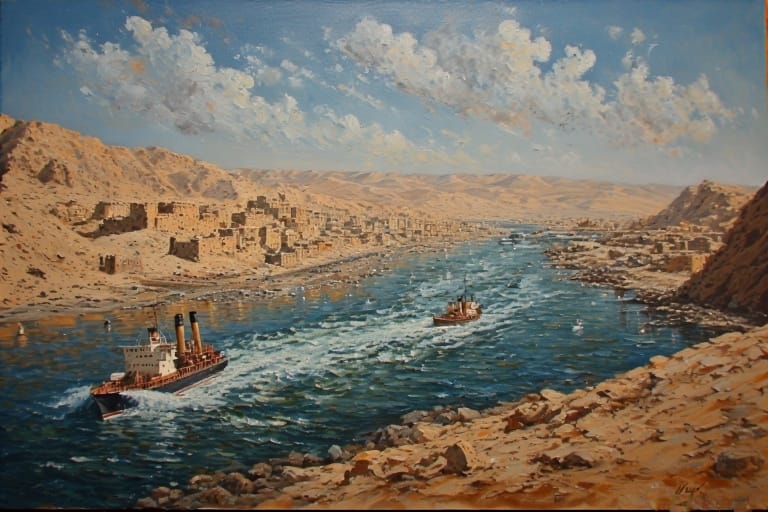
The air hung heavy with smoke and the horrific scent of burning timber. The Volga River, usually a placid artery flowing through southern Russia, was transformed into a stage for apocalyptic warfare. On the morning of August 23, 1942, artillery thundered relentlessly, drowning out even the cries of the desperate souls trapped inside Stalingrad’s crumbling walls. The city, once a bustling industrial hub, had become a fortress under siege, its streets soon to become a labyrinth of death. The Battle of Stalingrad—the cataclysmic clash that would come to define the Second World War’s Eastern Front—had officially ignited.
Harrowing and merciless, the first salvo of conflict carved the opening chapter of one of history’s bloodiest and most crucial engagements. Soldiers on both sides were about to confront not only each other's forces but the very essence of survival amidst utter destruction. This day marked not just a military operation, but a profound struggle for the soul of a nation, for global supremacy, and for the fateful outcome of a war unlike any before.
Stalingrad: A City on the Edge of Annihilation
Stalingrad, named after the Soviet leader Joseph Stalin only a few years earlier, sat at the crossroads of strategic imperatives and symbolic weight. Located on the western bank of the mighty Volga River, the city was an industrial powerhouse producing armaments critical to the Soviet war effort. Sailors, factory workers, and engineers had already been mobilized into a force of resilience, as Stalin himself famously decreed that the city “must not fall, for the honor of the Soviet Union.”
The architectural skeleton of Stalingrad—steep factories, residential blocks, rail yards, and wide avenues—would soon become a grid of brutal urban combat. The city’s fiery fate embodied not just military strategy but the dogged spirit and suffering of its inhabitants. Its fall would signify a devastating symbolic blow to the USSR; its defense a beacon of defiance.
The Strategic Chessboard: Why Stalingrad Mattered
Why did Stalingrad become such a fiercely contested prize? Geographically, it was the gateway to the resource-rich Caucasus, controlling the crucial Volga River, a vital artery for Soviet logistics. Politically and psychologically, its capture would serve Hitler’s ambitions of crushing Soviet morale and demonstrating the Nazi army’s unstoppable might. For Stalin, its defense was tantamount to a sacred duty—losing the city was unthinkable.
Operation Blue, the German summer offensive in 1942, aimed to secure the oil fields of the Caucasus and sever Soviet access to natural resources. Stalingrad stood in the path of this grand design. Control of the city would also allow the Germans to dominate river traffic on the Volga and open a corridor deep into the Soviet heartland. The stakes had never been higher.
The German Advance: Operation Blue Unfolds
By mid-August 1942, the Wehrmacht's Sixth Army under General Friedrich Paulus was poised to strike. Hundreds of thousands of German troops moved with chilling precision, confident—and some might say hubristic—that the Soviet defenses would crumble before them. Returning from previous victories, the German military machine rolled into the city’s outskirts, unleashing a barrage that reduced entire districts to rubble within hours.
The Luftwaffe’s unrelenting air assaults prepared the way: waves of bombers delivered torrents of incendiary and high-explosive bombs. The city was engulfed in a maelstrom of fire, smoke, and collapsing buildings. For the German soldiers, it was a terrifying yet mesmerizing spectacle—the price they were willing to pay for victory.
The Soviet Stand: Defiance Against All Odds
But the Soviets were far from defeated. Under the tenacious command of General Vasily Chuikov and political commissars embodying Stalin’s will, the Red Army transformed adversity into tenacity. Despite suffering crippling losses, they refused to yield an inch of ground. Soviet soldiers, many survivors of brutal Eastern Front fighting, dug in and prepared for a grotesque and intimate form of warfare that would shatter conventional tactics.
The Soviet defense strategy evolved in real-time—concentrating on close-quarter battles, destroying bridges, and exploiting the ruins to launch counterattacks at vulnerable points. Commanders exhorted their men with the haunting slogan: “Not One Step Back.” Motivation sprang from patriotism, ideology, and a raw desire to survive.
The First Hour: An Unyielding Inferno
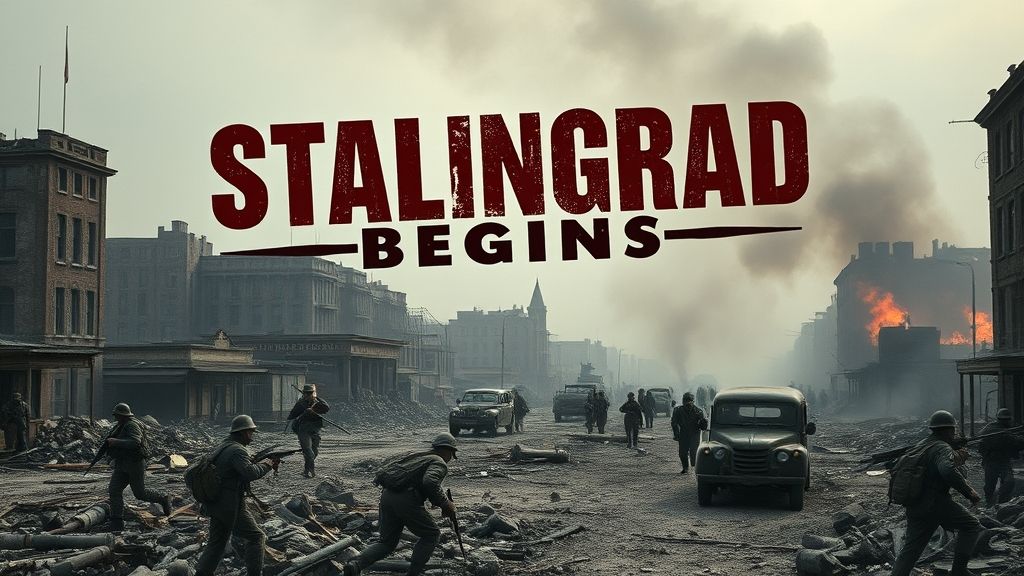
As dawn broke on August 23, the German artillery unleashed a hellish cacophony. Barrage after barrage devastated neighborhoods—the Red October tractor factory, the Barrikady steel works, the grain elevator—all strategic points quickly turned into battlefields. Soldiers ran through streets littered with rubble, bodies frozen in their last agonized moments.
Amidst the chaos, courage erupted in the most unexpected places. A Soviet sniper would find sanctuary among the ruins, targeting German officers with deadly precision. A small unit of Red Army troops, vastly outnumbered, held a building against repeated assaults, refusing surrender even as grenades rained inside their entrenchments.
Urban Warfare in the Heart of the Volga
The Battle of Stalingrad was no longer a war of grand maneuvers but a brutal contest of survival amid shattered buildings, sewers, and shattered factories. Each street, alley, and room was a bloody battleground. Both sides soon realized that traditional open-field tactics were worthless here.
Fighting became savage hand-to-hand combat—soldiers wielded knives, rifle butts, even bare fists. The city became a maze, a deathtrap littered with booby traps and snipers waiting in the shadows. Amid the ruins, ordinary civilians became involuntary combatants—whether as partisans, medics, or victims.
Commanders in the Crossfire: Paulus and Chuikov
At the heart of this maelstrom were two commanders whose decisions would impact thousands of lives and the war’s direction. General Friedrich Paulus, a professional soldier sharing Hitler’s confidence in victory, faced the mounting difficulties of an increasingly hostile and complex urban battlefield.
Opposite him was Vasily Chuikov, whose leadership embodied stubbornness and tactical ingenuity. Known as the master of “hugging the enemy” — engaging German forces at such close quarters as to neutralize their artillery and air support advantage — Chuikov’s resolve became legendary. Their duel would, in many ways, reflect the broader ideological and military struggle between fascism and communism.
The Civilian Plight: Horror Amidst the Rubble
While soldiers fought, the civilians of Stalingrad endured a nightmare. Homes were obliterated, food scarce, and water often contaminated or inaccessible. Shell shock and starvation were constant companions. Families were torn apart; children lost without hope. In the chaos, hospitals overflowed, and makeshift shelters struggled to protect the weak amid the bombardments.
Yet, amidst despair, stories of human resilience emerged. Women organized soup kitchens and helped ferry supplies; civilians improvised weapons, and church bells tolled for the dead even as the living fought for their city.
The Role of Soviet Industry and Propaganda
The city’s factories, despite being heavily bombed, continued to produce armaments and supplies, often under harrowing conditions. The Soviet propaganda machine capitalized on the city’s defense to galvanize not only local populations but the entire Soviet Union.
Films, radio broadcasts, and newspapers exalted Stalingrad as the heart of Soviet perseverance. The battle transcended mere military engagement— it became a living symbol of resistance and the collective will of the Soviet citizenry.
The Luftwaffe’s Bombing Campaign: Fire and Smoke
German air forces played a vital role in softening Soviet defenses. The blitzkrieg-style bombing raids brought staggering destruction. At times, the entire city seemed consumed by flames and thick black smoke, obscuring horizons and choking the skies.
However, the Luftwaffe’s immense focus on bombing caused logistical strain and did not fully anticipate the extent of Soviet defensive preparations. Much of the city’s industry had been moved eastward, and Soviet anti-aircraft defenses adapted swiftly.
The Turning Tide: Initial Soviet Counteractions
By late August and early September, Soviet forces began small but strategic counterattacks, exploiting German overextension. The Red Army utilized its knowledge of the terrain and massed reinforcements from across the Russian heartland.
These countermeasures began to shift the momentum, turning the urban maze into a deadly trap for German soldiers, who found themselves increasingly isolated, cut off, and vulnerable.
The German Perspective: Optimism and Underestimation
Despite the ferocity of the Soviet resistance, many German officers believed victory was within grasp. Fueled by earlier successes and the belief in superior training and equipment, the Wehrmacht’s command underestimated the Soviet capacity to absorb losses and continue fighting.
This misplaced confidence would prove costly, as prolonged urban warfare drained German resources and sapped morale, conditions they had not fully prepared for.
The Broader Context: The Eastern Front’s Deadliest Clash Begins
The Battle of Stalingrad’s beginning was a component of the broader cataclysm on the Eastern Front, where millions of soldiers faced off in a struggle of destruction and survival. The Eastern Front already consumed vast swathes of land and human lives, but Stalingrad promised to be the pivot on which the fate of the war would turn.
Its outcome would resonate far beyond the dusty streets of a single city—it was the crucible upon which the destiny of Europe was to be forged.
International Reactions and the Global Impact
Around the world, the news of the battle’s commencement stirred hope and dread. For the Allied powers, the Soviet stand provided a glimmer of hope against Axis advances. Meanwhile, Axis allies followed the unfolding catastrophe with increasing concern.
The outcome of Stalingrad, however, was still unwritten, and the world braced for an epic duel that could well decide the war’s wider course.
The Psychological Weight: Morale, Propaganda, and Resolve
The battle wasn’t merely a contest of bullets but an epic war of will. Propaganda became a weapon on both sides, with each command attempting to break enemy morale while fortifying its own. Stories of heroism, sacrifice, and martyrdom permeated the front lines and home fronts alike.
Stalingrad rapidly became a symbol of endurance— an embodiment of hope amidst devastation.
The Siege’s Early Days: Survival, Adaptation, and Resistance
As the siege intensified, survival strategies evolved. Civilians and soldiers alike adapted to conditions that defied human endurance. Makeshift hospitals, rationing, and scavenging became vital. Despite the chaos, moments of humanity persisted—comradeship, shared food, and letters from the front offered scant comfort.
Logistics and Supply Lines: Lifelines Under Threat
Maintaining supply lines was a Herculean task for the Soviet defenders. The Volga River served as the last artery for reinforcements and supplies—constantly threatened by air attacks and artillery fire. For the Germans, overextended lines and the chaotic urban landscape complicated their own efforts.
How these logistics battles played out would shape the ongoing course of the siege.
Voices from the Front: Diaries, Letters, and Memoirs
Amidst the carnage, individual voices emerge from diaries and letters—young soldiers like Tanya Savicheva, whose diary entries poignantly recorded loss; generals writing strategic communiqués; and civilians describing despair and hope. These personal narratives humanize a battle often reduced to statistics and timelines.
The Battle’s Symbolism in Soviet and German Narratives
To the Soviets, Stalingrad was to be immortalized as the triumph of socialism against fascism. To the Germans, it was initially a testament to military prowess, later a somber symbol of hubris and disaster. The battle has since resided in history as a complex narrative of ideology, resilience, and tragic sacrifice.
The Legacy of August 23: Setting the Stage for a Turning Point
The first day of battle marked a tragic commitment to a protracted campaign that would last months. From the smoke and ruins of August 23 emerged a saga of heroism and horror, a milestone that foreshadowed the eventual Soviet triumph that would decisively shift the war’s tide.
It was the beginning not only of a battle but of a story that the world would never forget.
Conclusion
The opening day of the Battle of Stalingrad stands as a somber testament to the brutality of war and the indomitable spirit of humanity under fire. On August 23, 1942, a city breathed its last in peace and exhorted its defenders into a war that would shatter lives but also help reshape history itself. Beyond the mass movements of armies and the thunder of artillery lay the stories of endurance, sacrifice, and hope that still resonate.
This battle, born in fire and forged in defiance, reminds us of the cost of freedom and the price nations pay in moments of existential trial. Stalingrad was not just a turning point in World War II; it was a crucible in which the courage of ordinary souls was as pivotal as the strategy of generals. The echo of August 23 endures—a call to remember, reflect, and learn from the past.
FAQs
Q1: Why did the Battle of Stalingrad begin on August 23, 1942?
A1: This date marks the start of the German Sixth Army’s assault on Stalingrad under Operation Blue, aiming to capture the city as a strategic and symbolic prize critical to the German campaign.
Q2: What made Stalingrad so strategically important during World War II?
A2: Stalingrad controlled vital industrial resources, the Volga River—a key logistics route—and served as the gateway to the oil-rich Caucasus, making it crucial for both German and Soviet war efforts.
Q3: Who were the principal commanders at the beginning of the battle?
A3: General Friedrich Paulus commanded the German Sixth Army, while General Vasily Chuikov led the Soviet 62nd Army tasked with defending the city.
Q4: How did civilians experience the opening of the battle?
A4: Civilians endured horrific bombardment and destruction, facing starvation, displacement, and death while some joined or supported the Soviet defense in various capacities.
Q5: What role did propaganda play during the initial phase of the battle?
A5: Propaganda was crucial in bolstering Soviet morale, depicting the defense of Stalingrad as a heroic stand against fascism, while German propaganda initially projected confidence and eventual victory.
Q6: How did the urban environment shape the battle’s early fighting?
A6: The city’s ruins created a complex, brutal urban warfare environment where traditional warfare tactics failed, leading to intense close-quarter combat, street fighting, and house-to-house battles.
Q7: What was the impact of the Luftwaffe’s bombing campaign in the early days?
A7: The Luftwaffe caused massive destruction, reducing city blocks to rubble and severely disrupting Soviet infrastructure, but failed to break Soviet will or eliminate key Soviet defenses.
Q8: Did the initial launch of the battle foreshadow the ultimate Soviet victory?
A8: While starting with intense German offensives, the battle’s early days showed Soviet resilience and adaptability that laid the foundation for their eventual encirclement and defeat of German forces.