Table of Contents
- The Battle of the Alamo Falls: Prelude to a Defiant Stand
- The Texas Revolution: A Cauldron of Hope and Conflict
- San Antonio in Early 1836: A City on Edge
- The Defenders Assemble: Faces and Fates United
- The Mexican Army’s March: Santa Anna’s Unyielding Resolve
- Inside the Walls: Life and Tension Behind Fortified Doors
- The Morning of March 6: The Dawn of a Ruthless Siege
- The Last Stand: Courage, Chaos, and Carnage
- The Fall of the Alamo: Dreams in Ashes
- The Aftermath: Voices Silenced, But Not Forgotten
- The Alamo’s Echo: Rallying Cry of Texan Independence
- Profiles of Valor: Davy Crockett, William Travis, and Jim Bowie
- Mexican Perspective: Santa Anna’s Vision and Cost
- The Global Impact: How the Alamo Shaped the Americas
- Memory and Myth: The Alamo in American Culture
- Historical Controversies: Heroism, Strategy, and Legacy
- Archaeology and Discovery: Unearthing the Past Today
- The Alamo in Modern San Antonio: Monument and Muse
- Lessons from the Battle: Freedom, Sacrifice, and Resolve
- Conclusion: The Unyielding Spirit of the Alamo Stands Eternal
- FAQs: Understanding the Battle and Its Legacy
- External Resource
- Internal Link
The sun climbed slowly over the horizon of San Antonio, casting long shadows on a moment forever etched into the soul of a burgeoning republic. It was March 6, 1836, and inside the weathered walls of the Alamo, a small band of Texan defenders — weary, resolute, and vastly outnumbered — braced for the storm of steel and fire that would soon consume them. The air was thick with smoke, desperation, and an unspoken resolve that burned brighter than the torches illuminating the night.
This was not merely a battle. It was a symbol of unyielding defiance against overwhelming odds, a piece of history that would echo far beyond the rugged frontier of Texas. The Battle of the Alamo, as it came to be known, represents the clash of determined dreams, imperial ambition, and the birth pangs of a new nation.
The Texas Revolution: A Cauldron of Hope and Conflict
By the early 1830s, tensions between the Mexican government and the American settlers in Texas had reached a boiling point. The seeds of conflict were sown in a complex tapestry of cultural clash, political ideology, and competing visions of governance. Mexico, having won independence from Spain a decade earlier, was struggling to maintain a fragile grip on its northern territories.
American immigrants — many from the southern United States — were drawn to Texas by promises of land and opportunity, but their cultural and political values clashed with Mexican law, particularly regarding slavery and local autonomy. As Mexican President Antonio López de Santa Anna centralized power, disregarding earlier federalist agreements, rebellion simmered throughout the region.
The call for Texan independence grew louder, fueled by a mixture of grievances and a burgeoning sense of identity. The Alamo would become the crucible in which these forces collided with irreversible consequence.
San Antonio in Early 1836: A City on Edge
San Antonio de Béxar was a frontier town caught between worlds — Mexican authority and Anglo-American settlers poised for confrontation. The Alamo itself, once a Spanish mission, served as a fortification and symbol of centuries of struggle for control in this land of borderlands.
In early 1836, the winds of war were unmistakable. Texan rebels had taken control of San Antonio, and Mexican troops were mobilizing to reclaim it. The city's dusty streets and historic plazas thrummed with tension and unease, as families and fighters alike prepared for the storm ahead.
The Defenders Assemble: Faces and Fates United
Inside the crumbling walls of the Alamo, a motley assemblage stood resolute. Roughly two hundred men, including frontiersmen, former soldiers, and passionate volunteers from across America, were led by William B. Travis and James Bowie. Among them was the legendary Davy Crockett, a former U.S. congressman with a reputation as a frontier folk hero.
Each defender carried a story—in many cases, of exile, sacrifice, or conviction. Brought together by a shared cause and forced by circumstance, these men knew they faced insurmountable odds against Santa Anna’s vastly larger army. Yet, determination forged a bond that would become immortal.
The Mexican Army’s March: Santa Anna’s Unyielding Resolve
General Antonio López de Santa Anna was no stranger to war or ambition. His vision for Mexico was clear: to quash rebellion and preserve the nation’s territorial integrity by whatever means necessary. Leading a well-disciplined force of over 1,800 soldiers, Santa Anna's march was swift and ruthless.
Approaching San Antonio, Santa Anna was determined to break the uprising quickly. His strategy was brutal but calculated: the overwhelming force would shock and intimidate, crushing resistance in a demonstration of might. To him, the rebels were insurgents threatening the fragile fabric of Mexican sovereignty.
Inside the Walls: Life and Tension Behind Fortified Doors
Life inside the Alamo was grim and austere. The defenders faced shortages of food, water, and ammunition. The relentless Texan winter had left cold winds rattling the adobe walls, while news from outside was sporadic and grim.
Soldiers kept watch under moonless nights, hearts pounding with fear and hope intertwined. The campfires flickered against the darkness as men whispered prayers, wrote farewell letters, or sharpened their weapons — all fully aware that few would emerge alive.
The Morning of March 6: The Dawn of a Ruthless Siege
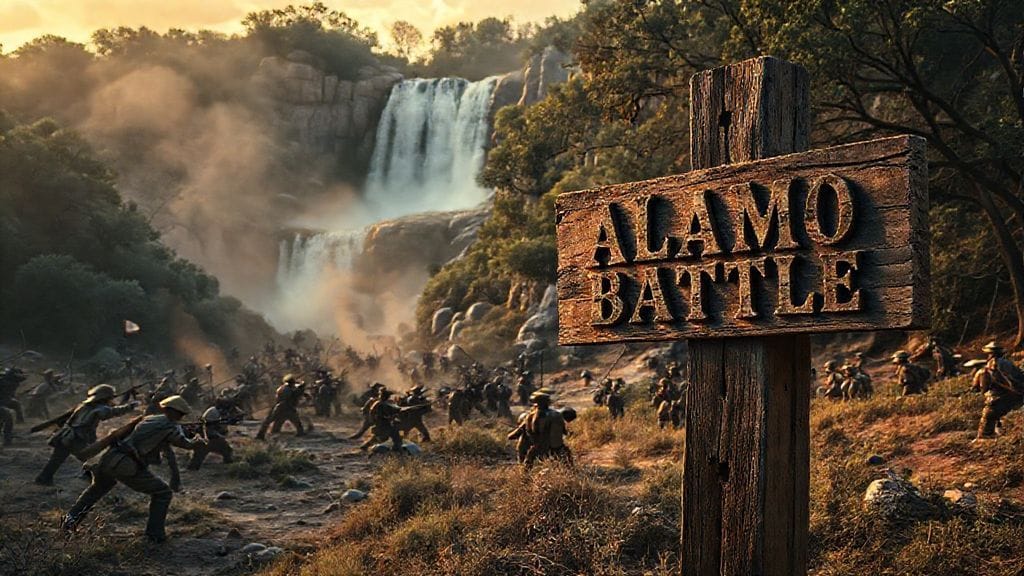
As first light crept over the horizon on March 6, Santa Anna’s troops launched their assault. Chaos erupted as gunfire cracked and cannonballs tore through the fort’s defenses. The cries of battle pierced the dawn, a violent symphony of courage and agony.
The attackers surged relentlessly, hammering at every breach. Smoke and dust tangled with the screams of men fighting not just for victory, but survival itself. The defenders fought with desperation; every inch gained or lost was paid in blood.
The Last Stand: Courage, Chaos, and Carnage
Inside the Alamo’s walls, the final hours were a brutal clash of will and weaponry. William Travis reportedly drew a line in the sand, asking men to choose whether to stay and fight or leave – all but a few chose to stay. Jim Bowie, despite illness, commanded bedside orders even as chaos descended.
Davy Crockett’s legend is born in this crucible, though the exact details of his death remain shrouded in the fog of war. The defenders fell one by one, their stand an act of defiant heroism amid an unforgiving storm of enemy fire.
The Fall of the Alamo: Dreams in Ashes
By mid-morning, resistance had ended. The Mexican forces claimed a grim victory, the Alamo reduced to a tableau of loss and valor. Nearly all of the Texan defenders were killed, their bodies left on the battlefield — a gruesome testament to the fierce fight mounted.
Yet, the battle’s significance was far from over. Though fallen, the defenders of the Alamo became martyrs whose sacrifice inspired the rallying cry “Remember the Alamo!” that would ignite the fight for Texan independence.
The Aftermath: Voices Silenced, But Not Forgotten
Santa Anna expected the victory to demoralize the rebellion, but the opposite occurred. News of the massacre galvanized Texan resolve and attracted volunteers eager to avenge the fallen.
The battle’s brutal reality also sparked international attention, with many viewing it as a struggle for freedom against despotism. The Alamo transcended its military defeat, becoming a symbol — a beacon illuminating the path to liberty.
The Alamo’s Echo: Rallying Cry of Texan Independence
In the months following March 1836, the memory of the Alamo inspired strategic victories that culminated in the decisive Battle of San Jacinto, where Texan forces under Sam Houston defeated Santa Anna, securing independence.
The sacrifice of the Alamo defenders was evoked constantly, uniting disparate groups under the banner of Texan freedom, their fallen comrades’ courage a moral lodestar in warfare’s uncertain tides.
Profiles of Valor: Davy Crockett, William Travis, and Jim Bowie
Three names stand tallest among the Alamo’s defenders. Davy Crockett, the frontiersman-electrical, embodied rugged individualism; William Travis, the fiery young commander, exemplified unwavering leadership; Jim Bowie, famed for his knife and tenacity, represented the stubborn grit of the frontier.
Their stories meld fact and folklore — men who were warriors, politicians, and legends simultaneously — crafting a human face to the colossal historical drama unfolding within the Alamo’s ancient walls.
Mexican Perspective: Santa Anna’s Vision and Cost
Santa Anna’s gamble came at a steep price. Although victorious at the Alamo, his forces were stretched thin and morale battered. His ruthless tactics alienated many Tejanos (Texans of Mexican descent) and Mexican citizens alike, complicating the political and military landscape.
In retrospect, historians debate whether his inflexibility accelerated Mexico’s loss of Texas, illustrating the nuanced dynamics on both sides of this bloody conflict.
The Global Impact: How the Alamo Shaped the Americas
Beyond Texas, the battle resonated across the Americas as an emblem of the struggle between imperial control and emerging republics. It underscored the volatile mix of nationalism, expansionism, and identity questions facing the continent.
For the United States, the event foreshadowed westward expansion, shifting demographics, and the storm clouds of future conflict. For Mexico, it marked a painful loss and a turning point in the nation’s fragile postcolonial evolution.
Memory and Myth: The Alamo in American Culture
From dusty textbooks to Hollywood epics, the Alamo’s legacy has been woven deeply into American mythology. Its tale celebrates bravery, sacrifice, and the relentless pursuit of liberty — sometimes to the exclusion of more complex truths.
This mythology has shaped not just history but identity, illustrating how narrative and memory can act as powerful forces in the construction of meaning and nationalism.
Historical Controversies: Heroism, Strategy, and Legacy
Yet the Alamo’s history is also contested. Critics argue strategic errors, overconfidence, and political divisions doomed the defenders. Others question the glorification of the battle amid broader narratives of land dispossession and cultural clashes with Indigenous peoples and Tejanos.
These debates enrich our understanding, reminding us that history is rarely a simple tale of heroes and villains.
Archaeology and Discovery: Unearthing the Past Today
Modern archaeological efforts continue to reveal new insights into the battle and daily life at the Alamo. Excavations have uncovered weapons, artifacts, and human remains, each piece adding texture and detail to this storied event.
Such discoveries bridge past and present, allowing us to honor the fallen with greater accuracy and understanding.
The Alamo in Modern San Antonio: Monument and Muse
Today, the Alamo stands as a revered monument, drawing millions of visitors annually. In the heart of San Antonio, it is both a historical site and a symbol of cultural identity, reconciliation, and education.
Events, reenactments, and preservation efforts ensure the memory continues to inspire reflection and dialogue about freedom’s cost and meaning.
Lessons from the Battle: Freedom, Sacrifice, and Resolve
The Alamo teaches profound lessons about courage in the face of impossible odds and the powerful impact of sacrifice. It speaks to the universal human desire for self-determination while warning of the complexities entangled in revolutions.
Its story challenges us to remember the multifaceted nature of history — where valor and tragedy coexist, shaping the future irrevocably.
Conclusion
The Battle of the Alamo Falls is more than a chapter in Texan or American history; it is a timeless narrative of resilience, loss, and hope. The visionaries and fighters huddled within those adobe walls knew they stood on the brink of oblivion, yet their defiance crafted a legacy that transcended death.
Their sacrifice breathed life into a fledgling republic and sent ripples through the fabric of a continent in flux. Remembering the Alamo invites us not only to honor their courage but to confront the complex realities behind legends — reminding us that history is, at its heart, a human story of struggle and earnest aspiration.
In the quiet that follows battle’s roar, the Alamo whispers an enduring truth: freedom is never free, but forged in fire and memory, it becomes immortal.
FAQs
Q1: What were the main causes leading to the Battle of the Alamo?
A: The battle was rooted in rising tensions between American settlers in Texas and the Mexican government over issues such as governance, cultural differences, and especially Mexican President Santa Anna’s centralization of power, which many Texans viewed as tyrannical.
Q2: Who were the key figures defending the Alamo?
A: The most notable figures were William B. Travis (commander), James Bowie (a militia leader known for his fighting spirit), and Davy Crockett (a famed frontiersman and former U.S. congressman).
Q3: How significant was Santa Anna’s role in the battle?
A: Santa Anna was the commanding general of the Mexican forces and crucial in planning the siege and assault. His desire to stamp out the rebellion led to harsh tactics that won the battle but arguably fueled further resistance.
Q4: What impact did the Battle of the Alamo have on the Texan Revolution?
A: Although a military defeat, the battle became a powerful symbol of resistance that unified Texan forces and inspired their eventual victory in the war for independence.
Q5: How is the Battle of the Alamo remembered today?
A: It is remembered as a heroic last stand and a rallying symbol of Texan and American courage, commemorated through monuments, cultural retellings, and educational programs.
Q6: Are there controversies surrounding the historical narrative of the Alamo?
A: Yes, some historians argue that the battle's romanticization oversimplifies complex issues, including the treatment of Tejanos, the role of slavery, and questions about leadership decisions during the siege.
Q7: How has archaeology contributed to our understanding of the battle?
A: Archaeological findings have unearthed weapons, artifacts, and remains that provide tangible evidence of the battle’s scale and the lives of those involved, enriching and sometimes challenging traditional narratives.
Q8: What broader lessons can we learn from the Battle of the Alamo?
A: The battle illustrates the profound costs of freedom, the complexity of cultural and political conflict, and the enduring power of collective memory and identity shaped through sacrifice.