Table of Contents
- The Dawn of a Defining Clash: Europe on the Brink
- The Rise of Attila the Hun: From Shadows to Storm
- Gaul Under Threat: The Gothic and Roman Response
- Prelude to Catalaunian Plains: A Gathering of Forces
- June 20, 451: The Catalaunian Battlefield Comes Alive
- The Ferocity of Combat: Clashing Titans on the Plains
- The Role of Flavius Aetius: The Last Roman General
- King Theodoric I and the Visigoths: Unlikely Allies
- The Hunnic Horde: Strategy and Psychological Warfare
- The Tide Turns: Moments of Crisis and Valor
- The Aftermath on the Battlefield: Heroism and Loss
- The Huns’ Retreat: A Pyrrhic Victory?
- The Western Roman Empire: Between Survival and Decline
- Gaul’s Future: Seeds of Medieval Europe
- How History Remembered the Battle: Myth, Memory, and Legacy
- Unseen Threads: The Battle’s Impact Beyond Europe
- Archaeology and Legend: Unearthing Catalaunian Secrets
- The Battle in Popular Culture and Historical Fiction
- Attila’s Shadow: The Battle’s Role in Shaping European Identity
- Reflections on the Battle’s Enduring Lessons
The Dawn of a Defining Clash: Europe on the Brink
The sun rose over the rolling fields near Châlons, casting a pale golden light over a landscape forever marked by war's impending doom. It was June 20, 451 CE—a day destined to eclipse many others in the annals of history. The air bore the charged tension of armies amassing, the murmurs of countless warriors rustling through banners and armor. Over thirty thousand men prepared to face each other not simply as soldiers but as the last line warding off a tempest threatening to engulf the West. Europe, vulnerable and fraying at the seams of its ancient empires, stood at the precipice.
This was no ordinary battle. This was the Battle of the Catalaunian Plains, or as it would echo through time, the Battle of Châlons—an epic confrontation where the forces of the formidable Attila the Hun met a rare coalition of Romans, Visigoths, and allied tribes. Their fate would sculpt the future of a continent.
The Rise of Attila the Hun: From Shadows to Storm
To grasp the battle’s magnitude, one must first tread the shadowy path of Attila the Hun’s meteoric rise. Born into the obscure tribal world of the Huns in the early 5th century, Attila’s early life is veiled in mystery and legend. Yet his ascent was unmistakably brutal and brilliant—a man forged in the crucible of tribal warfare who came to command a vast confederation of horsemen that seemed to ride the winds themselves.
By the 440s, Attila had united disparate Hunnic clans into a ferocious horde. His reputation rapidly transcended terrifying tales; to the Roman world, he became “the Scourge of God,” a relentless force threatening to pulverize the Roman West. Raids turned into invasions, and by 451 his ambitions had carried him deep into the heart of Gaul, challenging the very nerve center of Western Roman power.
Gaul Under Threat: The Gothic and Roman Response
The Western Roman Empire, weakened by decades of internal strife, barbarian settlements, and economic malaise, faced an existential crisis. Gaul, rich in resources and strategic position, was the gateway for any invader seeking Rome’s western provinces.
In this fraught context, Flavius Aetius, the empire’s last great general, knew that traditional Roman legions alone could not repel the Hunnic flood. He turned to the Visigoths, once foes turned foederati (allied tribes), under King Theodoric I. This uneasy alliance—Romans and “barbarians”—was born out of sheer necessity, a shared dread of the annihilation that might follow Attila’s unchecked advance.
Prelude to Catalaunian Plains: A Gathering of Forces
As June approached, the stage was meticulously set. Armies numbered tens of thousands, cavalry and infantry arrayed in tight formations, their commanders aware that this confrontation could decide an entire epoch’s fate. The Roman-Visigothic coalition integrated other tribal groups—Franks, Burgundians—in a polyglot force committed to halting the Huns’ relentless pressure.
The site near Châlons was chosen not by accident but by strategic calculation: open enough for cavalry maneuvers, yet constrained enough to neutralize some of the Huns’ famed mobility. Scouts, messengers, and the omnipresent tension defined those mornings, as leaders negotiated, marshaled troops, and awaited the thunder they all sensed was inevitable.
June 20, 451: The Catalaunian Battlefield Comes Alive
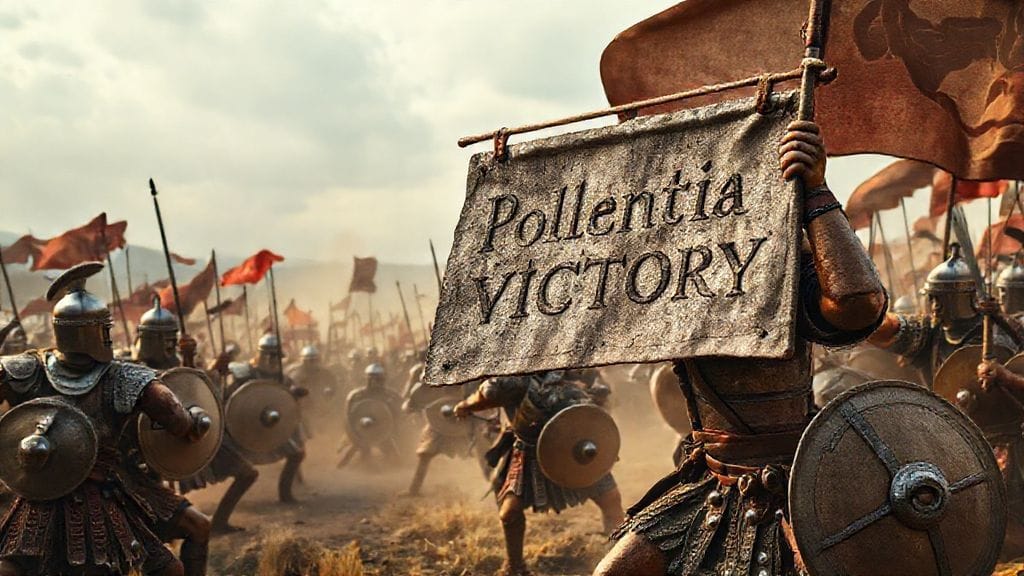
The dawn broke on June 20 with a simmering calm. Then, like a tempest unleashed, the battle began. The clamor of war horns, the clang of steel, the whinnying of horses—the plains near Châlons transformed into a maelstrom. Hunnic horse archers swirled in deadly arcs, unleashing precise volleys. The Roman legions formed shields and counterattacked, while the Visigoths, gripping their distinctive seaxes and lances, charged with fury.
In those first hours, the clash was brutal and chaotic. The thunder of hooves collided with the clash of swords and spears; dust choked the air; screams echoed across the horizon. Attila himself was often near the front, a living force of nature driving his men forward, wild-eyed and sanguine in the swirl of carnage.
The Ferocity of Combat: Clashing Titans on the Plains
This was no skirmish—it was a cataclysm. From dawn to dusk, the battlefield was a vast chessboard of horrors and heroism. The Huns relied on speed and psychological impact, encircling and disorienting their foes. Yet the Romans and Visigoths held their lines with resolve born from desperation.
Theodoric I, leading the Visigothic right flank, carved through the enemy with a warrior’s zeal. Flavius Aetius coordinated the left, his experience and discipline crucial in maintaining order amid chaos. Despite the overwhelming ferocity, the coalition’s command structures enabled them to sustain pressure—buying time, absorbing blows, trading weapon for weapon.
The Role of Flavius Aetius: The Last Roman General
Few figures from this era embody the twilight of the Roman Empire more poignantly than Flavius Aetius. His political acumen and military expertise earned him the moniker “the Last of the Romans.” Aetius knew that the legacy of Rome hung on this battle.
Throughout the day, Aetius’s decisions were pivotal. Whether ordering a cavalry charge into an exposed Hunnic flank or rallying faltering troops, his command was a blend of pragmatism and bravery. Behind his steely countenance was the profound awareness that the empire’s fragile existence depended on lines of steel and courage.
King Theodoric I and the Visigoths: Unlikely Allies
Theodoric I, a warrior king of Gothic heritage, was a figure larger than life. Having once battled the Romans, now he fought alongside them against a common enemy, a testament to the shifting political sands of the time.
His motivations were clear: defending his people's lands and asserting Gothic relevance on the Western stage. His valor on the battlefield was unmatched; yet fate dealt a grievous blow when he fell during the combat, mortally wounded. The death of the Visigothic king underscored the brutal price paid for this fragile alliance.
The Hunnic Horde: Strategy and Psychological Warfare
Attila's approach was as strategic as it was terrifying. His forces utilized lightning-fast cavalry strikes and feigned retreats, sowing confusion among opponents. Moreover, the Huns harnessed psychological warfare masterfully—rumors, fear, and sheer reputation preceded them.
But the coalition’s steadiness at Catalaunian Plains proved the limits of terror. The battle revealed that the Hunnic war machine, while devastating, could be contained and repelled by unified resistance.
The Tide Turns: Moments of Crisis and Valor
The battle see-sawed through its grim hours. When the Visigothic center faltered after Theodoric’s death, panic threatened to cascade. Yet leadership and resolve held firm. Roman contingents filled gaps, counterattacks blunted Hunnic momentum.
Instances of extraordinary valor punctuated the day: cavalry charging through death clouds, infantry squares holding lines against overwhelming odds. It was a testament to human resilience amid the thunder of destruction.
The Aftermath on the Battlefield: Heroism and Loss
As dusk tempered the day, survivors counted wounds and losses. The plains bore rivers of blood—thousands dead on both sides, including nobles, warriors, and commanders. Theodoric I was dead; many Hunnic elites also perished.
Yet the battlefield was silent now, save for the moans of the wounded and the cries of the bereaved. The debris of war—broken weapons, scattered banners—lay strewn like grim relics of a world on the pivot.
The Huns’ Retreat: A Pyrrhic Victory?
Though Attila withdrew northward following the battle, historians debate whether the encounter was a defeat or something more complex. The Huns retained military strength but lost the initiative and momentum.
For Attila, the battle marked a turning point—his aura of invincibility shattered, his capacity to invade Western Europe stalled indefinitely. It was a strategic setback that would reverberate far beyond the fields of Gaul.
The Western Roman Empire: Between Survival and Decline
The victory at Catalaunian Plains was a fleeting balm for the crumbling western empire. Rome’s foundations continued to erode—political fragmentation, economic hardship, and waves of migrations loomed ahead.
Yet, the coalition’s stand proved Rome’s enduring spirit. It displayed cooperation between Roman and barbarian forces, hinting at the complex ethnicity and power reconfigurations that would shape early medieval Europe.
Gaul’s Future: Seeds of Medieval Europe
In the wake of the battle, Gaul did not simply revert to old order; instead, it evolved into a mosaic of kingdoms and cultures. The Visigoths would hold sway in parts, paving a path toward the medieval “barbarian” kingdoms.
Catalaunian Plains thus emerges as more than a military event—it was a crucible where remnants of Roman civilization and barbarian ascendancy fused, birthing the nascent medieval order.
How History Remembered the Battle: Myth, Memory, and Legacy
The battle permeated medieval and modern imagination, often cloaked in myth and legend. Chroniclers painted it as a last bastion against invasion; some even romanticized the “stand against barbarism” trope.
Yet the truth lies in its complexity: a clash of worlds, ideologies, and survival strategies. Memory weighs heavily here—how societies choose to recall moments shapes identity and politics for centuries.
Unseen Threads: The Battle’s Impact Beyond Europe
While geographically restricted to Gaul, the aftermath rippled far beyond. Roman resilience influenced Byzantine policies; the Huns’ defeat shifted migration streams; Europe’s borders and ethnicities were forever altered.
It shaped the eventual rise of the Frankish kingdoms, which would rise from the ashes to forge a new European destiny.
Archaeology and Legend: Unearthing Catalaunian Secrets
Modern archaeology has sought to pinpoint the battle’s precise location and details, though debates persist. Excavations revealed weapons and burial sites, aligning fragments of history with physical traces.
These discoveries fuel both academic scrutiny and public fascination, bridging the gap between dusty annals and visceral reality.
The Battle in Popular Culture and Historical Fiction
From medieval chronicles to novels and films, Catalaunian Plains captivates storytellers. It symbolizes resistance, heroism, and the twilight of empires.
Characters like Attila have morphed from feared barbarian to complex anti-hero or legend. The battle’s dramatic scale offers inexhaustible inspiration for exploring human conflict.
Attila’s Shadow: The Battle’s Role in Shaping European Identity
Attila embodies a paradox: destroyer and architect of change. His defeat at Châlons symbolized the end of one epoch but sowed seeds for another, reminding Europe of its fragility and capacity for rebirth.
This battle remains a foundational narrative in European historical consciousness—a testament to endurance, alliance, and transformation.
Reflections on the Battle’s Enduring Lessons
The Battle of the Catalaunian Plains teaches us about the complexity of empire, cultural fusion, and war’s human toll. It reminds modern readers that history often unfolds not in grand victories, but in gritty, costly stalemates where alliances and resilience matter profoundly.
It poses timeless questions: how do societies unite against overwhelming threats? What legacies do we inherit from moments of crisis? And ultimately, how does the past inform our shared future?
Conclusion
In the radiant light of a long-gone June morning, the plains near Châlons bore witness to a spectacle of desperation and courage, ambition and loss. The Battle of the Catalaunian Plains was not just a military engagement; it was the crucible in which the fate of Western civilization was fiercely contested.
Though the dust of the battle settled, its ripples echoed through centuries—shaping the contours of Europe’s destiny. The coalition of Romans, Visigoths, and other tribes showed that unity, even among unlikely allies, could confront the seemingly unstoppable. Yet, with death, sacrifice, and the harsh realities of imperial decline, the victory was bittersweet, marking a turning point from the classical world toward the medieval.
This battle’s enduring power lies not just in the clash of armies but in the profound human stories intertwined—the leaders who dared, the warriors who stood firm, and the societies forced to adapt. It teaches us about resilience amidst upheaval, the fragile balance of power, and the profound human capacity to face the storm together.
FAQs
Q1: What were the main causes leading to the Battle of the Catalaunian Plains?
The battle was primarily triggered by Attila the Hun’s aggressive expansion into Western Europe, particularly Gaul, and the Western Roman Empire’s need to defend its territories. Political fragmentation and alliances among Roman and barbarian tribes also set the stage.
Q2: Who were the key figures in the battle?
Flavius Aetius, the Roman general often called "the Last of the Romans," led the coalition forces. On the other side, Attila commanded the Hunnic army. Theodoric I, king of the Visigoths, was a crucial ally who died in combat.
Q3: How significant was the battle in halting the Hunnic advance?
The battle was decisive in halting Attila's push further into Western Europe. Though not a total defeat, it broke the momentum of the Huns, preventing their domination of Gaul and possibly Western Europe.
Q4: What alliances were formed for this battle and why?
The Western Roman Empire formed an alliance with the Visigoths and other barbarian tribes because the empire alone was too weakened to resist Attila effectively. This coalition of Romans and "barbarians" was born from necessity.
Q5: How did the battle influence the Western Roman Empire’s fate?
While the battle temporarily preserved parts of Gaul and delayed Hunnic conquest, it did not reverse the Western Empire's overall decline, which continued in the following decades.
Q6: What is the legacy of the Battle of Catalaunian Plains in European history?
It represents a crucial moment in the transition from antiquity to the Middle Ages, illustrating the complex dynamics between Romans and barbarian kingdoms and shaping the development of medieval Europe.
Q7: Has the exact location of the battle been identified?
While traditionally placed near Châlons in Gaul, modern archaeology has not decisively identified the exact site, with ongoing debates among historians.
Q8: How is the battle remembered in popular culture?
Often romanticized, the battle is a symbol of heroic resistance and political upheaval. Attila remains a popular figure in literature, film, and legend, and the battle serves as a backdrop for exploring themes of empire and cultural transformation.