Table of Contents
- The Twilight of an Empire: Europe on the Brink
- Odoacer’s Rise: The Fall of the Western Roman Empire
- The Kingdom of Italy Under Odoacer’s Rule
- The Ostrogoths Advance: The Ambition of Theodoric the Great
- Verona, 489: The Staging Ground for History
- The Battle Unfolds: Odoacer vs. Theodoric
- The Warrior Kings: Portraits of Odoacer and Theodoric
- Clash of Cultures: Romans, Goths, and the Struggle for Italy
- Turning Points on the Battlefield: Strategy and Chaos
- The Defeat of Odoacer: An Empire’s Last Roar
- The Aftermath: The Death Throes of Odoacer’s Kingdom
- Theodoric’s Triumph: Establishing the Ostrogothic Kingdom
- Political Reconfigurations: Shifting Power in Post-Roman Italy
- Legacy of the Battle: A Prelude to the Medieval Era
- Cultural Resonance: How Verona’s Battle Echoed through History
- Odoacer and Theodoric in Memory and Myth
- The Battle’s Role in Shaping European Identity
- Verona’s Place on the Historical Map
- Lessons in Leadership and Warfare from 489 AD
- The Battle’s Place in the Fall of Antiquity
- Echoes in Modern Scholarship and Popular Culture
- From Ruins to Renaissance: Italy after the Ostrogothic Rule
- Conclusion: The End of an Era, The Dawn of Another
- FAQs: Understanding the Battle of Verona
- External Resources and Further Reading
- Internal Link: Visit History Sphere
The Twilight of an Empire: Europe on the Brink
On the misted morning of 30 September 489 AD, the air hung heavy over the hills surrounding Verona. The city, a jewel of Northern Italy, bore silent witness to the tumultuous events that had been dawning across the continent for decades. At this very hour, two titanic forces, symbolizing the last vestiges of Roman order and the dawning barbarian power, were about to meet in a battle that would echo far beyond the fields of Veneto.
Odoacer, the Germanic chieftain who had once deposed the last Western Roman Emperor, Romulus Augustulus, and declared himself King of Italy, was now challenged by another barbarian leader: Theodoric the Great, king of the Ostrogoths. This confrontation was more than a mere battle; it was a defining moment on the historical fault line between Antiquity and the Middle Ages, a clash wherein the fate of an entire realm was about to be rewritten.
This article delves into the complex mosaic of this historic encounter—the Battle of Verona, fought in September 489, which saw the decisive defeat of Odoacer by Theodoric. Beyond the clash of armies and swords, this event marked the rebirth of Italy under Gothic rule, symbolizing the transformation of the post-Roman world.
Odoacer’s Rise: The Fall of the Western Roman Empire
To understand the Battle of Verona, one must first grasp the dramatic collapse of the Western Roman Empire in the late fifth century. Odoacer—a man from the Scirian tribe—emerged as a pivotal figure amidst the empire’s disintegration. In 476 AD, his forces deposed the boy emperor Romulus Augustulus, marking what many historians consider the symbolic end of the Western Roman Empire.
However, Odoacer’s ascendance was not the beginning of chaos but rather an interregnum—a fragile bridge between Rome’s imperial past and the barbarian-dominated future. He declared himself King of Italy, sending the imperial regalia to the Eastern Emperor Zeno and ostensibly ruling Italy as a subordinate to Constantinople. His reign, though semi-legitimate, brought a degree of stability absent since Rome’s fall.
But Odoacer’s rule was fraught with tension. His barbarian followers expected rewards; the Roman aristocracy nurtured lingering resentments. Moreover, Ostrogoths under Theodoric, themselves refugees and warriors seeking a haven, eyed Italy’s rich lands with desire and urgency.
The Kingdom of Italy Under Odoacer’s Rule
Odoacer’s tenure over Italy was a delicate balancing act. On the one hand, he respected Roman administrative traditions and retained many Roman officials, understanding the importance of continuity. On the other, his power rested heavily on his Germanic troops who demanded land and spoils.
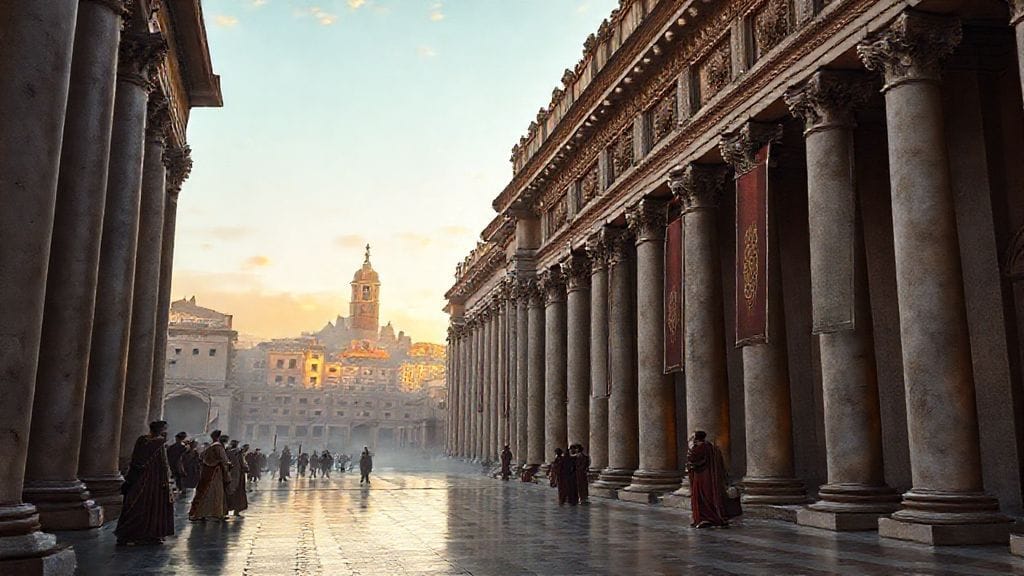
Italy during this period was a land of contradictions. Rome’s grandeur—its forums, basilicas, and aqueducts—still loomed, but the political center had shifted to Ravenna, the seat of Odoacer’s government, protected by marshes and fortresses. The countryside bore scars of decades of warfare and neglect; famine and social unrest simmered beneath the surface.
Odoacer’s leadership style was pragmatic, yet his legitimacy was fragile, especially in the eyes of both the Eastern Roman Empire and the Ostrogoths. Emperor Zeno, intrigued and cautious, initially tolerated Odoacer but soon sought to rid Italy of this unpredictable vassal.
The Ostrogoths Advance: The Ambition of Theodoric the Great
Enter Theodoric, the Ostrogothic king, educated in Constantinople, versed in Roman diplomacy, and ambitious in his designs. His people had been displaced from their traditional homelands by the aggressive Huns and other migratory tribes. Theodoric’s destiny intertwined with the fate of Italy, as Emperor Zeno saw in him a useful instrument to depose Odoacer.
In 488 AD, Theodoric led his forces into Italy, initiating a campaign that would culminate in the battle near Verona a year later. His army was a composite of Gothic warriors, allied tribes such as the Heruli and Rugians, and even some Roman defectors.
Theodoric did not seek mere conquest; he envisaged establishing a kingdom that blended Roman governance with Gothic martial strength—a new order. His arrival was met with a mix of hope and dread among Italians, many weary of the ambiguity under Odoacer’s reign.
Verona, 489: The Staging Ground for History
Verona was more than a strategic target; it symbolized Italy’s northern bastion, the gateway to the Po Valley and the rest of the peninsula. Its sturdy walls and command over key routes made it an ideal battlefield for what would become a decisive act.
In the late summer of 489, Theodoric’s forces encamped near the city, ready to challenge Odoacer’s hold. Months of skirmishes, diplomatic overtures, and espionage set the stage for the main confrontation.
The local population, caught between two warlords, watched anxiously. For the soldiers, weary from years of fighting, the battle promised either liberation or destruction.
The Battle Unfolds: Odoacer vs. Theodoric
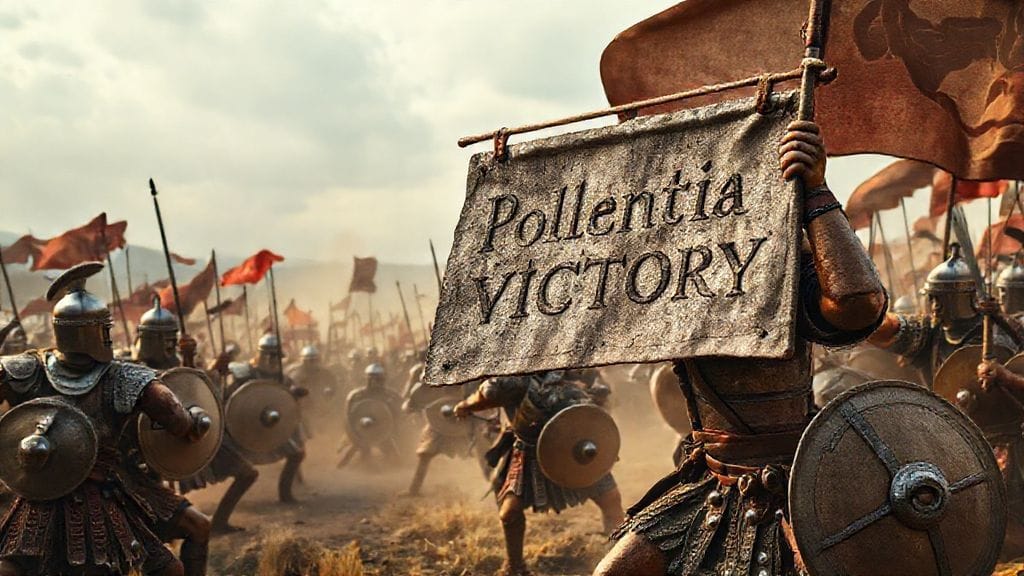
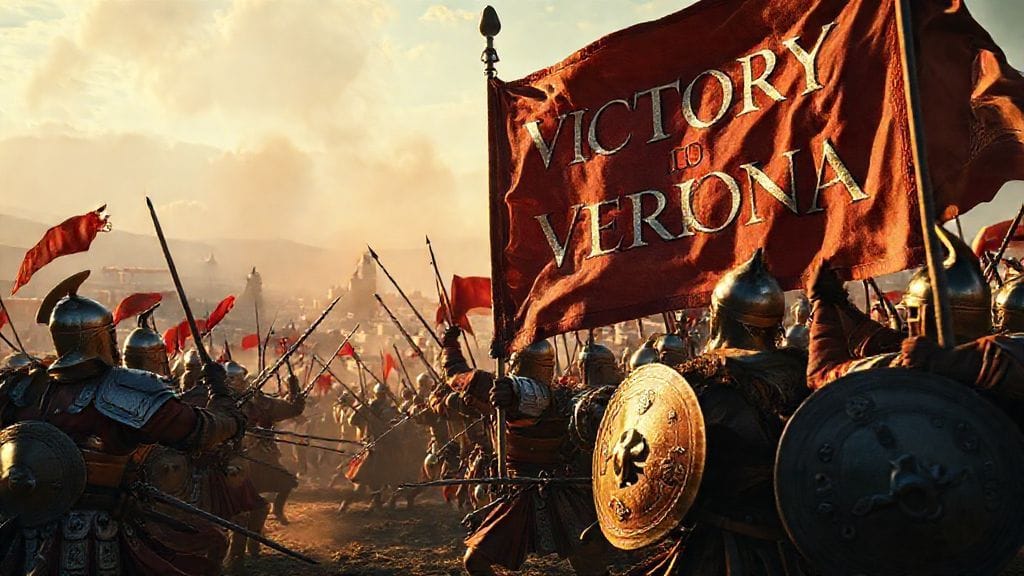
Details of the battle, while sparse, paint a vivid picture of brutal combat and tactical maneuvers. The armies clashed on a sprawling plain near Verona, where the rolling fields gave way to the foothills of the Lessini Mountains.
Odoacer commanded veteran barbarian troops and remaining Roman forces, relying on defensive formations and cavalry charges designed to dislodge the Gothic advance. Theodoric, known for his tactical acumen, aimed to break Odoacer’s lines through coordinated assaults and exploiting weaknesses in command.
After a day of fierce fighting punctuated by moments of uncertainty and rallying cries, Odoacer’s forces began to waver. Exhaustion, perhaps betrayal among troops, and strategic encirclement by the Goths tilted the scales.
When the dust settled, Odoacer had been routed. This defeat, though not the immediate end of his reign, was a cataclysmic blow.
The Warrior Kings: Portraits of Odoacer and Theodoric
Odoacer and Theodoric personify the fractured world of late Antiquity. Odoacer was a pragmatic leader, a man forged in the crucible of soldiering who understood both Roman political theatre and barbarian warfare. His rise from chieftain to king underscores the fluidity of power in this era.
Theodoric, meanwhile, was a charismatic and cultured monarch—educated in Constantinople’s grandeur yet rooted in Gothic traditions. He was a visionary who sought to transcend tribal warfare by uniting Roman and Gothic worlds under a new banner.
Their personal rivalry was a dialogue between two approaches to leadership: raw ambition versus strategic statesmanship; brute force versus political reconciliation.
Clash of Cultures: Romans, Goths, and the Struggle for Italy
The battle was not solely military; it was cultural and ideological. Italy’s population was a blend of Roman citizens, Latin-speaking aristocrats, Germanic settlers, and assorted tribes. Each faction brought its identity and aspirations into the fray.
Theodoric’s conquest foreshadowed the medieval synthesis of Roman law and Germanic custom. His reign would respect Roman culture, Christian orthodoxy, and administrative systems, even as Gothic warriors maintained dominance.
Odoacer’s defeat, thus, symbolized the fading of one hybrid order and the rise of another—each a testament to shifting identities in Europe’s post-imperial landscape.
Turning Points on the Battlefield: Strategy and Chaos
Historical reconstructions highlight several critical moments: the initial charge that stunned Odoacer’s flanks, the failure of the defensive Roman formations to hold, and the effective use of Gothic cavalry by Theodoric.
The chaos of combat—fog of war, miscommunication, and the psychological weight of being outflanked—played a decisive role. Some accounts speculate betrayal by Odoacer’s sub-commanders, eager to switch allegiance or preserve their holdings.
These elements underscore how battles are lived experiences—chaotic, brutal, with fortunes swinging unpredictably.
The Defeat of Odoacer: An Empire’s Last Roar
Odoacer fled the battlefield but was not yet done. He retreated to the fortified city of Ravenna, where he continued resisting Theodoric’s siege for several months.
Yet the defeat at Verona shattered his aura of invincibility. His authority crumbled as Gothic forces systematically took control of Italy’s major cities. By 493, Odoacer was betrayed and killed by Theodoric during a banquet—a somber end to a man who had once proclaimed the end of Rome’s Western Empire.
Odoacer’s final defeat marked the definitive close of one chapter; the last flicker of the old barbarian King who ruled Rome’s remains.
The Aftermath: The Death Throes of Odoacer’s Kingdom
The immediate aftermath was grim but orderly. Theodoric moved quickly to consolidate control, securing alliances, rebuilding institutions, and stabilizing the war-torn landscape.
Italy under Theodoric was less a conquered land and more a kingdom reshaped—where Roman senators retained influence, and Gothic warriors secured frontier defense.
The power vacuum left by Odoacer’s fall was filled not by chaos but by rigid order, hybridized culture, and new political realities.
Theodoric’s Triumph: Establishing the Ostrogothic Kingdom
By these victorious years, Theodoric solidified his place as one of the most effective rulers of the early medieval period. His court at Ravenna became a beacon of art, architecture, and law, marrying Roman officialdom with Gothic martial strength.
Under his enlightened reign, Italy experienced relative peace, economic recovery, and cultural flowering—setting the stage for the complex Medieval period to come.
Political Reconfigurations: Shifting Power in Post-Roman Italy
The battle and its result were not isolated events. Europe itself was being redrawn. Ostrogothic Italy was a key player in the reconfiguration of power that saw the Eastern Roman Empire assert influence through proxies like Theodoric.
Local elites adapted to new rulers; religious institutions played stabilizing roles. The military was restructured, integrating Roman and barbarian tactics.
This period entirely refashioned Italy’s identity, kicking off centuries of political flux.
Legacy of the Battle: A Prelude to the Medieval Era
The Battle of Verona was a hinge on history’s door. It stands at the crossroads of epochs—bridge between ancient Rome’s collapse and medieval Europe’s birth.
Its legacy is visible in the synthesis of cultures, the rise of Germanic kingdoms as heirs to Roman lands, and the enduring image of barbarian kings balancing brutal force with diplomatic vision.
Theodoric’s victory sparked a chain reaction that influenced everything—from law codes (like the Edict of Theodoric) to the very notion of kingship in Europe.
Cultural Resonance: How Verona’s Battle Echoed through History
Verona itself became a symbol—a city whose walls witnessed the passage from empire to kingdom. Artistic depictions and medieval chronicles echoed the event repeatedly, emphasizing themes of destiny, legitimacy, and renewal.
The site inspired tales blending fact and legend, reminding that history is not just a record but a story shaped through time by cultural memory.
Odoacer and Theodoric in Memory and Myth
These two figures, once mortal enemies, evolved into archetypes. Odoacer, the usurper who ended empire; Theodoric, the wise conqueror who built anew.
Legends magnify their deeds and flaws, reflecting how history intertwines with myth to create identities. Their stories inform modern understanding of leadership, cultural mixing, and the fragile nature of power.
The Battle’s Role in Shaping European Identity
Europe’s path to unity and diversity is linked to moments like Verona. The blending of Roman legacies with Germanic tradition laid groundwork for medieval states, languages, and customs.
The battle’s outcome shaped borders, political systems, and collective memory—touchstones for understanding Europe’s complex origins.
Verona’s Place on the Historical Map
Today, Verona resonates not only as a city of Shakespearean romance but as a witness to a pivotal battle that transformed civilizations. Its preservation and archeological remains allow scholars to connect past with present.
Understanding Verona’s role enriches appreciation for Italy’s layered history and Europe’s deep roots.
Lessons in Leadership and Warfare from 489 AD
The battle offers timeless lessons: the importance of strategy, the interplay of culture and power, the fickle nature of loyalty, and how leadership adapts in uncertain times.
Studying this event enhances insight into how history is shaped by individuals’ choices amid vast currents of change.
The Battle’s Place in the Fall of Antiquity
This encounter exemplifies the transition between fading imperial structures and emergent medieval kingdoms. It marks an evolutionary step where political power becomes localized, military innovation adapted, and cultural identities hybridized.
Its study enriches comprehension of Antiquity’s long twilight.
Echoes in Modern Scholarship and Popular Culture
Historians continue to debate sources and interpretations, uncovering nuances about troop movements, alliances, and political strategy.
Meanwhile, Verona’s battle surfaces occasionally in novels, films, and artistic works seeking to interpret this pivotal moment for new audiences.
From Ruins to Renaissance: Italy after the Ostrogothic Rule
Though Theodoric’s kingdom eventually fell to Byzantine reconquest and later invasions, his reign’s imprint endured. Italy’s recovery into the Renaissance centuries later can trace roots back to the relative order and cultural preservation of this era.
The battle thus symbolizes both destruction and hope, a cyclical moment in Italy’s grand saga.
Conclusion
The Battle of Verona in 489 AD was no ordinary fight; it was a fulcrum upon which the destinies of empires and peoples pivoted. In the clash between Odoacer and Theodoric, we witness the twilight of classical antiquity and the dawning of medieval Europe. Theodoric’s decisive victory did more than topple a king—it redefined leadership, reshaped culture, and seeded the political and social reinvention of Italy and beyond.
Today, as we walk the ancient streets of Verona or read its chronicles, we are reminded of the ephemeral nature of power and the enduring human spirit seeking order amidst chaos. The battle invites reflection on resilience, adaptation, and the endless weaving of history’s tapestry.
FAQs
1. Why was the Battle of Verona fought in 489 AD?
The battle was fought because Theodoric, leading the Ostrogoths, sought to depose Odoacer and take control of Italy, a crucial territory in the post-Roman world. Emperor Zeno supported Theodoric’s campaign as a way to remove Odoacer, who had become increasingly independent.
2. Who were Odoacer and Theodoric?
Odoacer was a Germanic chieftain who deposed the last Western Roman Emperor and ruled Italy as king. Theodoric was the Ostrogothic king, ambitious and politically savvy, who aimed to create a new kingdom blending Roman and Gothic elements.
3. What was the significance of Italy during this period?
Italy was the heartland of the former Western Roman Empire, rich in resources, culture, and strategic importance. Control over Italy meant legitimacy and power in the fragmented post-imperial world.
4. How did the battle influence the cultural landscape of Italy?
Theodoric’s victory led to a unique synthesis of Roman traditions with Gothic customs, influencing law, governance, and society, and laying the groundwork for medieval Italian states.
5. What role did the Eastern Roman Empire play in these events?
The Eastern Emperor Zeno supported Theodoric to remove Odoacer, seeing the Ostrogothic king as a useful proxy to control Italy without direct imperial involvement.
6. How is the Battle of Verona remembered today?
The battle is remembered as a crucial turning point at the end of Antiquity, symbolizing the transition to the medieval order. Verona remains a symbol of cultural memory and historical continuity.
7. Did Odoacer have any lasting impact despite his defeat?
Yes, Odoacer is often credited with bridging the Roman past and the barbarian future, governing in a way that maintained Roman administrative practices, and influencing the politics of early post-Roman Italy.
8. How did Theodoric’s reign end?
Theodoric died in 526 AD; his kingdom gradually weakened due to internal strife and conflict with the Eastern Roman Empire, eventually falling to Byzantine reconquest in the 6th century.