Table of Contents
- The Dawn of June 18, 1815: Thunder Over the Belgian Plains
- Europe on Edge: The Tumultuous Prelude to Waterloo
- Napoleon’s Return: The Hundred Days’ Reckoning
- The Coalition Assembles: Allied Powers vs. the Emperor
- The Opening Moves: Battle Lines Drawn on Wellington’s Ground
- The Mornings of Tension: Skirmishes and Strategies Before the Storm
- Storm Clouds Gather: Napoleon’s Initial Offensives
- The Fight for Hougoumont: A Fortress Amidst Chaos
- The Cavalry Charges: Moments of Heroism and Horror
- The Role of the Prussian Army: Blücher’s Crucial Arrival
- The Imperial Guard’s Last Stand: The Turning Point
- The Collapse: Napoleon’s Defeat Unfolds
- Aftermath on the Battlefield: The Cost in Blood and Spirit
- Political Reverberations: Europe Reconfigured Once Again
- The Legend of Waterloo: Myth, Memory, and Memorials
- The Soldiers’ Stories: Voices from the Front
- Economic and Social Shockwaves: Europe’s Recovery
- Waterloo in Art and Literature: An Enduring Narrative
- The Global Impact: From France to the Far Colonies
- Modern Reflections: What Does Waterloo Teach Us Today?
1. The Dawn of June 18, 1815: Thunder Over the Belgian Plains
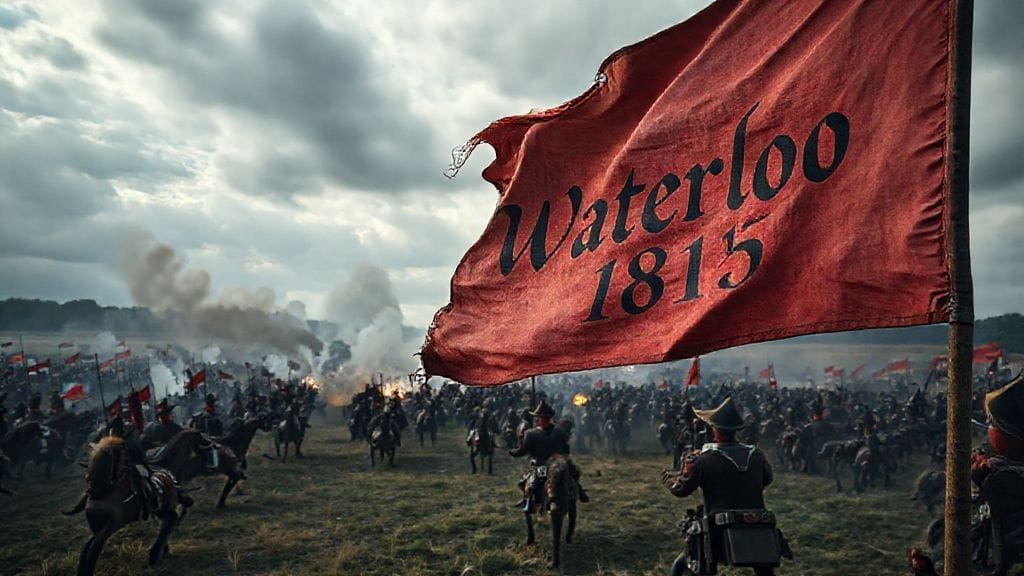
A heavy mist rolled over the rolling fields near the village of Waterloo in the early hours of June 18, 1815, as tens of thousands of soldiers stood poised, their breath visible in the chill morning air. The sun struggled through the gray horizon, setting the stage for one of history's most legendary confrontations. Cannons growled distantly, horses pawed the earth nervously, and men gripped muskets with a blend of fear, resolve, and anticipation. This was no ordinary day—it was the climax of an era, the moment when Europe awaited to see if Napoleon Bonaparte, exiled emperor, soldier-poet, and unmatched tactician, would rise once more or meet his definitive end.
2. Europe on Edge: The Tumultuous Prelude to Waterloo
Europe in 1815 was a continent struggling to maintain a fragile peace after decades of near-constant upheaval from the French Revolutionary and Napoleonic Wars. The Congress of Vienna had attempted a grand redesign of the European map, striving to balance power and prevent future cataclysms. Yet, the continent’s uneasy calm shattered sharply when Napoleon escaped Elba in March 1815, calling his return “The Hundred Days.”
This bold gamble reignited the flames of conflict, pitting the restored Bourbon monarchy of France against a formidable coalition of old enemies keen to crush the French eagle once and for all. England, Prussia, Austria, and Russia, among others, hastily prepared their armies, fearful of a new Napoleonic storm.
3. Napoleon’s Return: The Hundred Days’ Reckoning
Napoleon's dramatic return was a spectacle. Landing at Golfe-Juan, the emperor marched triumphantly toward Paris, regaining authority while crowds cheered. His charisma and military genius rekindled the hopes of his supporters and the fears of his adversaries. Yet, beneath the grandeur was an emperor who faced daunting odds—hemmed in by time, resources, and wary allies.
The Continental powers feared that Versailles and Vienna had underestimated Napoleon's ability to rally France’s heart and army. His strategy was to strike decisively before the allied forces could unite against him.
4. The Coalition Assembles: Allied Powers vs. the Emperor
The coalition army at Waterloo was a remarkable amalgam of cultures, led by the Duke of Wellington, a Briton renowned for discipline and defensive prowess, and Field Marshal Gebhard Leberecht von Blücher, the headstrong Prussian commander. Their men came from across Europe—British, Dutch, Belgian, German, and others—united by the common goal of ending Napoleon’s battlefield mastery.
Frederick William III of Prussia and Britain’s King George III watched with bated breath as their generals took positions, understanding that this battle could reshape the destiny of Europe.
5. The Opening Moves: Battle Lines Drawn on Wellington’s Ground
Wellington chose his ground with the care of a master strategist. The ridges around the villages of La Haie Sainte and Hougoumont provided strong defensive points, while the farmhouses and fields carved natural barriers. His forces numbered about 68,000 men, roughly equal in size to Napoleon’s 72,000 troops, but their morale and supply lines were a gamble.
Napoleon, confident yet cautious, ordered Marshal Ney to engage first, trusting his fiery commander’s daring spirit to unsettle the Allied forces.
6. The Mornings of Tension: Skirmishes and Strategies Before the Storm
The hours before full engagement soured with intermittent skirmishes and probing attacks. Scouting parties exchanged musket fire in the damp fields while heavy rain had soaked the earth, turning the battlefield into a muddy quagmire that would slow cannonballs and men alike.
Both sides grappled with miscommunications, foggy intelligence, and the physical strain of preparing for the largest confrontation on European soil since decades.
7. Storm Clouds Gather: Napoleon’s Initial Offensives
At mid-morning, Napoleon unleashed his infantry and artillery against Wellington’s right flank. The assault on the chateau of Hougoumont was particularly fierce. Designed as a defensive redoubt, Hougoumont became a symbol of tenacity, as a handful of Allied troops repelled wave after wave of French attacks. This grueling fight bled French resources and tied down vital divisions—something Napoleon had not intended.
Meanwhile, Ney's cavalry charges, intended to break British lines, faced stubborn resistance and the muddy terrain that sapped momentum.
8. The Fight for Hougoumont: A Fortress Amidst Chaos
Hougoumont's defense grew into an epic saga. The farmhouse and outbuildings changed hands multiple times, embodying brutal close-quarter combat that defied neat battle plans. Reports describe the desperate, bloody struggles in narrow corridors and gardens, where cannon smoke mingled with cries of pain and valor.
Napoleon’s troops, despite their courage, were unable to seize the position quickly. This proved catastrophic, as vital French forces remained engaged there rather than supporting offensives elsewhere.
9. The Cavalry Charges: Moments of Heroism and Horror
Marshal Ney earned the moniker “the bravest of the brave” for his relentless cavalry attacks. In the early afternoon, thousands of French cavalry swept forward in massive charges against Allied infantry squares—formations designed to repel mounted troops with disciplined volley fire.
Some charges nearly broke the lines, moments of raw chaos where horses, riders, and foot soldiers clashed in a maelstrom of dust, steel, and blood. Yet, the tight discipline of Wellington’s troops and the unforgiving terrain ultimately repelled these assaults, exacting a devastating toll on the French horsemen.
10. The Role of the Prussian Army: Blücher’s Crucial Arrival
Throughout the battle, the arrival of the Prussian army under Field Marshal Blücher was a critical variable. Despite heavy fighting and setbacks from earlier days of campaign, Blücher was determined to join Wellington’s forces on the field.
Late in the afternoon, the thunder of Prussian artillery and infantry broke onto Napoleon’s right flank at the village of Plancenoit. The new front forced Napoleon to divide his forces, weakening his offensive thrust and hastening the French army’s disintegration.
11. The Imperial Guard’s Last Stand: The Turning Point
Napoleon’s Imperial Guard—the elite corps that had never before been decisively defeated—made a majestic and desperate push to turn the tide. Their advance seemed unstoppable, a final manifestation of imperial pride and skill.
But Wellington’s forces held firm, and when the Guard faltered against fierce volleys and counterattacks, the aura of French invincibility shattered. Witnesses spoke of broken ranks and retreating officers. It was the psychological blow from which Napoleon’s army never recovered.
12. The Collapse: Napoleon’s Defeat Unfolds
As dusk approached, the French lines began to crumble. Exhausted, outnumbered, and outflanked, French troops fled, pursued by allied cavalry. Panic spread; artillery was abandoned. Napoleon’s dreams of reclaiming Europe’s crown dissolved in the blood-soaked fields.
Napoleon himself retreated with what forces remained, a broken emperor in a broken empire, his military empire extinguished at Waterloo.
13. Aftermath on the Battlefield: The Cost in Blood and Spirit
By nightfall, the battlefield lay strewn with tens of thousands of casualties—killed, wounded, or missing. Bodies mingled with shattered weapons and abandoned standards. Machetes and musket stocks bore the scars of fierce combat.
The human cost was staggering: estimates suggest more than 50,000 dead or wounded. For many soldiers, survival was a matter of luck and resilience; for Europe, a sobering reminder of war’s toll.
14. Political Reverberations: Europe Reconfigured Once Again
Napoleon’s defeat at Waterloo decisively ended the Hundred Days and his imperial ambitions. He abdicated for a second time and was exiled to Saint Helena in the South Atlantic, far more remote than Elba, where he would die in 1821.
The Congress of Vienna solidified, with monarchies restored and a new European balance established. Britain emerged strengthened; the United Kingdom of the Netherlands was confirmed, and a century of relative peace—the Pax Britannica—unfolded.
15. The Legend of Waterloo: Myth, Memory, and Memorials
Waterloo swiftly became more than a battle; it became a symbol. Founding myths, heroic tales, and commemorations multiplied across Europe and beyond. The battlefield itself transformed into a sacred site, dotted with monuments, cemeteries, and visitor centers.
Napoleon, his generals, and soldiers of all nations entered the pantheon of history—immortalized in stories of courage, folly, and fate.
16. The Soldiers’ Stories: Voices from the Front
Letters, diaries, and memoirs from Waterloo’s soldiers reveal a tapestry of human experience—from the French grenadiers’ pride to the British infantry’s gritty endurance, from the Prussian artillerymen’s desperate marches to the Dutch troops’ steadfast defense.
Fascinating anecdotes detail acts of kindness amid slaughter, fears of the unknown, and the close bonds forged in shared survival.
17. Economic and Social Shockwaves: Europe’s Recovery
The aftermath of Waterloo rippled economically. The post-war reconstruction required reintegrating veterans, rebuilding communities, and stabilizing markets disrupted by years of conflict. Resources were strained, but the defeat also heralded a new era where war fatigue inspired diplomatic resolutions.
Socially, nationalism and liberalism began to simmer beneath the surface, foreshadowing future upheavals.
18. Waterloo in Art and Literature: An Enduring Narrative
Painters like William Sadler and writers such as Victor Hugo immortalized Waterloo’s drama. The battle’s imagery—smoke-filled skies, heroic last stands, and shattered ideals—fueled Romantic art and literature, anchoring the event in collective European consciousness.
Fiction and history intertwined; Waterloo’s lessons and legends grew with each retelling.
19. The Global Impact: From France to the Far Colonies
Waterloo’s significance extended beyond Europe’s borders. Colonial powers adjusted their policies in Asia, Africa, and the Americas, wary of renewed French ambition. The battle indirectly influenced independence movements and colonial realignments, marking a shift toward British naval and imperial dominance.
20. Modern Reflections: What Does Waterloo Teach Us Today?
Two centuries later, the Battle of Waterloo remains a study in leadership, coalition warfare, and the fragility of empires. It cautions against overreach but celebrates resilience and alliance.
Its memory prompts questions about war’s price and the pursuit of lasting peace—a challenge as urgent now as in 1815.
Conclusion
The Battle of Waterloo was not merely the violent end to a man or an empire; it was the pivot on which nineteenth-century Europe turned. It was a clash of titanic wills and mortal fears—where strategy met the grit of ordinary soldiers, where alliances forged destiny, and where history was written in blood and valor. As the smoke cleared over the Belgian fields, a new order was born, fragile but determined. From the trenches and triumphs emerged timeless truths about power, pride, and perseverance. Waterloo still speaks to us: reminding us that even the greatest can fall, and that the future is shaped by the courage to face the storm.
FAQs
Q1: What were the main causes leading to the Battle of Waterloo?
A1: The battle resulted mainly from Napoleon’s escape from Elba and his attempt to regain control of France during the Hundred Days, prompting a coalition of European powers to unite against him and prevent any resurgence of French dominance.
Q2: Who were the key military leaders at Waterloo?
A2: The main commanders were Napoleon Bonaparte for France, Arthur Wellesley (Duke of Wellington) for the Anglo-Allied forces, and Gebhard Leberecht von Blücher leading the Prussian army.
Q3: What was the significance of the Prussian army’s arrival during the battle?
A3: The Prussian army’s late arrival was decisive, opening a new front against Napoleon’s forces, forcing them to split and ultimately breaking the French army's cohesion.
Q4: How did the Battle of Waterloo affect the political landscape of Europe?
A4: It ended Napoleon’s rule, restored the Bourbon monarchy in France, reinforced the Congress of Vienna's post-Napoleonic order, and paved the way for a century of relative peace in Europe.
Q5: What were the human costs of the battle?
A5: Estimates suggest around 50,000 soldiers were killed, wounded, or missing, making it one of the bloodiest single-day battles of the era, with immense suffering and social impact.
Q6: How has the Battle of Waterloo been remembered culturally?
A6: It inspired countless works of art, literature, and memorials, becoming a symbol of heroism, tragedy, and the shifting tides of history.
Q7: Why is Waterloo still studied in military history today?
A7: It exemplifies coalition warfare, leadership under pressure, the impact of terrain and logistics, and the dynamics of battlefield morale and tactics.
Q8: Did Waterloo impact colonies or global politics beyond Europe?
A8: Yes, the battle solidified British dominance, influenced colonial policies, and indirectly affected independence movements and imperial rivalries worldwide.