Table of Contents
- A Morning of Steel and Fog in the Hills of Emilia-Romagna
- Italy Divided: Guelphs, Ghibellines, and the Long Road to Zappolino
- Bologna and Modena: Rival Cities on a Collision Course
- The Political Chessboard: Emperors, Popes, and Local Lords
- On the Eve of Battle: Camps, Councils, and Silent Prayers
- Dawn of November 15, 1325: The Battlefield Takes Shape
- The First Clash: Trumpets, Hooves, and Shattered Lances
- Turning of the Tide: Panic in the Bolognese Ranks
- Voices from the Field: Fear, Fury, and the Human Face of War
- A Banner Captured, A City Humiliated: The Aftermath for Bologna
- Modena Triumphant: Triumph, Spoils, and the Long Shadow of Victory
- From Skirmish to Symbol: The Battle of Zappolino in Italian Memory
- Economies in Ruin and in Bloom: The Material Consequences of Defeat and Victory
- Families, Exiles, and Broken Oaths: Social Consequences of a Single Day
- Chroniclers, Myths, and Exaggerations: Writing the Battle into History
- From Medieval Battlefield to Modern Countryside: Traces on the Landscape
- Why Zappolino Matters: A Lens on a Fragmented Italy
- Conclusion
- FAQs
- External Resource
- Internal Link
Article Summary: This article explores the battle of zappolino, fought on 15 November 1325 in the rolling hills of Emilia-Romagna, as both a dramatic clash of arms and a revealing episode in the long struggle between Guelphs and Ghibellines. Through a narrative reconstruction of the hours leading up to the battle, it traces how the rival city-states of Bologna and Modena slid inexorably toward confrontation. The story then follows the chaos of the fight itself, the breaking of the Bolognese lines, and the surge of Modenese cavalry that turned a contested field into a rout. Beyond tactics and banners, the article considers the political, economic, and emotional consequences of the battle of zappolino for citizens, exiles, and ruling elites across northern Italy. It looks at how chroniclers shaped the memory of the battle, turning a regional conflict into a powerful symbol of communal rivalry. At the same time, it situates the clash within the broader landscape of imperial–papal tensions that fractured the peninsula. Finally, the narrative reflects on what this little hillside near Zappolino can still tell us today about identity, violence, and the fragile pride of medieval Italian communes.
A Morning of Steel and Fog in the Hills of Emilia-Romagna
The hills around Zappolino on the morning of 15 November 1325 would have seemed, at first light, deceptively peaceful. Low fog clung to the folds of Emilia-Romagna’s countryside, muffling sound and softening the edges of vineyards, orchards, and the thin line of the Samoggia stream. Yet within that mist, an army was stirring. Men tightened leather straps with numb fingers, checked buckles on helmets still bearing the scars of older skirmishes, and whispered prayers that mixed habit with genuine fear. Horses snorted and stamped, nervous at the scent of so many others and the barely restrained violence all around. The battle of zappolino, though not yet called by that name, was about to tear this quiet landscape apart.
To one side of the hills, the Bolognese host prepared itself under the Guelph banners—symbols of loyalty to the pope, but more immediately, emblems of a proud and wealthy commune that believed in its own invincibility. To the other, the men of Modena, hardened by years of border fighting, mustered beneath the colors of the Ghibellines, the imperial party. Their leaders had chosen this ground with care. Gentle slopes gave tactical advantage to those who knew the terrain; the Samoggia, shallow in late autumn, cut a subtle line through the valley, a potential trap or escape route depending on how the day would unfold.
The air was filled with the smells that always preceded medieval battle: smoke from the cook fires that had burned through the night, the pungency of animals, the cold iron scent rising from hundreds of weapons newly sharpened. But this was only the beginning of a story that had taken decades to reach this violent morning. The clash about to erupt between Bologna and Modena was not a sudden quarrel, not a passing feud over stolen cattle or an affronted nobleman. It was the explosive culmination of a long rivalry, woven into the fabric of northern Italy’s fractured politics. To understand the battle of zappolino, one has to step back from the rolling fields and fog and look at an Italy divided in its soul.
Italy Divided: Guelphs, Ghibellines, and the Long Road to Zappolino
In the early fourteenth century, the Italian peninsula was less a unified land than a mosaic of fiercely independent communes, lordships, and tiny principalities, constantly shifting their alliances. Above them loomed two grand powers: the papacy, based in Avignon during this period, and the Holy Roman Empire, whose claims to authority in Italy had been contested for generations. The labels “Guelph” and “Ghibelline” had initially referred to loyalty to pope or emperor, but by 1325 they had become more than simple political tags. They were identities that divided families, marked neighborhoods, and decorated city gates. The Guelph–Ghibelline divide, born of high politics, seeped into everyday life like a stubborn stain.
Bologna was a great Guelph stronghold, proud of its university, its mercantile wealth, and its reputation as a bulwark of papal influence in the north. Modena, to the west, had tipped decisively toward the Ghibellines, especially under the leadership of the Este family. The conflict between these cities, however, did not begin in the clouds of ideology alone. It was rooted in land—fertile strips of territory along borders disputed for years—and in honor. Each side remembered past humiliations: raids on rural castles, burned farmsteads, citizens exiled and stripped of property. Every minor skirmish was recounted, embellished, and carried forward in communal memory, until it seemed that peace itself was a kind of betrayal.
Across Lombardy and Emilia-Romagna, the pattern repeated: cities fractured between factions, then fractures within factions, Guelphs splitting into “Black” and “White” Guelphs, Ghibellines arguing among themselves. Yet while these fine gradations mattered deeply to contemporaries, what resonated most in the streets and taverns of Bologna and Modena was simpler: “We” and “They.” Zappolino would become one of those moments when this emotional line hardened—when men who might otherwise have traded wine and wool found themselves charging at each other with lowered lances.
Bologna and Modena: Rival Cities on a Collision Course
The rivalry between Bologna and Modena before 1325 was as much about prestige as about power. Bologna, encircled by its famous brick towers, had long seen itself as a beacon of learning and republican vitality. Its law school attracted students from across Europe; its cloth and banking industries enriched merchant families who invested in politics as eagerly as in trade. Modena, smaller but strategically placed along vital routes linking the plains of the Po to Tuscany, watched this neighbor with a mixture of jealousy and defiance. When Modena’s Ghibelline factions gained ascendancy, they were determined not to be overshadowed.
A series of border disputes in the early fourteenth century pushed relations from tension to open hostility. Control of the countryside was essential: whoever commanded the rural castles and watercourses could choke off the other city’s supply lines and economic lifeblood. Villages were sacked, fortifications changed hands repeatedly, and each commune received a steady stream of refugees—exiles from the other side, bearing tales of atrocity. Among these contested points was the area around Monteveglio and the valley of the Samoggia, not far from Zappolino. The landscape that would host the battle was already scarred by raids and reprisals.
Inside Bologna’s ruling councils, debates grew heated. Could the city afford to allow Modena to continue its encroachments? Was a decisive blow necessary to restore fear and respect? The rhetoric hardened, as it so often does before war. Chroniclers later reported that some Bolognese politicians spoke of teaching Modena a “lesson it would never forget,” language that sounds ominously contemporary in any age. Modena’s leaders, for their part, cast Bologna as an arrogant oppressor, a Guelph colossus that must be humbled if the Ghibelline cause were to flourish in the region. With each passing month, the space for compromise grew smaller.
The Political Chessboard: Emperors, Popes, and Local Lords
Hovering above the immediate rivalry of these two cities was the distant figure of the Holy Roman Emperor Louis IV (Ludwig of Bavaria), whose contested claim to imperial authority pushed Italian Ghibellines into defensive solidarity. The papacy, residing in Avignon, sought to curb imperial influence and relied on staunch allies like Bologna to maintain a Guelph front across northern Italy. Yet these great powers often played only a shadowy role in day-to-day affairs. What truly mattered in Emilia-Romagna was how these grand allegiances filtered down through the ambitions of local lords.
Families such as the Este of Ferrara and Modena, the Pepoli of Bologna, and various rural aristocracies used Guelph and Ghibelline labels as both justification and weapon. They forged and broke alliances, promising loyalty to emperor or pope when convenient, only to switch sides when the winds of fortune shifted. In this context, the battle of zappolino was not a simple clash of neat ideological blocs but the expression of a dense web of feuds, vendettas, and opportunistic maneuvers. When Bologna mobilized in 1325, it did so with the hope of confirming its regional ascendancy; Modena responded with equal determination, seeing an opportunity to reconfigure the political map.
Even within the walls of each city, unity was fragile. Factions behind factions argued in council chambers and back rooms. Command structures were negotiated rather than imposed, combining civic militias with mercenary companies and noble retinues. Every commander had his own priorities; every banner represented not only the commune but also the honor of a family. This fragmentation would later help explain why the battle unfolded as it did, and why the outcome—so disastrous for Bologna—reverberated far beyond a single rainy November day.
On the Eve of Battle: Camps, Councils, and Silent Prayers
In the hours before dawn on 15 November, the Bolognese camp was restless. Contemporary estimates, admittedly colored by exaggeration, speak of a Bolognese army that may have numbered around 30,000 when one counts not only professional soldiers but also militia, servants, and camp followers. Even if that figure is inflated—a likelihood historians acknowledge—it conveys the sense of scale. This was not a mere raiding force. Bologna intended a major demonstration of power, one that would smash Modenese resistance and perhaps even bring the rival city to its knees.
Campfires burned low as captains walked among their men, offering last-minute instructions and, sometimes, rehearsed bravado. Behind them, shielded from the cold, were the communal authorities and leading families, some of whom had pushed hardest for this campaign. They now faced the sobering reality that decisions made amid heated rhetoric in the city’s palaces would soon be tested in the blood and mud of Zappolino’s slopes. These men, too, would have felt fear, though they shielded it behind curt commands and the weight of their ceremonial armor.
Across the valley, the Modenese host waited with a different kind of tension. Slightly smaller in number but arguably more cohesive, this army included experienced cavalry and men who had fought repeatedly along the contested borders. They knew the ground better; some had grown up on these very hills. Their commanders had chosen to let the Bolognese advance and overextend, betting that their own tactical adaptability would trump sheer mass. As midnight shifted toward dawn, priests in both camps whispered Mass, altars hurriedly set up beneath canvas or in crude field chapels. Men lined up to confess; not all believed in the cause, but most believed in heaven and hell.
Yet behind the celebrations that would later follow Modena’s victory lay this long, dark night of uncertainty. No one on either side could know that the coming hours would decisively alter the balance of power in the region. For many, it was simply another episode in an old, bitter feud—dangerous, yes, but also familiar. They had lived with war for as long as they could remember. And that is perhaps the most haunting aspect of the battle of zappolino: how ordinary it felt to those who walked toward it, even as it prepared to carve its name into history.
Dawn of November 15, 1325: The Battlefield Takes Shape
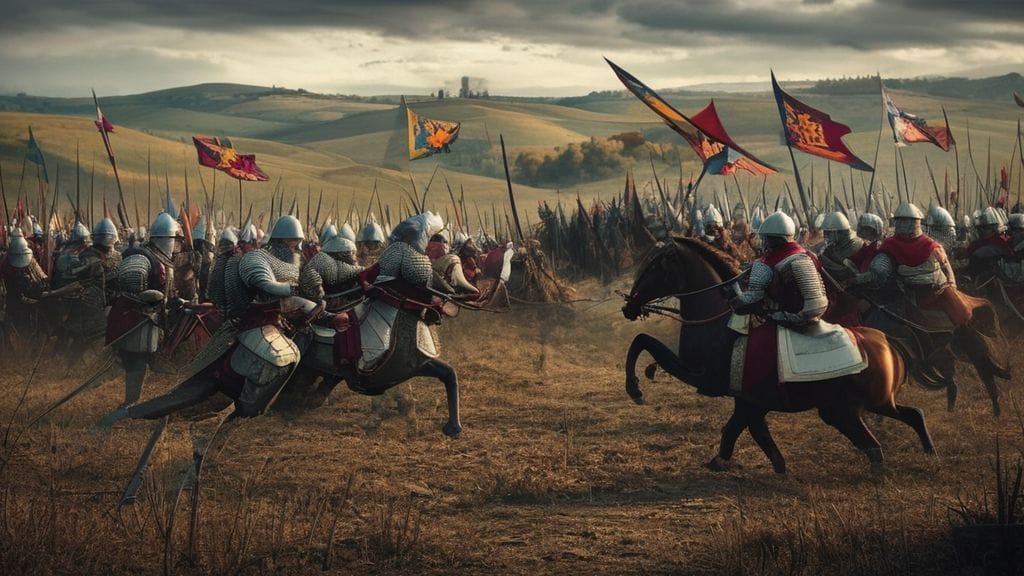
With the first pale light creeping over the ridges, the shapes of banners and helmets began to rise out of the fog. The hills around Zappolino formed a natural amphitheater. To the Bolognese, advancing in force, it must have seemed that sheer weight of numbers would overwhelm whatever resistance Modena could mount. Their lines extended across the gentle slopes, infantry and militia in the center, cavalry massed toward the flanks, crossbowmen and archers scattered in supporting roles. The communal carroccio—Bologna’s great war wagon, bearing the city’s standard and a field altar—rumbled forward, its presence a powerful symbol of civic pride.
The Modenese, however, positioned themselves more compactly, making use of the terrain’s undulations. Their cavalry contingents, loyal to Ghibelline leaders who had honed their skills in endless border raids, were poised not for a straightforward charge but for flexible maneuvers and sudden strikes. When the fog lifted enough to reveal the opposing host, some Modenese soldiers must surely have swallowed hard at the apparent disparity. Yet their commanders understood that numbers could be turned against Bologna, if only the enemy could be provoked into a disordered advance.
As church bells rang faintly from distant villages, echoing across the valley, trumpets began to sound. Orders, shouted and repeated, struggled to stay coherent amid the growing din. Horses tossed their heads; men gripped spears until their knuckles whitened. According to later accounts, the earliest exchanges involved skirmishing detachments and probing assaults, as each side tested the other’s resolve. Arrows and crossbow bolts cut through the damp morning air, sometimes thudding harmlessly into earth, sometimes finding flesh and starting the day’s first screams.
The battlefield of the battle of zappolino, in that moment, was less a grand tableau than a series of local encounters. Units advanced, retreated, shifted sideways along the slopes. Communications were imperfect; dust and lingering mist obscured lines of sight. Commanders had to rely on instinct and the loyalty of their lieutenants. What they could not yet know was that small decisions, made in seconds amid this fog of war, would trigger a cascading collapse on the Bolognese side, transforming a contested struggle into a catastrophic rout.
The First Clash: Trumpets, Hooves, and Shattered Lances
When the main bodies of cavalry finally thundered forward, the sound rolled across the valley like approaching thunder. Lances couched, horses spurred on, banners snapping in the cold air—such moments have been romanticized in paintings and poems, but on the ground they were a blur of terror. A rider with a narrowed field of vision, visor down and heart hammering, could see little beyond the immediate front. Impact came in an instant: the jolt of lance against shield or armor, the sickening give when wood splintered and flesh yielded, the sudden chaos when horses, weighing hundreds of kilograms, collided.
In the early phases, Bolognese cavalry likely made some gains. Their numerical strength told in initial charges; Modenese lines were pushed back in places; scattered men fell or fled down the slopes. Yet medieval battles rarely followed a clean script. The weight of Bologna’s army, extended across difficult terrain, began to work against it. Units struggled to maintain cohesion; some advanced too far, losing contact with their supports; others hesitated, wary of overcommitting. All the while, Modenese commanders looked for gaps to exploit.
One chronicler suggests that a coordinated Modenese counterattack on a Bolognese flank, supported by well-timed infantry pressure, triggered the psychological turning point. The Bolognese militia—brave but less seasoned—saw elite Modenese cavalry suddenly bearing down on them from an unexpected angle. Under the pounding of hooves, the clatter of steel, and the enveloping dust, panic swallowed discipline. Men began to drift backward, then run. Panic, in any age, is the true enemy of armies, and here on the hills of Zappolino it spread faster than any commander could contain.
Turning of the Tide: Panic in the Bolognese Ranks
Once fear takes hold in a medieval army, command structure dissolves with alarming speed. Signals become meaningless; shouted orders are drowned out by the roar of retreating men and the screams of the wounded. At Zappolino, as the Modenese pressed their advantage, parts of the Bolognese center began to crumble. What had started as a measured withdrawal in some units swiftly became a race to escape. Shield lines opened in jagged gaps, into which Modenese horsemen poured like water through a breached dam.
The carroccio, that potent emblem of Bologna’s communal pride, suddenly found itself in grave danger. Defenders clustered around it, desperately trying to buy time for more men to regroup. But the tide was moving the other way. As groups of fleeing soldiers collided with those still holding their ground, confusion multiplied. Horses stumbling over fleeing infantry, fallen men trampled beneath hooves and boots, the cries of men begging comrades to turn and stand—these are scenes easily imagined and, in the testimony of later chroniclers, painfully real.
It’s astonishing, isn’t it, how swiftly reputation can implode? Bologna had marched out with an air of almost unshakable confidence. Within hours, that confidence cracked. Some captains may have fought valiantly to stabilize the line; individual heroism certainly existed. Yet heroism, scattered and isolated, could not stem mass panic. The Modenese sensed victory and drove forward, their shouts rising over the field. Later writers would speak of the “flight of Bologna” with a mixture of contempt and awe, as if watching a great stone statue topple and shatter in slow motion.
By midday, the battle of zappolino was no longer a battle in the strict sense but a pursuit. Bolognese forces fled toward their own territory, hounded by Modenese cavalry intent on turning defeat into humiliation. Weapons were cast aside to speed escape; banners were abandoned; men who had left home vowing glory now thought only of seeing their families again. The day had turned decisively, and the narrative of regional power with it.
Voices from the Field: Fear, Fury, and the Human Face of War
When historians sift through the battle of zappolino, they often rely on terse chronicles written by clergy or officials, eager to highlight divine favor for one side or the other. Yet behind these stylized accounts stood thousands of individual experiences, rarely recorded in detail but no less real. Imagine a Bolognese militia man—a baker or weaver in peacetime—finding himself suddenly cut off from his unit. His shield arm aches, his breathing is ragged, and the screams around him pull at the fragile thread of his courage.
He sees a familiar banner fall, its bearer cut down by a Modenese rider whose face is obscured by a great helm. The world constricts to a narrow tunnel: a slope leading down, away from the press of swords, and the instinct to run surges up, battling with shame. He hears a captain bellowing for order, but the crowd surges past. To stay is to be trampled; to run is to betray the oath taken before the communal altar. He runs.
On the other side, a Modenese cavalryman, perhaps from a minor noble family, feels the opposite storm of emotion. For weeks he has listened to talk of Bolognese arrogance, of burned farms, of exiled cousins dreaming of return. Now, as he leans forward in the saddle and sees Bolognese lines collapsing, a fierce exhilaration grips him. Every foe who drops his shield to flee seems to confirm the righteousness of his own cause. In the heat of pursuit, he does not think of the long-term consequences, only of striking wherever he can. Frenzy, like fear, narrows the world.
Even in chroniclers’ spare Latin, traces of this emotional intensity remain. One contemporary account, cited in later secondary works, notes simply that “the Bolognese, seeing their ranks broken, were seized by great fear and turned their backs, and the Modenese pressed them with unspeakable fierceness.” Behind such phrases lie the sobs of the wounded calling for water, the desperate bargains of men offering ransoms for their lives, the quiet acts of mercy or cruelty that rarely reach official narratives. War, as ever, was fought not only by banners and councils, but by frightened, angry, and hopeful individuals.
A Banner Captured, A City Humiliated: The Aftermath for Bologna
When the dust settled and Modenese forces finally drew rein, the field around Zappolino bore the familiar scars of medieval battle: discarded shields and broken lances, bodies strewn across the slopes, the occasional groan of those not yet dead. Among the trophies gathered by the victors, one item shone with particular significance: the Bolognese carroccio and its banners, symbols of civic identity and honor. Their capture was more than a military success; it was a psychological coup of the highest order.
News of the defeat traveled faster than messengers. Survivors limped or galloped back to Bologna, some bereft of armor, all bereft of confidence. In council chambers that had once rung with bold declarations, silence now lingered. How could a city as strong as Bologna, with its seasoned militias and impressive resources, have suffered such a rout? Explanations and accusations blossomed overnight. Some blamed overconfidence, others poor leadership, still others divine displeasure—an always convenient explanation in an age deeply attuned to the idea of providence.
Politically, the consequences were immediate. Bologna’s prestige as a leading Guelph city in the region took a heavy blow. Allies, calculating the new balance of power, hesitated before committing themselves to any fresh ventures under Bolognese leadership. Enemies, both near and far, took note of the city’s vulnerability. Internally, the defeat fed factional unrest. Losers in the battle of policy—those who had argued against the risky campaign—now demanded accountability. Trials, purges, and the quiet sidelining of certain families followed, as the communal government struggled to reassert control.
The emotional cost, though less quantifiable, was no less profound. The families of the fallen demanded recognition and restitution. Processions of mourning wound through Bologna’s streets; churches filled with those seeking some solace or explanation. For decades afterward, Zappolino would be a word spoken with a mixture of sorrow and anger, a reminder that even great communes could be brought low by a single day’s misjudgment and misfortune.
Modena Triumphant: Triumph, Spoils, and the Long Shadow of Victory
For Modena, the victory at Zappolino brought a surge of exultation that seems almost tangible in the surviving accounts. Returning warriors processed through city gates to the peal of bells and the shouts of a populace that had feared for their future. The captured Bolognese standards and, in some versions, symbolic relics from the enemy camp were displayed like holy trophies. One oft-repeated anecdote, reported in multiple later sources, tells how the Modenese brought home a bucket seized from a Bolognese well and hung it in their city as a mocking reminder of Bologna’s humiliation—a story woven so deeply into local lore that a wooden “Secchia rapita,” the “stolen bucket,” would, centuries later, inspire mock-epic poetry.
This victorious moment, however, carried its own complexities. Triumph tended to embolden ruling factions. The Ghibelline leadership in Modena, flush with success, could claim divine favor and popular support. Critics and rivals within the commune found it harder to raise objections; after all, the leaders had delivered not just survival but glory. Modena’s standing among other Ghibelline centers rose accordingly, opening new doors for alliances and influence. The Este family could point to the battle of zappolino as tangible proof of their strategic skill and their capacity to defend and expand their domains.
Yet behind the celebrations, more pragmatic minds understood that victory also brought new risks. Bologna, though wounded, remained a large and potentially vengeful neighbor. Its defeat might provoke intervention from other Guelph powers, keen to prevent a wholesale Ghibelline resurgence in the region. Modena now had to consolidate its gains, fortify vulnerable points, and manage an influx of prisoners and plunder without descending into destructive excess. A story that often ends in historical summaries with “Modena victorious” actually continued in long negotiations, skirmishes, and shifting balances over the years that followed.
Still, for ordinary Modenese, the memory of Zappolino would be a bright thread in the fabric of civic pride. In taverns and workshops, men who had fought there told and retold their stories. As one seventeenth-century historian later summarized—drawing on lost medieval sources—“the victory of the Modenese at Zappolino was recounted with the same fervor as ancient Romans spoke of their own triumphs,” a telling comparison that highlights how deeply the battle embedded itself in local identity.
From Skirmish to Symbol: The Battle of Zappolino in Italian Memory
In the centuries that followed, the battle of zappolino was gradually lifted out of the realm of immediate military consequence and into the more fluid space of cultural memory. At first, chroniclers recorded it as one episode among many in the long saga of Guelph–Ghibelline conflict. Its location in the hills near Monteveglio, its date—15 November 1325—its principal actors: these details were fixed like coordinates on the map of Italian medieval history. But over time, meaning accreted around the bare facts.
For Modena, Zappolino became a cornerstone of communal myth-making. The anecdote of the stolen bucket, for instance, achieved almost legendary status, immortalized in Alessandro Tassoni’s seventeenth-century poem “La secchia rapita” (“The Stolen Bucket”). While Tassoni’s work is a comic-epic, it draws on a real tradition of triumphal mockery directed at Bologna. The very existence of such a poem shows how the battle, though a medieval event, remained alive in early modern imagination—transformed, parodied, but never forgotten.
Bologna, in contrast, had less incentive to celebrate the memory. For Bolognese historians, Zappolino often appeared as a cautionary tale or as a painful but instructive episode. Some minimized its importance, emphasizing that the city remained a major power despite the setback. Others foregrounded the moral: overconfidence and internal discord invite disaster. The same battle, in other words, could be narrated either as a shining example of plucky victory or as a somber reminder of the costs of arrogance, depending on who held the pen.
This divergence highlights how medieval Italian battles functioned not only as turning points in territorial struggles but also as raw material for later narratives about identity. Guelphs and Ghibellines, long after their immediate political relevance had faded, survived as shorthand for competing visions of Italy’s past. Zappolino, situated squarely within that Guelph–Ghibelline matrix, offered historians, poets, and patriotic writers a vivid tableau onto which they could project their own preoccupations—about civic pride, the perils of division, or the absurdity of human conflict.
Economies in Ruin and in Bloom: The Material Consequences of Defeat and Victory
War in fourteenth-century Italy was always expensive, and the battle of zappolino was no exception. For Bologna, the costs began long before the first sword was drawn. Raising a large army required extensive expenditure: arms, armor, horses, provisions, and, crucially, the hiring of condottieri—mercenary leaders and their companies. Loans had to be contracted from wealthy citizens and banking houses, pledges made against future revenues. Defeat meant that this investment yielded little return. Worse, the loss of men and matériel, the need to rebuild fortifications and renew alliances, placed additional strain on already taxed resources.
The countryside around the contested border zones suffered as well. Armies on the march consumed everything in their path: grain, livestock, firewood. Fields were trampled; irrigation works damaged; rural populations fled at the rumor of approaching troops. In the months after Zappolino, Bolognese peasants in the affected districts faced not only the grief of lost relatives but also the challenge of restoring their livelihoods. Taxes might increase to fund renewed defenses or compensate urban elites; resentment could simmer in the villages, far from the grand rhetoric of city councils.
Modena, by contrast, enjoyed a temporary economic windfall. Spoils from the Bolognese camp, ransoms from captured nobles, and the stabilization of contested territories all benefited the city’s coffers. Merchants found new opportunities in an environment where Modena’s prestige and power were on the rise. Yet war profits were unevenly distributed. Soldiers might celebrate a share of loot, but the larger gains accrued to commanders and ruling families. The triumph of 1325 thus also helped consolidate economic hierarchies within Modena, strengthening those already well placed.
Over the longer term, the battle influenced regional trade patterns. Allies and clients gravitated toward Modena, seeking favor with a proven military power. Bologna had to work harder to maintain its networks, sometimes making concessions in trade or taxation to attract partners. The echoes of a single day’s fighting rippled through the ledgers of merchants and the calculations of financiers for years afterward, a reminder that war’s “aftershocks” often play out in markets and workshops as much as in castles and courts.
Families, Exiles, and Broken Oaths: Social Consequences of a Single Day
If we shift the lens from politics and economics to social life, the battle of zappolino appears as a wrenching rupture. Every casualty represented a family losing a son, husband, or father; every captured noble or officer meant households plunging into uncertainty. Ransom negotiations could drag on for months, reshaping fortunes as properties were sold to pay for a relative’s freedom. For women in both cities, the battle meant taking on new responsibilities overnight, managing estates or workshops, navigating complex legal frameworks to defend inheritances.
In Bologna, defeat intensified existing tensions between social groups. Militia members, drawn largely from the artisan and lower-middle strata, might feel that they had borne the brunt of the fighting while elites retreated into safer roles. Rumors of cowardice or betrayal at higher levels could spread, fraying the fragile trust that supported communal governance. Factions exploited this discontent, blaming their rivals for strategic failures. The resulting atmosphere, charged with suspicion, encouraged purges and the exile of politically inconvenient figures.
Exile was, in itself, one of the most characteristic social consequences of Italian communal conflict. Families forced to leave Bologna after Zappolino—whether formally condemned or simply fleeing hostile political winds—often ended up in sympathetic neighboring cities or rural enclaves. There, they nurtured dreams of return, telling their children stories of lost homes and injustices suffered. These exiles could become potent political instruments, serving as living reminders of a city’s divisions and as ready allies for external powers seeking to meddle in internal affairs.
On the Modenese side, social dynamics were reshaped as well. Veterans of Zappolino, especially those who had distinguished themselves, could leverage their status into better positions—military commands, civic offices, or advantageous marriages. The creation of a “victor generation,” proud of its accomplishments, sometimes clashed with older elites who viewed such upstarts with suspicion. Victories, like defeats, can destabilize as well as unify, unsettling established hierarchies in subtle but enduring ways.
Chroniclers, Myths, and Exaggerations: Writing the Battle into History
Our understanding of the battle of zappolino relies heavily on the surviving written sources, and these are anything but neutral. Medieval chroniclers were, almost without exception, partisans. They wrote from within particular cities, religious orders, or political factions, and their narratives reflect their loyalties. Bolognese writers might dwell on the bravery of their soldiers and frame the defeat as a temporary setback under unfavorable circumstances. Modenese authors, in contrast, painted their own side as divinely favored and the Bolognese as puffed-up bullies brought low by providence.
One chronicler, quoted in a modern scholarly study of the period, claims that the Bolognese army numbered an almost fantastical 30,000 men, while the Modenese counted a modest 5,000 and yet triumphed. Most historians view such figures with skepticism, recognizing both the tendency toward exaggeration and the difficulty of accurate medieval headcounts. The point of such numbers was less statistical precision than moral messaging: the underdog, aided by right and God, defeats the overmighty foe. This narrative pattern runs through many medieval battle accounts, and Zappolino is no exception.
Over time, details blurred and myths attached themselves to the core story. The stolen bucket tale is the most famous example, but even tactical descriptions became colored by hindsight. Some later writers inserted heroic speeches no one could have heard, or invented dramatic gestures to heighten the drama. Modern historians, approaching the evidence with a more critical eye, try to peel back these layers to glimpse the probable reality underneath. As Philippe Contamine once noted in another context, medieval warfare is known to us through “a veil of rhetoric as thick as the smoke of battle itself.”
Yet these distortions themselves are historically valuable. They show how communities wanted to remember the battle, what aspects they wished to highlight or hide. The persistence of the battle of zappolino in both scholarly works and popular memory is a testament not only to its immediate importance but also to the skill with which generations of writers turned it into an emblematic story—of pride, folly, courage, and revenge.
From Medieval Battlefield to Modern Countryside: Traces on the Landscape
Visit the countryside around Zappolino today, and it may take an act of imagination to overlay the quiet fields with the clamor of fourteenth-century battle. The hills are still there, softened by cultivation and time; vineyards and orchards patchwork the slopes; villages cluster along the roads. The Samoggia continues to wind through the valley, its waters indifferent to human struggles. Yet if one walks with the chronicles in mind, certain features of the landscape come alive. A gentle rise that once offered a vantage point; a narrow crossing where troops might have bogged down; the distance between likely camp sites and the field of engagement—these traces linger, faint but discernible.
Local historical societies and enthusiasts occasionally organize re-enactments or guided tours, inviting visitors to step back into 1325 for an afternoon. Costumed participants brandish wooden lances and foam swords; banners of Bologna and Modena flap in the wind again, if only symbolically. Such events, while inevitably more pageant than reconstruction, speak to a continuing fascination with the battle. They also underscore how the memory of Zappolino has become part of Emilia-Romagna’s cultural heritage, woven into tourism brochures and educational materials.
The physical landscape also holds more subtle traces. Archaeological work, though limited, has occasionally turned up artifacts that may be associated with the battle: fragments of weaponry, horseshoes, buckles. None are dramatic in themselves; there are no mass graves or spectacular hoards confirmed to date. But taken together, they remind us that the battle of zappolino was not an abstract event but a real, lived experience etched into soil and stone. Every plowed field that turns up a rusted nail or shard of chain mail offers a tiny, mute testimony to that morning in November 1325.
Standing on a ridge and looking out over the valley, modern visitors can also reflect on how different the stakes feel now. The tidy patchwork of private farms, the peaceful hum of distant tractors, the quiet roads leading to Bologna and Modena as friendly, interconnected cities—these are products of centuries of change. And yet, beneath this calm surface, the echoes of past conflicts remind us how deeply contested this same ground once was, and how fragile peace can be when pride and fear collide.
Why Zappolino Matters: A Lens on a Fragmented Italy
Compared to titanic clashes like Crécy or Agincourt, the battle of zappolino might seem, at first glance, a minor affair, a localized conflict between neighboring communes. Yet to think of it that way is to miss its significance as a window into the world of medieval Italy. Here, in a single day’s events, we see distilled the themes that defined an era: the fracturing of authority between emperor and pope, the intense rivalries of city-states, the volatility of factional politics, and the human costs of perpetual war.
Zappolino illuminates the nature of Guelph and Ghibelline identities, showing how labels born from distant power struggles became everyday markers of belonging and enmity. It reveals the precariousness of communal power, how even a wealthy and learned city like Bologna could stumble when internal divisions and strategic overreach combined. It also showcases the resourcefulness and ambition of a smaller player like Modena, able to turn terrain, cohesion, and leadership into tools of surprising victory.
On a more intimate level, the battle invites us to consider how ordinary people navigated a world where political decisions far above their heads could send them marching to fields like Zappolino. It prompts questions about memory: why some defeats are buried in embarrassed silence while others, like this one, remain alive in tales and poems, sometimes even reframed as sources of humor and identity. The enduring story of the stolen bucket, exaggerated and playful as it is, testifies to a human impulse to narrate pain and triumph in ways that reinforce communal bonds.
In the end, the battle of zappolino matters because it is both particular and emblematic. It belongs firmly to the hills of Emilia-Romagna and the rivalry of Bologna and Modena, yet it also speaks to universal dynamics—how communities define themselves against their neighbors, how wars are begun in rhetoric and ended in chaos, and how the landscape quietly absorbs each generation’s conflicts. To study this battle is to gain not just a clearer view of 1325, but a richer understanding of the fragile, contested nature of political life in any age.
Conclusion
Seen from the vantage point of seven centuries, the battle of zappolino is both a vivid drama and a sobering lesson. On that foggy November morning in 1325, two armies met on the hills of Emilia-Romagna, each carrying the weight of communal pride, factional allegiance, and long-nurtured grievances. By day’s end, Modena had secured a resounding victory, Bologna had suffered a humiliating defeat, and the political balance of the region had shifted. Yet the true story of Zappolino does not end with the last clash of steel. It continues in the grief of families, in the recalculations of merchants and rulers, in exiles plotting return, and in the generations of chroniclers and poets who turned a local battle into a symbol of Italian division and identity.
In reconstructing the battle, we see not only tactics and banners but also the fragility of reputation and the speed with which overconfidence can turn into rout. We glimpse how Guelph and Ghibelline labels, once rooted in the high politics of emperors and popes, came to define lives on the ground, saturating rivalries with ideological fervor. We watch as landscapes are first ravaged and then quietly healed, leaving behind only faint archaeological traces and stubborn stories. Above all, we are reminded that history is not only the domain of great empires and sweeping reforms but also of narrow valleys and single days when decisions made in crowded council halls are tested under a gray sky, amid fear and courage.
The hills near Zappolino, serene today, carry this memory whether they know it or not. They remind us that behind every peaceful view there may be layers of conflict, forgotten by many but alive in the archives and in local lore. By listening closely to the echoes of that November battle, we gain not just knowledge of Bologna and Modena’s past, but a sharper awareness of how communities everywhere balance pride and prudence, rivalry and coexistence. The story of Zappolino, in the end, is part of the larger human story—a testament to our capacity both for destruction and for remembrance.
FAQs
- Where and when did the Battle of Zappolino take place?
The Battle of Zappolino was fought on 15 November 1325 in the rolling hills near the locality of Zappolino, close to Monteveglio, in the Emilia-Romagna region of northern Italy. The battlefield lay along the valley of the Samoggia stream, roughly between the territories of Bologna and Modena. - Which sides fought in the Battle of Zappolino?
The battle pitted the Guelph-aligned commune of Bologna against the Ghibelline-aligned forces of Modena. Bologna fielded a large army that included civic militias and noble retinues, while Modena deployed a somewhat smaller but more cohesive force, strongly supported by experienced cavalry and Ghibelline allies. - What were the main causes of the Battle of Zappolino?
The battle grew out of long-standing rivalry between Bologna and Modena, rooted in territorial disputes, economic competition, and the broader Guelph–Ghibelline struggle between papal and imperial supporters. Escalating border skirmishes, especially around the Samoggia valley and nearby fortifications, and Bolognese efforts to assert regional dominance, ultimately led both sides to commit to a decisive engagement. - Who won the Battle of Zappolino and what was the outcome?
Modena won a decisive victory. Despite Bologna’s superior numbers, Modenese commanders exploited terrain and battlefield confusion to trigger a collapse in the Bolognese ranks. The defeat led to the capture of important Bolognese symbols, including the communal carroccio, and dealt a serious blow to Bologna’s prestige and political influence in the region. - Why is the Battle of Zappolino historically significant?
The Battle of Zappolino is significant because it illustrates the dynamics of communal warfare in medieval Italy—the interplay of local rivalries, factional politics, and larger imperial–papal tensions. It dramatically reshaped the balance of power between Bologna and Modena, became a key episode in Guelph–Ghibelline conflicts, and later developed into a powerful symbol in local memory and literature, particularly in Modenese tradition. - What is the story of the “stolen bucket” associated with the battle?
According to a well-known legend, Modenese troops seized a wooden bucket from a Bolognese well during or after the battle and carried it back to Modena as a trophy, where it was proudly displayed. This anecdote, which may blend fact and folklore, inspired Alessandro Tassoni’s seventeenth-century mock-epic poem “La secchia rapita” (“The Stolen Bucket”), reinforcing the battle’s place in cultural memory. - Are there visible remains of the Battle of Zappolino today?
The landscape around Zappolino still preserves the general contours of the battlefield—hills, valleys, and the course of the Samoggia—but there are no large, dramatic ruins directly tied to the combat. Occasional archaeological finds, such as weapon fragments and metal fittings, and local commemorations and re-enactments help maintain the memory of the battle in the modern countryside.
External Resource
Internal Link
Other Resources
- Encyclopaedia Britannica – general search for the exact subject
- Google Scholar – academic search for the exact subject
- Internet Archive – digital library search for the exact subject

