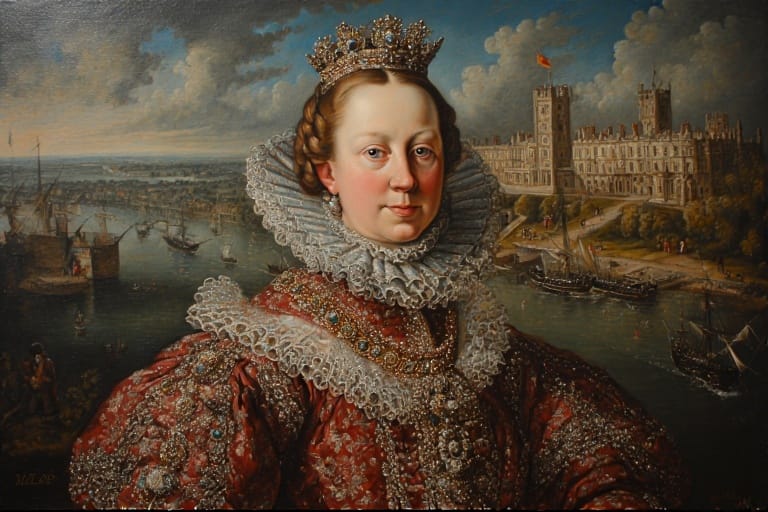
Table of Contents
- A Kingdom in Mourning: The Empire Bayezid Inherited
- Whispers in Edirne: The Days Before the Accession
- The Death of Mehmed the Conqueror and the Race for Power
- Brothers at Odds: Bayezid, Cem, and the Ottoman Tradition of Succession
- On the Road to Edirne: The March of a Reluctant Heir
- The Janissaries Decide: Mutiny, Violence, and a Chosen Sultan
- The Day of Bayezid II Accession: Ceremony, Oaths, and Silent Fears
- From Conquest to Consolidation: Changing the Ottoman Vision
- Faith, Law, and Learning: The Pious Image of the New Sultan
- The Shadow of Cem: Civil War, Exile, and a Brother Held Hostage
- Between Cross and Crescent: European Diplomacy and the Ottoman Succession
- Edirne and Istanbul: Twin Capitals of a Transforming Empire
- Merchants, Peasants, and Scholars: How Ordinary People Felt the Change
- Storm over the Horizons: Bayezid II and the Iberian Expulsions
- Earthquakes, Fires, and the Tests of a Reign
- Art, Calligraphy, and the Quiet Glory of Bayezid’s Court
- The Long Echo of 1481: How Historians Judge Bayezid II
- Conclusion
- FAQs
- External Resource
- Internal Link
Article Summary: On 21 May 1481, in the old Ottoman capital of Edirne, a quiet but momentous transfer of power reshaped the future of an empire: bayezid ii accession to the throne. This article traces the days of confusion after the sudden death of Mehmed the Conqueror, when Janissaries mutinied, rival princes mobilized, and the question of who would rule the Ottomans hung dangerously in the balance. It explores how bayezid ii accession marked a turning point from aggressive expansion to cautious consolidation, from fiery conquest to patient statecraft and pious patronage. Through vivid narrative and careful historical analysis, we follow Bayezid’s clash with his brother Cem, the intrigues of European courts, and the response of soldiers, scholars, and peasants to the new ruler. We also look at how bayezid ii accession influenced religious policy, urban life in Edirne and Istanbul, and the empire’s humanitarian response to the expulsions from Spain. Along the way, we examine the emotional and political weight of a son stepping into the shadow of a legendary father, and the personal costs of rule in a world where brothers could become mortal enemies. By the end, the story of bayezid ii accession emerges not just as a dynastic episode, but as a decisive chapter in Mediterranean history, still echoing in how we remember the Ottoman Empire today.
A Kingdom in Mourning: The Empire Bayezid Inherited
On a late spring morning in 1481, the air over the Balkans was thick with the scent of wet soil and smoke from distant villages. The Ottoman Empire, stretching from the Danube to the Taurus mountains, looked powerful and unshakable on any map a learned European might unroll. Yet the people who lived within its borders felt something else: a tremor of fear, a shiver of uncertainty that seemed to travel from village to city, from frontier fortress to bustling market. News had begun to spread—first as a whisper, then as a rumor, and finally as a certainty—that Sultan Mehmed II, known to the world as Mehmed the Conqueror, was dead.
The empire this dead sultan left behind was at once magnificent and fragile. Only twenty-eight years earlier he had taken Constantinople, making it Istanbul, a conquest that had stunned Christendom and Islam alike. The fall of the ancient Byzantine capital in 1453 was more than a military victory; it symbolized the passing of an age. Under Mehmed, the Ottomans had pushed into the Balkans, threatened Hungary, harried Venetian holdings, and challenged the great Italian maritime republics. They had advanced deep into Anatolia, subduing beyliks and rival dynasties. Granaries in Thrace fed armies in the Balkans; taxes from Aegean ports financed cannons and palaces; caravans from Persia and beyond converged on Ottoman markets. And yet, an empire is not only its territory—it is also its fears. Behind the façade of power, Mehmed’s drive for expansion had exhausted treasuries, unsettled nobles, and alarmed the Janissaries, those elite infantrymen who had been the backbone of his conquests.
It is within this volatile landscape that bayezid ii accession must be understood. Without appreciating the empire’s mood in 1481—the mixture of awe at Mehmed’s achievements and fatigue from his constant wars—one cannot grasp the emotional weight of his son’s rise. Turkish chroniclers of the time, like Tursun Bey, described Mehmed in almost mythic terms, a ruler whose appetite for conquest seemed boundless. European observers, such as the Venetian ambassador Bartolomeo Contarini, wrote of him with a mixture of dread and grudging respect, noting both his cruelty and his discipline. He was, to friend and foe alike, a storm that reshaped the political geography of three continents.
But storms rarely leave behind calm seas. Mehmed’s last years had been marked by ambitious plans—rumors circulated that he intended to march against Rome itself, or to strike deeper into Italy. In preparation, he had demanded more money, more men, more sacrifices. Overburdened taxpayers grumbled under the weight of extraordinary levies. Provincial notables, the timar-holding cavalry officers whose land grants were tied to military service, watched anxiously as the centralizing power of the sultan gnawed at their traditional privileges. The Janissaries, while increasingly powerful as a political force, were restless; the line between elite guard and palace kingmakers had begun to blur.
Whispers in Edirne: The Days Before the Accession
Edirne, the old Ottoman capital in Thrace, had once been the beating heart of the sultans’ domains. Long before Istanbul’s minarets pierced the sky, Edirne’s mosques and markets had served as the vital crossroads between Europe and Asia. By the late fifteenth century, however, the city had become a kind of second capital, a place of retreat from the swirling intrigues of Istanbul, yet still dense with administrators, judges, and soldiers. It was in this city, on the banks of the Maritsa River, that bayezid ii accession would be solemnized. But in the days leading up to that ceremony, nothing was solemn at all.
The first rumors of Mehmed’s death reached Edirne in fragments: a caravan from the south carrying anxious faces and half-told stories; a courier whose horse staggered into the city at dusk, foam on its flank; a whispered report in the medrese courtyard that the sultan had collapsed near Gebze on campaign. To the jurists and scholars, it raised urgent questions of law and legitimacy. To the soldiers in the barracks, it raised a more immediate question: who would pay them, and who would command them now?
Bayezid, the elder surviving son of Mehmed, was governing Amasya in northern Anatolia, a cultured provincial capital known for its poets and scholars. His younger brother, Cem, held Karaman in central Anatolia, a region that had long resisted Ottoman encroachment. This geographic separation was deliberate, part of the Ottoman practice of sending princes (şehzades) to govern provinces as a form of apprenticeship. But as soon as the sultan died, that same system turned deadly. Distance, in a crisis, can be lethal. Whoever reached the army, the Janissaries, and the capital first could bend events to his will.
Edirne’s streets buzzed with speculation. Merchants in the bazaar argued over which prince would make a better sultan. Pious men in the mosques prayed for stability and for a ruler who would uphold the sharia. Behind closed doors, provincial governors and high officials calculated their positions. According to later accounts, some had already begun corresponding with both princes, hedging their bets. The empire was not yet in open conflict, but the atmosphere was thick with anticipation. This was the anxious overture to bayezid ii accession, when nothing was certain and everything depended on rumor, loyalty, and speed.
The Death of Mehmed the Conqueror and the Race for Power
The precise details of Mehmed II’s death remain shrouded in a mix of fact, rumor, and retrospective suspicion. Most sources agree that he died on 3 May 1481, somewhere near the town of Gebze, east of Istanbul, while preparing for another campaign. His plans are the subject of debate. Some contemporaries believed he was marching against the Mamluks in Syria and Egypt; others thought he intended a naval thrust against Rhodes or perhaps a renewed push into Italy. Regardless of his target, the sudden end of his life cut short an unfinished imperial design.
The moment the sultan’s heart stopped, the question of succession burst into the open like a wound. There was no formal, codified rule that the eldest son would inherit the throne. Ottoman succession traditionally operated on a brutal principle: the throne went to the son who could seize it. Warfare among princes—fratricide sanctioned by custom and later by law—was seen as preferable to civil war across the entire realm. It was a logic that placed stability above sentiment, state above family. Yet, each time a sultan died, that logic had to be tested anew.
In the immediate aftermath, high officials around Mehmed’s camp attempted to keep news of his death secret. They understood that time was the most precious commodity. Every hour that passed without a clear declaration would invite plots and panic. A royal messenger galloped eastward to summon Bayezid from Amasya. Another envoy reached Cem in Karaman. Both princes, upon hearing the news, had to make a decision: whether to mourn or to march.
Bayezid, older and more experienced in governance, reacted with a mixture of grief and calculation. The father whose shadow had defined his life—demanding, brilliant, overwhelming—was gone. But sentiment could not slow him; he gathered his household troops, rallied local notables, and set out westward. Cem, younger, charismatic, and popular among some segments of the army, did the same, heading north and west in a rival bid. The roads of Anatolia filled with riders, messengers, and armed men. It became, in essence, a race for the throne.
This race is at the heart of bayezid ii accession. The image is almost cinematic: two rival caravans cutting across mountains and plains, each prince knowing that the one who arrived first where it mattered—Istanbul, Edirne, the Janissary barracks—would likely become sultan. Speed was not just a practical matter; it was a signal of vigor and resolve. In a world where divine favor was often seen in military success, the prince who could outpace his brother might also be judged as more deserving in the eyes of God.
Brothers at Odds: Bayezid, Cem, and the Ottoman Tradition of Succession
Bayezid and Cem were not simply rivals; they were brothers bound by blood yet separated by temperament and vision. Bayezid, born in 1447, had grown up under the stern gaze of Mehmed the Conqueror. As prince-governor of Amasya, he had cultivated an image of piety and restraint. His court attracted jurists, poets, and Sufi mystics. He was a man of learning, inclined toward compromise rather than reckless adventure, more a steward than a storm. Cem, several years younger, was widely described as handsome, brave, and bold—a prince who enjoyed the affection of soldiers and courtiers who missed the thrill of constant campaigning.
The Ottoman tradition gave no mercy to such brothers. The unstated rule was clear: only one could survive to rule. This grim reality cast an ominous light over bayezid ii accession. To accept the throne meant, in practice, to accept the likely death or permanent exile of one’s siblings. Medieval chroniclers report tense moments in earlier reigns when princes were strangled with silk cords in the palace gardens, their deaths later justified as necessary for the safety of the empire. Mehmed himself had ordered the killing of an infant brother at the beginning of his rule, setting a precedent that jurists would later reference to legitimize fratricide. The family drama behind the façade of imperial power was nothing less than tragic.
Bayezid knew Cem not as an abstraction but as a flesh-and-blood rival he had observed for years. He understood how Cem’s personal charm and martial energy appealed to many in the army. Cem, in turn, saw Bayezid as overly cautious, perhaps even weak, better suited to prayer mats than to battlefields. These mutual perceptions, colored by years of gossip and competition, hardened into political identity once their father died. Supporters of Bayezid framed him as the guarantor of law and religious orthodoxy, the prince who would protect the realm from the excesses of endless war. Supporters of Cem portrayed their champion as the true heir to Mehmed’s conquering spirit, the only one capable of defending and expanding the empire’s frontiers.
Within this psychological and political framework, bayezid ii accession becomes more than a simple dynastic change; it becomes a choice about what kind of empire the Ottomans would be after 1481. Would they continue Mehmed’s relentless outward thrust, or would they turn inward, consolidating and organizing what had already been taken? The answer would be decided not only by generals and viziers, but also by the men of the barracks, the scribes of the chancery, and the unseen prayers of mothers who feared civil war more than any foreign enemy.
On the Road to Edirne: The March of a Reluctant Heir
Bayezid’s journey from Amasya to Edirne was not simply a physical trek across Anatolia and Thrace; it was a passage from princely seclusion to the brutal glare of sovereignty. As his caravan moved westward, every village passed, every bridge crossed, seemed to weigh upon him with the knowledge that the next step would bind him to an unescapable destiny. The countryside through which he traveled bore the scars of recent wars—burned farmsteads, abandoned fields, fortified hilltops still bristling with half-rotten palisades. The empire was vast, but its stability was far from assured.
Local notables and provincial commanders came out to greet him along the way. Some brought gifts—fine horses, silk robes, bags of coins—seeking to secure his favor should he ascend the throne. Others brought questions. Would he continue Mehmed’s costly wars? Would he respect older tax exemptions granted by previous sultans? Would he favor one faction of the court over another? Bayezid, careful and deliberate, answered with vague assurances, promising justice, adherence to Islamic law, and care for his subjects. These were the words of a man building a coalition, not of a reckless conqueror.
Yet, behind these courtesies, danger lurked. Cem’s partisans were also on the move. Rumors reached Bayezid that some commanders were delaying their allegiance, waiting to see which brother would prevail. There were reports of Janissary units in Istanbul growing restless, unsure whom to support. In such an environment, a single misstep—a delay, an insult, an ill-timed order—could cause defections. Bayezid’s supporters urged him to move faster, to make bold promises to the army. He resisted excessive haste, but he understood that bayezid ii accession would not wait for endless deliberation. Time remained his harshest judge.
Night after night, as campfires dotted the hillsides, Bayezid would have heard the murmurs of his own entourage. Some, no doubt, invoked the memory of Mehmed: “Your father would have ridden all night, pressing forward without rest.” Others counseled caution, reminding the prince that arriving too soon without firm support in the capital could be fatal. The future sultan must have realized that he was being compared, at every moment, to the towering legacy of his father. It is here, in these dimly lit encampments, that the emotional core of bayezid ii accession becomes visible: a son struggling to define his own path under the enormous, almost crushing, weight of a conqueror’s memory.
The Janissaries Decide: Mutiny, Violence, and a Chosen Sultan
While Bayezid advanced toward Thrace, the real crucible of power lay in the Janissary barracks. The Janissaries, originally formed from converted Christian youths taken through the devşirme system, had become the most feared infantry in the region. Their loyalty was to the sultan—but which sultan, when there were two claimants and no clear rule of primogeniture? As news of Mehmed’s death broke through the attempted secrecy, the Janissaries grumbled about unpaid wages and uncertain futures.
In Istanbul, tensions exploded. According to several Ottoman and European accounts, the Janissaries mutinied, plundering parts of the city, attacking officials they blamed for financial mismanagement. This violent eruption was not only about money; it was a way of signaling that the army would not be a passive spectator in the struggle for succession. They wanted a sultan who would secure their privileges and guarantee regular pay. Viziers and court bureaucrats, sensing the danger, quickly understood that any plan for bayezid ii accession would have to run through the barracks.
Key figures within the administration moved decisively in Bayezid’s favor. The powerful grand vizier and religious jurists, fearing Cem’s unpredictability, leaned toward the elder brother. Some of them dispatched secret messages to Edirne and to Bayezid’s camp, promising support if he would pledge to calm the army and respect the legal order. Bayezid, keenly aware that legitimacy was being auctioned in real time, agreed. He signaled that he would satisfy the Janissaries’ financial demands and restore order in the capital.
The Janissaries, for their part, made a brutal demonstration of their leverage. In a paroxysm of rage, they killed certain high-ranking officials, men they saw as symbols of Mehmed’s oppressive fiscal policies. Buildings burned. Ordinary citizens cowered indoors, unsure if the violence heralded wider chaos. In one stroke, the Janissaries announced that any future sultan would need to reckon with their power. When they finally allowed a semblance of calm to return, it was under the implicit condition that Bayezid—not Cem—would be welcomed as the new ruler. In this sense, bayezid ii accession was not only a dynastic event but also a political pact between a cautious prince and a fearsome military elite.
The Day of Bayezid II Accession: Ceremony, Oaths, and Silent Fears
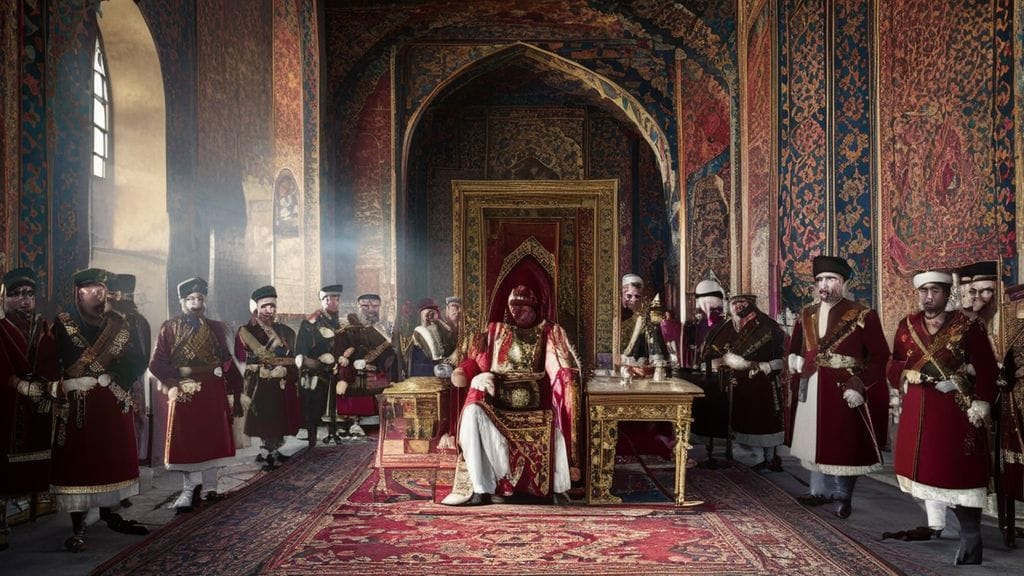
On 21 May 1481, Edirne awoke to the sound of drums and the call to prayer echoing from its mosques. The spring light fell gently on the domes and slender minarets, on the stone bridges spanning the Maritsa, and on the swelling crowds moving toward the imperial complex. This was the day of bayezid ii accession to the Ottoman throne. The city had seen sultans come and go, but few moments bore such a mixture of hope and apprehension.
Inside the palace, Bayezid donned robes of deep, imperial color—perhaps rich crimson or royal blue—and a turban wound with meticulous care. Courtiers adjusted his belt, making sure the ceremonial sword hung just so, an emblem of both justice and war. Religious scholars prepared for the ritual that would symbolize divine approval of his rule: the presentation of the sword of Osman, the legendary founder of the dynasty. Outside, Janissaries lined the routes, their ranks both guardians and implicit reminders of the power they wielded.
The ceremony itself combined pomp with a palpable undercurrent of anxiety. As Bayezid processed through the palace courtyards, officials bowed in sequence. The chief judge recited prayers invoking God’s blessing upon the new sultan, asking for wisdom, justice, and victory. The crowd answered with cries of “Padishahım çok yaşa!”—“May our sultan live long!” Trumpets blared, kettledrums rolled, and messengers hurried to inscribe the event into the chronicles of the empire. This was the formal, visible face of bayezid ii accession: a carefully choreographed display meant to show that the transition of power was orderly, legitimate, and sanctioned by heaven.
Yet behind the chanting and the shimmering procession, silent fears stalked the minds of many. Some wondered how Cem would respond when he learned that his brother had been enthroned in Edirne. Would he accept a compromise, perhaps a smaller domain, or would he march on the capital in defiance, plunging the empire into civil war? Others quietly questioned whether Bayezid could live up to Mehmed’s legacy, whether a pious, deliberate ruler could protect them from the ambitions of Europe and the Mamluks. For Bayezid himself, the moment must have felt like both a coronation and a trial: every eye watching, every whisper weighing his gestures for signs of strength or hesitation.
After the sword was girded to his waist and the prayers had been said, Bayezid emerged fully as Sultan Bayezid II. Decrees were issued in his name. Coins would soon bear his titles. Envoys were dispatched to neighboring courts announcing the accession. But in his private chambers, the new sultan surely knew that this day was only the beginning. The real test of bayezid ii accession would unfold in the months and years to come, as brother turned against brother, and as the empire learned what sort of ruler it had gained.
From Conquest to Consolidation: Changing the Ottoman Vision
The transition from Mehmed II to Bayezid II marked a profound shift in the Ottoman imperial project. Under Mehmed, the empire had been defined by the relentless push of its borders. Sieges, campaigns, and the thunder of cannons at fortress walls had been the soundtrack of his reign. Bayezid, by contrast, soon signaled a different emphasis. Though he did not abandon warfare—no Ottoman sultan of his era could—he leaned toward consolidation, administration, and the quieter, less glamorous work of governance.
Historians often describe this shift as one from a “conquering” to a “stabilizing” sultan. That description, while somewhat simplistic, captures the essence of what made bayezid ii accession such a turning point. Bayezid focused on repairing the fiscal strains of his father’s policies. He sought to regularize taxation, to reduce extraordinary levies, and to ensure that land grants to cavalrymen (timar holders) were better documented and supervised. This kind of work rarely inspires legends, but it keeps empires from collapsing.
Diplomatically, Bayezid pursued a more measured path. With Venice, the perennial naval rival, he oscillated between confrontation and accommodation but generally showed more willingness to negotiate than Mehmed had. In the Balkans, he continued to assert Ottoman dominance, yet he also relied on diplomacy, truces, and client rulers. In Anatolia, he attempted, where possible, to integrate former rivals through marriage alliances and controlled autonomy. This approach reflected his temperament: he believed that lasting power lay in order, not in spectacle.
Yet this new vision came at a political cost. Some soldiers and frontier lords, the gazi warriors whose identity was built on holy war, felt increasingly marginalized. They had thrived under Mehmed, whose appetite for campaigns had kept their swords employed and their status affirmed. Under Bayezid, their role became less central. They were not dismissed, but they were slowly woven into a more institutionalized military machine where the sultan and his central bureaucracy held greater sway. In this sense, bayezid ii accession can be seen as part of a broader arc of Ottoman history: the gradual transformation of a frontier warrior state into a complex, bureaucratic empire.
Faith, Law, and Learning: The Pious Image of the New Sultan
One of the defining features of Bayezid II’s rule was his cultivation of a deeply pious public image. Where Mehmed had sometimes scandalized conservative circles with his bold reforms, occasional disregard for traditional forms, and near-obsessive pursuit of power, Bayezid sought to drape his sovereignty in the reassuring garments of religious orthodoxy. Mosques, madrasas, and charitable foundations (vakıfs) multiplied under his patronage. Cities from Edirne to Amasya and Istanbul felt the imprint of this devotion in stone and calligraphy.
Bayezid’s own habits reinforced this reputation. He was known to attend prayers punctually, to consult learned jurists on matters of law, and to support Sufi orders that fostered spiritual life across the empire. His interest in Islamic scholarship extended beyond mere patronage; he engaged personally with questions of jurisprudence and theology. Such behavior soothed anxieties among the religious elite who had watched Mehmed’s cosmopolitan court with unease. After the turbulence of the succession crisis, bayezid ii accession thus appeared, to many clerics and scholars, as a providential correction, a return to balance.
At the same time, Bayezid did not use piety merely as window dressing. His legal reforms and interventions reveal a ruler concerned with social justice as he understood it. He ordered reviews of certain tax abuses, intervened in inheritance disputes, and sought to protect peasant communities from the overreach of local powerholders. In the imperial chancery, scribes drafted firmans (edicts) that began with traditional invocations of God and the Prophet but often turned quickly to practical problems such as land boundaries, market regulation, or the rights of non-Muslim communities under Ottoman rule.
Like many rulers of his age, Bayezid also understood that the control of knowledge was a form of power. He invested in libraries and encouraged translations, attracting Persian and Arabic scholars alongside local Turkish intellectuals. The result was a flowering of literature and science that sometimes goes overlooked in the shadow of Mehmed’s more dramatic military exploits. Yet, when considered in the context of bayezid ii accession, this investment in learning becomes highly significant: it signals that Bayezid saw the future of the empire not only in battlefield victories but in cultivated minds, moral order, and institutional continuity.
The Shadow of Cem: Civil War, Exile, and a Brother Held Hostage
No account of bayezid ii accession is complete without the tragic figure of Cem Sultan, his ill-fated brother. For while Bayezid sat upon the throne in Edirne and Istanbul, Cem refused to vanish quietly into obscurity. Believing himself no less entitled to rule, he gathered supporters and launched an open challenge. In 1481 and 1482, the Ottoman Empire teetered on the brink of a fratricidal conflict that could have shattered Mehmed’s inheritance.
Cem first attempted to claim the throne in Bursa, a former Ottoman capital. He was initially successful in gaining local support, and for a brief, flickering moment, it seemed possible that the empire might split between two brothers—Bayezid ruling in Europe and northern Anatolia, Cem commanding the south and perhaps parts of the Balkans. But Bayezid moved swiftly. In a series of confrontations, his forces pushed Cem back. The decisive defeat came near Yenişehir, where Cem’s army faltered. Realizing that he could not withstand his brother’s superior position and resources, Cem made a fateful choice: he sought refuge, first with the Mamluks in Cairo and then, more dramatically, with European powers.
Cem’s odyssey through foreign courts reads like a tragic novel. He was received by the Knights Hospitaller on Rhodes, then handed over to the Papacy, and eventually shuttled between Rome, France, and even the Habsburg domains. Throughout these journeyings, he was treated with a curious blend of honor and captivity—a royal guest whose very presence was a bargaining chip against his brother in Istanbul. European rulers entertained fantasies: perhaps Cem could be used to divide the Ottoman Empire from within, or to force Bayezid into concessions, or even to spearhead a crusade. None of these grand schemes fully materialized, but the fear of them haunted Bayezid’s reign.
For Bayezid, the existence of a rival prince in Christian hands was a constant source of anxiety. He paid substantial sums to keep Cem in relatively honorable confinement, preferring a living hostage under watchful eyes to a free, wandering claimant who might return at the head of a Christian army. There is an undeniable pathos in this arrangement: two brothers whose lives had diverged so sharply that one paid foreign knights and popes to ensure the other remained safely distant but alive.
Cem’s story, often recounted in both Ottoman and European chronicles, crystallizes the human cost of bayezid ii accession. It also shows how internal dynastic disputes could become entangled with wider geopolitical games. When Cem died in 1495 in Naples—some say of natural causes, others whispering of poison—Bayezid reacted with a strange mix of relief and sorrow. With his brother’s death, the last significant internal threat to his rule evaporated. Yet another thread of his own humanity was cut. The empire was safer; his conscience, perhaps, less so.
Between Cross and Crescent: European Diplomacy and the Ottoman Succession
The European courts watched the events of 1481 and the years that followed with intense fascination. To the Venetians, Hungarians, French, and the Papacy, bayezid ii accession was not merely an internal Ottoman matter; it was an opportunity, a risk, and a puzzle, all at once. Would the new sultan be as aggressive as Mehmed? Would internal strife weaken the Ottomans enough to allow Christian states to reclaim lost territories, or at least secure more favorable treaties?
Diplomatic reports from Italian city-states provide a window into these anxieties. Venetian envoys wrote back to the Doge about rumors from Istanbul—about Janissary discontent, about Cem’s movements, about Bayezid’s perceived character. Some believed Bayezid’s pious, cautious nature might make him more inclined to peace and commerce, which suited Venice’s mercantile priorities. Others warned that any moment of weakness in the Ottoman court could unleash unpredictable violence on the frontiers.
The Papacy, meanwhile, saw Cem as both a moral embarrassment and a potential instrument. Here was a Muslim prince, of the house that had taken Constantinople, living under the protection of Christian knights and prelates. Popes dreamed of orchestrating a grand crusade using Cem as a figurehead, thereby posing a “legitimate” Ottoman alternative to Bayezid for the empire’s Muslim subjects. The reality never matched the fantasy. Cem had limited influence over events in his homeland, and Christian states were often too divided among themselves to unite in sustained action.
Still, the very fact that European rulers entertained these ideas shows how much bayezid ii accession altered the diplomatic map. Mehmed’s death opened a brief window of perceived vulnerability. After Bayezid secured his position and survived Cem’s challenge, that window narrowed. But the precedent remained: foreign powers had learned that dynastic fractures in Istanbul could be leveraged for their own ends, a lesson that would echo across later centuries of Ottoman history.
Edirne and Istanbul: Twin Capitals of a Transforming Empire
Although Istanbul was firmly established as the empire’s main capital by 1481, Edirne still played a crucial role in the political and ceremonial life of the Ottomans. The fact that bayezid ii accession was solemnized there underscores the city’s continued importance. Edirne was more than a relic; it was a living repository of dynastic memory, a place where older forms of court ceremony and military mustering remained vivid.
The choice of Edirne offered practical advantages. It lay closer to the European frontiers and to the power base of many Janissary units. In turbulent times, having the ceremony in a city that could be defended by experienced Balkan troops and loyal commanders made logistical sense. Yet it also had symbolic resonance: crowning the new sultan in the old capital drew a line of continuity from the early Ottomans, through Murad II, to Mehmed and now Bayezid. It was as if the city itself whispered that empires might expand and capitals might shift, but the dynasty’s root still nourished the trunk.
Meanwhile, Istanbul continued to evolve under Bayezid’s rule. The city Mehmed had forcibly transformed from Byzantine Christian stronghold to Ottoman Muslim metropolis was becoming a more mature imperial center. Under Bayezid, mosques, markets, and public baths multiplied. The Sultan Bayezid II Mosque complex, later built on the city’s third hill, would stand as a testament to his religious and urban vision. Scholars, artisans, and merchants from across the empire and beyond converged on its streets. Istanbul’s growing cosmopolitanism—a fusion of Turkish, Greek, Armenian, Jewish, Persian, and Balkan influences—became an everyday reality.
Thus, bayezid ii accession did not merely shift a throne; it adjusted the very geography of power between Edirne and Istanbul. While Edirne played host to the crucial early ceremonies and remained a favored residence, Istanbul inexorably pulled the empire’s administrative and cultural gravity toward itself. The twin cities reflected the dual identity of the Ottoman state at that moment: rooted in its Anatolian and Balkan past, yet increasingly oriented toward a Mediterranean and world-spanning future.
Merchants, Peasants, and Scholars: How Ordinary People Felt the Change
High politics and imperial ceremonies tell only part of the story. To fully understand the impact of bayezid ii accession, one must listen, as far as the sources allow, to the quieter voices of the time: the merchants counting coins in dimly lit stalls, the peasants coaxing wheat from stony fields, the scholars hunched over manuscripts in chilly madrasa rooms. For these people, the change of sultan was both distant and intimately tangible.
In the markets of Edirne, Bursa, and Istanbul, merchants watched exchange rates and tax edicts as closely as they followed rumors of succession. Mehmed’s wars had disrupted trade routes, imposed extra levies, and periodically conscripted caravans for military logistics. Bayezid’s early decrees suggesting a more stable fiscal regime brought cautious optimism. If the new sultan kept the peace and reduced uncertainty, commerce could flourish. Venetian and Genoese traders, too, adjusted their strategies based on reports that Bayezid preferred negotiation to spectacular conquest.
For peasants, the calculus was more immediate. Their lives were governed by the rhythm of the seasons and the demands of tax collectors. A new sultan often meant the reaffirmation—or sometimes the revision—of tax obligations. In some regions, Bayezid’s government moved to curb abuses, reinforcing legal protections that forbade certain arbitrary exactions. Nonetheless, the risk of local officials turning succession chaos into opportunities for extra profit was real. In years when Cem’s challenge hovered like a specter, some border areas saw troop movements and skirmishes that trampled fields and disrupted planting cycles. The price of fraternal rivalry could be measured in lost harvests as well as spilled blood.
Scholars and religious figures perhaps felt the shift most keenly in the realm of ideas. Many had admired Mehmed’s patronage of both Islamic and classical learning, but some had also worried about the sultan’s occasional disregard for conservative norms. Bayezid’s evident devotion to Islamic law and his generous support for mosques and schools reassured them. They adapted their sermons and legal opinions to praise the new ruler as a protector of the faith, emphasizing continuity between his piety and the empire’s stability. Yet even among the learned, there were debates. Was Bayezid’s relative caution a virtue, or would it allow Christian rivals to regain strength?
It is astonishing, isn’t it, how a decision made in palace halls resonates in such diverse and humble spaces? A peasant in Macedonia, a Jewish merchant arriving in Salonika, a dervish in an Anatolian tekke—all, in their own way, experienced the consequences of bayezid ii accession. The sultan’s policies filtered down to them as shifts in tax burdens, degrees of religious tolerance, security on the roads, and the tenor of official justice. For some, Bayezid’s reign brought modest relief after the strains of ceaseless war; for others, it was simply a new name on the coins they used and the prayers they heard on Fridays.
Storm over the Horizons: Bayezid II and the Iberian Expulsions
One of the most far-reaching episodes of Bayezid II’s rule, and one that illustrates the moral and political dimensions of his reign, lies far from Edirne or Amasya—in the kingdoms of Spain. In 1492, the same year Christopher Columbus sailed westward, the Catholic Monarchs Ferdinand and Isabella completed the Reconquista with the fall of Granada and then decreed the expulsion of the Jews from their realms. This catastrophe for Iberian Jewry sent shockwaves across the Mediterranean. Within those waves, the Ottoman Empire, under Bayezid’s guidance, became an unexpected harbor.
Contemporary accounts, including those of later Ottoman chroniclers and Jewish writers, recount how Bayezid ordered his navy to assist in transporting some of the expelled Jews to Ottoman ports, especially Salonika and Istanbul. The sultan is said to have mocked Ferdinand, allegedly remarking that the Spanish king was impoverishing his own lands while enriching Ottoman domains with skilled and industrious subjects. While some of these quotes may be embellished by later historians, the underlying reality is clear: Bayezid saw in the suffering of Iberian Jews both a humanitarian obligation and a strategic opportunity.
The arrival of thousands of Sephardic Jews in Ottoman lands over the following years reshaped local economies and cultures. These newcomers brought commercial networks, linguistic skills, artisanal knowledge, and medical expertise. Cities like Salonika would eventually become major centers of Jewish life under Ottoman rule, renowned for their printing presses and mercantile activity. For Bayezid, welcoming them reinforced his image as a just and pragmatic ruler, willing to harness diversity for the empire’s benefit.
In the broader narrative of bayezid ii accession, this episode demonstrates how a sultan whose rule began amid internal succession struggles could, a decade later, shape the fate of entire communities far beyond his frontiers. His decision to open Ottoman doors to Iberian refugees contrasted starkly with the expulsions and forced conversions in the West. It added a layer of complexity to the image of the “Turk” in European eyes: feared as a military rival yet admired, in some quarters, for a degree of tolerance absent closer to home. Historians such as Halil İnalcık have noted that this policy strengthened the empire’s commercial class and signaled a distinctive Ottoman approach to religious minorities.
Earthquakes, Fires, and the Tests of a Reign
No reign, however carefully planned, escapes the blows of chance. During Bayezid II’s time on the throne, the empire faced not only political and military trials but also natural disasters that tested its resilience. Earthquakes shook cities; fires consumed neighborhoods packed with wooden houses; floods ravaged fields and bridges. Each catastrophe posed practical challenges and raised theological questions among the population: were these events divine warnings, punishments, or mere natural misfortunes?
In Istanbul and Edirne, major fires occasionally swept through crowded quarters, leaping from roof to roof before they could be contained. Chronicles describe scenes of panic as families rushed to save what little they could, while mosque minarets glowed ominously in the reflected flames. The government’s response to such disasters—sending aid, organizing rebuilding, granting temporary tax relief—became a tangible measure of Bayezid’s concern for his subjects. A sultan who ignored such suffering risked losing not only prestige but also the loyalty that bound city dwellers to his rule.
Earthquakes, too, left their mark. The Ottoman heartlands lay along active fault lines, and tremors periodically toppled minarets, cracked walls, and collapsed homes. In the wake of such events, sermons often invoked the need for repentance and renewal. Bayezid, whose pious reputation was already well established, sometimes ordered additional charitable works or the repair of key religious buildings as acts of piety and reassurance. These efforts served a dual purpose: they soothed spiritual anxieties and maintained the physical infrastructure of imperial life.
Natural disasters thus became yet another stage on which the consequences of bayezid ii accession played out. They showed whether the administrative apparatus he had inherited and modified from Mehmed could respond effectively to crises. They also provided moments when the sultan’s character, as perceived by his subjects, shone through his actions. Was he generous, decisive, and present in their hour of need? Or was he distant, preoccupied with court intrigues and foreign affairs? The historical record suggests that Bayezid generally rose to these challenges reasonably well, reinforcing the image of a caretaker king more than a flamboyant conqueror.
Art, Calligraphy, and the Quiet Glory of Bayezid’s Court
While Mehmed the Conqueror is often credited with initiating a burst of artistic and architectural patronage, Bayezid II continued and refined this cultural flowering in ways that mirrored his own temperament. If Mehmed’s legacy was monumental—great fortresses, the reimagining of Istanbul’s skyline—Bayezid’s was more intimate, found in the delicate tracery of calligraphy, the measured beauty of mosque complexes, and the cultivation of musicians and poets who shaped the empire’s inner voice.
One of the most enduring monuments of his patronage is the Bayezid II Mosque and its külliye in Istanbul, completed in the early sixteenth century. The complex included not just a place of worship but also a hospital, a soup kitchen, and a madrasa. Its architecture exudes balance and harmony rather than overwhelming grandeur, reflecting the sultan’s desire to pair spiritual devotion with social welfare. Visitors walking through its courtyards centuries later still sense an atmosphere of ordered calm, a material echo of the stabilizing role Bayezid tried to play in Ottoman history.
At court, calligraphers and illuminators found a supportive environment. The art of beautiful writing—Arabic script shaped into fluid, almost musical lines—was highly esteemed. Bayezid himself reportedly had an appreciation for refined calligraphy and poetry, and his patronage helped standardize certain aesthetic norms that would characterize Ottoman manuscript culture for generations. Music, too, flourished, with court musicians blending Turkish, Persian, and Byzantine influences into a distinctive sonic tapestry for ceremonies, private gatherings, and religious rituals.
This cultural dimension deepens our understanding of bayezid ii accession. His rise to power did not simply alter military and diplomatic arrangements; it affected what people heard, saw, and read. By investing in enduring works of art and architecture rather than in ceaseless conquest, Bayezid quietly recalibrated the empire’s sense of itself. A new story of Ottoman greatness began to take shape, one that valued scholarly learning, artistic sophistication, and social institutions alongside battlefield triumphs. In this story, the sultan’s pen and purse were as important as his sword.
The Long Echo of 1481: How Historians Judge Bayezid II
Centuries after the drums sounded in Edirne to announce bayezid ii accession, historians continue to debate what kind of ruler he was and how pivotal his reign proved to be. Some, especially in older nationalist or heroic traditions, have dismissed him as a lesser figure overshadowed by his father Mehmed and by the more flamboyant sultans who came after, such as Selim I and Süleyman the Magnificent. Bayezid’s preference for negotiation over bold campaigns, his careful administrative adjustments rather than sweeping reforms, made him seem, at first glance, less dramatic.
Yet more recent scholarship has tended to view him in a different light. In the work of historians like Halil İnalcık and Colin Imber, Bayezid appears as a crucial bridge between eras—between the violently expansionist age of Mehmed and the more fully institutionalized classical period of the sixteenth century. Without the consolidation and administrative stabilization that followed bayezid ii accession, the later “Golden Age” of Ottoman power might have been built on sand. His piety and emphasis on law helped root imperial authority in a moral framework that resonated deeply with the empire’s Muslim majority, even as non-Muslim communities found a relatively secure, if subordinate, place within the system.
There is also a growing appreciation for the human complexity of his situation. Any ruler forced to maneuver between a powerful military elite, ambitious provincial magnates, foreign intrigue, and the constant possibility of dynastic challenge would face dilemmas that rarely yielded clean, heroic narratives. Bayezid’s treatment of Cem—paying to keep him confined but alive, constantly worrying about European manipulation—illustrates the tension between fraternal feeling and raison d’état. His policies toward expelled Iberian Jews reflect a blend of compassion and strategic foresight. His handling of internal unrest shows a preference for compromise but not an incapacity for decisive action when needed.
In a sense, the very fact that bayezid ii accession is less celebrated than Mehmed’s capture of Constantinople or Süleyman’s great sieges is a testament to its success. The empire did not collapse in civil war; its institutions did not disintegrate under the strain of succession. Instead, it weathered the storm and settled into a new equilibrium. That kind of achievement rarely inspires epic poetry, but it is the sort of work upon which enduring states are built. The quiet, steady drumbeat of Bayezid’s rule, begun on that uncertain day in Edirne in May 1481, would continue to reverberate quietly beneath the louder fanfares of later Ottoman glory.
Conclusion
Bayezid II’s accession to the Ottoman throne on 21 May 1481, in Edirne, was more than a ceremonial moment; it was a hinge on which the empire’s future swung. Born in the shadow of Mehmed the Conqueror, Bayezid inherited a realm vast but strained, awe-inspiring yet fragile. His rise, contested by his brother Cem and scrutinized by Janissaries, scholars, peasants, and foreign courts, forced the dynasty to reckon with its own violent tradition of succession and with the political realities of a maturing empire. In navigating these dangers, Bayezid chose a path of consolidation rather than reckless expansion, of piety and institutional strengthening rather than theatrical conquest.
Through his reign, begun with the fraught drama of bayezid ii accession, the Ottomans transformed from a relentlessly advancing war machine into a more stable, bureaucratic state capable of absorbing new populations, such as the expelled Jews of Iberia, and integrating diverse lands under a shared legal and moral framework. He contained internal threats, especially that posed by Cem, managed a complex diplomatic environment, and invested in the cultural and social infrastructure that would support Ottoman power for generations. His story, when told in full, reveals not a minor figure overshadowed by greater conquerors, but a careful steward of an empire in transition—one whose quiet decisions, taken in the flickering aftermath of Mehmed’s fiery reign, shaped the course of Ottoman and Mediterranean history long after the cheers in Edirne had faded.
FAQs
- Who was Bayezid II?
Bayezid II was the son of Sultan Mehmed II (Mehmed the Conqueror) and the eighth ruler of the Ottoman Empire, reigning from 1481 to 1512. He is known for consolidating the empire after a period of rapid expansion, emphasizing piety, law, and administration over constant conquest. His reign followed the dramatic bayezid ii accession in Edirne after his father’s sudden death. - What made bayezid ii accession in 1481 so important?
Bayezid II’s accession was crucial because it occurred at a moment of intense uncertainty following Mehmed II’s death, with rival claims from his brother Cem and unrest among the Janissaries. The way Bayezid secured the throne—through careful alliances, concessions to the army, and religious legitimation—set the tone for a more stable and institutionalized Ottoman state. It prevented a potentially catastrophic civil war and allowed the empire to transition from an era of rapid conquest to one of consolidation. - How did Bayezid II deal with his brother Cem?
After bayezid ii accession, Cem challenged his brother’s claim and briefly controlled parts of Anatolia, but he was defeated militarily and fled to seek refuge with the Mamluks and then in Europe. Bayezid responded by paying European powers, including the Knights of St. John and the Papacy, to keep Cem in honorable captivity, thereby neutralizing him as a political threat without directly ordering his execution. Cem’s long exile and eventual death in 1495 removed the last serious internal rival to Bayezid’s rule. - Did Bayezid II continue Mehmed the Conqueror’s expansionist policies?
Bayezid II did wage wars and defend Ottoman frontiers, but he was generally less expansionist than his father. His priorities lay in strengthening administration, stabilizing finances, and reinforcing religious and legal institutions. This shift did not mean the end of Ottoman military activity, but it did mark a change in emphasis, with more attention to consolidation, diplomacy, and internal order. - How did Bayezid II respond to the expulsion of Jews from Spain?
In the wake of the 1492 expulsion of Jews from Spain, Bayezid II welcomed many of the refugees into the Ottoman Empire, particularly in cities like Salonika and Istanbul. He reportedly instructed his navy to help transport them and recognized the economic and cultural benefits they could bring. This policy both enhanced the empire’s commercial vitality and contributed to its reputation for relative tolerance toward religious minorities. - What was Bayezid II’s relationship with the Janissaries?
At the time of bayezid ii accession, the Janissaries were a powerful and sometimes unruly force whose support was essential to any sultan. Bayezid secured their backing by addressing their financial grievances and integrating their interests into his broader policies. Throughout his reign, he balanced their influence with efforts to maintain central authority, avoiding the extremes of either total subservience or open confrontation. - How do historians today view Bayezid II’s reign?
Modern historians tend to see Bayezid II as a crucial transitional figure who stabilized and institutionalized the Ottoman Empire after its explosive growth under Mehmed II. While he lacks the dramatic profile of some other sultans, his cautious diplomacy, administrative reforms, and cultural patronage are increasingly recognized as laying important groundwork for the empire’s sixteenth-century “classical” period. His bayezid ii accession is thus viewed as a pivotal episode in the consolidation of Ottoman power.
External Resource
Internal Link
Other Resources
- Encyclopaedia Britannica – general search for the exact subject
- Google Scholar – academic search for the exact subject
- Internet Archive – digital library search for the exact subject