Table of Contents
- The Foreshadowing Storm: Europe on the Brink of Chaos
- Napoleon’s Ambition and the Spanish Crown
- Bayonne: A Town Turned Stage for Political Betrayal
- The Arrival of the Spanish Royal Family in France
- The Pressure Cooker: Negotiations that Were No Negotiations
- The Abdications Unfold: Charles IV and Ferdinand VII at Bayonne
- Napoleon’s Masterstroke or Overreach?
- The Spanish People: Shock, Betrayal, and the Burning Spirit of Resistance
- The Role of Key Figures: Godoy, Murat, and the Bourbon Brothers
- The Aftermath in Madrid: Power Vacuum and Chaos
- The Birth of a National Uprising: The Dos de Mayo Revolt
- The Peninsular War: A Nation’s Struggle against an Empire
- European Repercussions: Allies, Enemies, and the Shifting Balance
- The Legitimacy Question: Kings, Usurpers, and Sovereignty
- The Abdications in Historical Memory: Myth, Legend, and Controversy
- Cultural Echoes: Art, Literature, and the Spirit of Resistance
- Napoleon’s Spanish Adventure: From Diplomatic Coup to Military Quagmire
- The Legacy of Bayonne: Lessons on Power, Identity, and Resistance
- The Abdications' Place in the Grand Narrative of the Napoleonic Wars
- Conclusion: The End of an Era and the Dawn of a New Struggle
- FAQs: Digging Deeper into the Bayonne Abdications
- External Resource
- Internal Link
The Foreshadowing Storm: Europe on the Brink of Chaos
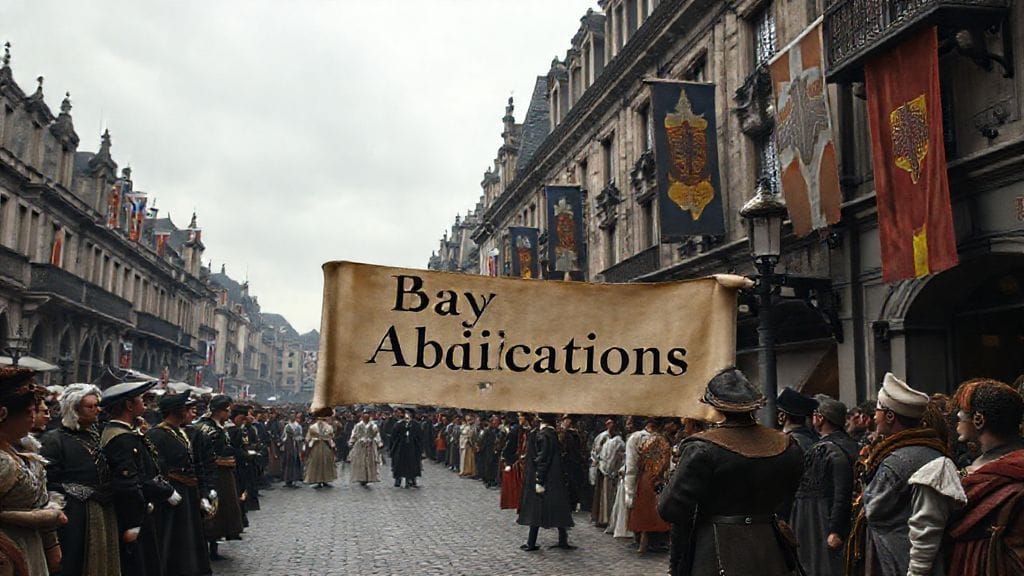
In the spring of 1808, the small border town of Bayonne in southwestern France became the unlikely epicenter of an event that would shake the foundations of the Iberian Peninsula and reverberate across Europe. It was here, amid the lush green hills and narrow cobbled streets, that two Spanish kings — Charles IV and his son Ferdinand VII — were coerced into an unprecedented and humiliating act: their abdication of the Spanish crown in favor of Napoleon Bonaparte.
Imagine the scene: a vibrant, proud Spain suddenly reduced to a pawn in Napoleon’s grand chess game. The air thick with uncertainty, murmurs of betrayal, and the quiet desperation of a monarchy unraveling. Bayonne was a quiet town, ill-prepared to host the drama of abdication, intrigue, and loss of legitimacy that would soon redefine the course of Spanish, and indeed European, history.
Napoleon’s Ambition and the Spanish Crown
To understand the gravity of the abdications at Bayonne, one must first grasp the sweeping ambitions of Napoleon Bonaparte, emperor of the French and master reshaper of the European political map. By 1808, his conquests had spread from Italy to Central Europe, yet Spain — long an imperial heavyweight with its own wealth and colonies — remained an untouched prize.
Spain’s internal situation was volatile. Charles IV’s reign was marked by weakness and scandal, overshadowed by his prime minister and favorite, Manuel Godoy. The king’s son, Ferdinand, was widely viewed as more dynamic but deeply embroiled in a bitter power struggle within his own family. Meanwhile, Europe was aflame in the fires of the Napoleonic Wars, and Napoleon sought to bring Spain firmly into his sphere, securing the southern flank of his empire and control over vital colonial routes.
Napoleon had initially approached Spain as an ally, but his patience was thin, and his appetite for control insatiable. As tensions escalated, the Spanish ruling class became fragmented, setting the stage for the dramatic events decided at Bayonne.
Bayonne: A Town Turned Stage for Political Betrayal
Bayonne was a mere border town, historically quiet, known for its strategic position at the confluence of the Nive and Adour rivers, acting as a gateway between France and Spain. What it now became was a gilded cage for Spanish royalty.
Napoleon orchestrated a plan to lure the Spanish royal family under the guise of diplomatic talks supposedly aimed at resolving disputes and securing alliances. The reality was starkly different: Bayonne was to be the site of coercion and forced abdication.
The choice was deliberate. The town’s distance from Madrid ensured control, secrecy, and a measure of isolation where the emperor’s will could be imposed without interference — a chessboard where kings were to be sacrificed.
The Arrival of the Spanish Royal Family in France
In late April 1808, the royal entourage began their journey northwards — an ambiguous procession filled with a mixture of hope, indignation, and foreboding. King Charles IV, his queen Maria Luisa, Prince Ferdinand, and Prince Carlos moved reluctantly, aware that their negotiation was more trap than treaty.
Their arrival in Bayonne was met with a reserved but tense reception. Napoleon welcomed them with the grandeur typical of his court, yet the hospitality was a thin veil over the reality of his intentions. The shadow of coercion was everywhere, from the guarded quarters to the secretive meetings.
This confrontation between an emperor at the height of his powers and a divided royal family on the verge of collapse set the stage for one of history’s most controversial power grabs.
The Pressure Cooker: Negotiations that Were No Negotiations
What followed in the palace halls of Bayonne was less a negotiation and more a display of overpowering dominance. Napoleon's agents pressed the Spanish royals with veiled threats and irresistible pressure, presenting abdication as the only solution to Spain’s supposed chaos and decline.
The talks were intense but perfunctory in respect to actual discussion. Behind the formal dialogues lured the undercurrent of manipulation — letters were intercepted or altered, allies sidelined, and fears exacerbated to break the will of Spain’s monarchs. Godoy, who had lost favor and trust, was powerless as his fate tumbled along with the kings’.
The significance lay not just in the act of abdication but in the spectacle of coercion: the crown was not voluntarily surrendered but stolen under duress, a fact that fueled the fiery resistance to come.
The Abdications Unfold: Charles IV and Ferdinand VII at Bayonne
On May 6 and 7, 1808, in a sequence that seemed almost surreal, Charles IV abdicated in favor of his son Ferdinand VII, who in turn abdicated in favor of Napoleon himself. The sheer audacity of the maneuver stunned Europe.
It was a moment of profound humiliation for the Spanish royal family. Forced to sign their own disgrace, their legitimacy unraveled. The French emperor, now crowned as King of Spain, symbolized the brutal reach of imperial ambition.
But the human element deserves reflection: Charles, the aging monarch, broken and weary; Ferdinand, the younger prince, torn by ambition and betrayal; and Napoleon, the calculating emperor, remaking kingdoms like pieces on a board. Behind these signatures lay stories of pain, desperation, and shattered trust.
Napoleon’s Masterstroke or Overreach?
Had Napoleon pulled off a masterstroke of diplomacy or set the stage for his undoing? Initially, it seemed like a strategic coup: remove a weak monarchy, install a pliable ruler, and secure Spain without war.
Yet, this overreach underestimated Spain’s unique identity and the resilience of its people. Napoleon’s installation of his brother Joseph Bonaparte on the Spanish throne was met not with acquiescence but with fierce defiance.
The Bayonne Abdications, rather than solidifying control, ignited a powder keg. The facade of legal succession masked a blatant usurpation, deepening resentment and sealing the fate of Napoleon’s Spanish enterprise.
The Spanish People: Shock, Betrayal, and the Burning Spirit of Resistance
Word of the abdications traveled swiftly, and Spain was plunged into an emotional and political tempest. To many, the Bayonne events were a betrayal — not only of their kings but of their nation’s sovereignty.
Popular uprisings erupted, fueled by anger, suspicion, and a resolve to defend the homeland. Families, peasants, priests, and nobles alike found common cause. The spirit of Spain, embodied in local militias known as "Juntas," began to coalesce into a formidable resistance.
This was not simply a political rebellion but a cultural and spiritual battle. The idea that foreign boots would trample Spanish soil and a foreign king would wear their crown was simply unacceptable.
The Role of Key Figures: Godoy, Murat, and the Bourbon Brothers
Behind the scenes, several key personalities shaped the drama:
Manuel Godoy, the once-powerful favorite, whose fall from grace was rapid and painful — trapped between loyalty to his monarch and his own survival.
Joachim Murat, Napoleon’s brother-in-law, a flamboyant marshal who played a significant role in enforcing French authority in Spain and later crushing early resistance.
Joseph Bonaparte, thrust unwillingly onto the Spanish throne, whose inability to gain loyalty epitomized the failure of Napoleonic policies.
And of course, Charles IV and Ferdinand VII themselves, caught helpless in a ruthless political game, embodying the dynastic conflicts that plagued Spain.
The Aftermath in Madrid: Power Vacuum and Chaos
With the kings absent and Napoleon’s puppet installed, Madrid descended into chaos. The traditional power structures fractured as juntas formed, local authorities wrestled for control, and the old order crumbled.
The capital, once a symbol of Spanish imperial power, became the crucible of revolution. The streets bore witness to protests, arrests, and brutal repression.
This instability would soon explode spectacularly, igniting one of the era’s most famous uprisings.
The Birth of a National Uprising: The Dos de Mayo Revolt
On May 2, 1808, barely weeks after the Bayonne Abdications, the people of Madrid rose in a spontaneous and desperate rebellion against French occupation.
Known as the Dos de Mayo Uprising, this fierce urban revolt symbolized the Spanish refusal to accept foreign domination. Citizens, armed with little more than courage and makeshift weapons, clashed with well-trained French troops. The bloody confrontation became a rallying point for national resistance.
Though crushed brutally, the uprising’s spirit spread across the country—turning a regional revolt into a sprawling war for liberation.
The Peninsular War: A Nation’s Struggle against an Empire
What began as a political crisis rapidly evolved into the Peninsular War (1808-1814), one of the longest and bloodiest conflicts of the Napoleonic era.
Spain’s geography, social structure, and the tenacity of guerrilla fighters frustrated the French military. British forces under Wellington eventually intervened, turning the conflict into a larger coalition war against Napoleon.
The war devastated Spain, reshaped Europe’s alliances, and drained French resources. It was a defining chapter in the decline of Napoleon’s empire and the affirmation of Spanish nationhood.
European Repercussions: Allies, Enemies, and the Shifting Balance
The Bayonne Abdications had repercussions far beyond Spain. Britain found in the Spanish uprising a new ally and rationale for continued war. Austria, Russia, and other powers seized on this sign of Napoleon’s vulnerability.
The indecisiveness and brutality in Spain exposed cracks in the French imperial model, emboldening enemies and eroding the aura of invincibility surrounding Napoleon.
By destabilizing Spain, the emperor unwittingly contributed to the coalition that would eventually lead to his downfall.
The Legitimacy Question: Kings, Usurpers, and Sovereignty
Central to the controversy was the question of legitimacy. Was Napoleon’s claim to the Spanish throne lawful? How did forced abdications affect the sovereign rights of monarchs?
For many Spaniards and much of Europe, legitimacy was not merely a legal formality but a sacred principle intertwined with divine right, tradition, and national identity.
The Bayonne Abdications challenged these notions profoundly, questioning what made a king legitimate and whether power could ever be truly imposed by foreign coercion.
The Abdications in Historical Memory: Myth, Legend, and Controversy
The story of the Bayonne Abdications quickly became a focal point of historical debate and cultural memory.
Spanish historians depicted them as an act of betrayal and foreign aggression; French narratives often framed them as a necessary step to bring order and modernity.
Artists, writers, and nationalists across centuries have revisited the episode — sometimes heroizing the resistance, sometimes lamenting the tragedy of a fractured monarchy.
This ambivalence underscores the complexity of history, where truth often mingles with myth.
Cultural Echoes: Art, Literature, and the Spirit of Resistance
The cultural response to the events at Bayonne and the ensuing Peninsular War was profound. Francisco Goya, the iconic Spanish painter, captured the horror and heroism of the Dos de Mayo uprising and its aftermath in haunting images. His work conveys not just violence but the profound emotional landscape of a nation under siege.
Literature and folk songs likewise immortalized the resistance and the outrage over the abdications, embedding them into the Spanish collective consciousness as symbols of struggle against tyranny.
Such cultural productions have kept the memory alive, continuing to inspire debates on sovereignty and national identity.
Napoleon’s Spanish Adventure: From Diplomatic Coup to Military Quagmire
Napoleon’s plan to control Spain through the Bayonne Abdications proved a double-edged sword. What was intended as a diplomatic masterstroke quickly morphed into a military quagmire.
As he diverted troops and attention to the Iberian Peninsula, Napoleon found himself bogged down in protracted combat, guerrilla warfare, and an increasingly hostile population.
The Bayonne episode thus marks a critical turning point where the emperor’s expansion began to falter.
The Legacy of Bayonne: Lessons on Power, Identity, and Resistance
The Bayonne Abdications stand as a powerful lesson in the limits of imperial power and the resilience of national identity.
They demonstrate how political legitimacy rests heavily on the consent and identity of the people, not merely on force or legal proclamations.
Moreover, they highlight how resistance to imposed authority, when fueled by cultural pride and a sense of betrayal, can erupt into transformative struggles that reshape nations.
The Abdications' Place in the Grand Narrative of the Napoleonic Wars
Within the broader sweep of the Napoleonic Wars, the Bayonne Abdications represent a pivotal moment when the tide began to turn against the emperor.
They illustrate the complexities of imposing a single dominant order over diverse European cultures and political traditions.
The episode bridges Napoleon’s zenith of power and his gradual unraveling, by showing how overreach and miscalculation in Spain contributed to his eventual defeat.
Conclusion: The End of an Era and the Dawn of a New Struggle
The Bayonne Abdications of 1808 were not just the fall of two kings but the collapse of an entire world order in Spain. They encapsulated ambition and betrayal, diplomacy and coercion, and ultimately sparked the flame of national resistance that would blaze fiercely in the Peninsular War.
This event reminds us that history is never static and that political authority is both fragile and fiercely contested. The abdications are a profound chapter on the human cost of empire-building and the indomitable will of people to defend their heritage.
Though it took decades for Spain to fully recover from the wounds inflicted, the spirit kindled in Bayonne’s shadow continued to inspire struggles for sovereignty and justice across the modern world.
FAQs
Q1: What caused the Bayonne Abdications?
The abdications were primarily caused by internal Spanish political instability, rivalry within the Bourbon royal family, and the ambitions of Napoleon to control Spain strategically. The French emperor exploited these divisions to force the Spanish monarchs to relinquish the throne.
Q2: Who were the main actors involved in the abdications?
French Emperor Napoleon Bonaparte, Spanish King Charles IV, Prince Ferdinand VII, and key figures like Manuel Godoy and Marshal Murat played pivotal roles in the events leading to and following the abdications.
Q3: How did the Spanish public react to the abdications?
The Spanish populace reacted with shock and outrage, perceiving the event as a betrayal and foreign usurpation. This sparked widespread resistance, including the famous Dos de Mayo uprising in Madrid.
Q4: What were the immediate consequences of the Bayonne Abdications?
The abdications created a power vacuum in Spain, leading to the installation of Joseph Bonaparte as king and igniting the Peninsular War, a prolonged and brutal conflict against French occupation.
Q5: Why are the Bayonne Abdications significant in European history?
They marked a turning point in the Napoleonic Wars, demonstrating the limits of French imperial expansion and encouraging coalition forces to intensify their opposition to Napoleon.
Q6: How did the abdications affect the legitimacy of monarchs in Europe?
They challenged traditional notions of legitimacy by showing that kings could be forced from power under foreign pressure, igniting debates on sovereignty and the rights of peoples versus imposed rulers.
Q7: How has the event been remembered culturally?
Through art, literature, and folklore, notably in Francisco Goya’s paintings and Spanish nationalist narratives that emphasize betrayal, resistance, and the fight for freedom.
Q8: Did the Bayonne Abdications directly cause the Peninsular War?
Yes, they were the immediate catalyst. The forced transfer of power to Napoleon’s brother Joseph directly led to widespread rebellion and the onset of the war.