Table of Contents
- The Morning the Sea Swelled: A Day of Unforeseen Fury
- The Eastern Mediterranean’s Quiet Before the Storm
- Geological Underpinnings: Tectonic Plates and Seismic Threats
- Recording the Tremors: The 551 AD Earthquake’s Silent Roar
- Birth of the Beast: How the Tsunami Took Shape
- Cities at the Edge: Beirut and the Levantine Coast’s Vulnerability
- The Tsunami Unleashed: Waves that Redrew Shores and Fates
- Eyewitness Echoes: Chronicles and Testimonies from the Ancient World
- Human Toll: Lives Shattered, Communities Swept Away
- Economic Collapse: Ports, Trade, and the Levant’s Demise
- Rebuilding from the Rubble: Resilience Amidst Devastation
- Ripple Effects: How the Tsunami Reshaped Regional Politics
- Nature’s Fury in the Shadows of Empire: The Byzantine Context
- Scientific Rediscovery: Modern Insights into the 551 Tsunami
- The Forgotten Flood: Why History Nearly Lost This Catastrophe
- Cultural Memory: Myths, Legends, and the Sea’s Wrath
- Lessons from the Past: Tsunami Preparedness in the Eastern Mediterranean
- Conclusion: Echoes of the 551 Tsunami in Today’s World
- FAQs: Unraveling the Mysteries of the Beirut–Levant Tsunami
- External Resource
- Internal Link
1. The Morning the Sea Swelled: A Day of Unforeseen Fury
On a calm morning in September of 551 AD, the eastern Mediterranean coast basked in the golden glow of dawn. Beirut, the thriving Levantine port city, its bustling markets alive with merchants from distant lands, was unaware that nature was about to unleash a fury the likes of which would scar its harbor and hearts forever. Without warning, the sea withdrew in a ghostly retreat, exposing alien reefs and seabeds, before returning with a monstrous roar. Towering walls of water tore through the shoreline, swallowing towns, scattering ships, and drowning the laughter of a thriving civilization. This was no mere storm—it was a cataclysmic tsunami, born of earth-shaking forces beneath the waves, a forgotten tragedy that shaped the destiny of the Levant for centuries.
2. The Eastern Mediterranean’s Quiet Before the Storm
The Levantine coast in the 6th century was a mosaic of flourishing cities, vibrant trade networks, and cultural crossroads. Beirut stood as a jewel along the eastern Mediterranean, a hub of commerce linking empires, from the Byzantine to the distant Persian realms. The sea was a pathway, a lifeline—but also a fragile boundary between human order and nature's chaos. For decades, the region had enjoyed relative peace, the hum of daily life masking the volatile geology beneath. Had anyone listened carefully to the ancient whispers of the earth, they might have heard the tremors of impending doom.
3. Geological Underpinnings: Tectonic Plates and Seismic Threats
The eastern Mediterranean rests precariously at the juncture of several major tectonic plates. The African Plate presses relentlessly against the Eurasian Plate, creating an intricate dance of subduction zones, fault lines, and uplifted mountain ranges. This tectonic tension was a ticking time bomb. The Dead Sea Transform Fault runs through this region—a tectonic scar responsible for frequent earthquakes and regional instability. Yet, the enormous earthquake in 551 AD was exceptional, originating offshore but unleashing its wrath on the coastal communities through a devastating tsunami, an event well beyond the scale of regular tremors.
4. Recording the Tremors: The 551 AD Earthquake’s Silent Roar
Ancient chroniclers captured the horror with a mix of awe and despair. John Malalas, a Byzantine chronicler, provides a vivid account of the earthquake's destructive power, marking 551 AD as a year of celestial wrath. At the time, there were no seismic instruments, no early warning systems—only eyewitness accounts, preserved through the ages and pieced together by historians. The magnitude is estimated to have been around 7.5 to 7.8 on the modern scale, strong enough to shake the foundations of cities like Beirut and stretch the boundaries of human endurance.
5. Birth of the Beast: How the Tsunami Took Shape
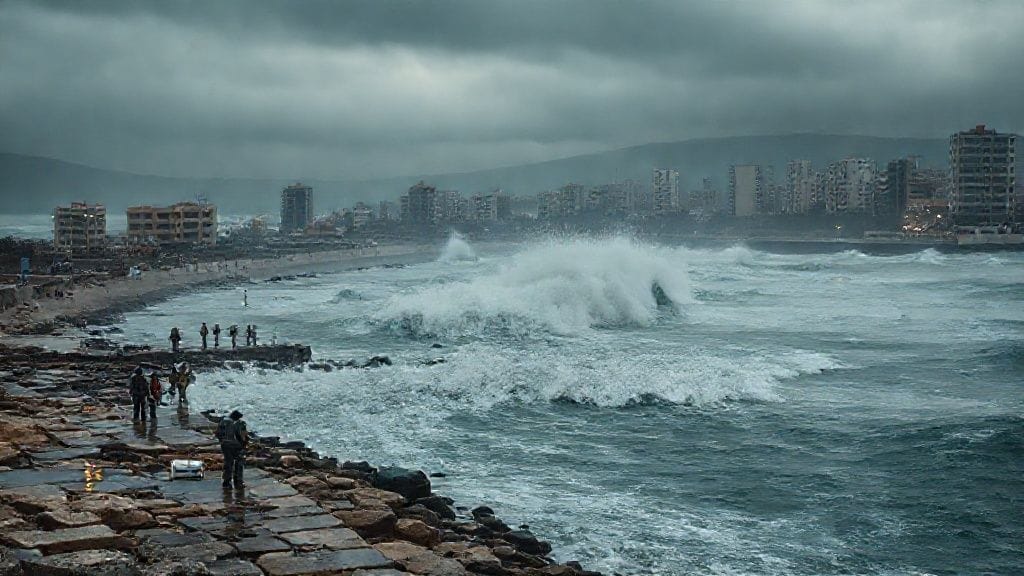
Earthquakes beneath the ocean do not merely rattle the seabed—they displace colossal tracts of water. In 551, a sudden vertical shift along the fault line caused the water column above to rise dramatically. This initial bulge fractured and rippled outward, forming a series of deadly waves racing toward the coast. These were not the gentle waves familiar to beachgoers but walls of water, some reaching heights of 10 meters or more, obliterating everything in their path. The tsunami was born in the hidden trenches of the sea and unleashed upon an unprepared and unsuspecting population.
6. Cities at the Edge: Beirut and the Levantine Coast’s Vulnerability
Beirut was no stranger to risk, perched on the razor-edge where land meets sea. Its harbors bustled with grain, wine, and spices—the prosperity of the city fed by maritime trade. Other coastal cities like Tyre and Sidon shared similar fates, their prosperity tied intimately to the sea’s blessings. But the narrow beaches, low-lying plains, and density of settlements meant that when the tsunami struck, there was nowhere for the people or goods to escape. The coastline had grown accustomed to the sea’s rhythm but was entirely unprepared for the torrent of destruction racing toward them.
7. The Tsunami Unleashed: Waves that Redrew Shores and Fates
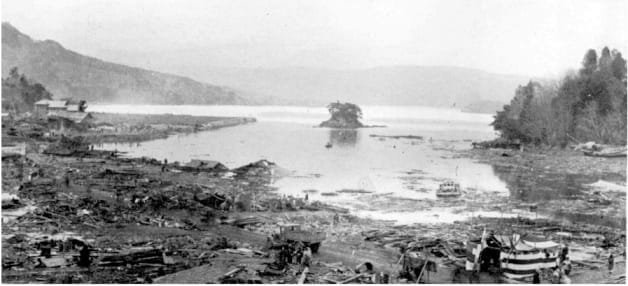
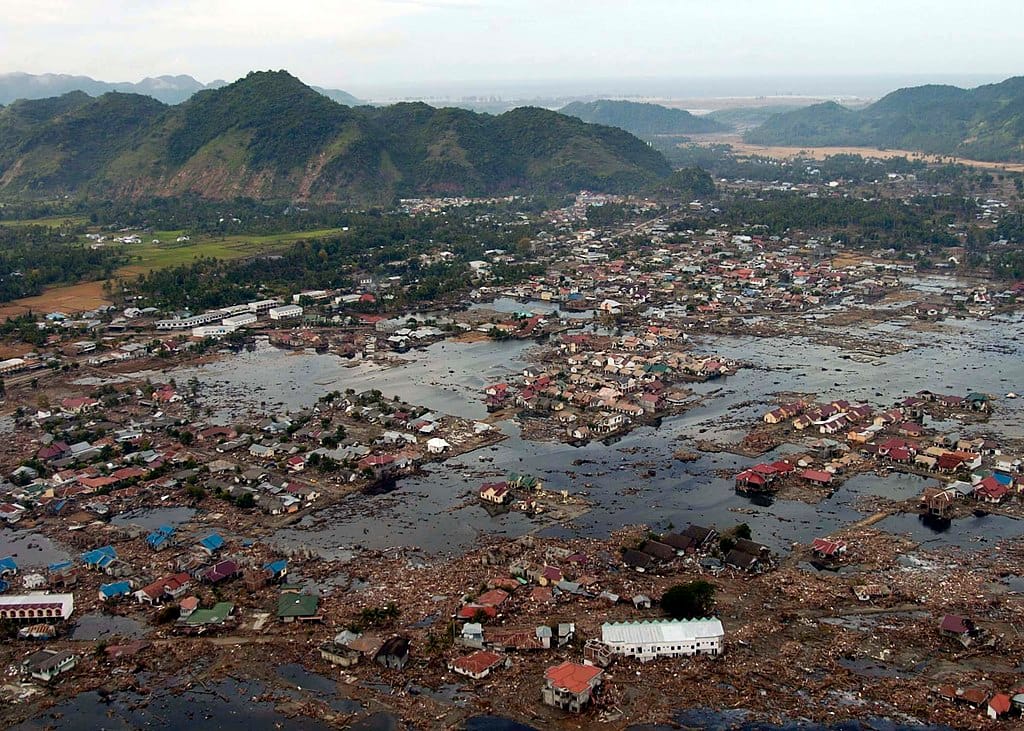
As the waves crashed onto the Levantine shores, destruction was immediate and unequivocal. Salty floods sailed over markets, homes, and temples; ships were hurled onto land or smashed against rocks; and the coastline was irrevocably reshaped. Entire districts vanished beneath the waves. The seawater invaded deep inland, ruining fertile fields and contaminating fresh water supplies. For survivors watching from hilltops, the scene was apocalyptic—a watery maelstrom consuming their world and futures.
8. Eyewitness Echoes: Chronicles and Testimonies from the Ancient World
Narratives passed down through Byzantine historians and local accounts paint harrowing images. John Malalas describes the sea “rising like a mountain and then falling,” while others spoke of the heavens trembling as if mourning. Stories of how priests hurried to save sacred relics or how fishermen’s boats were carried miles inland offer glimpses of human courage and despair. These accounts, though fragmentary, reveal the tsunami as a shared trauma, a historical event that etched deep scars onto the communal memory.
9. Human Toll: Lives Shattered, Communities Swept Away
Quantifying the dead is nearly impossible, but estimates suggest thousands perished. Families were torn apart, entire communities lost in a day. Survivors faced the grim reality of homelessness, starvation, and disease. The social fabric strained under the weight of loss—markets collapsed, kin networks scattered, and psychological wounds festered long after the waters receded. The tsunami forced communities to confront the fragility of their existence against the might of nature.
10. Economic Collapse: Ports, Trade, and the Levant’s Demise
The Levant’s economy hinged on maritime trade. The tsunami’s destruction of harbors crippled vital ports, halting commerce from Egypt to Anatolia. Silting filled docks; warehouses were flooded and ruined; merchant fleets were decimated. This shock rippled through Byzantine trade networks, reducing tax revenues and weakening imperial control over the region. The economic aftershocks echoed for decades, slowing urban recovery and precipitating decline in some coastal centers.
11. Rebuilding from the Rubble: Resilience Amidst Devastation
Despite the horror, the people of the Levant demonstrated remarkable resilience. Archaeological digs reveal reconstruction efforts, with buildings raised anew and harbors repaired. Religious leaders mobilized relief efforts and reinforced the spiritual resolve of the living. Yet rebuilding was gradual, often hampered by repeated seismic unrest. The tsunami tested not only the stones of temples and homes but the mettle of human endurance and communal solidarity.
12. Ripple Effects: How the Tsunami Reshaped Regional Politics
This natural disaster also rippled through the political landscape. Byzantine authority, already stretched thin by conflicts to the east and internal dissent, found its grip on the Levant weakened. Local leaders sometimes filled the vacuum, negotiating power and influence with the empire. The event added strain to imperial priorities, diverting resources and attention away from frontier defenses. In subtle ways, nature’s assault intersected with human ambition and vulnerability.
13. Nature’s Fury in the Shadows of Empire: The Byzantine Context
The mid-6th century was a tumultuous period for the Byzantine Empire, beset by wars, plagues, and economic challenges. The tsunami added another layer of calamity. Emperor Justinian’s ambitious efforts to reconquer lost territories met both glory and difficulty in this era. The region’s people perceived the disaster sometimes as divine punishment, linking nature’s wrath with the cosmic and political order. This spiritual interpretation shaped how the event was recorded and remembered.
14. Scientific Rediscovery: Modern Insights into the 551 Tsunami
Centuries later, modern science has pieced together the 551 tsunami through geological and historical detective work. Sediment layers offshore confirm massive disruptions; submarine canyons and fault scarps reveal the tectonic origins. Computer modeling estimates wave heights and travel times, shining light on an event obscured by time and myth. This rediscovery informs current tsunami risk assessments in the eastern Mediterranean, proving that history is a vital guide for modern hazard preparedness.
15. The Forgotten Flood: Why History Nearly Lost This Catastrophe
Despite its magnitude, the 551 tsunami often slips through historical memory, overshadowed by plagues and wars in the 6th century. Written records were limited and scattered, and natural disasters were sometimes minimized in imperial chronicles focused on military exploits. This historical amnesia poses challenges for modern scholars, who must reconstruct the narrative from fragmentary sources and physical evidence. Remembering this catastrophe is an act of intellectual and moral recuperation.
16. Cultural Memory: Myths, Legends, and the Sea’s Wrath
Over time, the tsunami morphed into myth and legend. Tales of vengeful seas, drowned cities, and divine warning resonated through local folklore. These stories captured communal fears and hopes, embedding the event into cultural identity. The Levant’s relationship with the sea is thus layered with memory—celebratory when bountiful, cautionary when destructive. This duality persists today in the region’s art, literature, and oral traditions.
17. Lessons from the Past: Tsunami Preparedness in the Eastern Mediterranean
The ancient tragedy of 551 underscores the ongoing seismic risk in the Levant. Modern governments and international bodies work to increase awareness, improve warning systems, and develop evacuation plans—efforts shaped by history’s painful lessons. The tsunami serves as a stark reminder that natural disasters transcend time and that human societies must remain vigilant, adaptive, and united against the forces beyond their control.
18. Conclusion: Echoes of the 551 Tsunami in Today’s World
The Beirut–Levant tsunami of 551 AD was more than a natural disaster—it was a pivot in history, a moment when earth and sea conspired to remind humanity of its fragility. Yet within this devastation lay stories of survival, resilience, and the enduring spirit of communities. Today, as coastal cities face rising seas and shifting fault lines, the ancient waves' echoes remind us to honor the past, understand our vulnerabilities, and build a future where catastrophe need not mean collapse.
FAQs
Q1: What caused the Beirut–Levant tsunami of 551 AD?
A1: The tsunami was triggered by a significant undersea earthquake along fault lines in the eastern Mediterranean, particularly associated with the Dead Sea Transform Fault and nearby tectonic boundaries.
Q2: How powerful was the earthquake that caused the tsunami?
A2: Estimated magnitudes range between 7.5 and 7.8, based on historical descriptions and geological evidence, strong enough to cause massive coastal destruction.
Q3: What were the main impacts on Beirut and other Levantine cities?
A3: Coastal infrastructure was devastated, thousands of lives lost, trade severely disrupted, and entire communities rendered homeless, leading to economic and social decline.
Q4: How is this event remembered in history and culture?
A4: It survives in Byzantine chronicles, local myths, and cultural memory, often viewed through the lens of divine punishment or natural wrath woven into folklore.
Q5: Why was the tsunami nearly forgotten in historical narratives?
A5: Limited contemporary records, overshadowing by plagues and wars, and imperial historiography focusing on political events led to its relative obscurity.
Q6: How did the tsunami affect Byzantine control in the region?
A6: It weakened Byzantine hold by damaging economic centers and diverting resources, contributing to political instability in the Levant.
Q7: What modern scientific methods help us understand this event better?
A7: Geological surveys, sediment core analysis, fault mapping, and computer tsunami modeling provide insights into the earthquake's scale and the tsunami's impact.
Q8: What lessons does the 551 tsunami hold for present-day tsunami preparedness?
A8: It highlights the ongoing seismic risks in the eastern Mediterranean, emphasizing the need for effective early warning systems, public awareness, and resilient infrastructure.