Table of Contents
- The Morning of Catastrophe: Bhuj, January 26, 2001
- The Geology Behind the Disaster: Understanding Kutch’s Hidden Faults
- A Republic’s Dark Day: The Earthquake Strikes on India’s 52nd Republic Day
- The Magnitude of Destruction: A Town Shattered Beyond Recognition
- Human Stories Unearthed: Survival, Loss, and Resilience Amid Ruins
- The Role of Technology and Seismology: Early Warnings and Their Limits
- Government Response: Mobilizing Amidst Chaos
- Local Heroes and Volunteers: Civil Society’s Indomitable Spirit
- International Aid and Solidarity: A World Reaches Out
- Infrastructure in Ruins: The Collapse of Roads, Schools, and Hospitals
- Economic Shockwaves: Impact on Industry, Agriculture, and Livelihoods
- The Challenge of Rescue and Relief: Logistical Nightmares and Breakthroughs
- The Aftershocks: Lingering Fear and Compounding Damage
- Rebuilding Bhuj: From Rubble to Renewal
- Architectural Lessons: New Standards for Earthquake-Resistant Design
- Psychological Scars: Trauma and the Long Road to Healing
- Media Coverage and the Global Eye on Kutch
- Political Ramifications: Accountability and Long-Term Policy Shifts
- Scientific Advances Inspired by Bhuj: Improving Seismic Preparedness in India
- Bhuj in the Collective Memory: Commemorations and Memorials
- Comparison with Other Historical Earthquakes in India and Worldwide
- The Earthquake’s Legacy: A Catalyst for Change
- Conclusion: Triumph, Tragedy, and Transformation
- FAQs: Common Questions on the 2001 Bhuj Earthquake
- External Resource
- Internal Link
1. The Morning of Catastrophe: Bhuj, January 26, 2001
The dawn of January 26, 2001, broke like any other across the arid expanses of Kutch district in Gujarat, India. Shops opened, children prepared for school, and families gathered for Republic Day celebrations—a patriotic ritual immortalizing India's democratic sovereignty. Yet beneath this ordinary calm, a terrible force was gathering strength, invisible but relentless.
At 8:46 a.m. local time, the earth convulsed violently. A monstrous—in every sense—7.7 magnitude earthquake tore the region apart in less than a minute. Buildings crumbled like sandcastles, roads buckled, and the ground itself ruptured in massive fissures. The very land of Bhuj heaved in pain and anguish.
The immediate aftermath was heartrending: thousands of lives lost, countless more injured, entire villages erased. The shock was not just seismic but deeply human—a community’s vibrant heart left in ruins. Yet even in the darkest moments, threads of courage and resilience began to weave a story of survival.
2. The Geology Behind the Disaster: Understanding Kutch’s Hidden Faults
Kutch, a region with a complex geological tapestry, sits precariously on the Indian tectonic plate's western edge. Unlike India’s more notorious Himalayan faults, Kutch’s seismicity was underappreciated before 2001.
The earthquake emanated from the Allah Bund fault system, a break in the earth’s crust locked in tension for centuries. Scientists studying the Indian subcontinent’s tectonics understood that intraplate earthquakes—those occurring away from plate boundaries—were rare but potentially devastating. Still, few expected such a massive rupture in this semi-arid, seemingly tranquil region.
Fundamentally, the quake was caused by the Indian plate's ongoing northward push against the Eurasian plate, but with the energy released along an ancient fault concealed beneath the Kutch terrain. This silent tectonic stress had been building quietly, waiting for a sudden release.
3. A Republic’s Dark Day: The Earthquake Strikes on India’s 52nd Republic Day
The irony was piercing. As millions of Indians celebrated the liberties enshrined in their Constitution—the world’s longest written constitution and a symbol of democratic hope—the earth beneath Bhuj rebelled violently. The Republic Day parades were underway in distant cities, while in Kutch, the very fabric of life crumbled.
This coincidence sealed the shock deeper into national consciousness. The day, meant for jubilation, instead became a solemn moment etched in collective memory. This was a test not only of infrastructure and disaster preparedness but of India’s spirit.
4. The Magnitude of Destruction: A Town Shattered Beyond Recognition
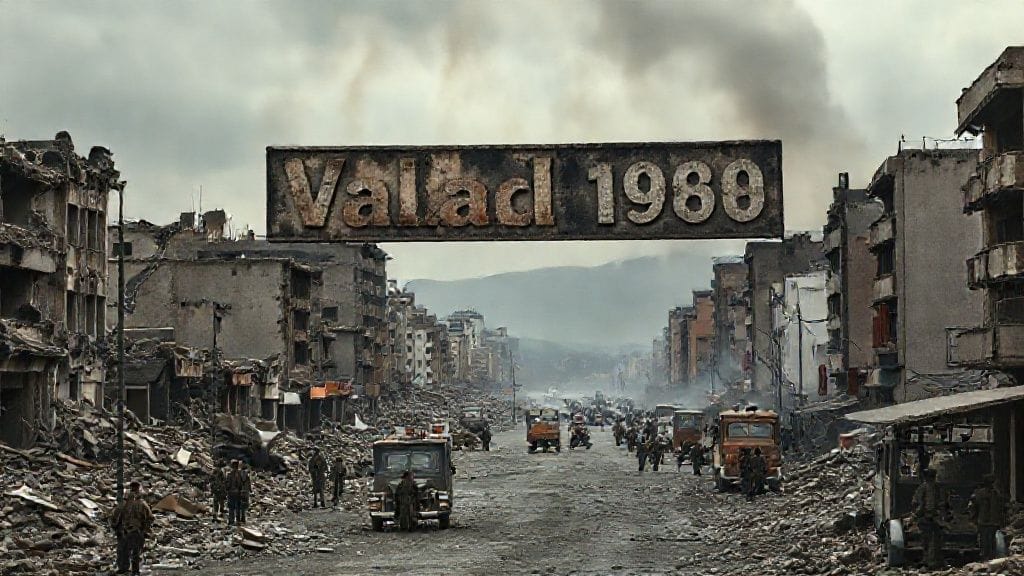
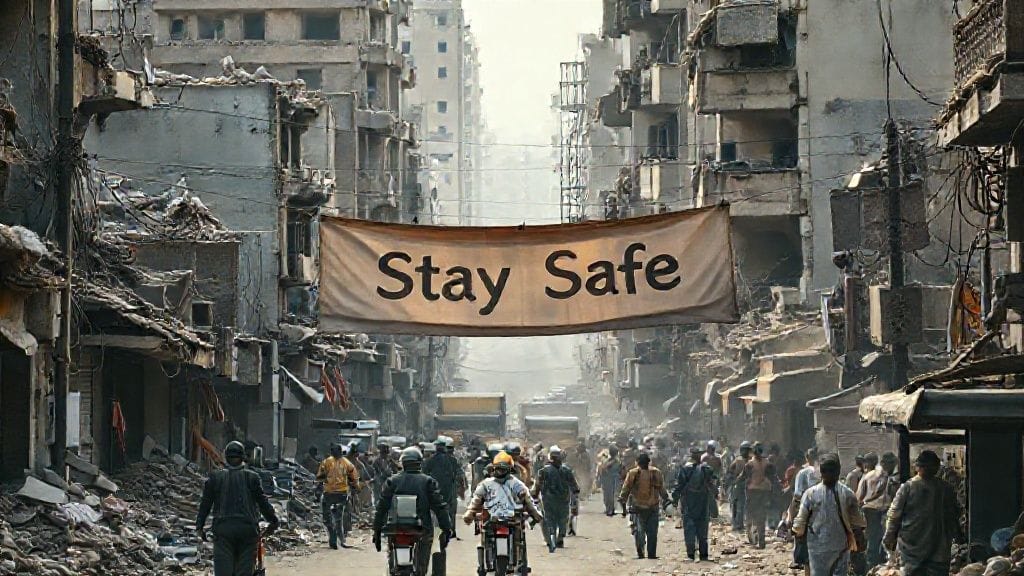
Bhuj was once a vibrant town known for its rich cultural heritage and bustling markets. After the quake, it resembled a war zone. Estimates put the death toll between 13,000 and 20,000, with over 167,000 injured. Over 400,000 people were rendered homeless.
Entire neighborhoods were flattened. Historical buildings—centuries-old temples and palaces—crumbled as if made of paper. Roads were impassable beneath debris and fissures. Water and electricity supplies snapped instantly, leaving survivors in darkness and desperation.
Such devastation was staggering. For many, the earth’s convulsion turned life upside-down in seconds: limbs trapped under masonry; parents lost children; families were scattered.
5. Human Stories Unearthed: Survival, Loss, and Resilience Amid Ruins
Among the statistics lie personal sagas—stories that humanize the catastrophe.
Take, for example, the tale of Harshad and his family. Trapped for hours beneath the ruins of their home, they clung to hope, their fate hinging on rescuers braving unstable wreckage. Or the schoolteacher in Bhachau who, despite losing her home and a brother, gathered students to safety amid aftershocks.
These tales of survival reveal the human will to endure. They show how neighbors and strangers became lifelines. Acts of kindness blossomed amid despair—food shared, hands extended, prayers whispered.
Yet with resilience came profound grief, scars that no rebuilding could erase fully.
6. The Role of Technology and Seismology: Early Warnings and Their Limits
In 2001, India’s seismic monitoring network was relatively nascent. No early warning system existed that could predict or forewarn citizens of the impending shock. Seismologists could only analyze the event after the fact, tracing fault lines and measuring energy released.
The Bhuj earthquake starkly revealed gaps in disaster preparedness technology. It spurred calls for investment in advanced detection and alert mechanisms, parameters to track aftershocks, and public education campaigns on earthquake safety.
Yet, seismic science remains an imperfect art: while fault zones are identifiable, predicting exact timing remains elusive.
7. Government Response: Mobilizing Amidst Chaos
In the quake’s immediate aftermath, the Gujarat government, alongside India’s central authorities, scrambled to assess damage and mobilize resources. Military and paramilitary forces were deployed quickly to assist with search and rescue.
However, logistical difficulties surfaced swiftly—impaired communication lines, collapsed infrastructure, and the sheer scale of destruction hampered swift response.
Despite these barriers, coordinated efforts saved countless lives. Temporary relief camps were set up; medical teams rushed to treat the injured; food and water distribution lines were established.
This response laid foundational lessons for future disaster management in India.
8. Local Heroes and Volunteers: Civil Society’s Indomitable Spirit
Amid governmental efforts, countless local heroes emerged. Ordinary residents turned rescuers, pulling strangers from wreckage, sharing whatever aid they had.
Volunteers from nearby towns and cities flooded into Kutch, bringing medical expertise, supplies, and moral support. Grassroots initiatives sprung up overnight; NGOs mobilized swiftly.
These spontaneous acts of bravery and solidarity underlined a critical truth: in disasters, community compassion is as vital as official protocols.
9. International Aid and Solidarity: A World Reaches Out
The enormity of the Bhuj quake attracted global concern. Numerous countries extended support—monetary aid, relief supplies, specialized rescue teams.
Organizations such as the Red Cross and UN agencies coordinated with Indian authorities to streamline efforts.
This international cooperation not only provided material relief but also highlighted India’s place in the global humanitarian network.
10. Infrastructure in Ruins: The Collapse of Roads, Schools, and Hospitals
Physical devastation extended beyond homes. Schools—some hosting Republic Day celebrations—and hospitals were destroyed or severely damaged, deepening the tragedy.
Once-sturdy bridges lay in rubble; arterial roads cracked and heaved, complicating aid delivery.
The destruction of infrastructure illustrated vulnerabilities in construction practices and maintenance, especially in seismic zones previously underestimated.
11. Economic Shockwaves: Impact on Industry, Agriculture, and Livelihoods
Kutch’s economy, centered on agriculture, handicrafts, and mining, was hard-hit. Crops lay trampled; livestock perished; artisan workshops turned to rubble.
Businesses shuttered; markets ceased operation. The economic ripple effect reached far beyond Bhuj—supply chains stalled, exports disrupted.
Rebuilding meant rebuilding economic livelihoods—a challenge involving government schemes, microfinance, and community initiatives.
12. The Challenge of Rescue and Relief: Logistical Nightmares and Breakthroughs
Hours after the quake, the reality sunk in: rescuers faced monumental obstacles—destroyed infrastructure, ongoing aftershocks, language barriers, and bureaucratic red tape.
Yet innovation emerged. Helicopters transported urgent supplies; mobile hospitals treated the wounded; makeshift communications networks were established.
Coordination between military, government agencies, NGOs, and locals became a powerful engine driving survival.
13. The Aftershocks: Lingering Fear and Compounding Damage
For days, smaller tremors continued, each one reopening wounds on the land and heart alike.
Aftershocks prolonged instability, forced evacuations, and complicated rebuilding.
The psychological impact of this relentless tremble can only be imagined: an entire population haunted by unpredictable quakes.
14. Rebuilding Bhuj: From Rubble to Renewal
The recovery was neither simple nor swift. Months and years of rebuilding followed, with a focus not only on restoring but improving.
Progressive urban planning, earthquake-resistant designs, and resilient infrastructure became priorities.
Communities rebuilt schools, hospitals, and markets incorporating lessons learned—building back better, not merely as before.
15. Architectural Lessons: New Standards for Earthquake-Resistant Design
The chaos unveiled glaring inadequacies in existing building codes. Many poorly constructed and unauthorized structures were victims of the quake, elevating casualties.
Post-disaster, regulatory reforms promoted stricter seismic design, engineering education, and public awareness.
This marked a turning point in Indian construction philosophy—recognizing nature’s unpredictable force and the cost of neglect.
16. Psychological Scars: Trauma and the Long Road to Healing
Beyond physical reconstruction loomed a more elusive challenge: psychological recovery.
Many survivors suffered post-traumatic stress disorder, anxiety, and grief.
Counseling programs, community rebuilding events, and memorial activities became essential to restoring mental health.
Healing of the earth was incomplete without healing the human heart.
17. Media Coverage and the Global Eye on Kutch
The Bhuj earthquake captivated media worldwide. News outlets broadcast harrowing images and stories, building awareness but also reminding distant viewers of nature’s wrath.
Journalists highlighted stories of heroism and despair alike, cultural resilience, and critiques of disaster preparedness.
This spotlight fueled domestic and international discourse on disaster management policies.
18. Political Ramifications: Accountability and Long-Term Policy Shifts
The tragedy stirred political debate regarding responsibility, urban planning, and disaster mitigation budgets.
Subsequently, India revamped disaster management frameworks, establishing more robust institutions like the National Disaster Management Authority (NDMA).
Bhuj became a case study prompting governments to rethink policy priorities and investment in disaster resilience.
19. Scientific Advances Inspired by Bhuj: Improving Seismic Preparedness in India
Scientists intensified their research on intraplate earthquakes, seismic hazard mapping, and tectonic dynamics.
Bhuj led to expanded seismograph networks and geotechnical studies, particularly in Central and Western India.
These advances enhanced early warning protocols and risk assessment capabilities.
20. Bhuj in the Collective Memory: Commemorations and Memorials
Every January 26 since 2001, communities in Kutch honor earthquake victims with memorial events that blend sorrow with hope.
Monuments and museums preserve memories and educate future generations on the disaster’s lessons.
These acts of remembrance affirm that while the earth shook, the spirit endured.
21. Comparison with Other Historical Earthquakes in India and Worldwide
Bhuj’s devastation echoes other global tragedies—the 1906 San Francisco quake, the 1999 İzmit earthquake in Turkey, and India’s own 1934 Nepal–Bihar earthquake.
Comparative study reveals both universal vulnerabilities and context-specific challenges.
Bhuj stands as a somber benchmark in intraplate earthquake history.
22. The Earthquake’s Legacy: A Catalyst for Change
Ultimately, the Bhuj earthquake transcended tragedy by becoming a catalyst. It reshaped India’s approach to urban planning, disaster readiness, community engagement, and scientific research.
Its legacy is visible in stronger buildings, faster government responses, and more resilient communities.
Bhuj’s story teaches that out of destruction can rise renewal and hope.
Conclusion
The 2001 Bhuj earthquake was a brutal reminder of nature’s unpredictable power and humanity’s fragile existence. Yet, within the shattered landscapes and grieving families, resilience blossomed. The catastrophe tested India’s preparedness, governance, and spirit—and transformed them. It is a story etched not only in cracked stones and consuming fires but in the hearts of those who lived through that fateful morning when the ground betrayed them.
From the dust and debris, Bhuj rose again—not merely reconstructed but reimagined. Its lessons resonate across time and place, a testament to human courage confronting nature’s darkest hour. In remembering, in rebuilding, in honoring lives lost, the people of Bhuj and India affirm that from tragedy comes strength—and from tragedy comes hope.
FAQs
1. Why did the Bhuj earthquake occur in a region considered low risk?
While Kutch was not traditionally seen as a high seismic risk zone, it lies on a complex network of faults subjected to intraplate tectonic stress. Ancient faults like the Allah Bund, previously dormant or unnoticed, ruptured under accumulated stress leading to the quake.
2. How many people died and were injured in the Bhuj earthquake?
Estimates suggest approximately 13,000 to 20,000 fatalities, with about 167,000 injured, and over 400,000 left homeless, making it one of India’s deadliest earthquakes.
3. What were the main challenges in rescue and relief operations?
Destroyed infrastructure, communication breakdown, ongoing aftershocks, and the widespread scale of destruction hampered initial rescue efforts. Coordinating between government, military, NGOs, and volunteer groups was complex but crucial.
4. How did the Indian government change disaster management after Bhuj?
The quake led to significant reforms, including the establishment of the National Disaster Management Authority (NDMA), stricter building codes, enhanced early warning systems, and increased investment in public awareness and scientific research.
5. Did the Bhuj earthquake trigger similar disasters elsewhere in India?
No immediate triggers were directly linked, but Bhuj raised awareness of seismic risks in other intraplate regions, encouraging better preparedness.
6. How is the Bhuj earthquake remembered today?
Annually commemorated on January 26, through memorials, museums, and community gatherings, ensuring that lessons and memories endure.
7. What scientific advancements came as a consequence of studying Bhuj?
Expanded seismological networks, improved fault mapping, greater understanding of intraplate seismicity, and advances in earthquake-resistant construction methods.
8. Was international aid significant in the recovery efforts?
Yes, international agencies and countries offered substantial aid in funds, supplies, technical expertise, and relief personnel, complementing domestic efforts.