Table of Contents
- The Unseen Fury: Setting the Scene on the Morning of February 17, 1996
- Papua’s Coastal Lifeline: The Fragile Beauty of Biak and Yapen Islands
- Geological Brewing: Understanding the Tectonic Forces Beneath Papua
- A Day Like Any Other: The Calm Before the Wave
- The Earth’s Awakening: The Undersea Earthquake That Triggered the Disaster
- First Signs of Catastrophe: How the Tsunami Descended on Biak and Yapen
- The Human Cost: Lives Lost and Communities Shattered
- Emergency Response in the Midst of Chaos
- Myth, Memory, and the Stories of Survival
- Indonesian Government’s Reaction and International Aid Efforts
- The Role of Local Knowledge and Traditional Warning Signs
- Rebuilding from Ruins: Reconstruction and Resilience in Post-Tsunami Papua
- The Environmental Aftermath: How the Tsunami Reshaped the Landscape
- Scientific Lessons: Advancements in Tsunami Detection and Preparedness
- Papua in the Global Context: The 1996 Tsunami’s Place in History
- Remembering Biak: Memorials and Commemorations Across Time
- The Tsunami and Indigenous Struggles: Political and Social Repercussions
- How the Disaster Altered Indonesia’s Disaster Management Policies
- Voices from the Past: Eyewitness Accounts and Survivor Testimonies
- Media Coverage and the World’s Attention—or Its Absence
- The Silent Threat: Tsunamis in the Pacific Ring of Fire
- Comparing Biak 1996 to Other Tsunami Catastrophes
- The Legacy of the Biak Tsunami: Hope, Warning, and Vigilance
The Unseen Fury: Setting the Scene on the Morning of February 17, 1996
On the dawn of February 17, 1996, a quiet stillness blanketed the lush, verdant islands of Biak and Yapen, situated off the northern coast of Papua in Indonesia. Fishermen pushed their boats gently into the cerulean waters, women tended morning fires, and children laughed along the shoreline, unaware that beneath the ocean floor, an immense and invisible force was gathering strength—one that would, within minutes, unleash one of the most devastating natural disasters in the region’s recent history.
It is often said that the ocean holds secrets, vast and unfathomable. On that morning, it kept its most terrible until just before midday, when the stillness shattered into chaos as an immense earthquake birthed a monstrous tsunami wave that swept with merciless speed across the islands’ shorelines. Villages were swallowed, ancestral homes wiped away as communities were enveloped in a devastating wall of water. The Biak (Yapen) tsunami was not just a catastrophe of natural origin—it was a human tragedy, searing itself into the memories of thousands and exposing the vulnerabilities of isolated island communities in one of the most geologically volatile places on Earth.
Papua’s Coastal Lifeline: The Fragile Beauty of Biak and Yapen Islands
Nestled in the western extremity of New Guinea, Papua is a land of staggering natural contrasts—soaring mountain ranges shrouded in mists, dense rainforests echoing with endemic bird calls, and a coastline fragmented into countless islands. Biak and Yapen, two such islands, formed vital economic and cultural hubs for indigenous Melanesian communities. Biak was known for its vibrant trade, lush agricultural lands, and complex social fabrics, while Yapen, less urbanized and more intimately tied to traditional lifeways, bore the imprint of ancestral histories.
The islands sat precariously on the Pacific Ring of Fire, a volatile geological belt that promises both volcanic fertility and deadly seismic upheavals. Life on these islands was a delicate balance—people lived harmoniously with nature but remained always at the mercy of its unpredictability. Preceding the tsunami, daily life ebbed and flowed with the tides, unaware of the approaching calamity below the waves.
Geological Brewing: Understanding the Tectonic Forces Beneath Papua
Beneath the seemingly serene surface around Biak and Yapen, tectonic plates grinded and collided with immense force. The region is dominated by the complex interaction of the Pacific, Australian, and Philippine Sea Plates. In this chaotic tectonic crucible, stress accumulates along fault lines, only to be released in violent jolts—earthquakes—that sometimes birth killer tsunamis.
The 1996 event was sparked by such tectonic strain releasing along an undersea fault line near the northern coast of Papua. Scientific investigations later revealed that the earthquake responsible was a powerful strike-slip event, unusual in some respects for generating a significant tsunami, yet devastating for the islands it struck.
Understanding these forces is key to perceiving the broader danger inherent to the region. The people of Biak and Yapen, aware in their own ways of the potential for natural disaster, had no inkling that their lives were about to change irrevocably.
A Day Like Any Other: The Calm Before the Wave
On the morning of February 17, 1996, the rhythm of island life followed familiar patterns. Vendors set up markets, children prepared for school, and fishermen readied their nets. The weather was typical for the season—humid but clear, with gentle trade winds brushing over the surface of the sea.
There were no warnings that the earth itself was about to shake beneath the depths. The large earthquake happened suddenly at approximately 11:49 a.m., catching virtually everyone unprepared. Without the early warning systems that today’s world has begun to develop, the islanders had mere moments to react before the monstrous waves arrived.
The Earth’s Awakening: The Undersea Earthquake That Triggered the Disaster
The earthquake measured an estimated 8.1 on the Richter scale, centered offshore from Biak. Its force was intense enough to be felt for hundreds of kilometers, triggering panic and confusion. However, the initial shaking was only part of the catastrophe—it was the tsunami generated by the sudden displacement of the seabed that proved infinitely more lethal.
Witnesses recall a terrifying rumbling from beneath and a sudden, unnatural retreat of the oceanwaters—a classic harbinger of the approaching tsunami. But confusion and disbelief prevailed; for many, the sea pulling back was not a warning but a curiosity. Within minutes, a towering wall of water surged forward.
First Signs of Catastrophe: How the Tsunami Descended on Biak and Yapen
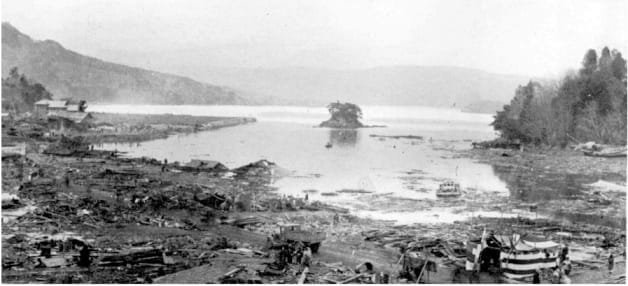
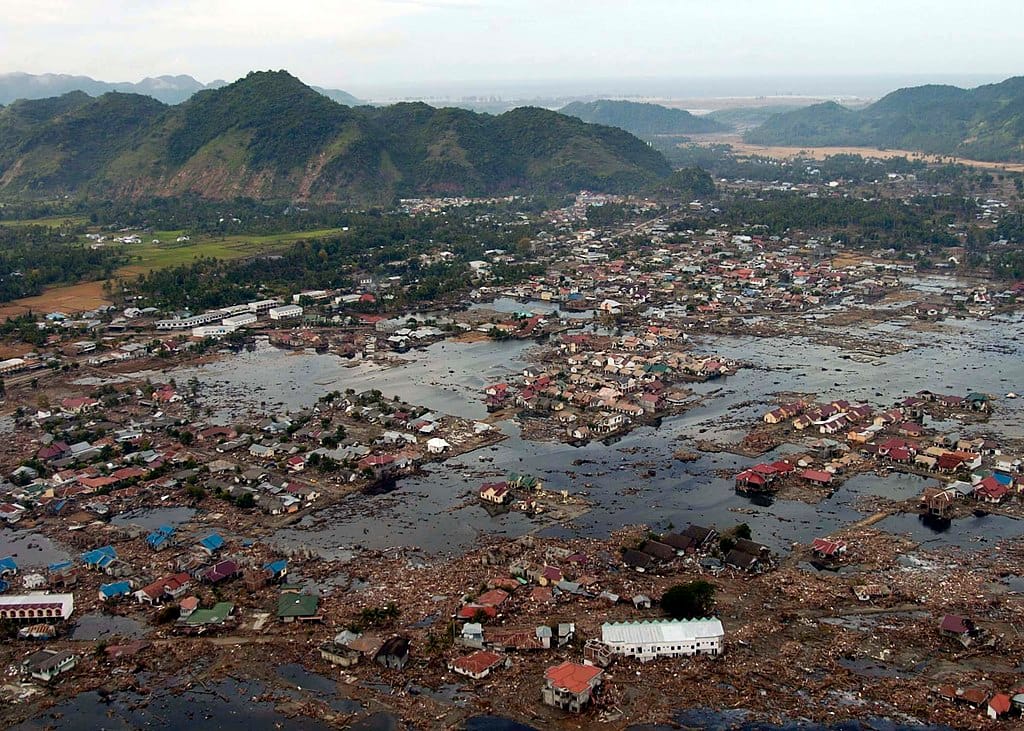
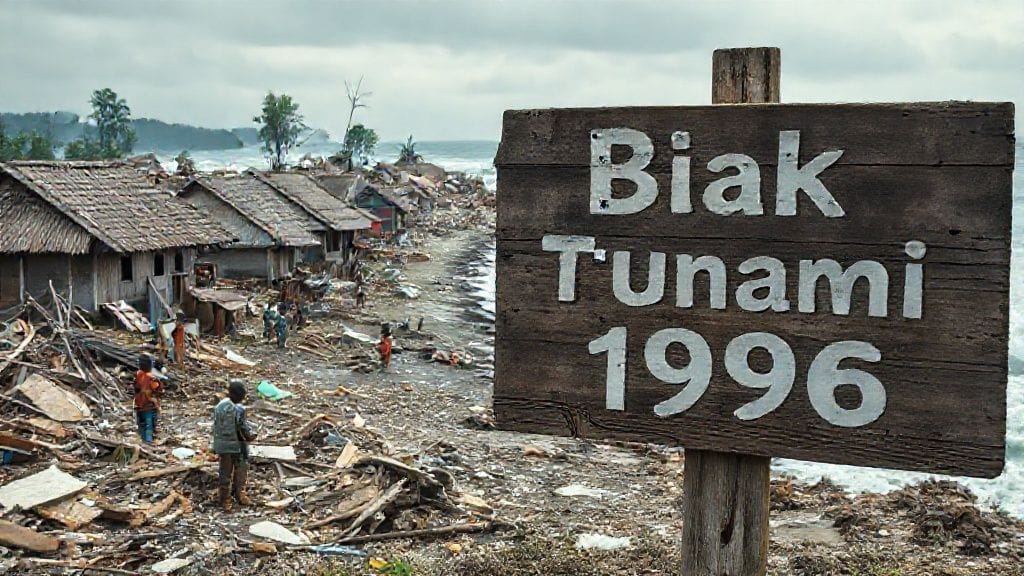
In a matter of minutes following the earthquake, the tsunami waves overwhelmed the islands’ northern shores. Villages along the coast were inundated by waves that reached heights of several meters, erasing entire communities in their path. Roofs were torn off, trees uprooted, and the earth beneath homes crumbled as the water surged relentlessly inland.
The speed made escape nearly impossible for those close to the shore. Fishermen who had been at sea were hurled about, some miraculously surviving the ordeal, while many on land fell victim to the crushing power of the water. Houses built on stilts or near the beach were particularly vulnerable to destruction.
The Human Cost: Lives Lost and Communities Shattered
Casualty figures are difficult to pin down precisely. Official estimates placed the death toll at approximately 107, while some local sources suggested higher numbers, considering indirect losses, missing persons, and the ripple effects of the disaster on health and livelihoods. Hundreds more were injured, many gravely.
Entire clans and families were displaced, some losing their ancestral homes and livestock in moments. Survivors were plagued by trauma, grief, and uncertainty. The tsunami did not just take lives—it fractured communities, disrupted social networks, and dimmed the bright futures of many children.
Emergency Response in the Midst of Chaos
The scale of destruction presented colossal challenges. In the immediate aftermath, survivors banded together, pooling resources and searching desperately amid the wreckage for missing loved ones. Local leaders and religious figures emerged as pillars of strength, directing urgent relief efforts.
However, the remoteness of Biak and Yapen complicated the arrival of national emergency teams. Roads were damaged; communication lines cut. Within days, the Indonesian government mobilized military units and disaster relief agencies, while international organizations offered aid. Yet the logistical and infrastructural hurdles slowed effective response.
Myth, Memory, and the Stories of Survival
Oral traditions among indigenous Papuans often speak of great waves and oceanic upheavals as cosmic punishments or ancestral warnings. The 1996 tsunami became woven into these narratives, a living memory passed from generation to generation.
Survivors recount tales of divine intervention, dreams foretelling disaster, and acts of bravery. One fisherman reportedly escaped by climbing the highest tree he could find, clutching his youngest child amid the swirling waters. Such stories reflect not only the human spirit’s resilience but also the deep cultural frameworks through which the disaster was understood.
Indonesian Government’s Reaction and International Aid Efforts
The Indonesian government faced criticism for the speed and adequacy of its response, reflective of the broader challenges it confronted in managing disasters across its vast archipelago. In the months following the tsunami, efforts focused on rebuilding essential infrastructure, providing food and shelter, and restoring basic health services.
International aid agencies including the Red Cross, UNICEF, and UNDP played roles in mobilizing resources, executing health campaigns to prevent disease outbreaks, and supporting housing reconstruction. Collaboration with local communities was crucial to ensure culturally sensitive recovery.
The Role of Local Knowledge and Traditional Warning Signs
While modern technology was absent, indigenous communities relied on longstanding environmental knowledge—such as noticing anomalous ocean behavior or animal reactions—to anticipate danger. Nonetheless, these indicators were either misunderstood by some or reached too late to prevent loss.
Post-1996, increasing attention has been given to integrating this local wisdom with scientific early warning systems. Empowering communities to recognize and respect natural signs is seen as a vital layer of defense against future tsunamis.
Rebuilding from Ruins: Reconstruction and Resilience in Post-Tsunami Papua
Recovery was slow and fraught with difficulties, intensified by Papua’s isolation and political tensions. Rebuilding homes, schools, and livelihoods took years, often with scarce resources. Yet, a remarkable resilience blossomed; survivor communities banded together to reconstruct their lives, often reconstructing social bonds as part of healing.
Efforts also focused on disaster education, developing evacuation routes, and fostering local disaster preparedness plans, lessons painfully learned from the tragedy.
The Environmental Aftermath: How the Tsunami Reshaped the Landscape
Beyond human losses, the tsunami dramatically altered Biak and Yapen’s natural environment. Coastlines were stripped bare of vegetation; reefs were damaged; soil salinization affected agriculture. These changes had lasting impacts on subsistence fishing and farming, deepening socioeconomic vulnerabilities.
Ecologists later studied these shifts, noting both the destructive power and the ocean’s slowly regenerative capacities, a poignant symbol of nature’s persistence.
Scientific Lessons: Advancements in Tsunami Detection and Preparedness
The Biak tsunami underscored significant gaps in Indonesia’s tsunami detection capabilities. In the years since, Indonesia has invested in seismic monitoring, early warning networks, and public education campaigns.
Regional and global collaborations, including the implementation of the Pacific Tsunami Warning System, have gradually improved response times and awareness. While perfect prevention remains impossible, the efforts have saved innumerable lives in subsequent disasters.
Papua in the Global Context: The 1996 Tsunami’s Place in History
Though overshadowed by more massive tsunamis in other parts of the Pacific, the 1996 Biak and Yapen tsunami remains a crucial reminder of the Pacific Ring of Fire's relentless threat. It is an event that tightened the global lens on Indonesia’s vulnerability, prompting shifts in policy and international cooperation.
Examined in the tapestry of natural catastrophes of the late 20th century, Biak is a somber marker of how quickly normal life can be upended.
Remembering Biak: Memorials and Commemorations Across Time
In the years following, memorial services honoring victims were held annually. Small monuments and plaques stand scattered across Biak and Yapen, silent witnesses to the lives lost and the suffering endured.
These commemorations serve both as moments of mourning and as vital cultural functions—to remind future generations of the fragility of existence and the power of community.
The Tsunami and Indigenous Struggles: Political and Social Repercussions
Papua’s fraught political status within Indonesia meant that disaster impacts had wider implications. Relief and reconstruction efforts were sometimes entangled in tensions between indigenous groups and the central government.
The tsunami's aftermath exposed inequalities in aid distribution and reconstruction policies, fueling broader conversations on governance, autonomy, and indigenous rights.
How the Disaster Altered Indonesia’s Disaster Management Policies
The Biak tsunami became one piece of the puzzle that forced Indonesia to reconsider its disaster management framework. It exposed the urgent need for coordinated national disaster risk reduction strategies, proactive community engagement, and infrastructure resilient to natural hazards.
These reforms would be tested repeatedly in the following decades, most notably during the devastating 2004 Indian Ocean tsunami.
Voices from the Past: Eyewitness Accounts and Survivor Testimonies
Minutes and hours after the waves, survivors shared harrowing stories: a mother clutching her child as her home disappeared beneath water; fishermen wrestling with the sea’s fury; villages burned by saltwater and debris storms. These personal narratives provide a visceral, human face to the cold statistics of disaster.
The stories also evoke the spiritual dimensions of facing overwhelming natural destruction, resilience in despair, and the fragile hope that sustains amid loss.
Media Coverage and the World’s Attention—or Its Absence
Unlike later tsunamis, Biak’s tragedy received limited international media coverage. Contributing factors included Indonesia’s political climate, geographic remoteness, and the early 1990s global news cycle focus. Limited attention perhaps contributed to slower global aid responses.
Yet within Indonesia, awareness was acute, galvanizing local reflection on vulnerability and the need for better preparedness.
The Silent Threat: Tsunamis in the Pacific Ring of Fire
Papua is emblematic of a region where the earth’s fury is both constant and unpredictable. The Biak tsunami is part of a long lineage of disasters, dictated by the Ring of Fire’s restless activity, demanding vigilance from the millions living along its rim.
It remains a potent symbol of nature’s double edge—creation and destruction intertwined.
Comparing Biak 1996 to Other Tsunami Catastrophes
When juxtaposed with colossal events like the 2004 Indian Ocean tsunami or the 2011 Tōhoku disaster in Japan, Biak’s tsunami may seem minor in scale, but the human tragedy and lessons it offers endure. It underscores how size does not equate to impact and the importance of localized knowledge and preparedness.
This tragedy’s quiet devastation is a testament to unheralded disasters worldwide.
The Legacy of the Biak Tsunami: Hope, Warning, and Vigilance
Twenty-eight years on, the Biak (Yapen) tsunami lingers in the collective memory as both warning and lesson. It reminds us that beneath the ocean’s beauty lies latent power—both deadly and humbling. For the islanders and for Indonesia at large, it taught the painful but invaluable lesson: readiness is not optional but imperative.
From grief, communities rebuilt, emerging with reinforced bonds and a determination to cohabit more safely with nature. The waves have receded into history, but their echoes continue to ripple across time.
Conclusion
The Biak tsunami of February 1996 stands as a tragic chapter in Papua’s long history, a stark encounter between human communities and the planet’s elemental forces. This disaster reveals much more than geological violence—it exposes the fragile threads weaving life together in remote island societies. It underscores the need for integration between modern science and indigenous knowledge, of infrastructures intertwined with cultural respect, and above all, of global solidarity in the face of calamity.
Remembering Biak is an act of respect for those lost, a tribute to survivors’ resilience, and a call to action for the future. It teaches us that tragedy and hope are often two sides of the same watery coin, that from the depths of despair, humanity can—and must—rise with renewed vigilance and compassion.
FAQs
1. What caused the Biak tsunami in 1996?
The tsunami was triggered by a powerful undersea earthquake—estimated magnitude 8.1—occurring along a fault near northern Papua. This tectonic shift displaced the seabed, producing massive waves that struck Biak and Yapen islands.
2. How many people were affected by the tsunami?
Official records estimate around 107 fatalities, with many more injured and thousands displaced. The disaster shattered communities, robbed families of homes and livelihoods, and caused long-lasting social disruption.
3. What was the Indonesian government’s response to the disaster?
The government mobilized military and disaster relief agencies to provide emergency aid, but challenges in accessibility and communication slowed some efforts. International aid was also crucial in recovery and reconstruction activities.
4. Were there any early warning systems in place at that time?
No formal early warning systems existed for the region in 1996. The tsunami arrived quickly after the earthquake, leaving little warning for local populations dependent on traditional signs.
5. How has the disaster influenced tsunami preparedness in Indonesia?
The Biak tsunami highlighted Indonesia’s vulnerabilities, leading to investments in seismic monitoring, public education, and early warning systems. These efforts were later reinforced after major disasters such as the 2004 Indian Ocean tsunami.
6. What role does local knowledge play in tsunami awareness?
Local communities rely on environmental and animal behavior cues to detect danger. Integrating this indigenous knowledge with scientific data is vital for improving community responses to future tsunamis.
7. How is the Biak tsunami remembered today?
Memorials, commemorations, and stories keep the memory alive among Papuan communities. Remembering the tragedy serves to honor lives lost and to promote ongoing vigilance and disaster preparedness.
8. How does the Biak tsunami compare to other Pacific tsunamis?
While less deadly than some major tsunamis, its impact was deeply felt locally. It exemplifies the constant risk faced by communities in the Pacific Ring of Fire and the profound consequences even relatively smaller tsunamis can bring.