Table of Contents
- Introduction
- The Economic Climate Before the Crash
- Build-Up: The Weeks Leading to Black Monday
- What Happened on October 19, 1987?
- Dow Jones Drops 22%: The Largest One-Day Fall
- The Role of Computerized Trading
- Investor Panic and Market Psychology
- Immediate Global Impact
- How Governments Responded
- Federal Reserve’s Actions
- The Effect on Individual Investors
- Lessons for Market Regulation
- Comparing 1987 to 1929 and 2008
- Long-Term Impact on Wall Street
- Conclusion
- External Resource
- Internal Link
1. Introduction
Black Monday. Even the name sounds ominous.
On October 19, 1987, Wall Street experienced a financial earthquake. The Dow Jones Industrial Average fell by 508 points, which was over 22% of its value in a single day. At the time, it was the most catastrophic single-day decline in the history of U.S. stock markets.
What caused such a dramatic collapse? It wasn’t just one factor—it was a storm of economic tension, technological vulnerability, and raw human fear.
2. The Economic Climate Before the Crash
In the early 1980s, the U.S. economy was booming. The Reagan administration’s tax cuts and deregulation had fueled investor optimism. By 1987, the stock market had been rising steadily for five years, with the Dow Jones tripling between 1982 and August 1987.
But beneath the surface, cracks had started to form. Trade imbalances, rising interest rates, and currency instability were causing concern among economists and institutional investors.
3. Build-Up: The Weeks Leading to Black Monday
The warning signs were there. On October 14, the Dow dropped 95 points. The following Friday, it fell another 108. There was growing tension in international markets, particularly as the U.S. dollar came under pressure. The Plaza Accord of 1985 had attempted to correct dollar strength, but volatility remained.
By the weekend of October 17–18, anxiety was high. Financial news headlines were increasingly gloomy, and the market seemed fragile.
4. What Happened on October 19, 1987?
When trading opened on Monday morning, fear turned into a freefall.
Sell orders flooded in. Brokers were overwhelmed. The New York Stock Exchange (NYSE) couldn’t keep up with the volume. Panic spread like wildfire. By the end of the day, the Dow had lost 508 points, wiping out $500 billion in market value.
Other global indices followed. London’s FTSE 100 dropped 10%, and markets in Hong Kong and Australia were battered.
5. Dow Jones Drops 22%: The Largest One-Day Fall
To put it in perspective: the 22.6% decline was worse than even the worst day of the 1929 Great Depression.
Imagine if that happened today—it’s the equivalent of the Dow falling by over 7,000 points in one session. For many investors, it felt like the financial system was imploding.
6. The Role of Computerized Trading
One major factor behind the speed and scale of the crash was program trading—early automated trading systems that executed large sell orders when markets dropped by a certain percentage.
These algorithms, meant to limit risk, ironically accelerated the sell-off, as one wave of selling triggered another. It was one of the first major warnings that automation could amplify human panic rather than prevent it.
7. Investor Panic and Market Psychology
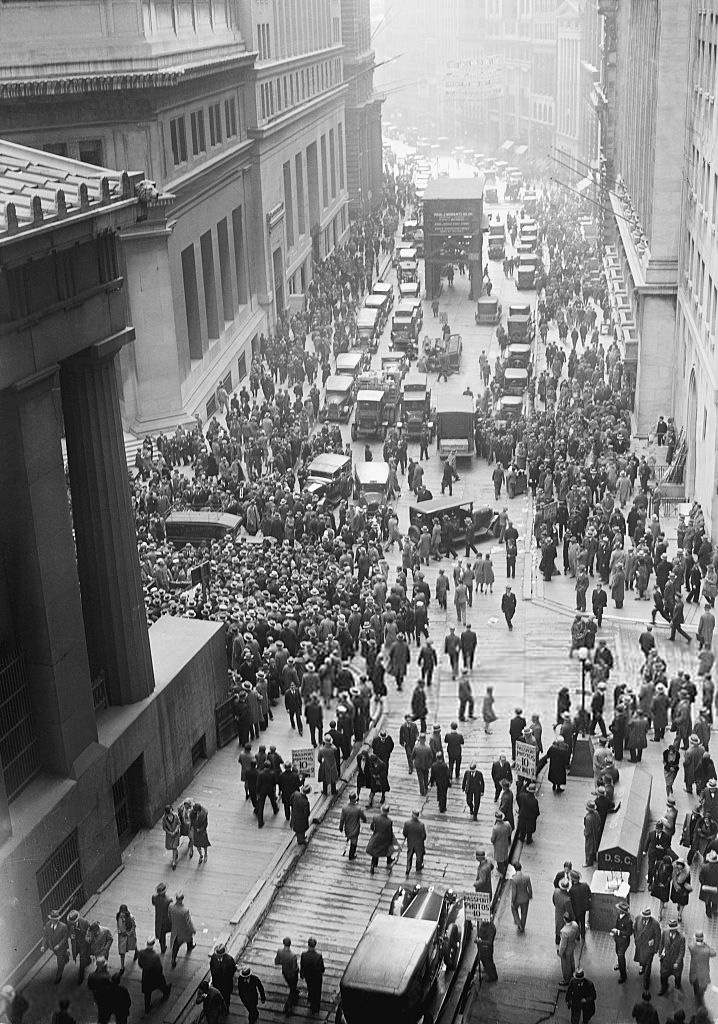
Psychology played a massive role. Once markets began to fall, fear became contagious. News reports showed grim tickers, brokers shouting on the floor, and investors on the brink of collapse.
Many people rushed to sell, not wanting to be the last to exit. Ironically, many sold without understanding the cause, driven by instinct rather than information.
8. Immediate Global Impact
Black Monday wasn’t just a U.S. phenomenon. The crash was truly global:
- London: FTSE dropped 10.8%
- Hong Kong: Market closed for an entire week
- Australia: Down nearly 40% by month’s end
- Canada, Japan, Germany: All faced double-digit losses
For the first time, the world saw what financial globalization truly meant.
9. How Governments Responded
Governments and central banks around the world responded swiftly. They understood that confidence had to be restored quickly to avoid a full-scale economic depression.
In the U.S., the Federal Reserve, under Chairman Alan Greenspan, issued a now-famous statement:
“The Federal Reserve, consistent with its responsibilities as the nation’s central bank, affirmed today its readiness to serve as a source of liquidity to support the economic and financial system.”
This reassurance was vital.
10. Federal Reserve’s Actions
The Fed began injecting liquidity into the banking system and encouraging banks to keep lending. Interest rates were held steady or reduced, and market confidence began to recover.
By early 1988, the Dow had started to climb again. The damage had been severe, but a depression had been avoided.
11. The Effect on Individual Investors
Many individual investors suffered steep losses. Retirement accounts were wiped out, college funds depleted, and some lost confidence in the stock market for years.
But others, particularly those who held their investments, saw their portfolios recover over the next few years.
12. Lessons for Market Regulation
Black Monday led to several regulatory changes:
- Circuit breakers were introduced, which allow markets to pause trading when sharp declines occur.
- Increased scrutiny of automated trading systems
- Greater coordination between global financial regulators
These measures aimed to prevent a similar freefall without oversight.
13. Comparing 1987 to 1929 and 2008
- 1929 was triggered by speculative bubbles and led to a decade-long depression.
- 2008 was caused by a housing and banking crisis, requiring massive bailouts.
- 1987, though dramatic, did not result in a recession, thanks in part to swift action by central banks and a fundamentally stronger economy.
Each crash was different, but 1987 proved that panic alone can cause catastrophe.
14. Long-Term Impact on Wall Street
Black Monday reshaped Wall Street in several ways:
- It demonstrated the importance of investor psychology
- It spurred advances in risk management and portfolio insurance
- It emphasized the interconnectedness of global markets
And perhaps most importantly, it was a wake-up call for a financial industry growing too confident in its systems.
15. Conclusion
October 19, 1987, will always be remembered as Black Monday—a day when confidence collapsed and panic reigned.
But it was also a testament to the resilience of financial institutions and the power of coordinated response. In a matter of hours, hundreds of billions were lost, but within months, the system began to recover.
The lessons of that day live on in every stock market circuit breaker, every risk management strategy, and every trader who watches the charts with a cautious eye. Markets may move fast, but fear moves faster—and history has a way of repeating itself when we forget.
16. External Resource
🌐 Wikipedia – Black Monday (1987)