Table of Contents
- A Shattering Dawn: The Black Sea Tsunami of September 11, 1927
- Crimean Shores Before the Wave: A Landscape of Culture and Conflict
- The Tectonic Heartbeat: Understanding the Black Sea’s Seismic Nature
- September 11, 1927: The Moment the Sea Turned Against Yalta
- Eyewitness Accounts: Voices from the Wave’s Path
- The Physics of Destruction: Tsunami Dynamics in a Semi-Enclosed Sea
- The Aftermath: Yalta in Ruins and the Human Toll
- The Soviet Response: Relief, Reconstruction, and Political Implications
- Scientific Investigations: How Was the Tsunami Understood?
- The Forgotten Disaster: Why the 1927 Tsunami Is Overlooked Today
- Ecological Impact: The Black Sea’s Marine Life and Coastal Landscape
- Cultural Memory: Stories, Art, and Local Myths Born from the Disaster
- Comparative Perspectives: Tsunami Hazards in the Black Sea Region
- Crimea’s Geopolitical Reality: How Natural Disasters Shape Human Struggles
- Lessons Learned: Disaster Preparedness in the Interwar Period
- Legacy and Memorialization: Remembering 1927 in Modern Crimea
- Conclusion: The Silent Force Beneath the Sea and Its Human Echo
- FAQs about the 1927 Black Sea Tsunami
- External Resource: Wikipedia Entry on the Black Sea Tsunami
- Internal Link: Visit History Sphere
1. A Shattering Dawn: The Black Sea Tsunami of September 11, 1927
The morning of September 11, 1927, dawned like any other along the Crimean coast. Gentle waves lapped the shores of Yalta, while the sun stretched its first golden fingers over the dark waters of the Black Sea. Fishermen prepared their nets, children laughed in the streets, and the markets buzzed with familiar life. But beneath this peaceful veneer, forces deep beneath the earth were stirring—a violent awakening that would transform this tranquil day into a scene of unimaginable tumult.
Suddenly, without warning, the sea withdrew, pulling back as if to suck the coastline into its depths. From this eerie retreat came a roar—a monstrous wall of water surged forth, crashing with a fury that shattered homes and lives alike. The Black Sea, often quiet, revealed its hidden violence that day: a tsunami.
Though tsunamis are more commonly associated with the Pacific's “Ring of Fire,” September 11 of 1927 bore witness to one of the most devastating waves ever recorded in the relatively calm Black Sea basin. This event shook the heart of Crimea, ravaging Yalta and surrounding villages, leaving a trail of death, destruction, and disbelief.
2. Crimean Shores Before the Wave: A Landscape of Culture and Conflict
In the early 20th century, Crimea was a crossroads of empires, ethnicities, and histories. Its shores cradled a mosaic of communities—Tatars, Russians, Ukrainians, Greeks—each weaving their traditions into the fabric of daily life. Yalta, a jewel on this coast, was more than a resort town; it was a symbol of imperial leisure, where Russian nobility and European aristocracy mingled beneath the shade of palm trees and exotic gardens.
But beneath this cosmopolitan sheen lurked complex tensions. The aftermath of World War I and the Russian Civil War left the region politically unstable, transforming Crimea from a battleground into a site of Soviet consolidation. The Soviet authorities viewed the peninsula as strategically vital—its ports and warm waters essential for both commerce and military projection.
This delicate blend of vibrant culture and growing political turbulence framed the setting for an event that would soon overshadow human disputes with nature’s indiscriminate fury.
3. The Tectonic Heartbeat: Understanding the Black Sea’s Seismic Nature
Though the Black Sea is often portrayed as a placid, landlocked body of water, it lies above a complex geological puzzle. The region is shaped by the shifting boundaries of the Eurasian and Anatolian tectonic plates, creating faults beneath the sea floor capable of generating earthquakes and underwater landslides.
The Crimean Peninsula itself is a tectonically active zone, with the Crimean Mountains rising steeply from the coast. Historical records and geological studies indicate that seismic activity here, though less frequent than around the Pacific, is far from negligible. Underwater landslides triggered by earthquakes have the potential to displace vast amounts of water—setting the stage for the 1927 tsunami.
Scientists today understand that the Black Sea’s semi-enclosed nature can amplify the impact of such waves, pushing surges far inland once the oscillations interact with the coastline’s unique topography.
4. September 11, 1927: The Moment the Sea Turned Against Yalta
On that fateful day, seismic tremors were reported with varying intensity across the peninsula—but to many, they were just another quiver of the earth, a dull reminder of the omnipresent subterranean restlessness. However, beneath the cold surface of the Black Sea, a stronger earthquake struck. This quake destabilized underwater sediments along the Crimean shelf, triggering a massive submarine landslide.
The result was catastrophic: a towering tsunami wave raced toward Yalta’s shores.
Eyewitness descriptions paint a scene of surreal horror. The sea pulled back so far that seabeds were exposed, causing fishermen to hastily retreat. Then came the towering wall of water, crashing with the force of a freight train. Homes that stood for centuries were torn from their foundations. Streets became rivers of destruction and despair.
It is estimated that the wave reached heights of 4 to 6 meters (13 to 20 feet) as it slammed into the coast. Entire neighborhoods were flooded, the coastline forever scarred.
5. Eyewitness Accounts: Voices from the Wave’s Path
Testimonies from survivors form the emotional backbone of this disaster’s story. Anna Petrova, a schoolteacher in Yalta, recounted, “The sea vanished before my eyes. I thought it was a miracle until the wave came—a monstrous wall swallowing the beach and rushing toward us. We ran, but many were caught; friends lost in the chaos. That day the ground and sea betrayed us both.”
Another witness, Ivan Markov, a local fisherman, vividly described the eerie silence that preceded the onrush. “The birds stopped singing. The air grew heavy. Men on the docks looked to the horizon and knew—something had come wrong. When the water came back, it was like the end of the world.”
These human voices remind us that beyond the science and statistics lies the raw human experience: terror, loss, and the desperate struggle to survive.
6. The Physics of Destruction: Tsunami Dynamics in a Semi-Enclosed Sea
The Black Sea’s unique geographic configuration means tsunamis here behave differently compared to the open ocean. The basin’s depth variations and narrow connections to adjacent seas cause complex wave patterns.
The 1927 tsunami was likely generated by a combination of seismic shaking and a subsequent underwater landslide. This dual mechanism compounded the energy unleashed. As the tsunami wave’s long wavelength approached the shallower Crimean coast, it compressed, growing taller and more powerful before striking.
Hydrodynamic models show how such waves can be amplified by coastal features like bays and cliffs, concentrating destructive force onto settlement areas such as Yalta’s shoreline. Scientists today use this data to assess current tsunami risks for vulnerable Black Sea communities.
7. The Aftermath: Yalta in Ruins and the Human Toll
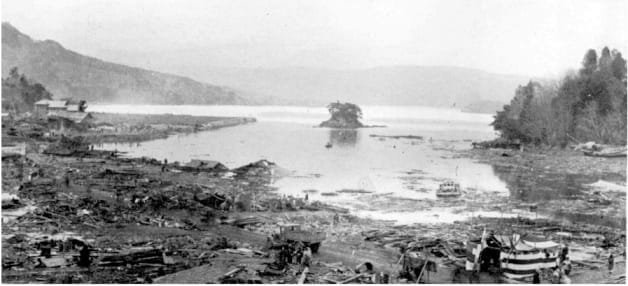
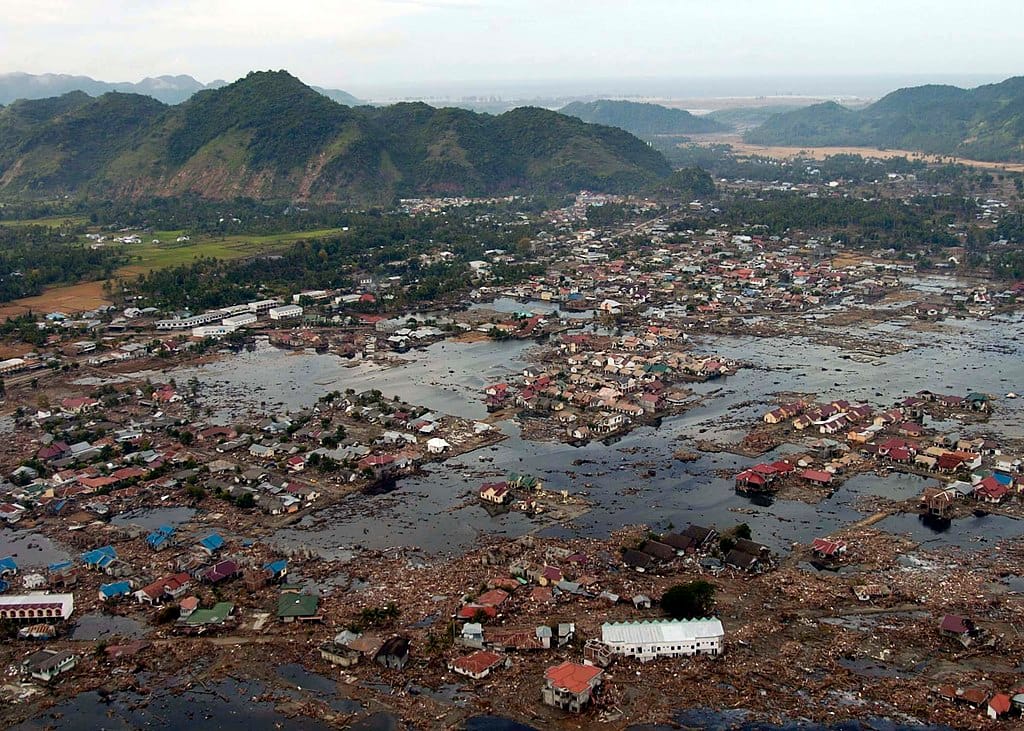
In the disaster’s immediate wake, Yalta and its surrounding villages were a landscape transformed. Buildings reduced to shattered rubble, streets submerged and strewn with debris, and a populace shaken to its core.
Contemporary reports suggest hundreds perished in the flood—though precise numbers remain uncertain due to the chaos. Thousands more were left homeless, their livelihoods destroyed.
The tsunami did not only devastate infrastructure but fractured the social fabric of the town. Families were separated, communities uprooted, and economic activity ground to a halt. Fishermen lost their boats and nets, vital for survival along these coasts.
8. The Soviet Response: Relief, Reconstruction, and Political Implications
The Soviet government, newly establishing authority over Crimea, faced the dual challenge of disaster relief and political consolidation. Initial response efforts involved mobilizing local resources and military units to assist survivors, distribute food, and begin clearing wreckage.
Reconstruction became a symbol of Soviet resilience and propaganda. Restoration of public buildings, roads, and ports was expedited, showcasing the regime’s capacity to tame nature’s fury.
However, the disaster also highlighted infrastructural vulnerabilities and governance challenges in managing natural catastrophes—a lesson not lost on Soviet planners.
9. Scientific Investigations: How Was the Tsunami Understood?
In the years following, geologists and oceanographers began piecing together the mystery of the 1927 tsunami. Early studies incorporated seismic records, eyewitness testimonies, and coastal damage assessments.
These investigations confirmed the causative link to a submarine earthquake and demonstrated that tsunamis could indeed threaten the Black Sea—a revelation that expanded the understanding of regional geohazards.
The 1927 event became a case study referenced in Soviet scientific literature, albeit underplayed due to limited communication beyond Soviet borders.
10. The Forgotten Disaster: Why the 1927 Tsunami Is Overlooked Today
Despite its severity, the 1927 Black Sea tsunami remains relatively obscure in global historical narratives. Several factors contributed to this: the isolated nature of Soviet Crimea during the interwar years, limited international media coverage, and the overshadowing effect of subsequent global events like the Great Depression and World War II.
Moreover, the Black Sea’s rarity for such phenomena has led to a general underestimation of tsunami risk in the region. Until recent decades, local memories of the event have faded, surviving mostly in oral histories and scattered archival records.
11. Ecological Impact: The Black Sea’s Marine Life and Coastal Landscape
Beyond human suffering, the tsunami disrupted coastal ecosystems. The violent inundation altered beach profiles, destroyed spawning grounds, and displaced marine organisms.
Scientific retrospectives suggest that such geological events contribute to periodic “resets” in ecological succession along shorelines, influencing biodiversity patterns.
The tsunami's impact on sediment redistribution also shaped the morphology of the Crimean coast, with effects still detectable in contemporary geological strata.
12. Cultural Memory: Stories, Art, and Local Myths Born from the Disaster
Communities often process trauma through storytelling and artistic expression. In Crimea, tales of the 1927 tsunami entered local folklore, mingling with older myths about the sea’s caprice.
Poets and painters captured moments of the catastrophe, evoking themes of loss and resilience. Some narratives transformed the wave into a symbol of nature’s vengeance or divine retribution, reflecting cultural attempts to interpret the incomprehensible.
Such memories, though fragmentary, sustain the human imprint of this watery horror.
13. Comparative Perspectives: Tsunami Hazards in the Black Sea Region
When viewed comparatively, the 1927 tsunami is one among a handful of rare but impactful Black Sea wave disasters. Historical references document earlier tsunamis linked to earthquakes in neighboring regions, including the Sea of Marmara and along Turkey’s northern coast.
Modern hazard assessments integrate such data to model risks for contemporary cities across the Black Sea rim, emphasizing a need for renewed vigilance.
14. Crimea’s Geopolitical Reality: How Natural Disasters Shape Human Struggles
Crimea’s strategic importance means natural disasters ripple beyond immediate devastation; they intersect with geopolitical narratives.
The 1927 tsunami’s timing—amid Soviet state-building—meant that disaster management was entangled with control and ideological messaging. In later periods, Crimea's contested status ensures that environmental vulnerabilities remain intertwined with political tensions.
Understanding the role of natural events adds nuance to the region’s complex history.
15. Lessons Learned: Disaster Preparedness in the Interwar Period
The 1927 tsunami exposed serious gaps in disaster preparedness. Early warning systems were non-existent; evacuations uncoordinated; public awareness minimal.
This catastrophe prompted Soviet authorities to begin incorporating seismic and oceanographic monitoring in regional planning. Internationally, it joined a growing corpus of experiences that would eventually inspire comprehensive disaster management frameworks.
Though insufficient at the time, these embryonic efforts laid groundwork for more systematic responses decades later.
16. Legacy and Memorialization: Remembering 1927 in Modern Crimea
Today, the legacy of the Black Sea tsunami lingers both in archives and the collective consciousness of Crimean communities. Memorials and local museums commemorate the event’s victims and resilience of survivors.
Evolving interpretations emphasize a dialogue between past and present risks, underscoring an urgency to preserve historical knowledge amid changing political landscapes.
In a region perpetually buffeted by forces—human and natural—the tsunami remains a solemn testament to vulnerability and endurance.
17. Conclusion: The Silent Force Beneath the Sea and Its Human Echo
The Black Sea tsunami of September 11, 1927, stands as a haunting reminder that nature’s power can awaken without warning beneath even the calmest waters. It forever altered the life and landscape of Crimea’s shores, imprinting stories of tragedy, survival, and renewal.
Beyond the waves and ruins, this event teaches us about the delicate interplay between earth, sea, and humanity—a complex dance in which the ground beneath our feet can shift, and the sea that sustains us can suddenly become a fierce adversary.
Remembering 1927 is not merely about looking back—it's about acknowledging an ongoing challenge to live in harmony with the restless planet we inhabit.
Conclusion
History often unfolds at the nexus of nature’s unpredictability and human vulnerability. The 1927 Black Sea tsunami was one such event, a sudden rupture in the continuity of a vibrant Crimean life that shocked all who witnessed. It laid bare the fragility of coastal communities confronting unseen geological forces and highlighted the urgent need for preparedness long before modern warning systems existed.
Yet beyond destruction, this catastrophe also sowed seeds of hope, resilience, and scientific pursuit. Its lessons ripple through time, urging us to remember that beneath serene waves may lurk silent threats, and that humanity’s survival depends on respect, understanding, and solidarity.
Yalta’s shattered past calls out to us today, urging vigilance and compassion in a world where natural disasters continue to shape destinies. May the memory of that September morning inspire courage and care for generations to come.
FAQs about the 1927 Black Sea Tsunami
Q1: What caused the 1927 Black Sea tsunami near Crimea?
A1: The tsunami was triggered by an earthquake beneath the Black Sea that caused a submarine landslide, displacing large volumes of water and generating a destructive wave that struck the Crimean coast.
Q2: How many people were affected by the tsunami?
A2: Exact numbers remain uncertain, but estimates suggest hundreds died, with thousands more displaced and injured in Yalta and nearby communities.
Q3: Was the 1927 tsunami unique in the Black Sea?
A3: While rare, tsunamis have occurred previously and since in the Black Sea region. The 1927 event is among the most significant recorded in modern history for this basin.
Q4: How did the Soviet government respond to the disaster?
A4: The Soviets organized relief efforts, coordinated reconstruction, and used the event to promote images of resilience and control during a period of political consolidation.
Q5: Why is the 1927 tsunami not well known internationally?
A5: Factors include limited media coverage at the time, political isolation of the Soviet Union, and overshadowing by larger global events like the Great Depression and World War II.
Q6: What lessons did scientists learn from this event?
A6: The tsunami expanded awareness of seismic risk in the Black Sea, highlighted submarine landslides as tsunami triggers, and informed future regional hazard assessments.
Q7: Does Crimea face tsunami risks today?
A7: Yes, geological studies indicate ongoing seismic activity that could pose a tsunami threat, though modern monitoring and disaster preparedness have improved.
Q8: How is the 1927 tsunami remembered in local culture?
A8: The event lives on through oral histories, artistic expression, and local memorials, contributing to community identity and awareness about nature’s power.