Table of Contents
- The Morning the Sea Changed: Opening the Black Sea Tsunami Story
- The Black Sea: A Storied Basin of Calm and Tempest
- The 1920s in Crimea: Between Old Empires and New Soviet Realities
- September 11, 1927: The Day the Shoreline Trembled
- The Unfolding of Disaster: From the Depths to the Coast
- Witnesses to the Wave: Eyewitness Accounts from Yalta and Surroundings
- Geological Forces Behind the Black Sea Tsunami
- The Role of Underwater Earthquakes and Submarine Landslides
- Yalta’s Waterfront in Ruins: The Immediate Human Toll
- Rescue and Relief: The Local Community’s Response
- The Soviet Authorities and Their Approach to Natural Catastrophes
- Mapping the Tsunami: Scientific Investigations in the 1920s and Beyond
- The Forgotten Wave: Why the 1927 Black Sea Tsunami Is Obscure Today
- Environmental Aftershocks: Coastal Changes and Ecological Impact
- Psychological and Cultural Ripples: How the Tsunami Shaped Crimean Society
- Lessons from 1927: Tsunami Awareness in the Black Sea Region
- Modern Seismology and the Threat of Black Sea Tsunamis
- Comparing the 1927 Tsunami with Global Counterparts
- Memorializing Disaster: Has Memory Eclipsed the Wave?
- Scientific Advances: Predicting and Understanding Submarine Hazards
- Climate and Geological Context: Could It Happen Again?
- The Black Sea Today: Community, Risk, and Resilience
- Epilogue: The Sea’s Quiet Fury and the Human Story Beneath the Waves
The Morning the Sea Changed: Opening the Black Sea Tsunami Story
It was a radiant September morning in 1927 along the Crimean coast. The sky, a flawless cerulean, stretched endlessly above the Black Sea swaying gently against the shores of Yalta, a famed resort town cherished by poets, aristocrats, and the newly energized Soviet intelligentsia alike. People were out enjoying the fresh breezes and calm waves, blissfully unaware that beneath the tranquil surface, the earth had begun to shift, setting off a chain of events that would ripple through communities forever.
Suddenly, the water seemed to retreat from the shore, a surreal and eerie reversal that puzzled fishermen and bathers alike. Moments later, a towering wave surged in—a wall of water that crashed violently upon the beach, tearing into boats, homes, and lives with merciless force. The Black Sea, long regarded as a serene expanse surrounded by history, had revealed a hidden fury: a tsunami had struck the Crimean peninsula.
This event, struck on September 11, 1927, remains a haunting and little-known chapter in the annals of natural disasters. Yet its story is rich, fraught with human drama, geological mysteries, and lessons still echoing today.
The Black Sea: A Storied Basin of Calm and Tempest
The Black Sea, cradle of ancient civilizations and crossroads of empires, has for millennia been more than a vast body of water. It is a living chronicle, its depths concealing mysteries and its shores bearing witness to the ebb and flow of history. Geographically enclosed, its waters connect to the Mediterranean through narrow straits, lending it a unique character: both isolated yet entwined with the wider world.
Typically, the sea is gentle—a playground for fishermen, traders, and tourists. Yet, its geological setting at the collision zone between the Eurasian and Anatolian tectonic plates hints at the potential for violent upheavals. Earthquakes ripple beneath its waves, underwater landslides lurk in its submarine canyons, and, occasionally, nature reminds humanity of its fragile foothold.
For centuries, locals whispered stories of strange waves and sudden floods. However, large, well-documented tsunamis in the Black Sea have been exceedingly rare, making the catastrophic 1927 event all the more striking.
The 1920s in Crimea: Between Old Empires and New Soviet Realities
Crimea in the 1920s was a region caught between epochs. The echoes of Tsarist rule still lingered, but the Soviet Union’s sweeping changes were rapidly reshaping society, economy, and politics. Yalta, with its palatial hotels and sun-drenched promenades, was a jewel adapted from imperial leisure to a Soviet cultural hub, hosting writers, scientists, and revolutionaries.
Infrastructure was modest; local communities relied heavily on fishing, small-scale agriculture, and burgeoning tourism. The sense of normalcy was palpable—whether in the clatter of markets or the hum of seaside festivities.
Still, uncertainty swirled beneath the surface—geopolitical tensions, economic challenges, and societal upheavals contributed to an atmosphere that would be forever altered on that foreboding September day.
September 11, 1927: The Day the Shoreline Trembled
The day began like any other, but soon the water’s behavior unsettled residents. Fishermen noted the sea’s unnatural recession—a phenomenon never before witnessed with such intensity in recent memory. This “drawback” of the water, an ominous precursor, allowed some to rush ashore to inspect the newly exposed seabed scattered with marine life and debris.
Then came the wave—massive, swift, and devastating. It overwhelmed the shorelines from Cape Ai-Todor to the bustling piers of Yalta, demolishing wooden fishing boats, swamping coastal homes, and instilling terror in bystanders. Children playing by the water’s edge were snatched from safety; families were torn apart by the surge.
Eyewitnesses would later describe the wave as “a monstrous hand of the sea reaching up, angry and unstoppable.”
The Unfolding of Disaster: From the Depths to the Coast
What exactly triggered this force of nature? In short, a powerful underwater earthquake shook the seabed near the Crimean coast. The tremors destabilized underwater sediment, resulting in a massive submarine landslide—a phenomenon where vast amounts of sediment plunge down slopes, displacing tremendous volumes of water.
The initial quake was felt faintly on land, but stone structures surprisingly survived intact; the water, however, was less forgiving.
As the displaced waters surged, the tsunami grew in intensity, funneling towards the shallow coastal areas where its height and destructive power multiplied. The natural bay formations around Yalta and adjacent beaches acted as amplifiers, increasing wave height in localized spots.
Witnesses to the Wave: Eyewitness Accounts from Yalta and Surroundings
Local testimonies form the emotional core of this story.
Mariya Ivanovna, a fisherman’s wife, recalled, “At first, the sea was like a giant pulling back its breath. Then it came rushing back like a flood of fire and ice. Boats smashed against rocks; people screamed. We lost my husband that day.”
A curious Soviet scientist visiting Yalta at the time wrote in his journal, “I saw the sea withdraw, revealing the ocean floor, then rise to engulf the coast in a monstrous, unstoppable wall.”
These personal recollections depict a community grappling with the incomprehensible—caught between nature’s surprise and human vulnerability.
Geological Forces Behind the Black Sea Tsunami
Beneath the waves, invisible tectonic dramas unfold constantly. The Black Sea basin lies within complex fault systems stemming from ongoing convergence between tectonic plates. This process stores colossal energy, released sporadically as earthquakes.
Unlike oceanic tsunamis common in the Pacific, Black Sea tsunamis are typically smaller and less frequent but can still cause sharp spikes in water levels due to submarine avalanches triggered by quakes.
1927’s event is now understood as one of the clearer examples, combining moderate seismic waves and a secondary submarine landslide to generate its destructive power.
The Role of Underwater Earthquakes and Submarine Landslides
Close scientific analysis shows the initial trigger: a magnitude estimated between 6.0 and 7.0 earthquake shook the seabed, causing sediment gathered on underwater slopes to fail and slide downward rapidly.
This landslide caused a sudden displacement of water, generating the tsunami waves.
Submarine landslides are especially menacing because they can occur without prior strong seismic shaking felt on land, complicating early warning efforts even today.
In essence, the dual act of shaking and sediment collapse magnified the disaster’s severity.
Yalta’s Waterfront in Ruins: The Immediate Human Toll
Yalta’s picturesque waterfront bore the brunt. Dozens of boats were crushed; merchant stalls were flattened; coastal homes, constructed largely of wood and masonry, suffered severe damage.
The death toll, though difficult to quantify precisely, likely numbered in the dozens, with many more injured and displaced. The shock disrupted the lives of thousands who lived dependent on the sea.
Compounding tragedy, the region was still recovering from the ravages of the Russian Civil War and shifting power structures, making rescue and recovery all the more challenging.
Rescue and Relief: The Local Community’s Response
In the aftermath, local fishermen, doctors, and volunteers mobilized swiftly despite scarce resources. Makeshift shelters were erected; victims were tended with first aid; food and water were distributed as best as possible.
News traveled slowly due to limited communication infrastructure. Yet camaraderie and solidarity strengthened, revealing the community’s resilience.
Soviet relief organizations arrived later, bringing more structured aid but also political oversight, aiming to show the new regime’s capacity for managing crises.
The Soviet Authorities and Their Approach to Natural Catastrophes
At the time, the Soviet state was consolidating control, emphasizing industrialization and modernization, sometimes at the expense of transparent disaster reporting.
The 1927 tsunami was downplayed publicly, framed as a minor incident in the wider narrative of Soviet progress. Nonetheless, scientific interest was piqued. Dedicated teams began monitoring seismic hazards in strategically sensitive regions including Crimea.
This duality—political messaging vs. genuine hazard assessment—marked early Soviet disaster management.
Mapping the Tsunami: Scientific Investigations in the 1920s and Beyond
The 1927 tsunami spurred initial scientific surveys of the Black Sea’s seismicity and underwater topography.
Oceanographic expeditions mapped submarine landslide scars; seismographs were installed to detect future tremors.
Over the decades, studies have refined understanding of the event’s causes and patterns, contributing to broader tsunami science and regional risk assessments.
Though early instrumentation was limited, later technological advances have enabled reconstruction of the event with growing accuracy.
The Forgotten Wave: Why the 1927 Black Sea Tsunami Is Obscure Today
Despite its local devastation, the 1927 tsunami remains largely absent from popular historical narratives.
Several factors contribute:
- Relative small scale compared to Pacific or Atlantic tsunamis
- Political climate suppressing detailed public discourse
- The Black Sea’s quieter reputation reducing international scientific focus
- Other dominating world events overshadowing regional natural disasters
This obscurity is a loss for both historical memory and hazard awareness in contemporary times.
Environmental Aftershocks: Coastal Changes and Ecological Impact
The tsunami altered Crimea’s coastline—eroding beaches, altering sediment deposition, and damaging marine habitats.
Fisheries suffered temporary decline, affecting livelihood sustainability.
Reports from the time noted unusual algal blooms and shifts in fish populations, although ecological monitoring was rudimentary.
These environmental aftershocks remind us that natural disasters ripple through nature as deeply as through human lives.
Psychological and Cultural Ripples: How the Tsunami Shaped Crimean Society
For the communities, trauma endured beyond physical destruction.
Folklore absorbed the event—new tales and cautionary legends emerged. A collective wariness regarding the sea blended with reverence and fear.
Psychologically, survivors reported lasting anxiety around the ocean, with some avoiding beaches altogether.
Yet, story-sharing also fostered stronger community bonds and a tacit acknowledgment of human fragility.
Lessons from 1927: Tsunami Awareness in the Black Sea Region
Though rare, the 1927 tsunami demonstrated that Black Sea coastal regions are not immune to sudden disaster.
Emergency planning, public education, and scientific vigilance are vital.
Modern authorities incorporate these lessons into risk frameworks, emphasizing early warning systems, evacuation drills, and community engagement.
It’s a testament to how even forgotten history can illuminate future safety.
Modern Seismology and the Threat of Black Sea Tsunamis
Today, seismology tools give clearer insight into the Black Sea’s seismic behaviors.
Networks of sensors track micro-quakes; surveys monitor sediment stability.
Though infrequent, tsunami potential exists, especially where tectonic and sedimentary factors converge.
Crimea and other coastal zones maintain preparedness in light of evolving knowledge.
Comparing the 1927 Tsunami with Global Counterparts
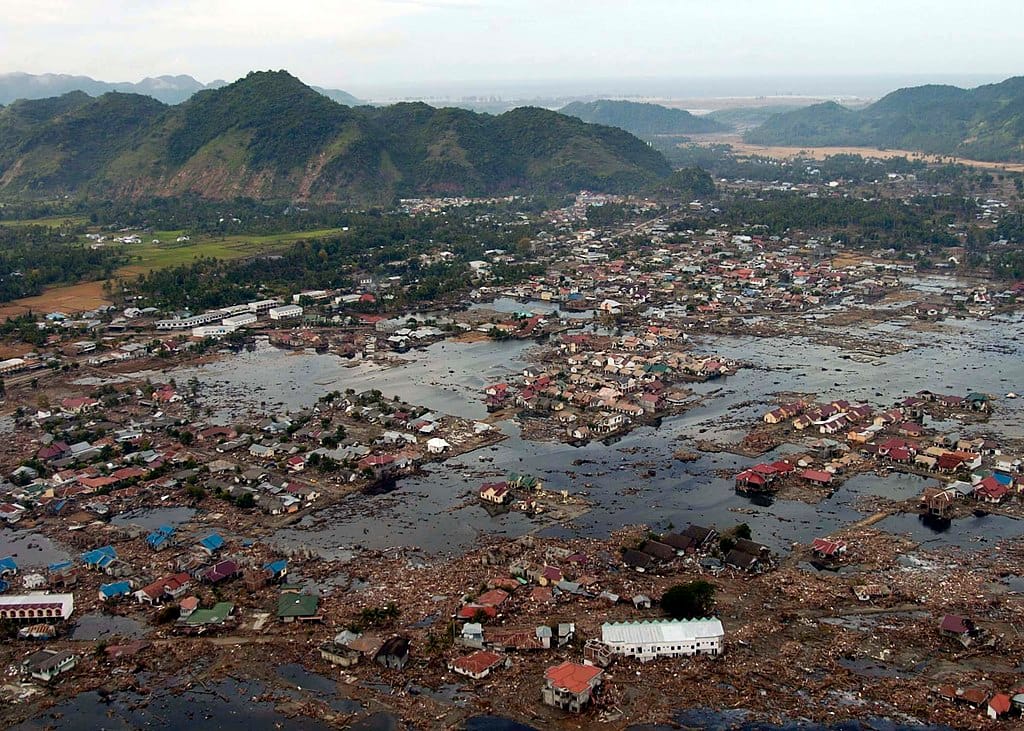
In scale and force, the 1927 event was modest compared to the legendary 2004 Indian Ocean Tsunami or the 2011 Tōhoku disaster.
Yet, it shares critical features: underwater triggers, rapid onset, community vulnerability.
Its study enriches global understanding of how tsunamis form and affect environments beyond high-risk “hot spots.”
Memorializing Disaster: Has Memory Eclipsed the Wave?
Unlike better-known tragedies, no large-scale memorial exists in Crimea commemorating the 1927 tsunami.
Oral histories persist in small pockets, and local museums hold scattered archives.
Raising awareness could honor victims and foster resilience—two legacies meriting preservation.
Scientific Advances: Predicting and Understanding Submarine Hazards
Research into submarine landslides and their tsunami potential has blossomed since the early 20th century.
Technological leaps allow modeling of sediment stability, wave propagation, and risk zones.
The 1927 event serves as a benchmark case for validating these models in enclosed seas.
Climate and Geological Context: Could It Happen Again?
Given ongoing tectonic activity and sediment accumulation, the threat is far from extinct.
Climate change may amplify risks through intensified rainfall and erosion—potentially destabilizing submarine slopes anew.
Scientists stress continued vigilance and integrated risk strategies for the Black Sea region.
The Black Sea Today: Community, Risk, and Resilience
Coastal towns have developed infrastructure and emergency protocols.
Tourism flourishes alongside historical awareness campaigns.
Local communities are increasingly proactive, blending tradition with modern science to coexist with the sea’s hidden power.
Epilogue: The Sea’s Quiet Fury and the Human Story Beneath the Waves
The Black Sea tsunami of September 11, 1927, may have passed through history’s quieter corridors, but its echoes persist beneath rippling waters and within human memory.
It is a story of nature’s caprice, human courage, and a landscape forever altered by invisible forces.
As waves continue to kiss Crimea’s shores, they carry reminders of a day when the familiar turned suddenly fearsome—and humanity’s enduring relationship with the sea was once again tested.
Conclusion
The 1927 Black Sea tsunami remains a compelling yet underappreciated saga of natural disaster on Earth’s lesser-known shores. It challenges perceptions that tsunamis are solely phenomena of distant, vast oceans and instead spotlights the potential fury that can arise even in enclosed or smaller seas.
Beyond geological explanations, this event embodies the universal human experience of grappling with sudden catastrophe—fear, loss, resilience, and adaptation. The people of Yalta and Crimea faced a moment when their world was physically and spiritually shaken, forcing confrontations with mortality and uncertainty.
Yet, from this calamity emerged seeds of knowledge, scientific inquiry, and communal strength, shaping how future generations understand and prepare for nature’s unpredictable power. The quiet waves of the Black Sea still harbor memory, urging us not to forget the lessons beneath the surface.
FAQs
Q1: What caused the 1927 Black Sea tsunami near Crimea?
A1: A moderate underwater earthquake triggered a submarine landslide, displacing water and generating the tsunami waves that struck the Crimean coast, particularly affecting Yalta.
Q2: How significant was the human toll of the tsunami?
A2: While exact figures remain uncertain, dozens of people died, many more were injured or displaced, and substantial property damage was reported.
Q3: Why is the 1927 tsunami not well known outside the region?
A3: Its relatively modest scale, restricted Soviet-era reporting, the Black Sea’s low tsunami profile, and overshadowing by global events contributed to its obscurity.
Q4: What geological forces make the Black Sea vulnerable to tsunamis?
A4: The region’s tectonic activity along fault lines and the presence of unstable underwater sediments create conditions conducive to earthquakes and submarine landslides, both potential tsunami triggers.
Q5: How did Soviet authorities respond to the disaster?
A5: They provided relief efforts but cautiously controlled information to align with political narratives of progress, favoring internal scientific study over public transparency.
Q6: Can similar tsunamis happen again in the Black Sea today?
A6: Yes. Geological and climatic conditions mean the risk persists, though modern monitoring and preparedness aim to mitigate impacts.
Q7: What scientific developments have come from studying this tsunami?
A7: Advances in understanding submarine landslides and tsunami wave mechanics in enclosed seas, contributing to broader hazard prediction and safety strategies.
Q8: How is the event remembered or commemorated locally?
A8: Mainly through oral history and limited museum documentation, but without large-scale public memorials or widespread awareness.