Table of Contents
- The Midnight Roar: Introduction to the Bogoslof Eruption
- Aleutians’ Ancient Fury: Geological Roots of Bogoslof
- A Remote Island’s Hidden Volcano: Bogoslof’s Quiet Dormancy Before 2016
- The First Tremors: Early Warnings of an Awakening
- December 2016: The Volcano Reignites with a Thunderous Blast
- Sky on Fire: Aerial Observations and Volcanic Ash Clouds
- The Dance of Fire and Ice: Eruption Patterns Through Winter 2016–2017
- Aviation at Risk: Threats to Trans-Pacific Flights
- Nature’s Fury Meets Human Strategy: Monitoring Bogoslof’s Volcanic Activity
- Unseen Hand: The Role of Remote Sensing and Satellite Data
- The Island’s Shape Shifts: Geological Transformations During the Eruption
- Voices from the Field: Scientists’ Firsthand Accounts and Observations
- Oceanic and Atmospheric Impacts: Beyond the Island’s Shores
- The Eruption’s Climatic Footprint: Short-Term and Long-Term Effects
- Cultural and Economic Implications for Alaska and Beyond
- Lessons Learned: Advances in Volcanology and Emergency Preparedness
- The Quiet Aftermath: From Active Volcano to Sleeping Giant
- Memorializing Bogoslof: How a Volcano Shapes Collective Memory
- Conclusion: The Eternal Pulse of Earth’s Restless Heart
- FAQs
- External Resource
- Internal Link
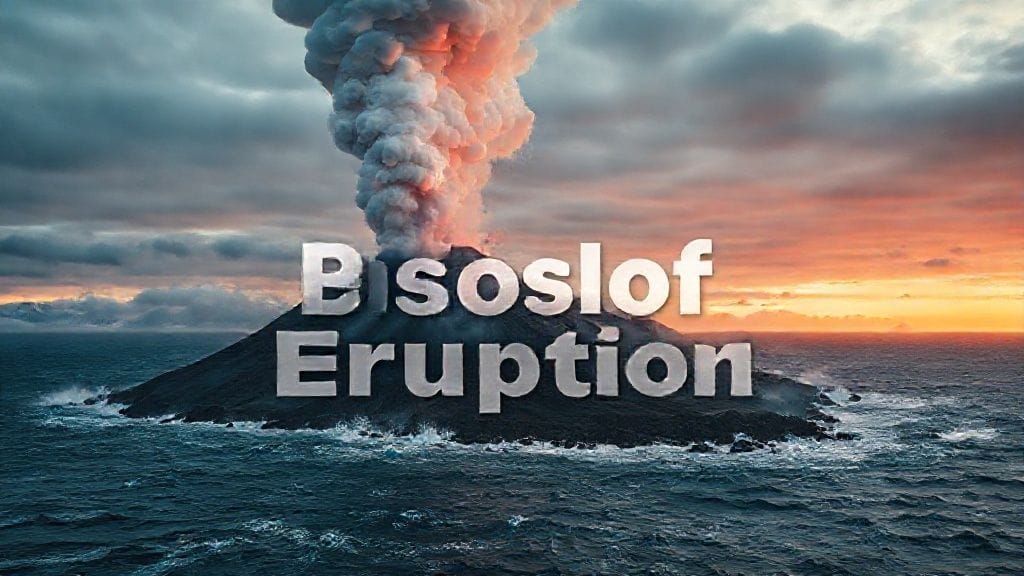
The midnight sky shattered under a fiery tempest. In the cold, star-studded expanse over the Aleutian Islands, a volcanic crescendo erupted from Bogoslof Island, sending towering plumes of ash and steam into the heavens, painting the moonlit canvas with violent brushstrokes of nature’s rawest power. It was December 2016, and this remote speck in the Bering Sea had awoken from decades of slumber with a fury that startled scientists, disrupted trans-Pacific air routes, and redefined the volatility of one of Alaska’s most enigmatic volcanoes.
1. The Midnight Roar: Introduction to the Bogoslof Eruption
The eruption of Bogoslof Island was a spectacle both sudden and prolonged, an exclamation point in the geological narrative of the Aleutian volcanic arc. Few could have guessed that this isolated, submarine volcano—more commonly hidden below the waves—would send such an explosive signal across oceans and skies. The roaring blasts, invisible waves of ash, and the unpredictable nature of the eruption turned Bogoslof into a dramatic testament to Earth’s restless dynamism.
2. Aleutians’ Ancient Fury: Geological Roots of Bogoslof
To understand Bogoslof’s 2016–2017 eruption, one must delve into the geological theatre of the Aleutian Islands. Stretching over 1,200 miles in the Northern Pacific, the Aleutians are the tangible seam where the Pacific Plate dives beneath the North American Plate—a process called subduction. This tectonic dance initiates magma formation deep within Earth’s mantle, feeding a chain of fiery mountain peaks and offshore volcanic islands including Bogoslof.
Unlike many continental volcanoes, Bogoslof is primarily submarine, originating from under the Bering Sea. It occasionally emerges as islands, only to be reshaped or submerged by wave erosion and future eruptions. Its past eruptions, recorded sporadically since the 18th century, have been both sudden and transformative—a geological phoenix rising repeatedly from the depths.
3. A Remote Island’s Hidden Volcano: Bogoslof’s Quiet Dormancy Before 2016
Prior to the 2016 awakening, Bogoslof had been quiet for decades. Last significant recorded activity occurred in the early 1990s, and then the island settled into a deceptive calm. In this remote, uninhabited region, human presence was limited to scientific expeditions and occasional overflights. Its dormant state lulled the global community into relative forgetfulness, yet deep beneath the surface, magma continued its slow, inexorable buildup.
4. The First Tremors: Early Warnings of an Awakening
The earliest signs of life from Bogoslof started with subtle seismic swarms in mid-2016. Analysts at the Alaska Volcano Observatory watched carefully, noting increasing earthquake frequencies and patterns beneath the island. But these tremors were not immediate heralds of eruption—they were whispers amid nature’s noise.
Then, in late November, subtle changes in satellite thermal imagery suggested rising heat flux. Instruments recorded slight ground inflation, further evidence that something was stirring below the volcanic edifice. Tension in the earth’s crust was mounting quietly, foreshadowing a crescendo that would soon blow through the Aleutians.
5. December 2016: The Volcano Reignites with a Thunderous Blast
On December 20, 2016, the atmosphere over Bogoslof shattered. A powerful explosion hurled ash high into the atmosphere—reports estimated plumes reaching up to 30,000 feet (approximately 9 km). This blast was not merely a geological event; it was as if the volcano declared its renewed presence to the world in a spectacular fashion.
The eruption was submarine at first but rapidly built new landforms while sending volcanic debris aloft. For observers, this event stunned because it was not a single eruption but the opening salvo of months of ongoing volcanic activity.
6. Sky on Fire: Aerial Observations and Volcanic Ash Clouds
The eruption’s ash clouds became an aviation nightmare. The volcanic material vented into upper airspace posed serious hazards to aircraft engines, forcing the Federal Aviation Administration and international authorities to reroute flights thousands of miles away.
Satellite images captured the shifting shapes of volcanic plumes, which danced and billowed in the Alaskan wind currents. The translucent clouds sometimes took on eerie orange and red hues at sunrise and sunset, a visual testament to the hazardous particles suspended miles above the surface.
7. The Dance of Fire and Ice: Eruption Patterns Through Winter 2016–2017
The eruption persisted relentlessly through winter, a season that made direct observation difficult. Far from mitigating the volcano’s power, the cold, aluminous weather amplified the drama: volcanic steam mingled with frigid air, generating spectacular, if brief, lightning displays and rapidly solidifying volcanic glass particles that fell back to the sea and island.
Bogoslof’s eruptive behavior was punctuated by a series of explosive episodes, each reshaping the island’s topography and altering the volcanic vent’s structure. The island grew, shrank, and grew again, as magma and ocean water contended in an elemental battle of fire and water.
8. Aviation at Risk: Threats to Trans-Pacific Flights
Because of Bogoslof’s location beneath major trans-Pacific air routes, airlines and aviation controllers faced heightened alarm. Volcanic ash can destroy jet engines and impair visibility. During successive eruptions, Alaska Volcano Observatory issued multiple Aviation Color Code Red alerts, temporarily grounding flights or rerouting them, causing logistical headaches and financial losses.
For the aviation industry, Bogoslof was not just an isolated geographic feature—it was a volatile risk factor demanding constant real-time monitoring and rapid response.
9. Nature’s Fury Meets Human Strategy: Monitoring Bogoslof’s Volcanic Activity
The response to Bogoslof’s eruption leaned heavily on modern technology and scientific cooperation. Seismometers, satellite sensors, infrasound detectors, and thermal cameras combined to form a high-tech watchtower over the island's volatile heart.
Teams of researchers from the U.S. Geological Survey, the University of Alaska, NOAA, and international partners collaborated, ensuring comprehensive data collection. This scientific vigilance did more than protect lives and infrastructure—it advanced the global understanding of submarine explosive volcanism, historically under-observed due to logistical challenges.
10. Unseen Hand: The Role of Remote Sensing and Satellite Data
The eruption proved a showcase for the game-changing role of remote sensing in volcanology. Satellite instruments such as NASA’s MODIS and NOAA’s GOES imageries captured thermal anomalies, ash dispersal, and island morphology changes in near real-time.
Without these “eyes in the sky,” the unfolding story of Bogoslof’s birth pangs would have been a mystery, hidden beneath hostile seas and remote wilderness. The data gleaned would feed into computer models predicting ash fallout, eruption magnitude, and potential future activity.
11. The Island’s Shape Shifts: Geological Transformations During the Eruption
One of the eruption’s most fascinating outcomes was the physical transformation of Bogoslof Island itself. With each blast, new volcanic cones erupted above the waterline; lava flows and ash deposits extended shorelines; underwater vents reshaped the seabed.
By early 2017, the island nearly doubled in size compared to its pre-eruption footprint. These quick geological changes exemplified the dynamism of volcanic island-building, a process that has shaped the Earth’s landscape through millennia.
12. Voices from the Field: Scientists’ Firsthand Accounts and Observations
Field researchers and volcanologists closely monitoring Bogoslof described a scene both mesmerizing and terrifying. Susan K. Brantley, a volcanologist not directly involved with Bogoslof but expert in volcanic gas emissions, noted in commentary: “Bogoslof’s activity reminds us that volcanoes are unpredictable storytellers, combining fire, water, air, and earth in an epic drama.”
From the data transmitted and the observations collected, scientists painted a picture of a restless, breathing island—alive in its geological youth, mercurial yet irresistibly compelling.
13. Oceanic and Atmospheric Impacts: Beyond the Island’s Shores
Bogoslof’s volcanic eruption didn’t confine its effects to land and air. The vast amounts of ash and volcanic material entering the ocean altered local marine chemistry and ecosystems. Nutrient-rich volcanic ash can fertilize ocean waters, sometimes sparking localized algae blooms, with ripple effects on fish and seabird populations.
In the atmosphere, fine ash particulates influenced cloud formation and sunlight absorption, albeit temporarily. This eruption was a vivid example of how interconnected Earth’s systems are, with a single event echoing far beyond its immediate epicenter.
14. The Eruption’s Climatic Footprint: Short-Term and Long-Term Effects
Despite the eruption’s intensity, its climatic impact was relatively short-lived due to the localized nature and limited volume of sulfur dioxide emissions compared to larger eruptions like that of Mount Pinatubo (1991). However, it offered valuable data to improve climate models concerning ash-cloud interactions with weather patterns.
Months after the eruption ended, the skies cleared, but questions remained on how to integrate such episodic volcanic activity into broader climate narratives.
15. Cultural and Economic Implications for Alaska and Beyond
Though Bogoslof Island is uninhabited, the eruption spotlighted Alaska’s volcanic risk profile, reminding residents and policymakers of the delicate balance between natural beauty and hazardous geology. Indigenous communities, aviators, fishermen, and businesses reliant on predictable weather and safe air travel all felt ripples of disruption.
The event fueled calls for enhanced emergency planning, investment in volcanic monitoring infrastructure, and deeper integration of scientific data into public policy.
16. Lessons Learned: Advances in Volcanology and Emergency Preparedness
Bogoslof’s eruption contributed substantially to volcanic science, particularly pertaining to submarine and phreatomagmatic eruptions (when magma interacts explosively with water). The eruption underscored the importance of multi-disciplinary approaches—combining geology, meteorology, oceanography, and technology.
Emergency preparedness benefited, too: procedure refinements at the Alaska Volcano Observatory and FAA response protocols were adjusted to better handle ash clouds from hard-to-access volcanoes.
17. The Quiet Aftermath: From Active Volcano to Sleeping Giant
By mid-2017, seismic activity declined, plumes vanished, and Bogoslof island’s fires seemingly died down. The volcano returned to its dormancy, at least for now, but the scars of its recent fury were etched into the island’s geography.
Scientists continue to monitor Bogoslof vigilantly, aware that this sleeping giant could awaken once more. Its eruption cycle is part of Earth’s eternal pulse—a reminder that beneath placid surfaces, great transformations brew.
18. Memorializing Bogoslof: How a Volcano Shapes Collective Memory
Volcanic eruptions embed themselves not just in rocks and ash but in collective consciousness. Though unpopulated, Bogoslof’s 2016–2017 eruption has entered the annals of natural wonder and natural hazard, studied in academic halls and shared in popular media, inspiring awe and respect for nature’s power.
Its eruption is a chapter in the story of the Alaska’s dynamic frontier, a symbol of resilience and renewal etched in fire and creation.
Conclusion: The Eternal Pulse of Earth’s Restless Heart
Bogoslof’s eruption was a dramatic, rare performance on nature’s grand stage—a reminder of Earth’s ceaseless energy and ceaseless change. From silent depths to explosive force, this volcanic episode encapsulated the incredible power wielded constantly beneath our feet and seas.
It challenged our understanding, stretched our technological reach, and tested human adaptability, all while painting an unforgettable portrait of wilderness, fury, and beauty.
Though the volcano has quieted, its story remains alive, echoing through the skies above the Aleutians and into the curious hearts of all who witness Earth’s restless heart.
FAQs
Q1: What causes the Bogoslof volcano to erupt?
Bogoslof sits on a subduction zone where the Pacific Plate dives beneath the North American Plate, causing magma to form and rise. When pressure builds sufficiently, it results in eruptions, often explosive due to interaction with seawater.
Q2: How long did the 2016–2017 eruption last?
The major eruptive phase lasted from December 2016 into mid-2017, with fluctuating intensity, including multiple explosive episodes rather than a single continuous event.
Q3: Why is Bogoslof particularly hazardous to aviation?
Its location beneath major trans-Pacific flight routes means ash plumes can reach cruising altitudes, where volcanic ash can damage aircraft engines and pose safety risks.
Q4: How was the eruption monitored given the island’s remoteness?
Scientists used a combination of satellite imagery, seismic monitoring stations on nearby islands, infrasound sensors to detect explosions, and aerial reconnaissance missions.
Q5: Did the eruption have significant climate effects?
Compared to massive historic eruptions, its climate impact was modest and short-lived, though it provided valuable data for understanding the atmospheric effects of volcanic ash.
Q6: Has Bogoslof erupted before 2016?
Yes, sporadic eruptions have been recorded since the 18th century, with notable activity in the early 1990s and earlier historic eruptions that repeatedly shaped the island’s form.
Q7: What are the dangers for local ecosystems from such eruptions?
Volcanic ash and material can alter ocean chemistry, affect marine life, and disrupt bird habitats—though such ecosystems often demonstrate resilience over time.
Q8: What lessons did volcanologists learn from this eruption?
Key lessons include improved monitoring of submarine volcanoes, better multi-sensor data integration, and more effective aviation response protocols.

