Table of Contents
- Dawn Shattered: The Morning of October 15, 2013
- The Philippine Archipelago: A Land of Fire and Faults
- Underlying Tensions: Geological Forces at Work
- The Bohol Earthquake Unfolds: A Moment of Trembling Earth
- The Epicenter Revealed: Near Sagbayan, Bohol
- Tremors Across the Islands: Felt from Cebu to Mindanao
- Immediate Aftermath: Chaos, Rescue, and Rising Fear
- The Human Toll: Lives Lost and Communities Devastated
- Cultural Heritage Crumbled: The Ruins of Centuries
- National and International Response: Aid and Solidarity
- Stories of Survival and Courage Amidst the Rubble
- Scientific Insights: What the Earthquake Taught Us
- Reconstruction Challenges: Rebuilding Bohol’s Future
- The Philippine Government’s Role and Policy Shifts
- Psychological Scars: Coping with Trauma and Loss
- Earthquake Preparedness: Lessons for a Seismic Nation
- Memory and Memorial: Remembering the Dead of 2013
- The Quake’s Legacy in Philippine Geology and Society
- Economic Impact: How Local and National Economies Fared
- Media Coverage: Narratives of Disaster and Hope
- Local Folklore and Earthquake Beliefs Before and After
- A Global Perspective: The Bohol Earthquake in World Seismology
- The Anniversary Reflections: Resilience and Remembrance
- Final Thoughts: When Nature Reminds Us of Our Fragility
Dawn Shattered: The Morning of October 15, 2013
The sun rose over Bohol Island in the central Philippines on October 15, 2013, as it had done countless times before—promising another ordinary day of fishing, farming, and community life. Yet, beneath this routine calm, the earth was already trembling, shifting imperceptibly until, suddenly, it ruptured. In a violent shake lasting barely over a minute, the ground heaved and fractured as a powerful earthquake struck at 8:12 a.m., forever altering the lives of thousands. Windows shattered, walls collapsed, churches crumbled, and the serene island became an arena of chaos and despair.
The air filled with dust and panicked screams, as the earth, a silent and constant presence beneath their feet, betrayed its steadfastness. For many inhabitants, it was not just a physical quake but a shattering of spiritual and cultural foundations. Historic landmarks that had once stood unyielding for centuries fell into ruin. The shockwaves of that morning would ripple far beyond the physical destruction: touching every facet of life and initiating a long journey of recovery that tested the resilience of the Boholano people and the entire Philippine archipelago.
Yet, as always with calamities, amidst destruction rose stories of courage – neighbors risking everything to save one another, communities banding together, and strangers offering hands in times of need.
The Philippine Archipelago: A Land of Fire and Faults
The Philippines sits on one of the world’s most complex and volatile geological junctures. Straddling the Pacific Ring of Fire, it is a nation continually sculpted by tectonic unrest, volcanic eruptions, and seismic ruptures. This archipelago of over 7,000 islands is a testament to the violent yet creative forces beneath the earth’s crust.
Bohol, located in the Central Visayas region, is nestled on a tectonically active zone influenced by the convergence of several major fault systems. The region’s geological profile is a legacy of millions of years of movement along the Philippine Fault Zone and the Central Visayas Fault systems. This intersection of active faults renders it highly susceptible to earthquakes capable of inflicting significant damage.
Although earthquakes are not uncommon here, the 7.2 magnitude that struck in 2013 was among the most powerful in recent decades and signaled a more alarming reality for the island’s inhabitants: the deep and fragile relationship between life and land. Understanding this context is crucial; the Philippine government’s ongoing struggle to enhance monitoring systems and public awareness speaks volumes about both the necessity and challenge of living on an active fault line.
Underlying Tensions: Geological Forces at Work
On that October day, the principal culprit was the West Bohol Fault, a system largely unmapped and not fully understood before the quake. It runs through Bohol with a lateral strike-slip motion — a horizontal grinding movement that releases built-up tectonic stress in devastating ways.
Tectonic plates in this area, primarily the Philippine Sea Plate moving westward against the Sunda Plate, exert continuous pressure along fault lines. Over years, stresses accumulate silently beneath the earth’s surface like a tightly coiled spring, until the pressure overcomes friction, finally snapping the fault and unleashing stored energy in seismic waves.
Seismologists noted that the earthquake was shallow, occurring just around 12 kilometers below ground. Such shallow quakes tend to produce more intense shaking on the surface than deeper ones. Moreover, Bohol’s unique soil composition — a mix of soft sediment and limestone hills — amplified the tremors’ effects.
This intricate combination of geologic conditions made the 2013 Bohol earthquake a textbook example of the latent power nested beneath everyday familiarity with the land. Yet, the surprise lay in the fault’s previously underestimated potential, an ecological whisper before a roar.
The Bohol Earthquake Unfolds: A Moment of Trembling Earth
At 8:12 a.m., the initial jolt struck. The earth’s movement was swift, violent—7.2 on the Richter scale. Buildings shook with a force that toppled centuries-old churches in mere seconds, a grim testament to both the earthquake’s strength and the region’s vulnerability.
Residents recalled how the ground seemed to ‘breathe’ and ‘roar’ underneath them. Walls cracked, paper fluttered in shaking offices, vehicles were tossed on roads. The main island of Bohol experienced the quake with a violence not seen in decades; neighboring islands like Cebu felt tremors strong enough to prompt mass evacuations.
Communication lines faltered or broke. Electrical power was immediately disrupted in many towns. Panic ensued — children clung to parents, neighbors called out to one another amidst dust clouds and falling debris. Yet, as the initial shock passed, it was just the beginning of the ordeal.
The Epicenter Revealed: Near Sagbayan, Bohol
Later seismic investigations traced the epicenter near Sagbayan, a mountainous region in central Bohol. The fault rupture was clearly visible in landslides, fresh fractures on hillsides, and disrupted infrastructure.
Researchers identified a scarp and lateral displacement along the West Bohol Fault of up to two meters in some places — an unmistakable engraving of nature’s sudden power. This rupture demonstrated the fault’s capacity to activate after centuries of dormancy.
Satellite imagery and ground surveys revealed a dramatic reshaping of the landscape. Rolling hills were scarred, roads were severed, and rivers slightly rerouted. The geographical drama underscored the dynamic forces reshaping mountains not over millennia, but minutes.
Tremors Across the Islands: Felt from Cebu to Mindanao
While Bohol bore the quake’s most significant physical damage, the tremors radiated far beyond its borders. On Cebu Island, just across the narrow Bohol Strait, fears mounted as classrooms emptied amid shaking. In parts of Mindanao, thousands of kilometers away, people recalled the distant rumble and feared a repeat of past catastrophes.
The earthquake’s reach reminded the nation how bound together the islands were—not just by geography, but by shared vulnerabilities. Infrastructure, once thought resilient, was suddenly fragile. Emergency centers coordinated evacuation and relief efforts in an unprecedented wave of mobilization.
Immediate Aftermath: Chaos, Rescue, and Rising Fear
In the minutes and hours that followed, the true scale of the disaster came to light. Entire families were trapped under collapsed homes. Villages suddenly inaccessible due to landslides and broken roads cried out for help. Makeshift shelters rose haphazardly as displaced families scrambled for safety.
First responders, overwhelmed yet resolute, raced against time. Volunteer groups from across the region flooded in. The Philippine National Police, the military, and international aid agencies collaborated in search-and-rescue missions, risking aftershocks and treacherous terrain.
Emergency phone lines jammed; messages transmitted by word-of-mouth and social media became lifelines. For many, it was a night spent trembling in fear, praying for dawn and deliverance.
The Human Toll: Lives Lost and Communities Devastated
Official counts reported 222 deaths, more than 800 injured, and tens of thousands displaced. But numbers, while vital, can never fully capture the personal stories behind each statistic.
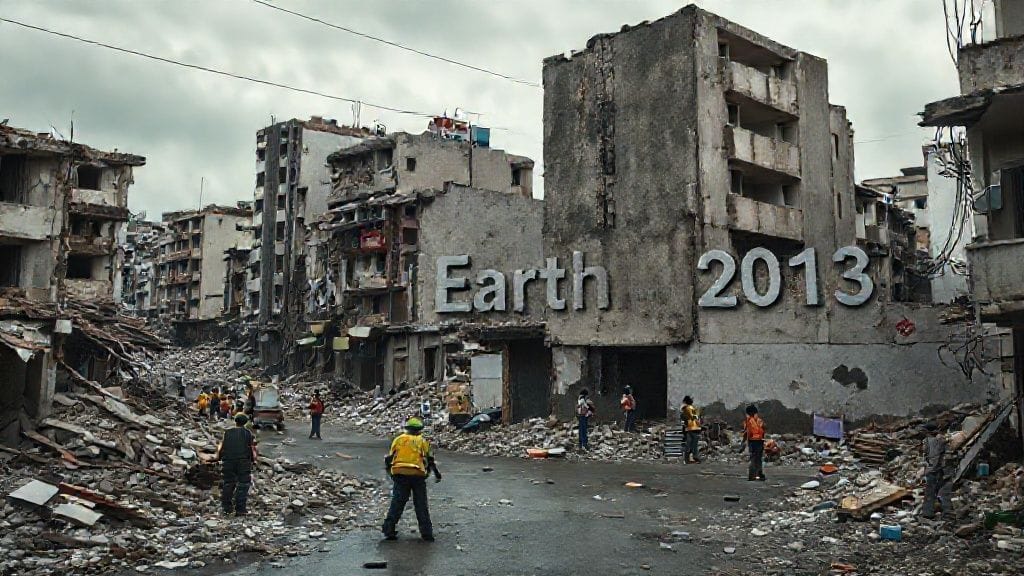
Among the deceased were parents, children, elders — each a thread in the fabric of Boholano society. Schools closed indefinitely as their buildings suffered irreparable damage. Homes, some centuries old and others recently constructed, were reduced to rubble. Entire barangays (villages) faced the heartbreaking task of mourning while rebuilding.
In the mountain town of Loon, damage was nearly total; its iconic centuries-old church, a symbol of local faith, vanished under fragmented stones. The intangible loss was immense — the community’s identity deeply intertwined with these historic edifices.
Cultural Heritage Crumbled: The Ruins of Centuries
Bohol is a treasure trove of heritage: ancient churches dating back to Spanish colonial times, cultural monuments, and palaeo-Christian art. The earthquake battered this legacy with severe force. At least 14 cultural heritage churches suffered major damage, sparking a collective sense of mourning across the nation.
The Baclayon Church, a National Cultural Treasure founded in 1596, lost large sections of its walls and frescoes — priceless relics of Philippine history endangered. The impact was not just architectural but symbolic: a rupture in the historical continuum.
Restoration efforts would later begin, but questions remained—how to balance preservation, modernization, and safety in a future still prone to nature’s unpredictability?
National and International Response: Aid and Solidarity
News of the disaster quickly spread throughout the Philippines and the international community. President Benigno Aquino III declared a state of calamity in affected areas, immediately allocating funds for relief and reconstruction.
Aid poured in: financial support, medical teams, food supplies, and equipment flowed from government agencies, local NGOs, and foreign governments. The United Nations and other global institutions mobilized resources recognizing the scale of destruction.
This widespread solidarity illustrated that disaster transcends borders, eliciting a collective human response to suffering and rebuilding. Yet coordinating these efforts amidst infrastructure collapse was an immense logistical challenge.
Stories of Survival and Courage Amidst the Rubble
Off the ruins and statistics emerged tales of human fortitude. One story recounts a schoolteacher in Bohol who, despite the shaking, calmly led her students out of a collapsing building, saving many lives. Another tells of a fisherman who braved aftershocks to rescue neighbors trapped beneath debris.
These narratives healed alongside physical reconstruction—an emotional underpinning to the island’s recovery. The earthquake, for all its devastation, unveiled the strength of community bonds and the depth of resilience.
Scientific Insights: What the Earthquake Taught Us
Seismologists closely studied the Bohol earthquake, noting its unusual fault activation and its implications for earthquake prediction in the central Philippines. Prior to 2013, Bohol was not listed among the most at-risk zones.
This quake revealed gaps in geological understanding and monitoring infrastructure. New fault lines were mapped, and building codes revisited to incorporate seismic resilience in design. The event also accelerated installation of improved early warning systems.
The science was clear: the earth beneath the Philippines was restless and demanded respect, readiness, and vigilance.
Reconstruction Challenges: Rebuilding Bohol’s Future
The rebuilding process was monumental. Roads, bridges, schools, and health centers required restoration. Yet, limited budgets and logistical hurdles slowed progress.
Authorities struggled to balance rapid reconstruction with maintaining cultural authenticity, especially concerning damaged heritage sites. Local communities pressured for transparency and inclusive planning.
Furthermore, persistent poverty and rural isolation exacerbated difficulties. Sustainable development—rebuilding not just structures but livelihoods—became a central theme.
The Philippine Government’s Role and Policy Shifts
The government faced harsh criticism for delayed responses in some areas and inadequate disaster preparedness. However, the calamity acted as a catalyst for policy reform.
Post-quake, legislative initiatives aimed to strengthen disaster risk reduction frameworks and allocate more resources to local governments. Partnerships developed between national agencies and communities to foster resilience at grassroots levels.
This disaster underscored the urgency of integrating risk management into national development strategies and urban planning.
Psychological Scars: Coping with Trauma and Loss
Beyond physical reconstruction, the emotional toll was profound. Survivors grappled with anxiety, grief, and post-traumatic stress.
Local health services, often underfunded, sought to provide counseling and psychosocial support, while NGOs stepped in with community-based healing programs. Religious institutions also played a significant role, offering hope and spiritual solace.
This dimension of recovery—mental health rehabilitation—is often overlooked but critical to restoring societal well-being after disasters.
Earthquake Preparedness: Lessons for a Seismic Nation
The Bohol earthquake brought into sharp focus the importance of preparedness. Citizens, schools, and businesses slowly began to embrace disaster drills and awareness campaigns.
Government agencies promoted improved building codes, emphasizing quake-resistant construction. Community training became widespread—empowering ordinary people with knowledge and tools.
The experience of 2013 served as a somber yet vital lesson for the entire Philippines, a nation living daily with the threat of natural disasters.
Memory and Memorial: Remembering the Dead of 2013
One year after the quake, memorial services were held across Bohol and the country. Monuments and plaques were erected in key sites to honor those who perished.
Commemoration became a ritual of collective grief and resilience. Stories of victims and heroes were passed down to younger generations—ensuring that remembrance is preserved not as mere history, but as a living part of community identity.
The Quake’s Legacy in Philippine Geology and Society
In the years following the disaster, the Bohol earthquake became a milestone in Philippine geological records. New fault maps and hazard assessments integrate its data, enriching scientific knowledge.
Socially, it spurred reforms that enhanced disaster readiness and community participation. It challenged a nation to reconcile its vulnerability with its determination to survive and thrive.
Economic Impact: How Local and National Economies Fared
The economic shock was significant for Bohol’s thriving tourism industry, agriculture, and fisheries. Immediate losses estimated in hundreds of millions of pesos impaired local livelihoods.
Tourists declined abruptly in the aftermath, though government campaigns gradually restored confidence. Nationally, funds diverted to disaster response impacted other development projects but underscored the high cost of environmental risks.
Nevertheless, reconstruction injected economic activity, creating jobs and revitalizing sectors.
Media Coverage: Narratives of Disaster and Hope
The national and international media attention brought visibility to Bohol’s plight. Images of toppled heritage sites, rescue efforts, and survivor testimonies dominated news cycles.
Yet media also portrayed resilience, emphasizing community spirit and recovery progress. Social media connected separated families and organized aid, demonstrating modern communication’s transformative role in disaster scenarios.
Local Folklore and Earthquake Beliefs Before and After
Traditionally, some Boholanos interpreted earthquakes through cultural lenses—sometimes attributing tremors to spirits or divine warnings. The 2013 quake revived interest in these beliefs while also prompting scientific dialogue.
This interplay highlighted the importance of culturally sensitive approaches in disaster education, blending respect for local narratives with empirical science.
A Global Perspective: The Bohol Earthquake in World Seismology
Though a regional event, the Bohol earthquake captured the attention of geologists worldwide. Its unexpected fault activation broadened understanding of seismic risks in similar island chains.
International collaborations increased, sharing data and expertise to refine prediction models. Bohol’s experience thus contributed to a global effort to mitigate the impact of natural disasters.
The Anniversary Reflections: Resilience and Remembrance
Every year, October 15th in Bohol is a day of reflection. Communities gather—remembering lost loved ones, appreciating continued survival, and renewing commitments to preparedness.
Festivals, memorial masses, and community activities intertwine mourning with hope, symbolizing the journey from tragedy toward recovery.
Final Thoughts: When Nature Reminds Us of Our Fragility
The 2013 Bohol earthquake was not merely an event of geological significance; it was a profound human drama. It laid bare the fragile relationship between mankind and earth, tested social bonds, and compelled reflection on values, priorities, and resilience.
It is incredible, isn’t it? How in less than two minutes, centuries of history and human toil could be reshaped by invisible forces deep underground. Yet, amidst ruins and heartbreak, the spirit of Boholano life persisted—ready to rebuild, remember, and rise again.
Natural disasters are nature’s reminders that human security is always provisional, that preparedness is essential, and that community spirit is often the strongest force after the earth finally stops shaking.
Conclusion
The October 15, 2013 Bohol earthquake remains one of the most significant natural disasters in recent Philippine history. Its raw power uprooted buildings, complex communities, and ancient heritage alike. But beyond destruction, it exposed the immense courage and cohesion of the Filipino people who faced fear with bravery, loss with unity, and uncertainty with resolve.
This event has become a powerful chapter in the archipelago’s ongoing story—one that teaches us about vulnerability but also about hope, recovery, and learning. It underscores how deeply interconnected humanity is with the planet beneath its feet, compelling societies to listen carefully and prepare wisely.
Above all, the Bohol earthquake reminds us that history is made not only by grand conquests or political upheavals but also by the quiet resilience of everyday lives rebuilding in the shadow of calamity.
FAQs
Q1: What caused the 2013 Bohol earthquake?
The earthquake was caused by the sudden rupture of the West Bohol Fault, a previously unmapped fault line in the central Philippines. It was a strike-slip fault activated by tectonic stresses from the Philippine Sea Plate interacting with surrounding plates.
Q2: How powerful was the Bohol earthquake?
It measured 7.2 on the Richter scale, with a shallow depth of about 12 kilometers, which intensified its surface impact.
Q3: What were the main areas affected by the earthquake?
The hardest-hit area was Bohol Island, especially towns like Sagbayan and Loon, with notable tremors felt in neighboring Cebu and distant Mindanao.
Q4: How many people died or were injured in the earthquake?
Approximately 222 people died, over 800 were injured, and tens of thousands were displaced.
Q5: What was the impact on cultural heritage in Bohol?
At least 14 heritage churches, including the historic Baclayon Church, suffered severe damage or destruction, representing a significant cultural loss.
Q6: How did the government respond after the earthquake?
The government declared a state of calamity, mobilized aid, and later implemented policy reforms to improve disaster preparedness and risk reduction.
Q7: What lessons were learned regarding disaster preparedness?
The earthquake underscored the importance of accurate fault mapping, stronger building codes, public education on safety protocols, and the need for emergency response infrastructure.
Q8: How is the Bohol earthquake remembered today?
October 15 is commemorated annually with memorials, religious services, and community events honoring victims and reflecting on resilience.