Table of Contents
- The Dawn of October 28, 1983: A Day Like No Other
- Setting the Stage: The Geological Heart of Idaho
- The Silent Forces Beneath: Tectonic Tensions and Fault Lines
- The First Tremor: Borah Peak Shakes the Earth
- The Immediate Impact: Shattered Homes and Shaken Communities
- Voices from the Epicenter: Personal Accounts of Fear and Resilience
- Science in Action: Measuring the Magnitude and Aftershocks
- Challis and Cascade: Two Towns Reshaped by the Quake
- Emergency Response: Local and Federal Mobilization
- The Earth’s Cracks: Physical Changes in Idaho’s Landscape
- Economic Aftershocks: Recovery Amidst Ruin
- The Human Cost: Injuries, Trauma, and Loss
- Media Spotlight: Broadcasting the Disaster to the Nation
- Lessons Learned: Advances in Seismology and Preparedness
- Remembering Borah Peak: Memorials and Historical Memory
- The Quake’s Legacy: Why 1983 Still Resonates in Idaho
- The Broader Picture: Earthquake Risks Across the Intermountain West
- How Borah Peak Changed Building Codes and Urban Planning
- The Role of the US Geological Survey: Tracking the Unpredictable
- Stories of Hope and Reconstruction in the Aftermath
- Comparing Borah Peak to Other Notorious U.S. Earthquakes
- Earthquake Science Then and Now: From 1983 to Today
- Conclusion: Reflections on Nature’s Raw Power and Human Endurance
- FAQs: Understanding the Borah Peak Earthquake Better
- External Resource
- Internal Link
The dawn of October 28, 1983, broke over the vast, rugged landscapes of central Idaho with a deceptive calm. The sun climbed slowly over the Sawtooth Mountains, casting long shadows over dense forests and quiet towns. In Challis, a town nestled within the Challis Volcanic Field, life went on like any other autumn day. Yet beneath this serene tableau, the Earth was preparing to roar.
At 8:06 a.m. Mountain Daylight Time, the ground convulsed with a force that would etch itself indelibly into Idaho’s history. A massive earthquake, registering a powerful 6.9 on the moment magnitude scale, violently ruptured the earth near Borah Peak—the highest point in Idaho. For three long, terrifying minutes, the very bones of the landscape shifted, collapsing homes, trembling mountainsides, and fracturing lives.
This was no ordinary quake. It was the largest seismic event ever recorded in the state—a raw, dramatic reminder of the restless, unpredictable power lurking beneath America’s peaceful heartland.
But to fully grasp the significance of this moment, we must journey deeper—into the geological forces that shaped the region, into the lives of the people who felt the earth shift beneath their feet, and into the aftermath that reshaped communities for decades to come.
Idaho’s terrain is a complex tapestry woven by ancient volcanic activity, mountain-building forces, and slow tectonic shifts. The Borah Peak earthquake erupted in the midst of the Lost River Range, an imposing fault-block mountain range formed by millions of years of geological deformation. This area lies along the Intermountain Seismic Belt—a notorious zone stretching from Montana to Nevada, known for recurrent seismic activity.
Unlike California, where the San Andreas Fault dominates, Idaho’s seismicity results from extensional tectonics—where the earth’s crust stretches and fractures, creating faults that occasionally snap to produce earthquakes. The Lost River Fault, a normal fault running beneath Borah Peak, had been accumulating stress over centuries, hidden from human eyes but waiting to release.
In the decades leading up to 1983, Idaho’s seismic risk was acknowledged but often underestimated. The region’s sporadic tremors did little to prepare residents for a jolting event on this scale. It was a tectonic powder keg poised to pour forth its pent-up energy.
On the morning of October 28, that tension was shattered.
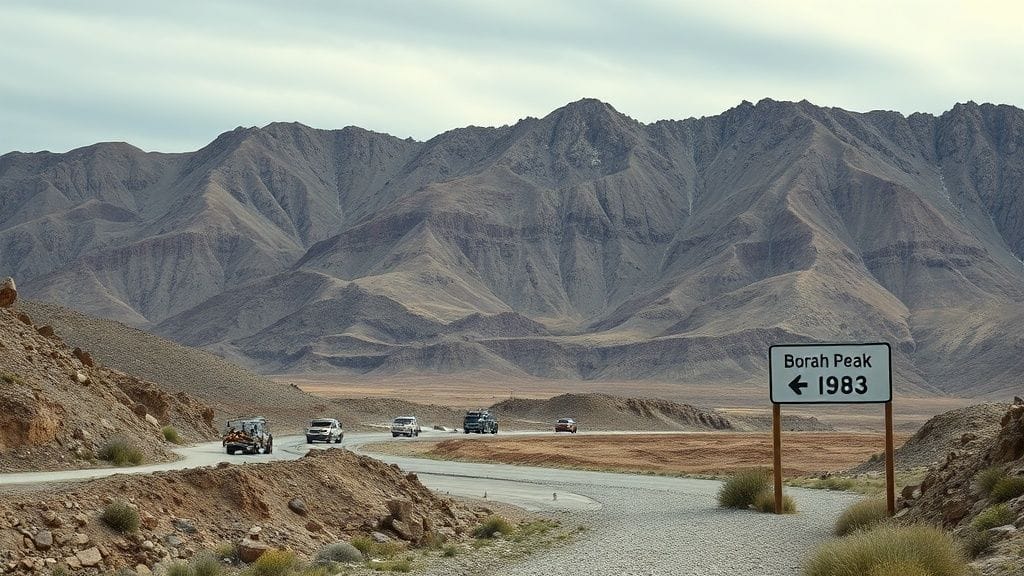
The Borah Peak earthquake began with a violent rupture along the Lost River Fault. The earth thrust upward in a dramatic fault scarp climb that raised the peak by nearly four feet. Within the first seconds, the shaking was so intense that wooden houses swayed like fragile toys while windows shattered, and roads twisted into serpentine distortions. The quake lasted approximately three minutes—a seemingly endless ordeal for those caught within.
Nearby towns like Challis and Cascade, positioned within a 15-mile radius of the epicenter, experienced the brunt of destruction. Buildings that had stood for generations crumbled; infrastructure such as bridges and water lines snapped under the strain. Yet, remarkably, despite the ferocity of the shaking, there was only one reported fatality, a testament perhaps to the relatively low population density and early warning instincts of residents.
Eyewitnesses remember the terrifying shock vividly. In the ruins of a collapsed building, one woman reportedly said, “The ground moved beneath me like it was alive—rolling, twisting—nothing felt solid anymore.” Another recalled the disorienting sensation as the horizon tilted and the mountains seemed to sway.
Seismologists sprang into action, deploying field teams to measure aftershocks that rippled through Idaho for days. The US Geological Survey (USGS) used data from seismometers to map the fault rupture, revealing a complex pattern of ground displacement extending over 28 miles. The quake produced hundreds of aftershocks, some registering magnitudes over 5, reminding the region that the earth’s restlessness had not settled.
Emergency services mobilized swiftly. Helicopters scanned the affected areas; medical teams tended to the injured; townspeople banded together to provide shelter and supplies. Roads damaged by the quake hampered aid deliveries, but community resilience shone as neighbors helped neighbors—just as they always had in the rugged Idaho wilderness.
In the wake of the quake, the landscape itself bore scars impossible to ignore. Highway 93, a key artery through the region, was buckled and closed for weeks. Landslides reshaped slopes; new cliffs tore open mountain faces. The massive fault scarp near Borah Peak—the visible uplift where the ground had jumped—was studied eagerly by geologists worldwide.
Economically, the region was dealt a hard blow. With much of the local infrastructure damaged, small businesses faced uncertain futures. Agricultural operations, vital to the area’s economy, suffered from disrupted irrigation and damaged farmland. Federal and state aid programs were swiftly implemented, but full economic recovery would take years.
Human suffering extended beyond the structural destruction. Many survivors faced psychological trauma, grappling with the fear of aftershocks and the uncertainty of rebuilding their homes and lives. Schools were temporarily closed, children struggled with stress, and entire communities mourned the disruption of their tranquil routines.
Media coverage brought the Borah Peak earthquake into the national spotlight, a relatively rare focus for a seismic event occurring outside of traditional earthquake hotspots. News footage captured dramatic images of damaged homes and fractured terrain, while interviews with survivors conveyed palpable emotion and resilience. These narratives, broadcast across the country, contributed to a growing awareness of earthquake risks beyond California and Alaska.
From a scientific perspective, the event was a watershed moment. It galvanized advancements in seismic monitoring and hazard assessment within the region. The USGS expanded sensor networks; local governments began reassessing building codes to better withstand future quakes. Borah Peak became a case study illustrating the risk posed by “intraplate” earthquakes—those occurring within tectonic plates rather than at their boundaries.
Remembering the 1983 earthquake has taken various forms. Memorial plaques and small museums commemorate the lives affected and the dramatic earth shifts visible in the landscape. Every anniversary sees remembrance ceremonies, reaffirming community strength and respect for nature’s formidable power.
Today, as Idaho continues to grow and urbanize, the legacy of Borah Peak endures. The earthquake reshaped not only the physical terrain but also the collective consciousness regarding natural hazards. Emergency preparedness initiatives, public education on seismic risk, and an ongoing commitment to scientific vigilance are direct heirs of the 1983 event.
Idaho remains a land of enduring beauty and rugged wilderness—but beneath its quiet facade, the earth pulses with ancient energy. Borah Peak was a vivid demonstration that this energy, though dormant most of the time, can awaken with sudden and overwhelming force.
The 1983 quake is often compared to other significant earthquakes in the U.S., including the 1971 San Fernando earthquake in California and the 1989 Loma Prieta event. While smaller in magnitude compared to some, Borah Peak’s impact was profound in its context—reminding that seismic risks are ubiquitous, unpredictable, and demand respect.
The science of earthquakes has evolved significantly since 1983. Today’s networks can detect tremors within seconds, and innovations in building technologies offer hope for reducing damage. But the raw lessons of Borah Peak—the ground breaking open, the mountains rising, the communities shaken—remain timeless.
Conclusion
The Borah Peak earthquake of October 28, 1983, was more than a geological event—it was a moment of reckoning between humanity and the powerful, often unseen forces of nature. It tested the resilience of Idaho’s communities, forever altered a striking landscape, and advanced our understanding of earthquake science in the Intermountain West.
Beyond the cracks in the earth and the damaged homes, the quake told a human story. One of fear and loss, certainly—but also one of courage, solidarity, and hope. From the trembling earth emerged a renewed commitment to preparedness and to honoring the strength of the human spirit.
The memory of that morning reminds us all: beneath the calm veneer of our world lies a restless planet. It urges vigilance, respect, and care—for nature’s power is ancient, inevitable, and awe-inspiring.
FAQs
Q1: What caused the Borah Peak earthquake?
A1: The earthquake was caused by a sudden rupture along the Lost River Fault, a normal fault in the extensional tectonic regime of the Intermountain Seismic Belt, releasing accumulated tectonic stress.
Q2: How strong was the earthquake?
A2: The main shock registered a magnitude of 6.9, making it the largest recorded earthquake in Idaho’s history.
Q3: Were there any casualties?
A3: Remarkably, only one fatality was officially reported, though numerous injuries and extensive property damage occurred.
Q4: How did the earthquake affect the local landscape?
A4: It caused a large fault scarp, uplift of Borah Peak by nearly four feet, landslides, road damage, and permanent ground displacement along the fault zone.
Q5: What was the response of local authorities?
A5: Emergency responders quickly provided medical aid, search and rescue efforts, and coordinated with federal agencies for disaster relief and reconstruction.
Q6: Did the earthquake lead to changes in building codes?
A6: Yes, the event prompted a reassessment of building codes in Idaho to improve earthquake resistance and led to better seismic monitoring infrastructure.
Q7: Is Idaho still at risk for similar earthquakes?
A7: Yes, the Intermountain Seismic Belt remains an active seismic zone, and the risk persists, making preparedness essential.
Q8: How is the Borah Peak earthquake remembered today?
A8: Through memorials, historical studies, anniversary commemorations, and its role in seismic education and civic readiness in Idaho.