Table of Contents
- The Dawn of a New Era: The Opening Battle of the Boshin War
- Japan on the Brink: The Political and Social Landscape of 1867
- The Tokugawa Shogunate in Decline: Power, Tradition, and Resistance
- The Rise of the Imperial Loyalists: Satsuma, Choshu, and the Vision of Restoration
- Kyoto’s Tenuous Peace: The Shogunate’s Last Stand in the Imperial Capital
- January 27, 1868: The Clash at Toba–Fushimi Unfolds
- The Art of War Transformed: Modern Weapons and Tactics in a Feudal Conflict
- From Skirmishes to Siege: Key Moments of the Battle
- Courage and Chaos: Personal Stories from the Battlefield
- The Crumbling Shogunate: Defeat and Disorder Aftermath
- The Flight of Tokugawa Yoshinobu: A Leader’s Dilemma and Legacy
- The Imperial Court Reclaims Authority: Symbolism and Reality
- The Ripple Effect: How Toba–Fushimi Changed the Course of Japanese History
- Reconfiguration of Power: The Fall of Feudalism and the Rise of Meiji Japan
- Remembering Toba–Fushimi: Memory, Myth, and Modern Reflection
- Conclusion: The Battle That Heralded Change and the Making of Modern Japan
- FAQs About the Boshin War and the Toba–Fushimi Battle
- External Resource
- Internal Link
The Dawn of a New Era: The Opening Battle of the Boshin War
In the cold, mist-shrouded air of late January 1868, a clash erupted that would forever alter the trajectory of Japan. The sun struggled to break through the dense fog clinging to the fields around Kyoto, as if the heavens themselves hesitated to witness the turmoil below. The air crackled not with the eerie silence of peaceful winter but with the distant murmurs of battle preparations.
Here, at the villages of Toba and Fushimi—mere miles from the ancient imperial capital—forces loyal to the aging Tokugawa Shogunate faced those championing the imperial restoration. The Boshin War, a brutal civil conflict veiled in the promise of modernization and unity, began with these ferocious confrontations. This was more than a military engagement; it was a symbolic rupture between Japan’s feudal past and a much-needed future under the restored emperor.
The story of Toba–Fushimi is not just one of armies and strategies but of ideologies embattled by time and circumstance. It invokes images of samurai honor clashing with industrial-age ambition; it was a pivotal moment pregnant with hope, fear, and the agony of inevitable change.
Japan on the Brink: The Political and Social Landscape of 1867
To understand why the Boshin War ignited at this exact place and time, one must step back into the intricate weave of Japan’s late-Edo period society. The early 1860s had cast the Tokugawa Shogunate into turmoil. After two centuries of relative peace and rigid isolationism under the policy of sakoku, Japan was suddenly thrust into contact with the West, which brought with it inevitable demands for reform and openness.
The Perry Expedition in 1853 had shattered the façade of seclusion, forcing the shogunate into unequal treaties that deeply humiliated many samurai and daimyos (feudal lords). The rapid intrusion of Western technology, culture, and military superiority sowed the seeds of discord within the ruling elite—between those yearning to preserve the status quo and those pressing for a decisive embrace of modernization.
Meanwhile, the emperor, long a figurehead residing quietly in Kyoto, began to be seen by many as the legitimate symbol of unity and national renewal. This rising imperialist sentiment found powerful champions in several domains, notably Satsuma and Choshu, whose leaders dreamed not just of restoring imperial power but of shaping a future Japan capable of standing shoulder to shoulder with the West.
The Tokugawa Shogunate in Decline: Power, Tradition, and Resistance
The Tokugawa family had ruled Japan for over 250 years, their regime built on a strict hierarchical social order and fierce loyalty from samurai retainers. But by the 1860s, cracks were unmistakable. Tokugawa Yoshinobu, the 15th and last shogun, faced forces far beyond samurai swords: political dissent, foreign pressure, economic hardship, and his own court’s skepticism.
Many within the shogunate resisted change outright. They feared that opening Japan would erode their centuries-old privileges. Yet Yoshinobu was a man pragmatically aware that Japan must modernize to survive—an uneasy reformer caught between reaction and revolution.
Internal divisions weakened the shogunate’s ability to respond effectively, while the extremist imperial loyalists gained momentum. The stage was set for a violent reckoning.
The Rise of the Imperial Loyalists: Satsuma, Choshu, and the Vision of Restoration
The domains of Satsuma and Choshu, farthest from Edo yet most fiercely devoted to the cause of the emperor, emerging as leaders of the anti-shogunate coalition. They merged traditional samurai valor with newfangled military technology—importing firearms, steamships, and Western-style artillery.
Their vision transcended mere political power; they sought to rebuild Japan on a model that honored imperial legitimacy while spurring modernization and centralization. The seeds for the Meiji Restoration were sown here, their push bolstered by young, idealistic samurai burning with nationalistic fervor.
Their alliance was fragile but ardent, united against the looming specter of Tokugawa rule.
Kyoto’s Tenuous Peace: The Shogunate’s Last Stand in the Imperial Capital
By January 1868, Kyoto was a city engulfed by uncertainty. The court—traditionally a spiritual and ceremonial center—had become a battleground. Allies of both factions moved clandestinely, aware that the city was the symbolic heart of the nation.
Tokugawa forces controlled parts of the city, but with diminishing authority. Imperial loyalists swarmed in, emboldened not only by military strength but by political legitimacy from Emperor Meiji himself. The atmosphere was electric, told through whispered rumors and midnight meetings among nobles and samurai alike.
At Toba and Fushimi, south and east of Kyoto, confrontation was inevitable.
January 27, 1868: The Clash at Toba–Fushimi Unfolds
Early dawn saw the first volleys. Around 3,000 shogunate troops, supported by traditional samurai armed with katana and matchlock rifles, faced a coalition of roughly equal strength—many equipped with more modern, Western-style firearms.
The battle raged fiercely along narrow roads and village outskirts. Imperial forces used quick, coordinated assaults and tactical positioning to outflank the perilously entrenched shogunate defenders.
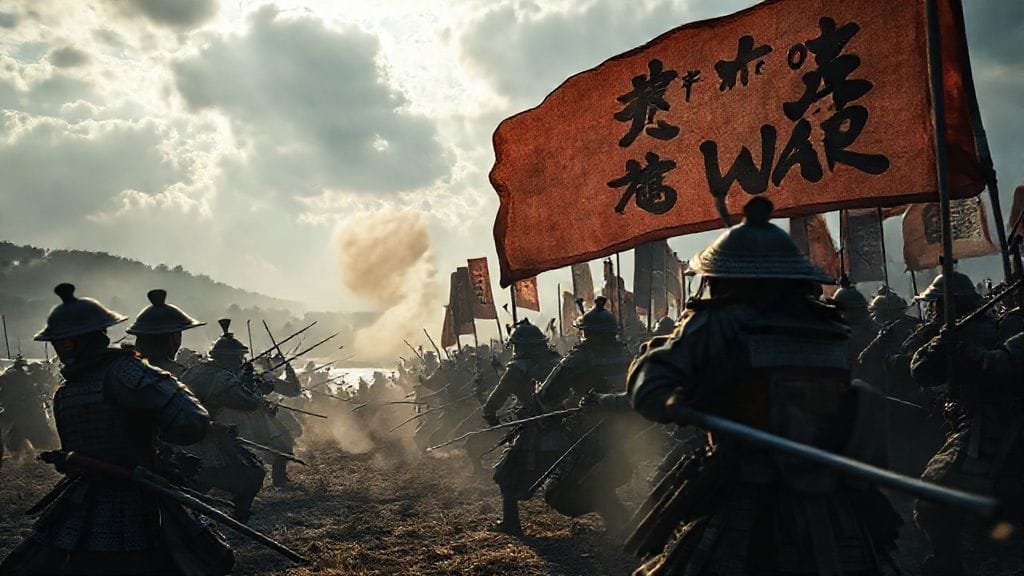
What makes this encounter particularly gripping is how tradition met innovation: samurai charging with swords clashing as artillery boomed in the background. Musket fire streaked through wooden buildings, and the very ground trembled beneath the trampling feet of foot soldiers.
Yet despite the chaos, discipline among the imperial loyalists proved decisive.
The Art of War Transformed: Modern Weapons and Tactics in a Feudal Conflict
The Battle of Toba–Fushimi was one of the first in Japanese history where Western military technology turned the tide decisively. The shogunate’s forces were hampered both by outdated training and inferior armaments.
Imperial troops, many trained by French military advisors and equipped with conscripted rifles and cannons, demonstrated the potency of modernization. Commanders like Saigo Takamori and Kido Takayoshi combined samurai courage with smart adaptation to the realities of contemporary warfare.
This clash underscored a broader truth: the era of the sword-wielding warrior alone was slipping away, replaced by armies shaped by industrial-age weaponry and organization.
From Skirmishes to Siege: Key Moments of the Battle
Despite early resistance, shogunate troops found themselves increasingly outmaneuvered. After initial hesitation, the loyalist forces pressed their advantage, cutting off supply lines and utilizing railway lines to reinforce positions rapidly.
One dramatic moment arrived when a detachment of shogunate samurai heroically held a narrow mountain pass, fighting to the last man to delay the imperial advance. Their sacrifice allowed remnants of the shogunate’s core forces to regroup—but only briefly.
By day's end, the loyalists controlled the strategic points at Toba and Fushimi, effectively sealing their victory.
Courage and Chaos: Personal Stories from the Battlefield
Amid the smoke and fury, individual tales emerge—like that of Hijikata Toshizo, the feared vice-commander of the Shinsengumi, the shogunate’s elite police unit. Though not directly at Toba–Fushimi, his desperate resistance echoes the intense loyalty and bravery displayed on both sides.
On the imperial side, the resolute leadership of Saigo Takamori, who combined military skill with a philosophical vision of restoration, inspired countless soldiers to fight not just for victory but for a shared future.
Soldiers on both sides bore the brunt of history’s turbulent currents—sacrificing life, honor, and a way of life soon to vanish.
The Crumbling Shogunate: Defeat and Disorder Aftermath
As night fell on January 27, the Tokugawa forces withdrew chaotically toward Edo (modern-day Tokyo). This defeat shattered the shogunate’s aura of invincibility and precipitated a rapid disintegration of their power.
Confusion and fear rippled through the ranks; many samurai began defecting or surrendering. The shogun himself, Tokugawa Yoshinobu, faced the grim reality that his reign may soon end.
This battle was not just a military loss—it was a symbolic death knell.
The Flight of Tokugawa Yoshinobu: A Leader’s Dilemma and Legacy
Tokugawa Yoshinobu’s decision to retreat and eventually cede power was fraught with personal and political complexity. Was he a coward or a pragmatist? History paints him largely as a man trapped by circumstance, striving unsuccessfully to preserve peace while modernizing Japan.
His flight from Kyoto marked the effective end of shogunal rule, but also prevented total annihilation of Tokugawa lineage and status. His legacy remains nuanced—neither villain nor hero, but a reluctant actor in a rapidly changing world.
The Imperial Court Reclaims Authority: Symbolism and Reality
With Toba–Fushimi’s victory, the Imperial Court reasserted itself visibly for the first time in centuries. Yet this restoration was not a simple return to traditions. The young Emperor Meiji became a symbol of unity and progress, harnessed by reformers eager to transform Japan.
The court’s authority was more than ceremonial—it was backed by an army, a vision, and the momentum of inevitable change.
From this moment, a completely new Japan would emerge.
The Ripple Effect: How Toba–Fushimi Changed the Course of Japanese History
The victory at Toba–Fushimi ignited a domino effect. The Boshin War raged for another year but this battle effectively decided the fate of the shogunate.
Domains across Japan aligned with the imperial cause, accelerating the dismantling of feudal domains, replacing samurai privileges with modern institutions. The Meiji Restoration opened the door to sweeping reforms that to this day shape Japan.
Reconfiguration of Power: The Fall of Feudalism and the Rise of Meiji Japan
Following the shogunate’s fall, Japan embraced rapid industrialization, western-style governance, and military reform. From education to infrastructure, society reshaped itself.
But beneath this transformation lay tensions—between tradition and innovation, unity and local identity—that echoed back to the heated battles fought around Kyoto.
Remembering Toba–Fushimi: Memory, Myth, and Modern Reflection
Today, Toba and Fushimi stand as solemn reminders of a turning point. Memorials and museums commemorate the valor and sacrifice on both sides.
The battle is remembered not just as a military event but as a crucible forging modern Japan. It invites reflection on the costs of change, the complexity of leadership, and the enduring question of how societies bridge past and future.
Conclusion
The Battle of Toba–Fushimi was a moment charged with the raw energy of a nation in upheaval. It was a struggle not merely for territory or political dominance but for Japan’s soul. The clash of swords and muskets, the smoke over Kyoto’s old hills, the courageous cries of samurai and conscripts alike—all speak to a painful yet hopeful transition.
From the ashes of that fog-laden morning emerged a Japan transformed, eager to embrace a future where the ideals of unity, strength, and modernization would shape not only an empire but a global player.
The echoes of Toba–Fushimi remind us: history is alive, violent in its change but also beautiful in its possibility. And in that battle’s blood and fire, the birth of modern Japan was inscribed forever.
FAQs About the Boshin War and the Toba–Fushimi Battle
Q1: What were the main causes of the Boshin War?
A1: The Boshin War was driven by political tensions between the declining Tokugawa Shogunate and factions loyal to restoring imperial rule, fueled by Japan's urgent need to modernize amid Western pressure.
Q2: Why was the Battle of Toba–Fushimi so significant?
A2: It was the first major clash marking the start of the Boshin War, resulting in a decisive imperial victory that undermined the shogunate’s power and propelled the Meiji Restoration forward.
Q3: Who were the key leaders involved in the battle?
A3: Tokugawa Yoshinobu led the shogunate forces, while the imperial side counted figures like Saigo Takamori and Kido Takayoshi among its commanders.
Q4: How did modern weapons influence the battle?
A4: The imperial forces' use of Western-style rifles and artillery proved decisive against the shogunate's more traditional weaponry, signaling a shift toward modern warfare in Japan.
Q5: What happened to Tokugawa Yoshinobu after the battle?
A5: He retreated to Edo and later peacefully surrendered power, preserving his family's status but ending shogunal rule.
Q6: How did this battle affect Japanese society and governance?
A6: It precipitated the fall of feudal Japan and ushered in the Meiji era, characterized by centralization, modernization, and rapid industrial growth.
Q7: How is the battle remembered in Japan today?
A7: Through monuments, museums, and education, Toba–Fushimi is seen as a symbol of transition and the sacrifices made for Japan’s modernization.
Q8: Did all samurai support the imperial cause?
A8: No, samurai loyalties were divided; many fought for the shogunate, while others embraced the imperial cause, reflecting a fractured society.