Table of Contents
- The Dawn of a New Conflict: January 19, 1839
- Aden Before the British: A Strategic Gateway
- Imperial Rivalries and the Race for Influence in the Arabian Peninsula
- The British East India Company: Protecting the Lifeline to India
- The Geopolitical Chessboard: Ottoman, Yemeni, and Local Powers
- British Motives: Trade, Security, and Colonial Ambitions
- The Preparations for Invasion: Ships, Soldiers, and Strategy
- The Siege and Capture of Aden: A Tale of Fire and Fortitude
- Resistance and Reaction: Local Tribes and Ottoman-Aligned Forces
- Aden Transformed: From Fort to Crown Colony
- The Port’s Role in the Struggle Against Piracy and the Slave Trade
- Aden as a Coaling Station: The Fuel for the British Steam Navy
- The Human Cost: Soldiers, Civilians, and the Changing Social Fabric
- The Ripple Effects: Aden’s Impact on Regional Politics
- Britain’s Stepping Stone to Empire in the Arabian Peninsula
- Aden in the Global Context: Trade Routes and Naval Dominance
- The Legacy of British Rule: Infrastructure, Culture, and Control
- Resistance Movements and the Seeds of Modern Yemen
- Aden Through the Eyes of Its New Masters: Letters and Reports
- Conclusion: The Long Shadow of 1839
- FAQs About the British Seizure of Aden
- External Resource
- Internal Link
1. The Dawn of a New Conflict: January 19, 1839
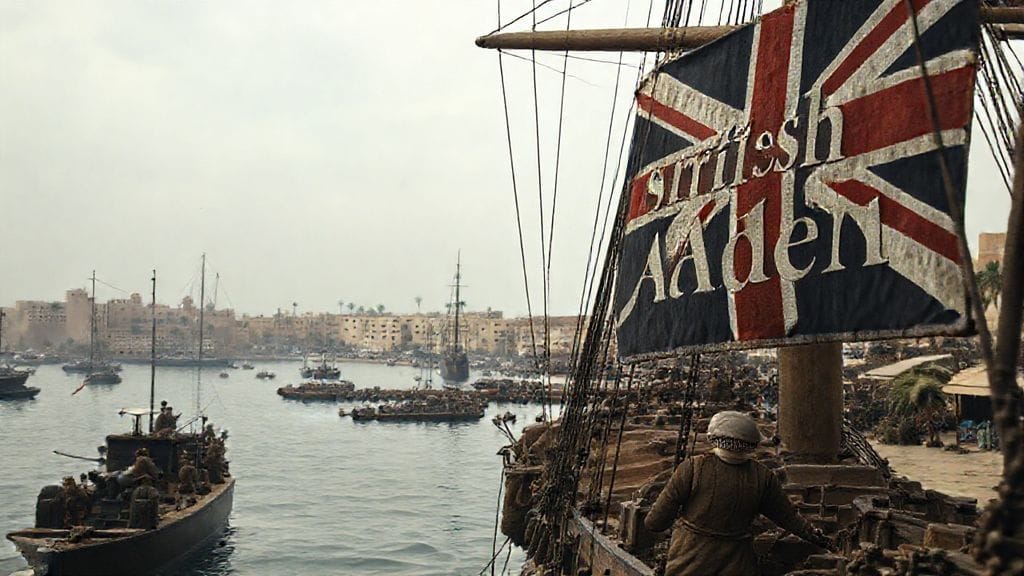
On a humid, shimmering morning of January 19, 1839, amid the swirling dust of a subtle desert breeze, British flags rose triumphantly over the distant turquoise waters of the Red Sea. For the first time, the Union Jack fluttered above the ancient port city of Aden—its fortress walls scarred by the recent shelling, its streets echoing with the uneasy silence of conquest. The British seizure of Aden marked the opening of a new chapter in Arabian history, a moment where the imperial tide of Britain reached deep into southern Arabia, driven by ambition, strategic calculation, and the far-reaching reach of empire.
It was not merely a military operation; it was a decisive act with reverberations across continents, forever altering the fate of a city and its people.
2. Aden Before the British: A Strategic Gateway
Long before the British arrived, Aden was no stranger to commerce and conquest. Perched at the southern tip of the Arabian Peninsula, it commanded the entry to the Red Sea, a vital corridor leading to the Suez Isthmus—and eventually to the fabled riches of India and the Far East. Controlled variously by local sultans, Ottoman governors, and tribal confederations, Aden had always been a prize coveted for its strategic location.
Its natural harbor was a sanctuary for merchants and travelers, a melting pot of cultures—Yemeni, Somali, Indian, Persian, Ottoman—and a crucible of the region's complex politics. Yet, by the early 19th century, Aden’s importance became greater than ever: the rise of steamship technology, the shifting routes of global trade, and the politics of empire cast a new spotlight on this ancient port.
3. Imperial Rivalries and the Race for Influence in the Arabian Peninsula
The Arabian Peninsula in the 1830s was a chessboard of imperial interests, tribal allegiances, and fragile sultanates. The Ottoman Empire, though waning, nominally claimed sovereignty over parts of Yemen and Aden. Local rulers wielded varying degrees of autonomy, balanced precariously between competing forces.
Britain’s burgeoning empire, centered on India, viewed control of the southern Arabian coast as indispensable for securing sea routes and projecting power. The French, too, eyed the region, while regional powers sought to guard their territories. In this tangle of ambitions, the British decision to seize Aden was less an isolated military operation than the latest move in a grand strategic game.
4. The British East India Company: Protecting the Lifeline to India
At the heart of British imperial interest was the East India Company, a mercantile and military giant that governed vast swathes of India. The Company had long recognized the vulnerability of its Indian holdings to threats by sea—pirates, rival European powers, and others.
Aden, with its commanding position over the Bab-el-Mandeb strait, represented a linchpin in these global trade routes. Control of Aden meant safeguarding the sea lanes to Bombay and Calcutta, ensuring the free flow of goods, information, and military reinforcements. It meant securing coaling stations vital for the new steam ships and providing a staging ground for further influence in Arabia and Africa.
5. The Geopolitical Chessboard: Ottoman, Yemeni, and Local Powers
Despite nominal Ottoman sovereignty over parts of Yemen, the empire’s hold was tenuous. Tribal chiefs and sultans exercised de facto control over their domains, responding variably to Ottoman governors and external pressures.
The British, understanding the fractious reality on the ground, knew that military conquest was only part of the challenge. Aden’s hinterlands were dominated by fiercely independent tribes not eager to yield their autonomy or succumb to foreign domination.
Ottoman officials decried the British move as an intrusion into their territory, but their capacity to respond was limited by internal difficulties and regional weakness.
6. British Motives: Trade, Security, and Colonial Ambitions
British motives to capture Aden were manifold. At the surface, it was about securing a port for steamships and guarding maritime routes against threats—especially piracy, which had long plagued the Red Sea. But deeper still lay the logic of empire: extending Britain’s reach, projecting power, and maintaining naval supremacy.
The seizure also reflected a strategic pre-emptive move against French ambitions in the region and a hedge against Ottoman decline, which could create a power vacuum inviting instability.
7. The Preparations for Invasion: Ships, Soldiers, and Strategy
The British expeditionary force that arrived off Aden consisted of naval vessels, artillery, and troops—primarily from the East India Company’s army in India. Commanded by Captain Haines of the Indian Marine, and Colonel S. Thackwell, the operation was meticulously planned.
Ships deployed anchored strategically offshore, their cannons aimed at the fortifications guarding Aden. Diplomatic envoys had attempted negotiation, but the refusal from local rulers hardened British resolve for force.
8. The Siege and Capture of Aden: A Tale of Fire and Fortitude
The battle for Aden was brief but intense. British cannons opened fire on January 19, battering the city’s defenses with relentless bombardment. The fortress guarding Aden, though ancient, was no match for British firepower and discipline.
Local defenders, a mix of tribal fighters and Ottoman troops, fought fiercely but were ultimately overwhelmed. The surrender of Aden’s fortress was formalized in the early afternoon, the Union Jack hoisted amid cheers from British sailors and soldiers.
The city stood silent but conquered—a gateway into the Arabian Peninsula now under British dominion.
9. Resistance and Reaction: Local Tribes and Ottoman-Aligned Forces
Control of Aden was only the beginning. The British soon found themselves confronting resistance not just from Ottoman officials distant and incapable of swift action, but from local tribes determined to resist foreign rule.
Raids, skirmishes, and proxy conflicts marked the early years of British occupation. Aden’s hinterland remained largely untamed, a stubborn frontier resisting colonial pacification. British administrators and military officers chronicled these challenges in letters filled with a mixture of frustration and admiration for local fighters’ tenacity.
10. Aden Transformed: From Fort to Crown Colony
Recognizing Aden’s strategic importance, the British solidified their hold, transitioning Aden into a Crown Colony in 1937—almost a century after its initial capture.
Infrastructure projects reshaped the city: docks expanded, telegraph lines installed, and roads built. Aden became a bustling entrepôt, catering to an international clientele and an increasingly diverse population. The transformation underscored British strategic priorities but also altered the city’s social and cultural fabric.
11. The Port’s Role in the Struggle Against Piracy and the Slave Trade
Piracy had long plagued the Red Sea shipping lanes, threatening commerce and security. British occupation of Aden brought concerted efforts to suppress pirates.
Moreover, the British positioned Aden as a center for combating the regional slave trade, intertwined with the naval patrols of the Indian Ocean and Red Sea. The port became a nexus for abolitionist policy as well as imperial economic interests, mixing moral narratives and realpolitik.
12. Aden as a Coaling Station: The Fuel for the British Steam Navy
The advent of steamships revolutionized naval warfare and global travel. Yet steam technology depended on a network of coaling stations where ships could refuel.
Aden’s deep harbor and strategic position made it ideal as a coaling station, vital for maintaining British naval supremacy between the Mediterranean and Indian Ocean. This logistical role elevated Aden’s geopolitical importance beyond mere territory, tying it into the engines of empire and industrial power.
13. The Human Cost: Soldiers, Civilians, and the Changing Social Fabric
War and empire have human faces—soldiers far from home, civilians caught in the maelstrom of change.
The conquest and occupation brought suffering and upheaval. British soldiers faced harsh desert conditions, disease, and guerrilla warfare. Local populations grappled with the imposition of foreign rule, social disruption, and economic transformation.
Yet Aden also became a crossroads where cultures mingled—Arab, British, Indian sailors and merchants, African porters—each weaving new threads into the city's complex tapestry.
14. The Ripple Effects: Aden’s Impact on Regional Politics
The British seizure set off a chain reaction in regional politics. Neighboring sultanates recalibrated alliances, tribal coalitions formed in response, and Ottoman officials scrambled for influence.
Aden’s capture emboldened Britain’s stance in the Red Sea and Arabian Peninsula, signaling a new era of colonial engagement. It also sowed the seeds for later conflicts and nationalist movements, as imperial imposition provoked resistance.
15. Britain’s Stepping Stone to Empire in the Arabian Peninsula
Aden became Britain’s beachhead in Arabia. From this foothold, British influence extended gradually inland through treaties, military expeditions, and alliance-building with local rulers.
The port was a vital node in the chain of stations stretching from Egypt to India—a testament to how strategic geography shapes imperial reach.
16. Aden in the Global Context: Trade Routes and Naval Dominance
By controlling Aden, Britain anchored its dominance over the newly opened Suez Isthmus route—an artery linking Europe, Africa, and Asia.
The control of Aden illustrated how global trade and naval power were intertwined. The seizure was not just local conquest but a strategic assertion shaping 19th-century globalization, maritime safety, and imperial logistics.
17. The Legacy of British Rule: Infrastructure, Culture, and Control
British rule left a lasting imprint on Aden. Victorian architecture, the introduction of new administrative systems, schools, and health infrastructures transformed the city.
Yet colonial rule also entrenched inequalities, reshaped identities, and sowed ambivalence—admired by some, resented by others. This dual legacy colors Aden’s history to this day.
18. Resistance Movements and the Seeds of Modern Yemen
British domination fueled nationalist sentiments and resistance movements. Across decades, local leaders and populations pushed back, nurturing the idea of Yemeni self-determination.
Later 20th-century struggles for independence had their distant roots in the era inaugurated by the 1839 seizure, linking empire to the modern narratives of decolonization.
19. Aden Through the Eyes of Its New Masters: Letters and Reports
Historical archives preserve vivid accounts from British officers, sailors, and administrators. Their letters reveal a spectrum of views: fascination, disdain, admiration, and the ever-present anxiety of holding a distant post under hostile skies.
These personal documents humanize the event, offering a window into the complexities of empire on the ground.
20. Conclusion: The Long Shadow of 1839
The British seizure of Aden in 1839 was a defining moment at the crossroads of empire, trade, and culture. It inaugurated British influence in southern Arabia, secured vital maritime routes, and reshaped a city's destiny.
Yet it also marked the beginning of lasting struggles—between empire and local sovereignty, between modernity and tradition. The echoes of that January day still ring through Aden’s streets, reminding us how history lives in places and people, long after flags are lowered or raised.
Conclusion
The capture of Aden was more than a military conquest; it was the opening act of modern imperial drama in the Arabian Peninsula. It embodied the competing forces of power, ambition, and human resilience. The British takeover rewrote the rules of engagement in a region steeped in ancient cultures and shifting allegiances, laying groundwork for centuries of change.
Looking back nearly two centuries later, Aden stands as a testament to the complexities of history—the intersections of geography, ambition, and identity. The seizing of Aden was the beginning of stories that still unfold in the heart of Yemen and beyond.
FAQs
Q1: Why did the British choose Aden for their strategic port in 1839?
A: Aden’s location at the southern Red Sea entrance allowed control over the critical maritime route to India and the East. It was ideally suited as a coaling station for steamships and a base to suppress piracy.
Q2: What was the role of the Ottoman Empire in Aden before the British occupation?
A: The Ottomans claimed sovereignty but had limited control, relying on local tribal leaders and sultans. Ottoman presence was weak and fragmented, making it difficult to resist British seizure effectively.
Q3: How did the local population react to the British takeover?
A: Many local tribes and communities resisted British rule through raids and guerrilla warfare. The occupation disrupted traditional power structures and social order, sowing resentment and resistance.
Q4: What were the long-term consequences of British rule in Aden?
A: British rule transformed Aden into a modern port city and important naval station but also entrenched colonial systems that led to social inequalities and nationalist movements seeking independence.
Q5: How did Aden’s capture fit into the wider context of British imperial strategy?
A: Aden secured Britain’s maritime lifeline to India, safeguarded Red Sea trade routes, and provided a strategic foothold for expansion into Arabia and East Africa.
Q6: Was the seizure of Aden a violent conflict?
A: The initial seizure involved a brief but intense bombardment and fighting, followed by ongoing local resistance and skirmishes for years afterward.
Q7: How did technological advances influence the British interest in Aden?
A: The rise of steamships requiring coaling stations increased the strategic value of Aden, transforming naval logistics and imperial reach.
Q8: Did the British attempt negotiations before the attack?
A: Yes, there were attempts at diplomatic engagement, but local rulers refused to cede control, prompting military action.