Table of Contents
- The Veiled Dawn: Britain at the Brink of Chaos
- The Shadow of Rome: A Crumbling Empire’s Legacy
- The Rise of the Britons: Clinging to an Ancestral Hope
- Mount Badon: Naming a Battle Lost in Time
- New Arms and Old Spirits: The Britons Prepare for War
- Enter the Saxons: Invaders from the East
- The Clash of Titans: The Battle Unfolds
- The Turning Tide: How the Britons Seized Victory
- Legends Born in Blood: The Battle’s Mythic Afterglow
- Arthur’s Shadow: King or General of Mount Badon?
- The Aftermath: Reprieve or a Prelude to New Struggles?
- Echoes in the Landscape: Archaeology and the Battle’s Footprint
- Political Earthquakes: Repercussions Across Southern Britain
- Cultural Ripples: How Badon Shaped Identity and Memory
- Beyond Britain: The Battle’s Place in European History
- Badon in the Chronicles: From Gildas to Geoffrey of Monmouth
- The Battle as Metaphor: Resistance and Renewal
- Modern Interpretations: Historians, Poets, and Pop Culture
- The Lost Armies: Saxon Fate after Badon
- Conclusion: Badon’s Enduring Legacy of Hope and Resistance
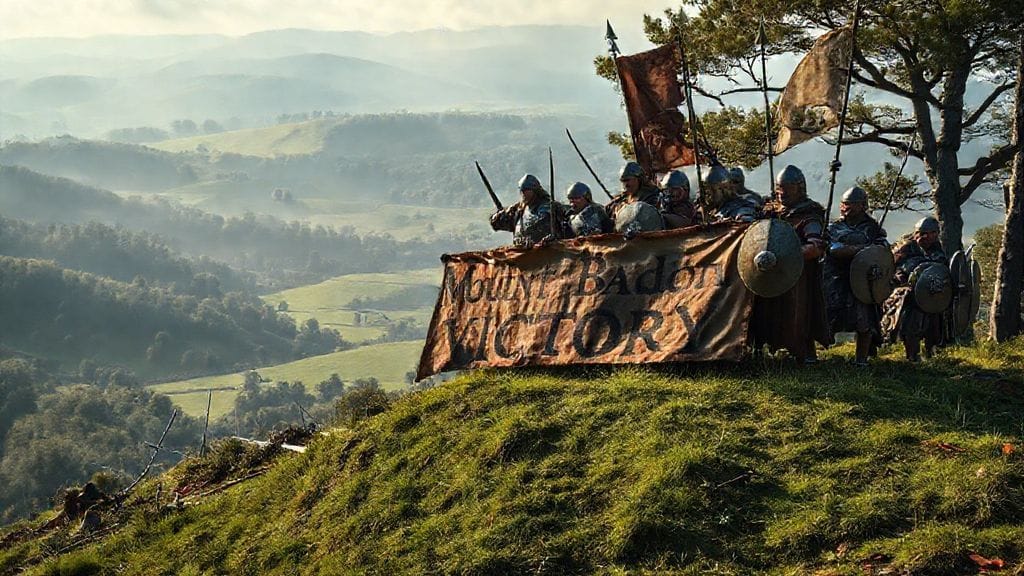
In the fading light of a cold autumn day around the year 500, southern Britain braced itself for a confrontation that would shape the continent’s fate for centuries to come. The air was heavy with anticipation and fear; the echoes of Roman legions had long since vanished, leaving behind a fractured land besieged by new powers. On the slopes of Mount Badon, a hill shrouded now in legend and obscurity, the Britons—descendants of the ancient Celtic tribes and former Roman subjects—stood poised to confront their invaders: the Saxons. This was not just a battle of armies but a desperate struggle for survival, identity, and legacy.
1. The Veiled Dawn: Britain at the Brink of Chaos
At the close of the 5th century, Britain was a land torn apart by uncertainty. The once-mighty Roman Empire had receded, leaving behind a power vacuum filled with competing kings, warlords, and marauding groups. Coastal towns lay in ruin, farmlands went uncultivated, and many Britons found themselves unprotected against the growing incursions of Germanic tribes across the sea. The social fabric strained under relentless assaults and internal disunity, making the significance of a single, decisive battle all the more critical.
2. The Shadow of Rome: A Crumbling Empire’s Legacy
For nearly four centuries, Roman rule had bonded Britain to a vast Mediterranean network of trade, governance, and military order. Yet, after the withdrawal of Roman legions in 410 CE, local leaders faced the daunting task of defending their territory without imperial support. Infrastructure decayed, towns shrank, and aristocratic power splintered. At the same time, Roman-Christianity took firm hold among many Britons, adding a spiritual dimension to their struggles. But Rome’s departure also opened doors wide for new enemies intent on carving their own kingdoms from the ruin.
3. The Rise of the Britons: Clinging to an Ancestral Hope
Despite adversity, the Britons regrouped. Tribal alliances reformed, and charismatic war leaders rose with stirring appeals to shared heritage and resistance. These figures, cloaked partly in history and partly in legend, began to galvanize fragmented peoples into a more coherent force. Oral traditions spoke of a looming test by fire — a battle that could decide whether Britain would be lost forever or preserved in its ancient dignity.
4. Mount Badon: Naming a Battle Lost in Time
Mount Badon, the site remembered in later chronicles but geographically elusive today, became the symbolic heart of this resistance. Mentioned by early chroniclers like Gildas and later by Nennius, it was here that the Britons would reportedly deliver a crushing blow to the Saxon advance. While scholars debate the exact location—some point to Bath, others to sites in Wiltshire or Somerset—the name "Badon" rings through history as a rallying cry, a moment where defiance coalesced into victory.
5. New Arms and Old Spirits: The Britons Prepare for War
Armed less with Roman steel and more with makeshift weapons forged from necessity, the Britons’ strength lay in their intimate knowledge of the land and burnished spirit. They trained in dense forests and fortified hill forts, refining guerrilla tactics to compensate for fewer numbers. The looming conflict at Badon demanded more than raw strength—it required cunning, unity, and a faith that would outmatch any sword.
6. Enter the Saxons: Invaders from the East
Across the North Sea, Germanic tribes—principally the Saxons, Angles, and Jutes—had migrated in waves, initially hired as mercenaries by local Britons but quickly turning into occupiers. Fierce and resourceful, these warriors sought fertile lands and dominance over the fractured island. Their presence destabilized existing power structures and threatened to erase Celtic culture from the southern lands. The occasion at Badon was their greatest challenge yet.
7. The Clash of Titans: The Battle Unfolds
According to later sources, the battle erupted with ferocious intensity. Britons deployed ambush tactics, exploiting rugged hills and wooded terrain to disrupt Saxon formations. The clash was not only a contest of arms but a collision of wills—each side fighting to secure a future for themselves and their kin. Though contemporary accounts are sparse, the echoes of the conflict resonate as a turning point, where the tide against Saxon expansion briefly reversed.
8. The Turning Tide: How the Britons Seized Victory
In a moment that would be immortalized by poets and historians, the Britons seized the advantage. With coordinated strikes and steadfast courage, they inflicted catastrophic losses upon the Saxons. Some chronicles speak of thousands of Saxon dead strewn across the battlefield—“so many that their bodies blocked the streams.” Meanwhile, Briton casualties, while heavy, were survivable enough to sustain the resistance. This victory rekindled hope across the land, proving the invaders were not invincible.
9. Legends Born in Blood: The Battle’s Mythic Afterglow
The victory at Mount Badon outgrew mere fact, morphing into a myth suffused with heroic grandeur. Stories circulated of gallant leaders, righteous fury, and divine favor sheltering the Britons. Even centuries later, troubadours and chroniclers would recall Badon as the “last stand” of Britain’s fading classical world, a symbol of resilience in the face of inexorable change.
10. Arthur’s Shadow: King or General of Mount Badon?
No tale of Badon escapes the shadow of Arthur—an enigmatic figure who straddles history and legend. Was he a real warlord commanding the Briton forces, or a symbolic amalgam of multiple heroes? This question haunts scholars still. Medieval texts credit Arthur with the victory, though earlier sources remain silent or ambiguous. Regardless, the connection between Badon and Arthur cemented the battle as the centerpiece of Britain’s heroic age, inspiring generations.
11. The Aftermath: Reprieve or a Prelude to New Struggles?
Victory at Badon did not end conflict but bought precious decades for the Britons. The Saxon advance slowed, and pockets of Briton control persisted, maintaining a Celtic presence in much of southern Britain. Still, internal divisions, economic decline, and renewed raids meant that the peace was fragile. Badon was a pause rather than a conclusion—one that shaped the evolving political landscape.
12. Echoes in the Landscape: Archaeology and the Battle’s Footprint
Modern archaeology strives to peel back the layers of time to locate Badon’s battlefield. While definitive evidence remains elusive, finds of weaponry, fortifications, and disturbed settlement patterns in regions near Bath and other proposed sites offer tantalizing clues. These discoveries deepen our understanding of the era’s warfare and shed light on how the Britons lived and fought.
13. Political Earthquakes: Repercussions Across Southern Britain
The battle reverberated far beyond the immediate clash. It tested alliances, altered power balances, and influenced the governance of southern Britain. Local rulers capitalized on the victory to reinforce their dominion, while Saxon leaders reassessed strategies. This reshuffling set the stage for the patchwork of kingdoms that would characterize early medieval Britain for centuries.
14. Cultural Ripples: How Badon Shaped Identity and Memory
Badon’s impact extended into the cultural consciousness of Britain. It became a touchstone of resistance, valor, and national pride—echoing through oral traditions, church records, and later nationalist movements. The memory of Badon helped sustain a distinct Briton identity amid waves of change and assimilation.
15. Beyond Britain: The Battle’s Place in European History
Though often framed as a local conflict, Badon had wider significance. It represented one of the final struggles of Romano-British civilization against the migratory forces shaping early medieval Europe. In many ways, it symbolized the larger transition from antiquity to the medieval world, echoing similar transformations across the continent.
16. Badon in the Chronicles: From Gildas to Geoffrey of Monmouth
Our knowledge derives from a patchwork of sources, beginning with the 6th-century monk Gildas, who lamented the Saxon invasion but wrote cryptically about the battle. Later writers like Nennius and Geoffrey of Monmouth expanded and mythologized the narrative. These texts, combining history and legend, have deeply influenced how Badon is remembered.
17. The Battle as Metaphor: Resistance and Renewal
Badon transcends its historical confines to become a powerful metaphor. Across centuries, it has epitomized the fight against oppression, the defense of homeland, and the hope of cultural survival. This symbolic resonance endures, inspiring art, literature, and political thought.
18. Modern Interpretations: Historians, Poets, and Pop Culture
From Victorian epics to modern novels, Badon continues to fascinate. Historians debate its historicity and impact, while artists and writers exploit its mythic power. Films, books, and television often draw on Badon as a dramatic centerpiece embodying themes of heroism and loss.
19. The Lost Armies: Saxon Fate after Badon
While defeated at Badon, the Saxons were far from broken. They adapted, regrouped, and slowly expanded their domains in the following decades. The battle delayed but did not halt their advance, underscoring the complexity of cultural and military change in post-Roman Britain.
20. Conclusion: Badon’s Enduring Legacy of Hope and Resistance
The victory of the Britons at Mount Badon stands as a beacon of resilience at the dawn of Britain’s medieval age. Though shrouded in mystery and legend, it captures the fierce human will to hold fast in the face of overwhelming odds. The battle’s legacy—woven from blood, myth, and memory—reminds us that history is not only about power but also about identity, courage, and the stories we tell ourselves to survive.
Conclusion
Mount Badon remains an enigmatic but vividly potent emblem of a people caught between worlds: the waning glow of the classical past and the uncertain light of the medieval future. Its story, part history, part myth, teaches us about the fragility and fortitude of human societies facing existential threat. The Britons’ victory—whether fact or legend—illuminates the enduring human desire to resist erosion, to carve out a narrative of hope amid despair. More than a battle, Badon is a story of survival, identity, and the power of memory. As we revisit it today, we reconnect with a time when history was made by those who dared to stand, fight, and dream.
FAQs
1. Where exactly did the Battle of Mount Badon take place?
The precise location remains uncertain. Historians propose sites near Bath, Old Sarum, or other hills in southern Britain, but archaeological evidence has yet to confirm an exact battlefield.
2. Who commanded the Briton forces at Badon?
While later legends attribute command to King Arthur, early sources do not specify leaders by name. The identity of the Briton commander remains debated and blurred by myth.
3. What caused the Battle of Mount Badon?
The battle was part of ongoing conflicts arising from Saxon invasions and the struggle of the Britons to reclaim control after Rome’s withdrawal from Britain.
4. What were the consequences of the Britons’ victory?
It temporarily halted Saxon expansion, reinforced Briton unity, and preserved Celtic culture for several decades, though it did not end conflict permanently.
5. How reliable are historical sources on Badon?
Sources vary in reliability. Gildas provides the earliest mention but is cryptic; Nennius and Geoffrey of Monmouth present more detailed but legendary accounts mixing fact and fiction.
6. Why is Badon linked to King Arthur?
The association stems from medieval chroniclers who sought to connect historical military success with a charismatic, heroic figure embodying Briton resistance.
7. Did the Saxons return after Badon?
Yes, they eventually resumed their expansion, establishing the foundations of future English kingdoms.
8. How does Mount Badon influence modern British identity?
It symbolizes national resilience and cultural continuity, inspiring literature, political movements, and popular culture as a foundational victory.

