Table of Contents
- The Dawn of Turbulence: The Balkans on the Brink in the 580s
- Shadows over the Danube: The Strategic Importance of the Sava and Danube Rivers
- The Byzantine Empire: A Power Struggling to Preserve its Borders
- The Avars: Nomads Turned Kings, Lords of the Steppe
- The Precipice of Clash: Causes and Rising Tensions
- The First Skirmishes: Avars Testing Byzantine Fortifications
- Siege and Strife: The Avars’ Campaigns Along the Danube
- The Byzantine Response: Military Reform and Diplomacy
- The Role of Slavic Tribes: Allies, Enemies, and Collateral Players
- The Siege of Sirmium: A Battle for the Gateway to the West
- The Psychological Warfare: Fear, Propaganda, and the Weight of History
- The Turning Tides: Byzantine Counteroffensives and Avar Retreats
- The War of Attrition: Prolonged Conflict and Its Human Toll
- Economic Devastation and the Disruption of Trade Routes
- Cultural Exchanges and the Seeds of Future Kingdoms
- Legacy of Conflict: The Changing Ethnic Landscape of the Balkans
- The Byzantine–Avar Wars in the Grand Scheme of Late Antiquity
- Chronicles and Chronicles: How Medieval Sources Portrayed the Conflict
- The Balkans Aftermath: A Region Transformed by War
- Echoes in Modern Memory: The Balkans’ Historical Identity
- Conclusion: The Conflicts That Shaped a Contested Frontier
- FAQs: Understanding the Byzantine–Avar Clashes
- External Resource
- Internal Link
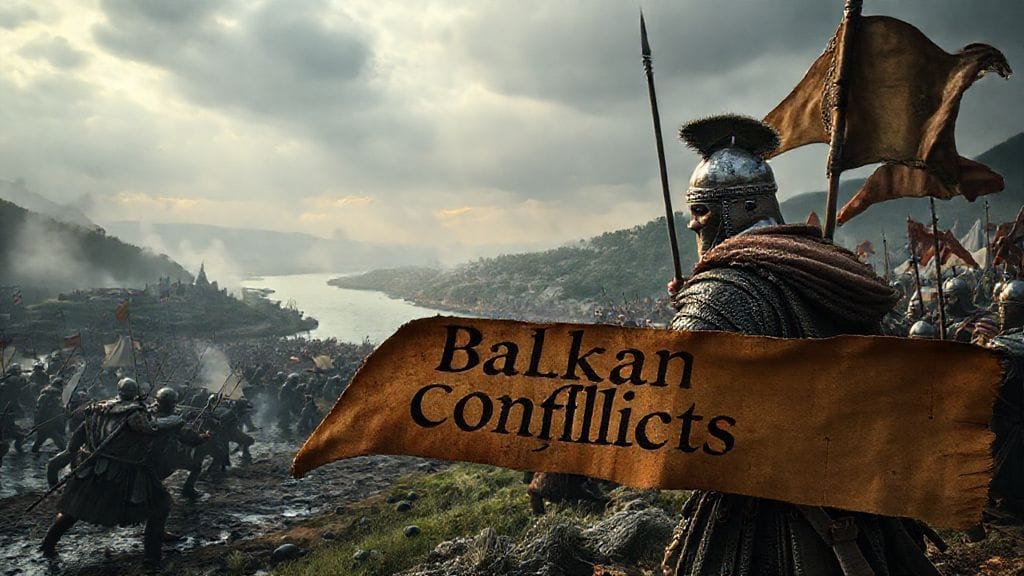
The eighth century was still decades away, but the flame of conflict that would set the Balkans ablaze had already begun to flicker in the 580s. Picture the dense forested banks of the Danube and Sava rivers, where mist curled over waters centuries old and the air was heavy with the tension between two vastly different worlds. On one side, the fading grandeur of the Byzantine Empire, straining to bind together an empire ripped by internal struggles and external menace; on the other, the fierce and enigmatic Avars, mounted nomads whose arrival heralded a profound transformation of Europe’s southeastern frontier. The Balkans were about to become a crucible of war, culture, and upheaval — a pivot on which the destiny of the region would turn.
1. The Dawn of Turbulence: The Balkans on the Brink in the 580s
It was more than just another decade; it was an unfolding drama where empires teetered and nomads surged forth like the tides. The Balkans, a historical crossroads between East and West, found themselves caught between the ambitions of empires and the survival instinct of migrating peoples. The 580s were marked by the escalation of conflict along the Byzantine northern borders, fueled by the expansionist drive of the Avars and the cautious but desperate attempts of Byzantium to hold its ground.
Imagine the sounds—horses’ hooves pounding on muddy roads, the clanging of armor, the whisper of spies in shadowy encampments. These decades echoed with the thunder of raiding parties and the whispered prayers of besieged city-dwellers. This was history in its rawest form—brutal, desperate, and transformative.
2. Shadows over the Danube: The Strategic Importance of the Sava and Danube Rivers
To truly grasp the stakes of the Byzantine–Avar conflicts, one must understand the geography that shaped them. The Danube, Europe’s second-longest river, was more than a mere waterway; it was the empire’s defensive lifeline, a natural boundary against incursions from the north. Along its tributary, the Sava River, vital towns and fortresses—keys to controlling trade routes and military passage—were perched like sentinels.
This watery frontier was like a living border, shifting and porous, challenging both Avar and Byzantine alike. Control over this region meant influence over a vital artery of commerce and military logistics, making it an irresistible prize.
3. The Byzantine Empire: A Power Struggling to Preserve its Borders
By the 580s, the Byzantine Empire was undergoing profound challenges. The glory days of Justinian I's reconquests lay behind, while swelling pressures from the Persian Sassanids and restless populations within the empire’s borders strained its resources. The Balkan provinces, once a linchpin of economic and military strength, were now vulnerable. Byzantine troops were stretched thin; corruption hampered effective response; and political instability in Constantinople rippled outward.
Yet, the empire was anything but passive. Officials dispatched seasoned generals, reinforced cities with walls, and engaged in delicate diplomatic maneuvering hoping to buy time. The clash with the Avars would test the empire’s resilience at an intimate level.
4. The Avars: Nomads Turned Kings, Lords of the Steppe
Less known to many today, the Avars were a formidable force, an amalgamation of Eurasian nomadic tribes famously mounted and mobile. By the mid-6th century, they had established a powerful khaganate centered in the Pannonian Basin—modern-day Hungary and surrounding areas.
Their rise was meteoric and terrifying. These were not mere raiders but sophisticated leaders who forged alliances, utilized siege technology, and demanded tribute from their neighbors. Their very name struck fear in Byzantine ears, signaling an unstoppable tide that threatened to sweep across the countryside like a storm.
5. The Precipice of Clash: Causes and Rising Tensions
What ignited these violent encounters? The causes were multifaceted. The Avars, eager to expand their dominion, pressed southward in search of riches and new territory. Byzantine weaknesses—military exhaustion from other fronts, internal strife, and economic strain—offered tempting targets.
Additionally, the shifting movements of Slavic tribes, often pressured by the Avars or seeking fresh lands themselves, introduced chaotic variables. Their encroachment unsettled traditional order and bred conflicts that often found the Byzantines and Avars vying for allies among the Slavs.
6. The First Skirmishes: Avars Testing Byzantine Fortifications
Historical accounts hint at a series of probing attacks rather than full-scale wars initially. The Avars, masters of mobility, exploited Byzantine complacency and weaknesses in the frontier defenses.
They struck at towns and smaller forts along the Sava and Danube, sometimes overwhelming garrisons with speed and force, sometimes retreating before stronger forces could muster. These skirmishes were tactical and strategic—Avars gauging opposition, Byzantines scrambling to reinforce.
7. Siege and Strife: The Avars’ Campaigns Along the Danube
The escalation came swiftly after these initial raids. The Avars began laying siege to key Byzantine strongholds such as Sirmium, a pivotal city whose fall would unravel Byzantine control of the region.
Sieges in the 6th century were brutal affairs—the work of patience, engineering, and psychological endurance. Avars combined traditional steppe attacks with siege engines borrowed or adapted from their encounters with other cultures. The relentless pounding of walls, starvation sieges, and sporadic sallies into enemy camps formed a grim dance.
8. The Byzantine Response: Military Reform and Diplomacy
Byzantium would not remain passive. In response, military reforms were instigated, partially inspired by earlier successes and failures. The empire reinforced its thematic system—provincial military districts—and improved fortifications along critical points.
Diplomacy, too, played a decisive role. Byzantine envoys sought to negotiate truces, pay tributes, or pit rival Avar factions against one another. Yet, these were often uneasy and temporary measures, offering little lasting respite.
9. The Role of Slavic Tribes: Allies, Enemies, and Collateral Players
The Slavs, indigenous to parts of the Balkans and migrating from the north, found themselves entwined in this Byzantine–Avar tug-of-war. Some allied with the Avars, lured by promises of loot or protection; others sided with Byzantium, or simply sought to carve independent spaces amid the chaos.
This tripartite struggle reshaped the demographic fabric of the region, facilitating the Slavs’ gradual settlement of much of the Balkans—a fact with profound historical significance for future medieval kingdoms.
10. The Siege of Sirmium: A Battle for the Gateway to the West
Few moments encapsulate the drama like the prolonged siege of Sirmium (modern Sremska Mitrovica). This fortified city was not merely a military prize but a symbol and pivot of Byzantine power in the Pannonian frontier.
Its defenders, including seasoned soldiers and local militia, faced waves of assaults, relentless pressure as supplies dwindled, and the oppressive mental strain of potential annihilation. Sirmium’s eventual fall marked a decisive moment, signaling a shift in regional power toward the Avars.
11. The Psychological Warfare: Fear, Propaganda, and the Weight of History
The conflict was also fought beyond swords and arrows. Byzantine chroniclers depicted the Avars as barbarous hordes, a menace to civilization, which fed into propaganda to bolster morale at home.
On the other side, the Avars wielded fear as a weapon, using intimidation and reputation to weaken enemy resolve. Stories of atrocities—whether real or exaggerated—spread rapidly, creating an atmosphere of dread that shaped strategies and public responses.
12. The Turning Tides: Byzantine Counteroffensives and Avar Retreats
Despite setbacks, the Byzantine military eventually regained footing. Seasoned generals launched counterstrikes, utilizing intelligence and improving coordination among thematic armies.
Strategic fortifications were reinforced; new alliances forged. The resilience of Constantinople’s defenses along the Danube and Sava pressured the Avars into negotiation or temporary withdrawal—although hostilities simmered for decades.
13. The War of Attrition: Prolonged Conflict and Its Human Toll
As the 580s dragged on, the conflict settled into a grinding war of attrition. Villages were razed, fields left fallow, and populations uprooted.
The human cost was staggering. Refugees flooded Byzantine territories to the south, adding strain to cities and economies. Families were torn apart, livelihoods destroyed. This was warfare in its harshest form, displacing entire cultures and plantations.
14. Economic Devastation and the Disruption of Trade Routes
The Balkans were once a bustling economic corridor connecting the Mediterranean with central Europe. The constant warfare shattered these networks.
Trade along the Danube faltered; tolls and tariffs disappeared or were arbitrarily imposed by marauding warlords. This economic disruption rippled outward, weakening Byzantium’s financial base and shifting regional commerce patterns.
15. Cultural Exchanges and the Seeds of Future Kingdoms
Amid destruction, unexpected cultural synthesis emerged. The interplay of Byzantine, Avar, and Slavic cultures began seeding new identities.
Religious practices, material culture, and language showed signs of fusion. Many historians see in this turbulent period the nascent formation of Slavic polities that would blossom into pivotal medieval kingdoms centuries later.
16. Legacy of Conflict: The Changing Ethnic Landscape of the Balkans
No conflict is without its enduring mark, and the Byzantine–Avar wars were no exception. They accelerated the migration and settlement of Slavs in the Balkans, gradually altering the ethnic and linguistic map.
The old Romanized populations dwindled or assimilated, replaced or reinterpreted by new power structures and cultural narratives—a transformation that would echo through medieval and modern European history.
17. The Byzantine–Avar Wars in the Grand Scheme of Late Antiquity
These conflicts must be seen not in isolation but as part of wider Late Antique transformations. The fall of the Western Roman Empire, the rise of new tribes, and Byzantine struggles painted a continent in flux.
The wars on the Danube frontier symbolized the shifting tides: from centralized classical empires to fragmented, dynamic medieval polities where identity, power, and borders were constantly renegotiated.
18. Chronicles and Chronicles: How Medieval Sources Portrayed the Conflict
Our understanding is shaped by Byzantine historians like Menander Protector and Theophylact Simocatta, whose works blend contemporary reporting with rhetorical flourish.
While invaluable, these chronicles reveal biases and propaganda, painting a picture of the Avars as relentless barbarians and Byzantium as heroic defenders. Cross-referencing them with archeological findings helps modern scholars disentangle myth from reality.
19. The Balkans Aftermath: A Region Transformed by War
By the end of the decade, the Balkans looked markedly different. Fortresses were razed or rebuilt, populations shifted, and political control remained contested.
The foundations for medieval states such as Bulgaria and the early Slavic realms were laid amidst the ruins of these conflicts. Byzantine power, while resilient, had ceded significant influence north of the Danube.
20. Echoes in Modern Memory: The Balkans’ Historical Identity
Today, the echoes of these 6th-century conflicts resonate in Balkan memory and scholarship. These struggles symbolize the region’s persistent role as a crossroads and battleground of empires.
National histories and modern identities often trace roots back to this period, highlighting the deep historical layers that continue to shape complex interethnic relations.
21. Conclusion: The Conflicts That Shaped a Contested Frontier
The Byzantine–Avar conflicts of the 580s were more than episodic wars; they were transformative dramas molding the future of the Balkans and Europe. Through sieges, migrations, and cultural fusions, a new world crystallized from the ashes of old empires.
For Byzantium, it was a testament to endurance amidst decline. For the Avars and Slavs, the opening of a new chapter in European history. The riverbanks of the Danube and Sava witnessed not just battles but the birth pains of nations yet to come.
Conclusion
History often unfolds where empires and peoples meet—and in the churning 580s Balkans, this meeting was fraught with violence and transformation. The Byzantine–Avar conflicts revealed the fragility of borders and the resilience of civilizations under threat. The rivers Danube and Sava bore witness not only to war but also to the ebb and flow of cultures and peoples wrestling for survival and supremacy.
While the immediate outcomes included devastation and displacement, the enduring legacy was profound: the redefinition of a region, the birth of identities, and the shaping of medieval Europe’s eastern frontier. The story of the Byzantines and the Avars is a story of confrontation and adaptation, of empires clashing and communities forging new paths. It reminds us that history is not merely a record of conflict, but a vibrant tapestry of human endurance and evolution.
FAQs
Q1: Who were the Avars and why were they significant in this conflict?
A: The Avars were a powerful nomadic confederation from the Eurasian steppe. By the 6th century, they had established a khaganate in Central Europe and posed a major military and political challenge to Byzantium, particularly along the Danube frontiers.
Q2: Why were the Danube and Sava rivers so important during these conflicts?
A: These rivers marked natural frontiers and strategic defensive lines for the Byzantine Empire. Controlling them meant securing crucial trade routes and military access between Central and Southeastern Europe.
Q3: How did the Slavic tribes influence the Byzantine–Avar conflicts?
A: Slavic tribes were both allies and adversaries during the conflict. Their migrations and settlements altered the demographic and political landscapes, often complicating Byzantine and Avar strategies.
Q4: What were the outcomes of the sieges, particularly of Sirmium?
A: The fall of key cities like Sirmium shifted power balances, giving the Avars strategic footholds. However, these gains were often contested by Byzantine counteroffensives.
Q5: How did these conflicts affect the Byzantine Empire overall?
A: The wars strained Byzantine military resources and finances, forced strategic reforms, and led to significant territorial losses north of the Danube, influencing future imperial policies and regional control.
Q6: What is the legacy of these conflicts in modern European history?
A: The conflicts contributed to the Slavic settlement of the Balkans and the reshaping of Eastern Europe’s ethnic and political geography, laying groundwork for medieval Balkan states.
Q7: Are there contemporary sources that describe the Byzantine–Avar conflicts?
A: Yes, historians like Menander Protector and Theophylact Simocatta provide valuable—though sometimes biased—narratives of these wars, supplemented by archeological evidence.
Q8: How did the Byzantine–Avar conflicts influence cultural developments in the Balkans?
A: The wars facilitated cultural exchanges and intermingling that spawned new syntheses of art, religion, and language, influencing the region’s medieval cultural landscape.

