Table of Contents
- The Dawn of Revolution: Cádiz in the Shadow of Empire
- Spain on the Brink: The Crisis of 1808-1810
- Napoleon’s Invasion and the Collapse of Spanish Authority
- The Flight to Cádiz: A City Become Fortress and Refuge
- The Idea of a Nation in Crisis: Seeds of Constitutional Change
- September 24, 1810: Opening of the Cortes of Cádiz
- The Men of Cádiz: Diverse Voices Gathered in Defiance
- Drafting Liberty: From Absolutism to Popular Sovereignty
- The Constitution of 1812: “La Pepa” Takes Shape
- Debates and Dilemmas: Progressives, Conservatives, and Moderates
- The Role of the Press and Public Opinion in Revolutionary Cádiz
- Women and Enlightenment: The Unseen Influences on the Cortes
- The Global Context: Cádiz Amidst the Atlantic Revolutionary Wave
- The Struggle Against External and Internal Enemies
- The Aftermath: The 1812 Constitution and Its Fragile Legacy
- The Restoration and the Reversal of Liberal Gains
- Remembering the Cádiz Cortes: A Symbol of Spanish Modernity
- Cádiz’s Enduring Impact on Spanish and Latin American Political Thought
- Lessons from the Cortes: Liberty, Sovereignty, and the Limits of Revolution
- Conclusion: The Spirit of Cádiz in the Heart of History
- FAQs: Unpacking the Cádiz Cortes and Their Legacy
- External Resource: Further Reading on the Cádiz Cortes
- Internal Link: Explore More With History Sphere
The Dawn of Revolution: Cádiz in the Shadow of Empire
The salty sea air of Cádiz was thick with tension on the morning of September 24, 1810. The narrow streets buzzed with the footsteps of delegates and whispers of fervent hopes. In a city girded by thick fortifications and battered by war, an extraordinary assembly was about to convene—one that would seek to reforge the identity of a fractured nation.
Cádiz, clinging to the southwestern tip of Spain like a battered ship holding against the storms of Napoleonic conquest, had become an unlikely cradle of revolution. This was no ordinary gathering; it was a desperate yet hopeful congress of minds determined to chart Spain’s course amidst the wreckage of empire.
The cobblestones bore silent witness to a nation at a crossroads, where ancient traditions met the fierce calls for liberty and reform. The birth of the Cortes of Cádiz marked a defining moment in Spanish history—an emblematic struggle for sovereignty, law, and modernity that resonated far beyond the city’s walls.
Spain on the Brink: The Crisis of 1808-1810
To understand the significance of the Cádiz Cortes, one must first grasp the devastating whirlwind Spain had endured in recent years. By 1808, the Iberian Peninsula was deeply fractured. The Bourbon monarchy had been shattered—King Charles IV and his son Ferdinand VII were effectively sidelined, replaced by Napoleon’s brother, Joseph Bonaparte, installed in Madrid as a puppet king.
But Spain’s spirit did not bend so easily. Guerrilla warfare raged through the mountains and villages; local juntas rose spontaneously to resist French occupation. The legitimacy of rule was in chaos, and with the traditional monarchy discredited or exiled, a constitutional vacuum gaped wide.
In this crucible, Cádiz assumed an outsized role. Unlike much of Spain, this fortified port city remained free from French occupation, guarded by the British navy that had allied with Spain against Napoleon. It was here, under siege yet unyielding, that the Spanish resistance sought to unite and reimagine its political future.
Napoleon’s Invasion and the Collapse of Spanish Authority
The invasion unleashed a cataclysm not merely military but existential. Napoleon’s strategy was a masterstroke of realpolitik and ruthlessness: to extinguish the old order by fracturing the monarchy and extinguishing royal authority.
Yet the Spanish people rebelled with ferocity and invention. The Peninsular War dragged on in a gruesome and unpredictable conflict marked by brutal repression and fierce popular insurgency. Entire provinces set up autonomous juntas, asserting local control in defiance of both the French and the discredited royalists.
The collapse of central authority raised fundamental questions. Who ruled Spain? What was Spain? And perhaps most importantly, who had the right to rule—the French usurpers, the exiled Bourbons, or a new power derived from the people?
The Flight to Cádiz: A City Become Fortress and Refuge
As French troops swept across the peninsula, Cádiz transformed. Its sturdy bastions and surrounding waters fashioned a haven, a last bastion of Spanish independence. Refugees streamed in—politicians, intellectuals, military officers, and ordinary citizens—all drawn by the promise of resistance.
The city’s narrow streets swelled with rhetoric of liberty and nationhood. Seated on the cusp of the Atlantic, Cádiz was no longer simply a port but the symbolic heart of Spanish defiance. It was into this charged atmosphere that the call came to convene the Cortes, Spain’s legendary parliamentary assembly.
The Idea of a Nation in Crisis: Seeds of Constitutional Change
The convocation of the Cortes was more than a political necessity; it was a radical experiment. Without a king to sanction their authority, the deputies faced the unprecedented challenge of defining sovereignty for themselves—and by extension, for the Spanish people.
Europe was in the grip of revolutionary ideals born in the Enlightenment and the French Revolution. Spanish thinkers and politicians debated the nature of monarchy, the rights of citizens, the roles of church and state, and the principles of representation.
This was no simple restoration of the ancien régime; it was the germ of constitutionalism emerging from the chaos of empire and war.
September 24, 1810: Opening of the Cortes of Cádiz
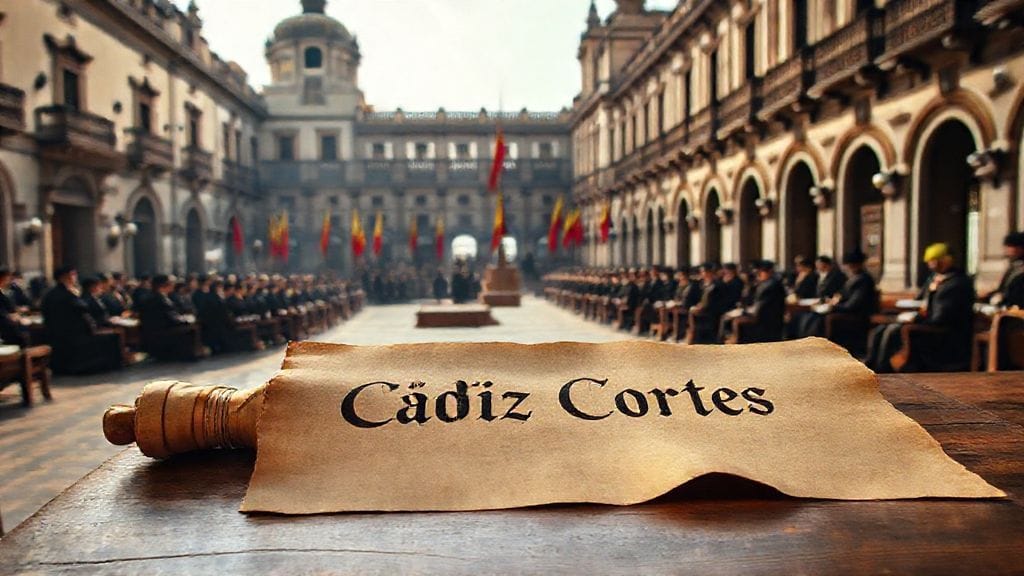
The assembly officially opened on a crisp fall morning in Cádiz’s Council Chambers. Delegates had arrived from across Spain and its overseas territories, embodying a wide spectrum of social classes, professions, and political convictions.
There was palpable excitement mixed with uncertainty. The opening oration proclaimed a solemn mission: to create a "constitution which would secure the liberty of the Spanish nation and all its dominions."
The session began under the shadow of war but illuminated by hope—a beacon for a struggle that would pit traditions against progress, absolutism against popular sovereignty.
The Men of Cádiz: Diverse Voices Gathered in Defiance
The composition of the Cortes was remarkable. Noble landowners rubbed shoulders with lawyers, military officers, merchants, and clergymen. Delegates from Spain’s vast colonies, from Cuba and Mexico to the Philippines, sat alongside peninsular Spaniards, reflecting the empire’s diversity.
Among these personalities, figures like Agustín de Argüelles and José María Blanco White emerged as fierce defenders of liberalism. Others urged caution, advocating a measured reform that preserved order.
The debates were lively and often fractious—a microcosm of the ideological battles roiling across Europe.
Drafting Liberty: From Absolutism to Popular Sovereignty
The core question was sovereignty. Did it reside in the king, in God, or in the people? The Cortes resolutely moved to declare popular sovereignty—the idea that all political power emanates from the nation.
This revolutionary shift dismantled the divine right of kings, establishing the basis for constitutional monarchy or even republicanism. Laws would be supreme, and the king merely an executor of the people's will.
Drafting these principles into a workable constitution challenged the assembly’s legal minds and moral philosophers.
The Constitution of 1812: “La Pepa” Takes Shape
After nearly two years of complex deliberations, the Cortes promulgated the Spanish Constitution on March 19, 1812. Nicknamed “La Pepa” (because it was adopted on St. Joseph’s Day), it was a landmark document.
It guaranteed freedoms of the press, abolished feudal privileges, established separation of powers, and expanded male suffrage. The Catholic Church remained the official religion but lost many of its political powers.
“La Pepa” was the most liberal constitution of its age, embodying Enlightenment ideals and signaling Spain’s tentative entry into constitutional modernity.
Debates and Dilemmas: Progressives, Conservatives, and Moderates
But this was not a peaceful consensus. Intense factions wrangled over the extent of reforms. Progressives sought a radical republic, secular governance, and sweeping social change. Conservatives feared anarchy and loss of order.
Moderates tried to balance reform and tradition. The political landscape was fluid, reflecting deep-rooted conflicts born of class, region, and colonial status.
The Cortes was both a forum for transformative ideas and a stage for enduring divisions.
The Role of the Press and Public Opinion in Revolutionary Cádiz
Cádiz was awash with newspapers, pamphlets, and broadsheets. These publications galvanized popular participation, spreading constitutional ideas and reporting on the Cortes' complex proceedings.
The press helped create a public sphere where ordinary citizens engaged with the concepts of liberty and representation. Popular enthusiasm and pressure influenced the deputies' actions, highlighting the growing importance of public opinion in politics.
Women and Enlightenment: The Unseen Influences on the Cortes
While women could not vote or serve as deputies, their intellectual and social influence was significant. Salons hosted by educated women fostered debate; their letters and critiques circulated among political circles.
Figures like Mariana Pineda inspired liberal thought and resistance. Though marginalized in official politics, women shaped the cultural and moral atmosphere of Cádiz’ revolutionary moment.
The Global Context: Cádiz Amidst the Atlantic Revolutionary Wave
The Cádiz Cortes were not an isolated phenomenon. Across the Atlantic, revolutions rocked Spanish America, inspired in part by similar ideals of self-determination and constitutionalism.
Cádiz sent representatives from the colonies, but tensions simmered between metropolitan liberals and creole elites, foreshadowing future independence movements.
The assembly’s decisions thus echoed globally, entangled in the age of empires in transition.
The Struggle Against External and Internal Enemies
Throughout its existence, the Cortes faced severe challenges. French armies pressed the peninsula; internal conspiracies sought to restore absolutism. The British navy’s support was vital to Cádiz’ survival.
The Cortes persevered under siege conditions, demonstrating remarkable resilience. Yet each victory was tempered by hardship and uncertainty.
The Aftermath: The 1812 Constitution and Its Fragile Legacy
With the defeat of Napoleon and the restoration of Ferdinand VII in 1814, hopes for a liberal Spain were cruelly dashed. The king abrogated the constitution, reinstated absolutism, and persecuted its supporters.
Yet the ideals born in Cádiz would endure in political struggles throughout the 19th century, fueling liberal revolutions, wars, and reforms.
The Restoration and the Reversal of Liberal Gains
The post-Napoleonic era was marked by repressions and retrenchment. The promise of “La Pepa” seemed lost, but its revival became a rallying cry for burgeoning liberal movements.
Spain oscillated between despotism and constitutionalism for decades, as the seeds planted in Cádiz grew unevenly.
Remembering the Cádiz Cortes: A Symbol of Spanish Modernity
Today, the Cádiz Cortes represent a breakthrough in Spanish political history—a moment when the nation sought to reconcile tradition and modernity.
Its constitution is celebrated as a milestone of liberalism and democracy in Spain and Latin America, commemorated in museums, literature, and political discourse.
Cádiz’s Enduring Impact on Spanish and Latin American Political Thought
The influence of Cádiz traveled beyond Spain’s borders, inspiring independence leaders like Simón Bolívar and influencing constitutional developments across the Americas.
Its vision of popular sovereignty and citizens’ rights became a foundational legacy in the wider Spanish-speaking world.
Lessons from the Cortes: Liberty, Sovereignty, and the Limits of Revolution
The Cádiz experiment reveals the complexity of revolutionary change—the promises, paradoxes, and perils of redefining political order amid crisis.
It reminds us that liberty is a contest of ideas and power, requiring patience and persistence.
Conclusion: The Spirit of Cádiz in the Heart of History
The convening of the Cádiz Cortes stands as a testament to resilience, vision, and the enduring human desire for freedom. Against the backdrop of war and occupation, a diverse assembly dared to reimagine the foundations of a nation.
Though their immediate triumph was fleeting, the spirit of Cádiz rippled through time, shaping democracy and constitutionalism in Spain and beyond. It is a story of hope born through hardship—a reminder that even in the darkest hours, the seeds of liberty can take root.
FAQs
Q1: Why was Cádiz chosen as the meeting place for the Cortes in 1810?
A: Cádiz was one of the few Spanish cities not occupied by French forces and was heavily fortified. Its strategic location and British naval support made it a secure refuge from which to organize resistance and governance.
Q2: What was revolutionary about the Cádiz Constitution of 1812?
A: It was one of Europe’s first liberal constitutions, establishing popular sovereignty, universal male suffrage (limited by today’s standards), separation of powers, and civil liberties, challenging absolutist monarchy.
Q3: Who were some key figures in the Cortes of Cádiz?
A: Prominent deputies included Agustín de Argüelles, a champion of liberalism, and José María Blanco White, a progressive intellectual. Many came from diverse backgrounds including clergy, military, and colonial representatives.
Q4: How did the Cádiz Cortes influence independence movements in Latin America?
A: The ideas and constitutional framework inspired creole elites seeking autonomy in the Americas. While the Cortes tried to maintain imperial unity, their liberal principles fueled debates on self-governance overseas.
Q5: What happened to the Constitution after Ferdinand VII’s return?
A: The king annulled the Constitution and restored absolutist rule. Many liberals were exiled or persecuted, but the ideals of Cádiz continued to inspire future reformers and revolutions.
Q6: How is the Cádiz Cortes remembered in Spain today?
A: It is regarded as a foundational moment of Spanish democracy and constitutionalism, celebrated for its liberal spirit and the bravery of its delegates working under siege conditions.
Q7: Did women participate in the Cortes?
A: Women could not participate directly as voters or deputies but influenced events through salons, correspondence, and intellectual engagement, laying groundwork for future gender rights movements.
Q8: What global movements paralleled the Cádiz Cortes?
A: The era saw simultaneous revolutions across the Atlantic world, including the United States, France, and Latin America, with shared Enlightenment ideals influencing the quest for constitutional governance.