Table of Contents
- The Twilight of an Empire: Córdoba on the Brink of Collapse
- The Caliphate of Córdoba: A Flourishing Dream of Unity
- Roots of Fragmentation: Political Tensions and Social Strains
- The Year 1031: A Turning Point in Andalusi History
- The End of the Caliphate: Abdication and Political Vacuum
- The Rise of the Taifa Kingdoms: From Unity to Fragmentation
- Portrait of the Taifa Kings: Ambition and Survival
- Cultural Blossoming Amidst Political Chaos
- Economic Shifts in Post-Caliphate Al-Andalus
- Relations with Christian Kingdoms: Opportunism and Hostility
- Legacy of the Caliphate: Art, Science, and Architecture
- The Human Cost: Identity, Displacement, and Memory
- The Fragmented Peninsula: Andalusi Trends and Christian Advances
- The Quiet Before the Storm: Prelude to the Reconquista
- Reflections on Power and Fragmentation: Lessons from Córdoba
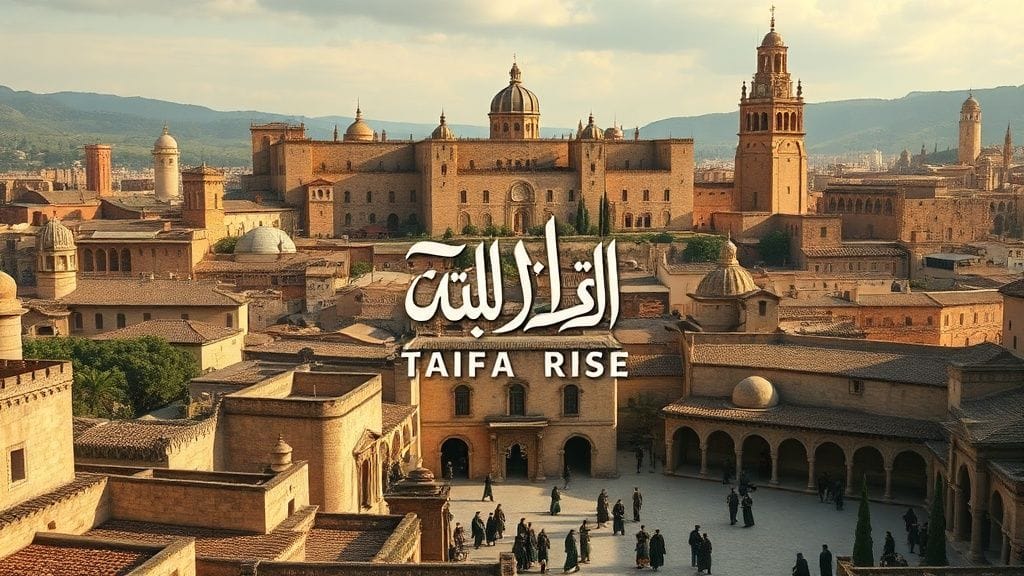
In the fading light of a late Andalusian afternoon, the resplendent city of Córdoba—once the jewel of the Umayyad Caliphate—quietly witnessed the unraveling of an empire. The golden minarets that had pierced the sky for centuries now cast long, restless shadows over bustling streets that hummed uneasily with whispers of dissent and dreams of sovereign ambition. This was the year 1031, a year marked by the formal abolition of the once lauded Caliphate of Córdoba, and the birth of a mosaic of independent taifa kingdoms.
For over a century, the Caliphate of Córdoba had stood as a beacon of political unity and cultural efflorescence in the Iberian Peninsula. Established in 929 by Abd al-Rahman III, it transformed Córdoba into one of the most advanced cities of the medieval world, epitomizing a sublime synthesis of Islamic governance, flourishing arts, and scientific inquiry. Its libraries housed countless manuscripts, its schools nurtured scholars from distant lands, and its architects crafted palaces that defied imagination. Yet beneath this magnificence brewed undercurrents of fragility: intricate rivalries, social fissures, and a brewing contest for power.
The years leading to 1031 unfolded like the final act of a tragic play. The death of al-Hakam II in 976 left a fragile succession, and the rise of the powerful and ruthless hajib (chamberlain) Almanzor further destabilized the Caliphate. Although Almanzor's military campaigns against Christian kingdoms temporarily revived Andalusi prestige, his death unleashed chaos. Subsequent rulers—often mere puppets trapped in the web of court intrigues—could not rein in rebellious provincial governors nor mend the fraying social fabric.
By the early 11th century, centrifugal forces pulled the Caliphate apart. Ethnic tensions among Arabs, Berbers, Slavs, and Muladies mingled with economic distress and factionalism at court. The intricate system that once held the Caliphate together had fractured irreparably. Then, in 1031, after decades of tumult, the last Umayyad Caliph Hisham III was deposed by his own subjects—marking the end of centralized Umayyad power in Al-Andalus. The Caliphate, a symbol of Islamic unity in Iberia, ceased to exist.
But the story did not end with dissolution. In the vacuum left by Córdoba's collapse, a fascinating political landscape emerged. The peninsula fragmented into approximately 30 taifa kingdoms, each ruled by warlords and former provincial governors asserting local autonomy. These taifas varied widely: some were small and vulnerable, others large and culturally vibrant. Rejecting former allegiances, taifa kings adopted regal titles and invested heavily in showcasing legitimacy through poets, architects, and learned men.
These petty kingdoms became embroiled in a complex web of alliances and conflicts, often shifting between cooperation and rivalry. The fragmentation initially weakened Muslim power in Iberia and accelerated Christian kingdoms' advances, paving the way for the Reconquista. Yet paradoxically, the taifa era witnessed an extraordinary cultural renaissance. Amid political fragmentation blossomed exquisite poetry, advancements in science, and innovations in arts and governance. Cities like Seville, Zaragoza, and Granada briefly flourished as loci of intellectual and artistic brilliance.
However, the newly independent taifas lacked the centralized military might of their Caliphate predecessors. Their divisions exposed them to increasing pressure from expanding Christian neighbors—the Kingdoms of León, Castile, Navarre, and eventually Aragon—who seized on internal Muslim divisions to press southward. Andalusian political fragmentation thus unwittingly heralded the gradual retreat of Islamic authority in Iberia.
Economically, the dismantling of central authority disrupted trade networks that had sustained Andalusia’s bustling commerce for centuries. Yet, many taifa kingdoms quickly reoriented towards localized economies, leveraging agriculture, craft industries, and limited Mediterranean trade. Patronage of poets and scholars became also a form of political legitimacy. As historian Richard Fletcher noted, these courts “were not simply political entities but cultural crucibles.”
The human impact of the Caliphate's collapse was profound. Many citizens found themselves caught between shifting loyalties and shifting powers. Cities once under singular rule became battlegrounds or co-opted into rival factions. The distinctions between Muslims, Christians, and Jews remained fluid but increasingly politicized. The taifa period reshaped identities in ways that would resonate through centuries.
Yet the end of the Caliphate was far from the end of Andalusian Muslim rule. Several taifa states would endure for decades, often becoming vassals to Christian kingdoms or relying on dynastic alliances. Still, from the ashes of imperial unity, the rich tapestry of Al-Andalus reinvented itself—an enduring testament to resilience under adversity.
The Twilight of an Empire: Córdoba on the Brink of Collapse
At its height, Córdoba was a city unlike any other in Europe or the Islamic world—a place of dazzling architectural marvels, thriving scholarly circles, and vibrant social life. Imagine walking through the enormous streets lined with public baths, libraries, and markets where merchants from across the Mediterranean converged. But by the dawn of the 11th century, this grandeur masked turmoil. The ruling class, once tightly centralized, fractured into factions vying for power. The Umayyad Caliphate, though still revered, had become an unstable beast struggling to contain internal strife.
The assassination of pivotal figures such as Almanzor and the failure of his successors to stabilize governance precipitated a decline. Provinces grew restless, emboldened by the center’s weakness to assert regional autonomy. The very fabric of Al-Andalus’ societal and political cohesion began to fray.
The Caliphate of Córdoba: A Flourishing Dream of Unity
The foundation of the Caliphate in 929 symbolized not only political ambition but a cultural renaissance. Abd al-Rahman III’s declaration as Caliph announced a new era where Córdoba rivaled Baghdad or Constantinople. The Court patronized arts and sciences; famous scholars like Ibn Hazm and poets flourished, while libraries stored tens of thousands of manuscripts. The Great Mosque of Córdoba physically embodied this synthesis of faith, artistry, and power.
This empire was a complex quilt woven of Arab conquerors, Berber soldiers, local Iberian converts (“Muladis”), and Jewish communities living under a system that, while hierarchical, allowed a degree of coexistence rarely seen in medieval Europe.
Roots of Fragmentation: Political Tensions and Social Strains
Yet beneath its dazzling surface, the Caliphate’s unity depended on delicate balances—between ethnic groups, factions, and powerful individuals. Ethno-political divisions often spilled into open conflict; court intrigues created endless cycles of assassination and betrayal. The military aristocracy, especially Berber mercenaries, increasingly asserted influence.
Economic challenges compounded these fissures. Land ownership became concentrated, generating rural unrest. Christian kingdoms in the north grew stronger, testing Al-Andalus’ borders. The political institution of the Caliphate, therefore, faced a challenge of survival amid growing centrifugal forces.
The Year 1031: A Turning Point in Andalusi History
The abdication of Caliph Hisham III in 1031 was not a sudden collapse but the climax of decades of decay. Popular upheaval, palace conspiracies, and the erosion of central authority culminated in a formal end to the caliphal title. With no robust successor, Córdoba ceased being the Islamic capital of Al-Andalus.
Contemporaries described the event with a mix of shock and resignation. Al-Maqqari, a historian writing centuries later, mourned the end of “the shadow of the Caliphate,” while noting the rise of petty rulers “seizing fragments like hungry wolves.”
The End of the Caliphate: Abdication and Political Vacuum
The deposition of Hisham III left Córdoba exposed to anarchy. Without the unifying symbol of the Caliph, provincial governors began asserting independence. This decentralized power structure lacked the legitimacy and resources of the past, and violence often accompanied transitions. Muslim Andalusia fragmented into dozens of taifa polities, each claiming sovereignty.
This period can be seen as both a dramatic end and a new beginning—a deeply disruptive moment that required reinvention.
The Rise of the Taifa Kingdoms: From Unity to Fragmentation
The taifa kingdoms represented a mosaic of political experiment. Smaller courts emerged in cities like Seville, Valencia, Toledo, and Zaragoza. Rulers adopted royal titles such as malik or sultan, invested in minting coins, and sought recognition from other Muslim states or even Christian kingdoms.
These kingdoms varied enormously: some enjoyed economic strength and cultural prestige; others struggled to survive. The rivalry and fragile alliances among them reflected a new reality where localism trumped previous unity.
Portrait of the Taifa Kings: Ambition and Survival
Taifa rulers were often former local governors or seasoned military leaders with personal charisma. Figures such as Al-Mu’tadid of Zaragoza or Al-Mu'tamid of Seville became both patrons and warriors, nurturing poets and scholars while constantly defending their fragile dominions.
Many taifa kings faced an impossible balancing act: to consolidate power internally while fending off Christian incursions and rival taifas. Diplomacy often meant paying tribute (parias) to Christian neighbors in exchange for peace—a controversial but pragmatic measure.
Cultural Blossoming Amidst Political Chaos
Surprisingly, political fragmentation ushered in a cultural renaissance. Taifa courts became vibrant centers of intellectual and artistic activity. The patronage of poets such as Ibn Ammar and musicians like Ziryab flourished. Scientific inquiry, particularly in astronomy, medicine, and philosophy, continued and sometimes advanced.
The proliferation of local contributions created a flowering of Andalusi culture that compensated, in part, for political disunity.
Economic Shifts in Post-Caliphate Al-Andalus
The demise of central control disrupted traditional trade routes and taxation systems. Some taifa kingdoms innovated by fostering crafts (such as textiles and ceramics) and agriculture (specially irrigation techniques), while others relied heavily on tribute and mercenary armies.
Despite chaos, Andalusia remained a vital link in Mediterranean commerce, but the economic landscape grew increasingly regionalized and competitive.
Relations with Christian Kingdoms: Opportunism and Hostility
The Christian kingdoms, sensing Muslim disarray, accelerated territorial ambitions in the north and center. Early 11th-century military campaigns pushed frontiers southward. Christian rulers often exploited Muslim rivalries, supporting some taifas against others—a classic divide-and-conquer strategy.
Yet there were also episodes of diplomacy, marriage alliances, and cultural exchanges—illustrating the complex interplay beyond mere warfare.
Legacy of the Caliphate: Art, Science, and Architecture
Though politically shattered, the spiritual and cultural heritage of the Caliphate endured. Its contributions to art, architecture (most famously the Mosque-Cathedral of Córdoba), literature, and science left an indelible mark on Iberia.
The taifa period preserved and expanded aspects of this legacy, blending local identities with ummah-wide Islamic culture.
The Human Cost: Identity, Displacement, and Memory
The crumbling Caliphate affected lives profoundly. Families navigated shifting political landscapes; minorities such as Jews found new roles under taifa patrons. Religious identity became a marker of politics as well as faith.
Over time, collective memory of the Caliphate would grow, casting it as a golden age amid later centuries of conflict and conquest.
The Fragmented Peninsula: Andalusi Trends and Christian Advances
The 11th century shaped a contested Iberia, divided between many small Muslim and Christian polities. This fragmentation slowed the momentum of Muslim unity, while Christian kingdoms composed the early contours of a future Iberian state system.
This setting laid the groundwork for the enduring drama of the Reconquista.
The Quiet Before the Storm: Prelude to the Reconquista
Although taifa kingdoms flourished culturally, their political weakness made eventual Christian reconquest inevitable. The taifa period was a crucial interlude—a time of both fragile flowering and gradual weakening that would set the stage for future centuries of conflict.
Reflections on Power and Fragmentation: Lessons from Córdoba
Córdoba’s fall challenges simplistic narratives of decline. It reveals how empires depend on more than military might—on legitimacy, social cohesion, and adaptability. The taifa period teaches that fragmentation can coexist with cultural brilliance, but also that disunity carries heavy costs.
Conclusion
The abolition of the Caliphate of Córdoba in 1031 marked a seismic shift in the history of Al-Andalus and the Iberian Peninsula. It was not simply the end of a political institution, but the transformation of an entire civilization’s trajectory—of its people, culture, and place in the Mediterranean world. The dissolution of centralized authority gave birth to a constellation of taifa kingdoms, each embodying new aspirations but also vulnerabilities.
Yet, embedded in this political fracturing was a profound cultural reinvention. Taifas became crucibles of poetry, science, and art, preserving and enriching Andalusian heritage in unexpected ways. The story is one of paradox: fragmentation spurred creativity amid chaos, resilience amid uncertainty.
This historic moment resonates with timeless lessons about the fragility and dynamism of political power, and the enduring human drive to create meaning in times of upheaval. Córdoba’s fall was not merely an end, but an invitation to imagine new futures—and to cherish the complex legacies left behind.
FAQs
Q1: What caused the abolition of the Caliphate of Córdoba in 1031?
The Caliphate’s abolition resulted from a combination of political fragmentation, court intrigues, ethnic tensions, economic difficulties, and weakening central authority, culminating in the abdication of Caliph Hisham III amid popular and aristocratic pressure.
Q2: Who were the taifa kingdoms, and how did they come into existence?
The taifa kingdoms were independent principalities formed by former provincial governors, military leaders, and local elites who seized power following the collapse of the Caliphate, each ruling a city or region within Al-Andalus.
Q3: How did the end of the Caliphate impact Islamic-Christian relations on the Iberian Peninsula?
Fragmentation among Muslim taifas weakened them militarily, enabling Christian kingdoms to expand southward. However, relations were complex, including warfare, diplomacy, alliances, and tribute arrangements.
Q4: In what ways did culture flourish during the taifa period despite political chaos?
Taifa courts patronized poets, philosophers, musicians, and scientists. This cultural flowering extended the intellectual and artistic heritage of the Caliphate, producing renowned works in literature, architecture, and sciences.
Q5: What was the economic consequence of the Caliphate’s dissolution?
The collapse disrupted centralized trade and taxation; many taifas developed localized economies focused on agriculture, crafts, and regional commerce, but economic competition and instability increased.
Q6: How did the abolition of the Caliphate affect everyday people in Al-Andalus?
Many experienced shifting loyalties, political instability, and at times violence. Religious minorities navigated new dynamics under taifa rulers. Social realignments altered identities and community relations.
Q7: Did any taifa kingdoms manage to regain unity or resist Christian advances?
Some taifas endured for decades and sometimes formed coalitions, but overall political disunity hindered effective resistance. Eventually, larger states like the Almoravids and Almohads would reconsolidate Muslim rule temporarily.
Q8: What is the lasting legacy of the Caliphate of Córdoba in modern history?
It remains a symbol of medieval cultural and scientific achievements, religious coexistence, and the complexities of power. Its influence shapes modern views on Andalusian identity and intercultural exchange.

