Table of Contents
- The Dawn of a New Era: The Capetian Royal Domain Awakens
- The Capetian Dynasty’s Early Struggles and the Seeds of Expansion
- Île-de-France in the Late 12th Century: A Land Divided
- Philippe Auguste: The Architect of Royal Consolidation
- The Political Landscape of 1180s France: Lords, Kings, and the Church
- The Role of Feudal Ties in the Growth of the Royal Domain
- Strategic Marriages and Alliances: Power Beyond the Battlefield
- The Reassertion of Royal Authority Over Rebellious Vassals
- Legal Reforms and Administrative Innovations in the Royal Domain
- The Conflict with the Angevin Empire: A Rivalry Defining an Era
- The War of the Lands: Battles, Sieges, and Diplomacy
- Fortresses and Towns: The Physical Markers of Royal Power
- The Economic Implications of Royal Domain Expansion
- The Rising Influence of the Royal Court in Paris
- The Role of the Church and Clergy in Supporting the Crown
- Commoners and Nobles: Social Changes Amid the Expansion
- The Capetian Royal Domain at the Turn of the Century: A New France Emerges
- Legacy of the 1180s-1190s Expansion on Subsequent French History
- Cultural Flourishing Under a Stronger Crown
- Conclusion: The Birth of a Kingdom’s Destiny
- FAQs: Understanding the Expansion of the Capetian Royal Domain
- External Resource
- Internal Link
The Dawn of a New Era: The Capetian Royal Domain Awakens
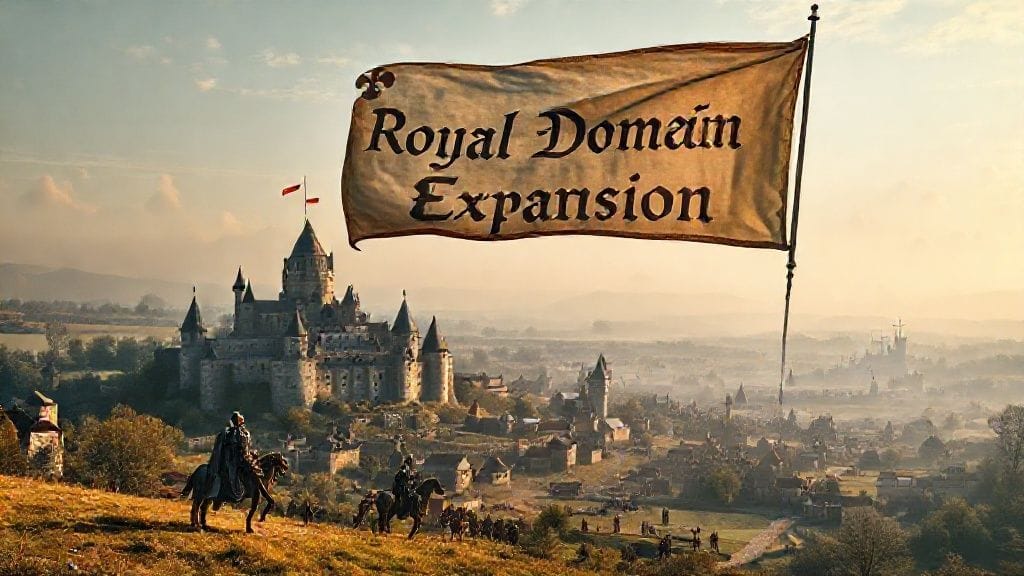
The chill of autumn had begun to descend over the rolling fields and dense forests of Île-de-France as the old order limped towards irrevocable change. Amid the winding Seine and beneath the ancient stone bastions of Paris, an invisible but palpable force was stirring—a force that would irrevocably tilt the balance of power in medieval France. This was the 1180s, a decade charged with tension, ambition, and the relentless impetus of a royal house desperate to resurrect its waning authority.
Imagine the courts of the young king Philippe Auguste, seated beneath tapestried walls, grappling with rebellious barons, negotiating with distant lords, and planning the consolidation of the domaine royal, the royal domain—the heartland of ancient Capetian power. The story of this expansion, seemingly technical and land-focused at first glance, was in reality the narrative of a kingdom rising from fragmented feudal chaos towards unity, law, and centralized authority.
But this was only the beginning of a profound transformation that would echo through the ages and reshape France’s very identity.
The Capetian Dynasty’s Early Struggles and the Seeds of Expansion
The Capetian dynasty, enthroned in 987 with Hugh Capet, had inherited a throne both symbolic and precarious. Unlike the powerful rulers of England or the Holy Roman Empire, early Capetian kings found their authority restricted largely to their own personal lands, known as the royal domain. The rest of France was a patchwork of semi-autonomous duchies and counties—Normandy, Anjou, Blois, Champagne—ruled by powerful nobles who owed limited allegiance.
Successive kings during the 11th and early 12th centuries had struggled to exert influence beyond the Île-de-France, often overshadowed by vassals or larger neighbors like the Plantagenet counts of Anjou, who controlled England and vast swathes of western France. The royal domain was modest, its lands fragmented and vulnerable to encroachment. Yet within these modest holdings lay the hope of a centralized monarchy.
By the late 12th century, the stage was set for a decisive turn—a generation that would seek not only to defend what little they had but to expand it boldly, forging the foundations of France as a unified kingdom.
Île-de-France in the Late 12th Century: A Land Divided
The region of Île-de-France was far from the solid heart of France that it is perceived today. It was a sprawling territory where villages huddled beside wary lords’ keeps and ecclesiastical estates, and where jurisdictional rights overlapped in a confusing mosaic. The royal domain covered a patchwork of lands surrounding Paris, stretching timidly outward but beleaguered by powerful neighbors eager to claim more.
Politically, the Île-de-France was a contested land. The kings faced pressure not only from external magnates but also from ambitious urban centers like Paris, with its growing population, merchants, and intellectual life, hungry for autonomy and favor. The balance between king and subjects was fragile, and every expansion effort required a mix of military firmness and political acumen.
Philippe Auguste: The Architect of Royal Consolidation
The young king Philippe II, later surnamed Augustus, ascended to the throne in 1180 at the age of fifteen. His father, Louis VII, had left a kingdom weakened by the rise of the Plantagenet empire under Henry II of England; his mother’s controversial divorce had fractured the Capetian house’s alliances. Yet Philippe was imbued with an unyielding determination to reclaim and secure the royal domain.
From the moment of his accession, Philippe Auguste enacted policies and campaigns that would set his reign apart. Shrewd and ambitious, he understood that to build a strong kingdom, the Capetian crown needed more than armies—it needed control over land, law, and loyalty.
Philippe’s reign sparked judicial reforms, fortification projects, and a methodical, often ruthless, territorial expansion, bridging personal power and institutional authority. His vision was clear: to transform the royal domain from a vulnerable relic into the backbone of a monarchy that could rival the greatest in Europe.
The Political Landscape of 1180s France: Lords, Kings, and the Church
The late 12th century was a chessboard of overlapping loyalties and fragmented power. Lords treated their territories almost as sovereign states, often paying homage to multiple overlords. The church wielded immense spiritual and temporal influence, controlling large estates and acting as mediator or power broker.
The king’s challenge was not only to conquer physically but to assert moral and legal supremacy over this patchwork. Philippe Auguste engaged with key ecclesiastical figures, reinforcing royal prerogatives while respecting the church’s interests — a delicate dance of cooperation that added legitimacy to his causes.
At the same time, the king’s court became a crucible of diplomacy, negotiation, and intrigue, where alliances were forged or broken, often through marriage or promises of lands, rather than open warfare alone.
The Role of Feudal Ties in the Growth of the Royal Domain
Feudalism, often misunderstood as chaos, also provided a framework for the expansion of royal power. The king was the apex lord; all others were theoretically his vassals. However, in practice, this hierarchy was contested. The 1180s saw Philippe levying feudal obligations with increasing effectiveness, demanding military and financial support from his vassals in exchange for protection and justice.
One of the king’s greatest achievements was his use of investiture—official grant of lands or titles—to reward loyal nobles and absorb rebellious ones. By integrating formerly independent lords into his vassal network, Philippe could expand direct control over the royal domain, turning feudal bonds into instruments of royal centralization.
Strategic Marriages and Alliances: Power Beyond the Battlefield
Amidst the warfare and political machinations, marriage emerged as a potent weapon. Philippe Auguste’s family ties were carefully used to cement claims and alliances that bolstered the royal domain.
His own union with Isabelle of Hainaut brought valuable territories to the crown, while arranged marriages of siblings and allies created a web of influence that extended royal reach without bloodshed. The royal family became a living nexus between competing powers, turning dynastic bonds into political capital.
These alliances supplemented military conquest, proving that power in medieval France often flowed as much through kinship as through castles and armies.
The Reassertion of Royal Authority Over Rebellious Vassals
Despite these strategies, many lords remained resistant, jealously guarding their independence. The 1180s and 1190s featured repeated insurrections and skirmishes as Philippe Auguste forced confrontations with stubborn nobles.
One striking episode was the siege of Château Gaillard, a fortress held by Richard the Lionheart, king of England and ruler of Normandy, who resisted Philippe’s encroachments. The protracted struggle typified the tangled conflicts over land and sovereignty that defined the era.
Yet through persistence and tactical acuity, Philippe imposed royal supremacy, demonstrating that even powerful vassals had to reckon with a revived and expanding royal domain.
Legal Reforms and Administrative Innovations in the Royal Domain
To sustain newfound territories, Philippe Auguste innovated beyond warfare. He promoted legal reforms that standardized justice across his lands and created royal officials, such as baillis and sénéchaux, to manage local affairs directly under the king’s command.
This growing bureaucracy contrasted with the personal rule dominant in earlier centuries. By institutionalizing governance, Philippe laid the groundwork for a centralized state apparatus, one capable of maintaining control and administering policies over an ever-enlarging domain.
The royal domain became less an assemblage of feudal fiefs and more a coherent polity under the law.
The Conflict with the Angevin Empire: A Rivalry Defining an Era
Perhaps no rivalry defined Philippe Auguste’s reign like that with the Angevin empire ruled by Henry II and Richard the Lionheart. The vast territories stretching from England across Normandy, Anjou, and Aquitaine posed a constant threat to Capetian ambitions.
This geopolitical duel shaped much of the military and diplomatic activity of the period. Battles, truces, and alliances fluctuated, with the Île-de-France strategically caught in the balance. Philippe’s ultimate goal was to reclaim lands held by the Plantagenets, eroding their continental power while reinforcing his own domain.
This enduring conflict was as much about identity and sovereignty as about land, setting the stage for the future nation-state of France.
The War of the Lands: Battles, Sieges, and Diplomacy
Between 1180 and 1200, France witnessed a cascade of military campaigns that blended sieges, skirmishes, and strategic absences. The siege of Château Gaillard (1196–1199) stands out as a landmark—Philippe’s forces besieging a seemingly impregnable fortress symbolized the clash between the Capetian crown and its Angevin rival.
The war was brutal but not continuous. Diplomacy often intervened, punctuating hostilities with marriage treaties, prisoner exchanges, and territorial concessions. This complex interplay revealed medieval warfare’s intricacies—victory not always won solely on the battlefield but in the king’s hall and on the lips of envoys.
Fortresses and Towns: The Physical Markers of Royal Power
As Philippe augmented his domain, he prioritized fortifications and urban development. Castles, keeps, and fortified towns were erected or refurbished, serving as tangible expressions of royal authority and military strength.
Paris, in particular, was transformed under his reign. The extension of city walls, construction of the Louvre fortress, and establishment of administrative centers reinforced the capital not only as a royal residence but as the nerve center of the kingdom.
These stone monuments stood as bulwarks against external threats and internal disorder, shaping the landscape of power for centuries to come.
The Economic Implications of Royal Domain Expansion
Expanding territory was not merely about land—it was about resources. The growth of the royal domain opened access to richer agricultural lands, trade routes, and tax revenues critical for funding armies and governance.
Philippe encouraged commerce, secured markets, and stabilized currency, understanding that economic strength underpinned political power. The royal domain’s expansion fostered increased prosperity in Île-de-France, drawing merchants, artisans, and intellectuals to vibrant centers that would fuel France’s medieval renaissance.
The Rising Influence of the Royal Court in Paris
Alongside territorial expansion came the emergence of a vibrant royal court in Paris, where nobles, clerics, poets, and bureaucrats gathered. The court became a symbol of refined power and cultural sophistication, projecting the image of a crown transcending mere feudal ruggedness.
Under Philippe Auguste, Paris began its journey to becoming Europe’s dominant capital—a place where law, art, and politics coalesced and where the royal domain’s heart beat ever stronger.
The Role of the Church and Clergy in Supporting the Crown
The church was a pivotal actor throughout this period. Bishops and abbots not only controlled vast lands but shaped public opinion and moral authority. Many clerics supported Philippe Auguste’s expansionist policies, seeing in a strong monarchy a protector of Christendom.
Conversely, the king sought to maintain a delicate balance—respecting ecclesiastical privileges while insisting on royal prerogatives. Papal endorsements legitimized his reign, reinforcing his claims both politically and spiritually.
This partnership was crucial to the success and stability of the royal domain’s growth.
Commoners and Nobles: Social Changes Amid the Expansion
The expansion of royal control rippled through society. For nobles, it meant shifting loyalties and sometimes loss of traditional autonomy. The rise of royal justice and administration curtailed private disputes and feudal violence.
Commoners in towns like Paris and Melun benefited from increased security and economic opportunity. Royal charters granted privileges to townsfolk, fostering urban growth that would later become a bedrock of French society.
Thus, the royal domain’s expansion effected not just territorial but social transformation, heralding gradual shifts in medieval France’s societal fabric.
The Capetian Royal Domain at the Turn of the Century: A New France Emerges
By the closing years of the 12th century, the Capetian royal domain had grown dramatically. Lands once contested or loosely held were now firmly under direct royal control. The crown’s authority extended beyond the Seine and Marne, laying claim to Normandy, parts of Anjou, and beyond.
Philippe Auguste’s reign marked the transition from fragmented feudal kingdom to centralized monarchy—the embryonic form of modern France. Though challenges persisted, the path had been set, with a stronger crown asserting its destiny to reign over a more unified realm.
Legacy of the 1180s-1190s Expansion on Subsequent French History
The expansion of the royal domain during the late 12th century reverberated through the subsequent centuries. It provided the Capetian kings with a power base that allowed later monarchs to challenge external foes, impose royal justice, and build an increasingly bureaucratic state.
This period taught lasting lessons: the importance of diplomacy, legal reform, economic stability, and military might in state-building. It also set precedents for royal intervention in noble affairs, the role of the capital city, and alliances that defined medieval and early modern France.
Without this vital era, the France we know would be unrecognizable.
Cultural Flourishing Under a Stronger Crown
The strengthened royal domain encouraged cultural activities, patronage of the arts, and intellectual pursuits. Paris, secure under the king’s growing protection, became a hub for scholars, cathedral builders, and poets.
The University of Paris gained influence, and Gothic architecture flourished, epitomized by the soaring spires of Notre-Dame. This cultural renaissance was intertwined with the political revival—art reflecting power and faith intertwined in the Capetian vision.
Conclusion: The Birth of a Kingdom’s Destiny
The expansion of the Capetian royal domain in Île-de-France during the 1180s and 1190s was more than a territorial gain—it was the rebirth of royal power and the dawn of the French nation. Against the backdrop of feudal fragmentation, divergent loyalties, and external threats, the Capetian kings, led by Philippe Auguste, marshaled strategy, strength, and savvy to forge a lasting legacy.
This story reminds us that history is not merely dates and battles, but the relentless struggle of vision and will—a tale of how kingdoms rise and endure, sculpted by the hands of those willing to envision a greater future. The stones of castles, the ink of charters, and the dreams of monarchs converged in this crucial time, laying the foundation of modern France.
FAQs: Understanding the Expansion of the Capetian Royal Domain
Q1: Why was the royal domain so limited before the 12th century?
The early Capetian kings inherited a throne with limited real power, confined largely to a modest territory around Paris. The feudal system granted extensive autonomy to powerful nobles, limiting the king’s ability to assert authority beyond his personal lands.
Q2: What role did Philippe Auguste play in expanding the royal domain?
Philippe Auguste was instrumental in consolidating royal power. Through military campaigns, strategic marriages, legal reforms, and the establishment of royal officials, he expanded the royal domain significantly, setting the foundation for the French state.
Q3: How did the conflict with the Angevin empire influence the expansion?
The rivalry with the Angevin kings, who controlled vast lands including Normandy and England, prompted Philippe to reclaim territories and strengthen his domain militarily and politically, making it a key driver of expansion strategy.
Q4: In what ways did the church support the Capetian crown?
Many members of the clergy supported the king as a defender of Christendom and law. The church’s endorsement legitimized Philippe’s reign, while church lands often aligned with or came under royal influence.
Q5: What social changes occurred due to the expansion of the royal domain?
The growth of the royal domain led to more centralized justice, weakening feudal lord autonomy. It also fostered urban growth, benefiting townspeople, merchants, and artisans by providing greater security and economic stability.
Q6: How did legal reforms aid in consolidating the royal domain?
Philippe Auguste introduced administrators and judges loyal to the crown, standardized laws, and curtailed local abuses. This created a coherent system of governance extending royal authority throughout newly acquired territories.
Q7: Why was Paris central to the Capetian expansion?
Paris was not only the king’s residence but became an administrative, economic, and cultural hub, symbolizing royal power. Expanding fortifications and promoting commerce in Paris helped secure the heart of the royal domain.
Q8: What is the lasting legacy of the Capetian royal domain expansion?
The expansion laid the groundwork for modern France’s centralized monarchy. It proved the effectiveness of combining military strength, diplomacy, and legal governance, shaping the nation’s political and cultural identity for centuries.

