Table of Contents
- The Dark Shadows of 782: A Turning Point in Saxon History
- Saxony on the Brink: The Turbulent Landscape Before the Capitulation
- Charlemagne: The Man Behind the Empire’s Expansion
- Pagan Saxons vs. Christian Franks: Clash of Worlds and Faiths
- The Saxon Wars: A Grim Prelude to Capitulation
- The Storm Breaks: The Campaigns Leading Up to 782
- The Massacre of Verden: Blood and Defiance in the Year of Fate
- The Weight of Submission: The Capitulation of Partibus Saxoniae Declared
- Legal Codes and Christian Conversion: Tools of Control and Assimilation
- Imposed Justice: The Capitulation’s Provisions and Their Brutality
- The Saxon Soul Tested: Fear, Resistance, and Resignation
- The Frankish Perspective: Empire Building through Law and Religion
- Saxony’s Transformation: From Pagan Stronghold to Christian Province
- Economic and Social Repercussions: The Cost of Forced Submission
- The Capitulation’s Legacy: Foundations for Future Imperial Policies
- Memory and Myth: How the Capitulation is Remembered in Saxon Culture
- Echoes Through Time: The Impact on European Statecraft and Identity
- Reflection on Coercion and Conversion: Lessons from 782
- Conclusion: The Human Face of Capitulation and Empire
- FAQs: Understanding the Capitulation of Partibus Saxoniae
- External Resource
- Internal Link
1. The Dark Shadows of 782: A Turning Point in Saxon History
On a cold autumn day in the year 782, the dense forests and rugged hills of Saxony witnessed the shattering of a fierce independence that had been fiercely held for generations. It was a time when swords sang sorrow, and faith was forged not only in churches but on battlefields lined with the fallen. The Capitulation of Partibus Saxoniae — an edict imposed upon the Saxon people by the mighty Frankish ruler Charlemagne — was more than a legal proclamation; it was a watershed moment that reshaped identities, enforce faith, and redrew allegiances across early medieval Europe.
Imagine the faces of Saxon chieftains, carved by years of resisting southern aggressors, now gathered to absorb an uncompromising decree that threatened their ancient customs and beliefs. The echoes of this capitulation still ripple through the pages of history — a narrative drenched in blood, faith, and the relentless march of empire.
2. Saxony on the Brink: The Turbulent Landscape Before the Capitulation
Before this momentous decree, Saxony was a land as wild as the warriors it birthed. Rough terrain intertwined with dense forests afforded a natural fortress to the pagan tribes that inhabited the region. These tribes followed intricate rituals and revered gods of nature, refusing to bow before distant kings, especially those brandishing the cross. Politically fragmented yet united by a shared defiance, Saxony restlessly resisted Frankish expansion year after year.
The Frankish Empire itself was growing under Charlemagne’s ambitious vision. His realm was a colossus straddling much of Western Europe, but Saxony remained an enduring thorn in his side. For decades, raids, rebellions, and skirmishes punctuated their volatile coexistence as each side sought dominance over the other. The stakes were immense — conversion was not merely spiritual but a tool of imperial control.
3. Charlemagne: The Man Behind the Empire’s Expansion
To understand the Capitulation's weight, we need to peer into the mind of Charlemagne himself. Crowned King of the Franks in 768 and later Emperor of the Romans, Charlemagne was a ruler possessed by divine purpose and brutal pragmatism. His mission to unite Europe under Christian rule led him to view pagan lands not just as territories but souls desperately in need of salvation — often delivered at the sword’s point.
Charlemagne’s campaigns into Saxony were thus both military conquests and religious crusades. His vision aimed at constructing a unified Christendom, a realm where culture, law, and faith would merge under imperial guidance. This vision, though grand, demanded uncompromising obedience and had little patience for dissent.
4. Pagan Saxons vs. Christian Franks: Clash of Worlds and Faiths
The confrontation between Saxons and Franks was more than mere warfare; it was a cosmic battle between belief systems. Saxon society was deeply rooted in pagan mythology — Woden, Thunor, and other deities governed their understanding of the world. Sacred groves and ritual sacrifices were central to their identity.
The Franks, by contrast, wielded the cross as much as the sword. Christianity was the backbone of their empire, bringing with it a wave of new cultural norms and administrative systems. For Saxons to accept Frankish rule meant abandoning ancestral gods and customs — an existential rupture.
5. The Saxon Wars: A Grim Prelude to Capitulation
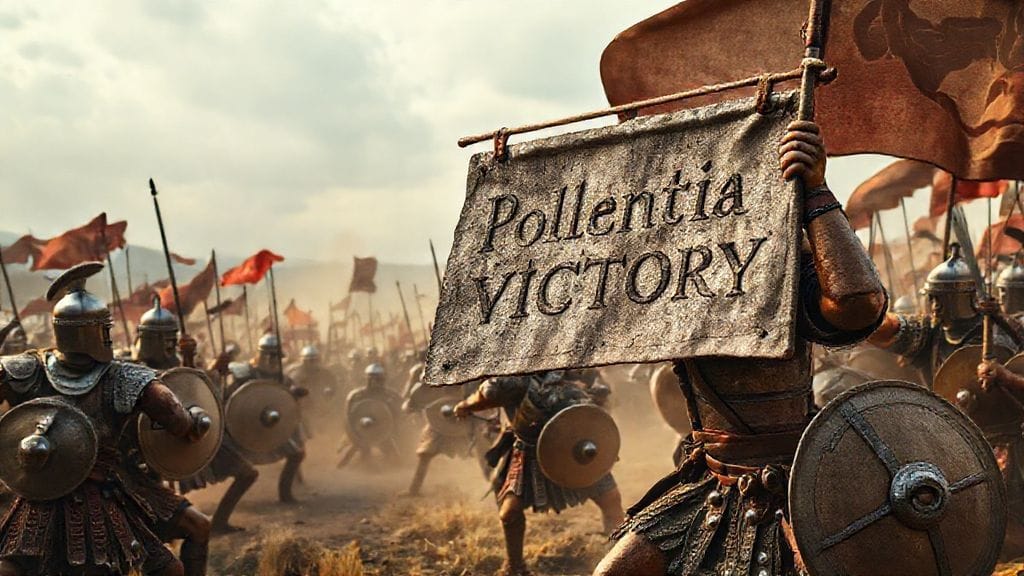
Charlemagne’s wars against Saxony were not a single campaign but a brutal series of conflicts spanning over thirty years. Each season witnessed raids, retaliations, and fleeting truces. The Saxons adopted guerrilla tactics, exploiting their terrain and knowledge of the land. However, Charlemagne’s resources and strategic acumen gradually wore down their resistance.
Though numerous leaders rose in rebellion, none could sustain a lasting defiance against the Frankish war machine. The persistent conflicts culminated in moments of extreme violence — most notoriously the Massacre of Verden — sowing dread but also setting the stage for redefinition.
6. The Storm Breaks: The Campaigns Leading Up to 782
The year 782 was marked by swift and devastating Frankish offensives. Earlier campaigns had delivered blows to key Saxon strongholds, and Charlemagne’s forces pushed deeper into the heartland. Saxon leaders, weakened and scattered, found themselves forced to negotiate from positions of diminishing strength.
Yet, it was not simply a military capitulation. Charlemagne’s policy was to bind these territories through law, faith, and culture — a strategy that required formal submission, cemented by legal documents such as the Capitulation of Partibus Saxoniae.
7. The Massacre of Verden: Blood and Defiance in the Year of Fate
One cannot recount the Capitulation without confronting the chilling shadow cast by the Massacre of Verden in 782. Following a lethal uprising, Charlemagne reportedly ordered the execution of 4,500 Saxon prisoners — a brutal act meant as both reprisal and deterrent. Medieval chroniclers record this as a decisive, yet horrific moment, stunning even contemporaries.
This massacre was a grim signal: resistance had a price that Charlemagne was prepared to enforce mercilessly. The events undoubtedly hastened the Saxon submission and the imposition of the capitulation’s terms.
8. The Weight of Submission: The Capitulation of Partibus Saxoniae Declared
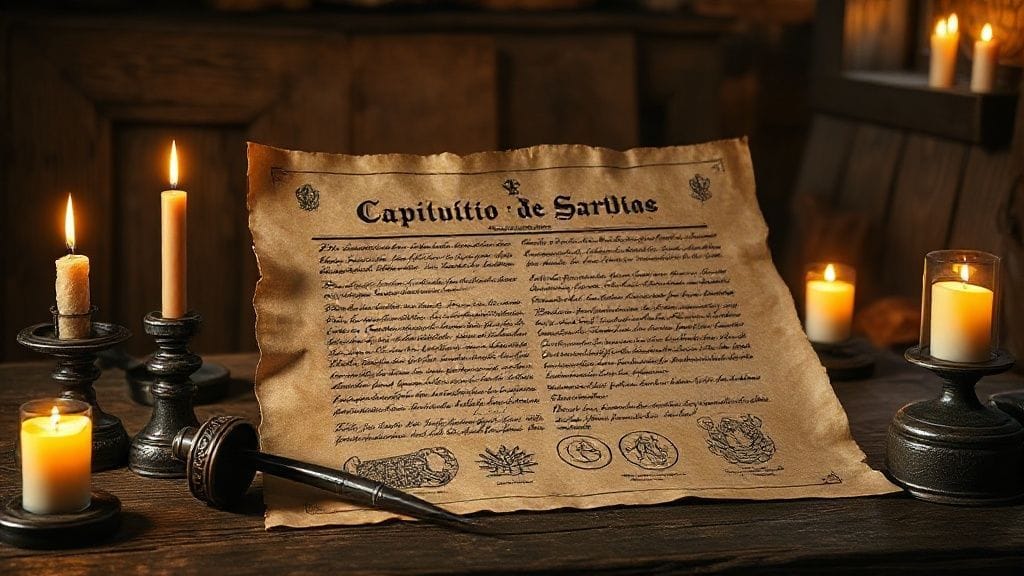
Against this backdrop of conflict and coercion, the Capitulation of Partibus Saxoniae was pronounced. This was not a simple surrender; it was a comprehensive legal and military framework that demanded Saxon acceptance of Christian faith, abandonment of pagan rites, and submission to Frankish law.
The document codified punishments for religious dissent, offenses against Frankish officials, and resistance. Its language was stern and unequivocal. The Saxons were thus not only conquered but redefined through legal means as subjects of an empire with new obligations and identities.
9. Legal Codes and Christian Conversion: Tools of Control and Assimilation
The Capitulation intertwined law and religion in an unprecedented way. Through its statutes, Charlemagne sought to break down Saxon tribal structures and pagan customs by making Christianity and fealty to the empire legally compulsory.
The enforcement of Christian sacraments became a state mechanism, with bishops and missionaries embedded in Saxon communities. This legal-religious fusion was revolutionary, foreshadowing later medieval governance where church and empire coalesced.
10. Imposed Justice: The Capitulation’s Provisions and Their Brutality
A striking feature of the Capitulation was its severity. Punishments were harsh and designed to instill fear — death for bearing pagan symbols, exile for refusing baptism, and severe penalties for insubordination. This legal rigor aimed to eliminate every trace of non-Christian practice swiftly.
Yet, these measures also sowed deep resentment. Families were torn apart by forced conversions; centuries-old beliefs were outlawed overnight. The fabric of Saxon culture faced a wrenching transformation.
11. The Saxon Soul Tested: Fear, Resistance, and Resignation
Although official documents framed the capitulation as inevitable, the human experience was far more complex. Many Saxons clung to their ancestral faiths in secret, engaging in quiet acts of defiance. Others, worn from relentless warfare and repression, reluctantly accepted the new order.
The tension between survival and identity created a fractured society. Oral histories speak of vanished gods and silent rituals — a landscape haunted by memories that refused to die quietly.
12. The Frankish Perspective: Empire Building through Law and Religion
For the Frankish court, the capitulation symbolized the triumph of civilization over barbarism, Christian order over pagan chaos. It reinforced Charlemagne’s vision of a cohesive empire stabilized by shared law and faith.
The success in Saxony justified further expansionist policies. It demonstrated that conversion and submission could be enforced through legal codification backed by military might — a formula that shaped European statecraft for centuries.
13. Saxony’s Transformation: From Pagan Stronghold to Christian Province
In the decades following the capitulation, Saxony was gradually integrated into the Frankish Empire’s political and ecclesiastical systems. Churches were built on formerly sacred sites; new administrative centers emerged; the role of traditional chieftains diminished.
This transformation was neither immediate nor uniform but marked a profound cultural shift that aligned Saxony more closely with the Western Christian world.
14. Economic and Social Repercussions: The Cost of Forced Submission
The military campaigns and legal strictures devastated Saxon society. Agricultural cycles were disrupted; villages were destroyed or relocated; social hierarchies were dismantled. However, integration into the empire eventually brought economic benefits such as trade opportunities and infrastructural development.
Still, this progress came at the price of profound cultural loss and trauma that shaped Saxon collective identity.
15. The Capitulation’s Legacy: Foundations for Future Imperial Policies
The Capitulation of Partibus Saxoniae set a precedent for future rulership in medieval Europe. It showed how legal frameworks and religion could serve imperial conquest and governance hand in hand. Later rulers would imitate and adapt these mechanisms to their ends.
Moreover, it arguably laid the groundwork for the Holy Roman Empire’s complex relationship with its diverse peoples.
16. Memory and Myth: How the Capitulation is Remembered in Saxon Culture
Over centuries, the capitulation has receded into legend and folklore. Tales of heroic resistance and martyrdom endured, often romanticizing a lost pagan past. Saxon identity today contains echoes of these stories — a testament to the enduring human need to remember subjugation and survival.
The event remains a cultural touchstone in Germany, explored by historians and artists alike.
17. Echoes Through Time: The Impact on European Statecraft and Identity
Beyond Saxony, the capitulation illuminates the dynamics of power, faith, and law that shaped medieval Europe. It foreshadowed the use of religious conversion as a political tool and the integration of diverse peoples under centralized rule.
Its lessons reverberate today in discussions about cultural assimilation, religious freedom, and identity politics.
18. Reflection on Coercion and Conversion: Lessons from 782
The Capitulation of Partibus Saxoniae challenges us to think about the human cost of empire-building. It is a stark reminder that political unity often came at the price of freedom and cultural diversity. The mixture of coercion and ideology reveals complexities in historical processes that shaped Europe’s foundations.
It begs the question: can lasting unity arise from imposed identity?
19. Conclusion: The Human Face of Capitulation and Empire
The story of the Capitulation of Partibus Saxoniae is a tapestry woven from suffering, faith, and resilience. It captures a moment when the old world wrestled with the new, leading to profound transformation. Yet beneath the grand narratives lie the stories of individuals — warriors, priests, farmers — caught in the tide of history.
Their voices remind us that behind every legal decree are real lives forever changed.
20. FAQs: Understanding the Capitulation of Partibus Saxoniae
Q1: What was the primary purpose of the Capitulation of Partibus Saxoniae?
A: It was primarily to enforce Saxon conversion to Christianity and submission to Frankish rule by codifying legal and religious obligations.
Q2: How did the Capitulation affect Saxon pagan practices?
A: It outlawed pagan rituals, imposing severe penalties for continuation, effectively forcing Saxons to abandon their traditional beliefs.
Q3: Who was Charlemagne, and why was he important in this context?
A: Charlemagne was the Frankish king and later emperor who led the expansion of the Frankish Empire and imposed the capitulation as part of his mission to unify Europe under Christianity.
Q4: What was the Massacre of Verden, and how did it relate to the Capitulation?
A: The Massacre of Verden was the execution of thousands of Saxon prisoners in 782, signaling the brutal suppression of rebellion and hastening Saxon submission.
Q5: Did the Capitulation end Saxon resistance immediately?
A: Not entirely; resistance continued in various forms, including secret pagan worship and sporadic rebellions, though the capitulation marked a turning point toward dominance.
Q6: What long-term impacts did the Capitulation have on European history?
A: It introduced a model of enforced religious conversion linked with imperial law, influencing medieval state-building and cultural assimilation across Europe.
Q7: How is the Capitulation remembered in modern Saxony?
A: It is remembered both as a tragic loss of autonomy and as part of the complex historical identity, often reflected in cultural memory and scholarship.
Q8: Were there any alternatives to the harsh measures imposed by the Capitulation?
A: Choice was limited for the Saxons; the Frankish approach favored strict enforcement to ensure stability, though other rulers sometimes allowed more gradual conversions.
21. External Resource
For further reading and detailed historical context, visit the Wikipedia page on the Saxon Wars and Capitulation (Charlemagne Era).
22. Internal Link
🏠 Visit History Sphere → https://historysphere.com/