Table of Contents
- The Final Hours of a Cardinal: December 4, 1642
- The Great Architect of Power: Richelieu’s Rise to Prominence
- Paris in the Mid-17th Century: A City on the Brink
- Richelieu's Politics: Balancing Religion and Statecraft
- The Fronde’s Foreshadowing: Seeds of Unrest
- The Cardinal’s Illness: A Slow Fade from Power
- Anecdotes from Richelieu’s Deathbed
- The Immediate Aftermath: A Power Vacuum in Paris
- The Mourning of a Minister: Public and Private Reactions
- Richelieu’s Will and Testament: Legacy in Writing
- The Role of King Louis XIII in Richelieu’s Final Days
- Richelieu’s Death and Its Impact on French Domestic Policy
- The Cardinal’s Influence on the Thirty Years’ War
- Succession Struggles: Mazarin and the Future of France
- Public Memory and Historical Interpretations Through the Centuries
- Richelieu in Literature and Arts: From Contempt to Admiration
- The Cardinal’s Tomb: Symbolism and Burial in Paris
- Lessons from Richelieu’s Death for Modern Statecraft
- The Long Shadow of 1642: France on the Cusp of Transformation
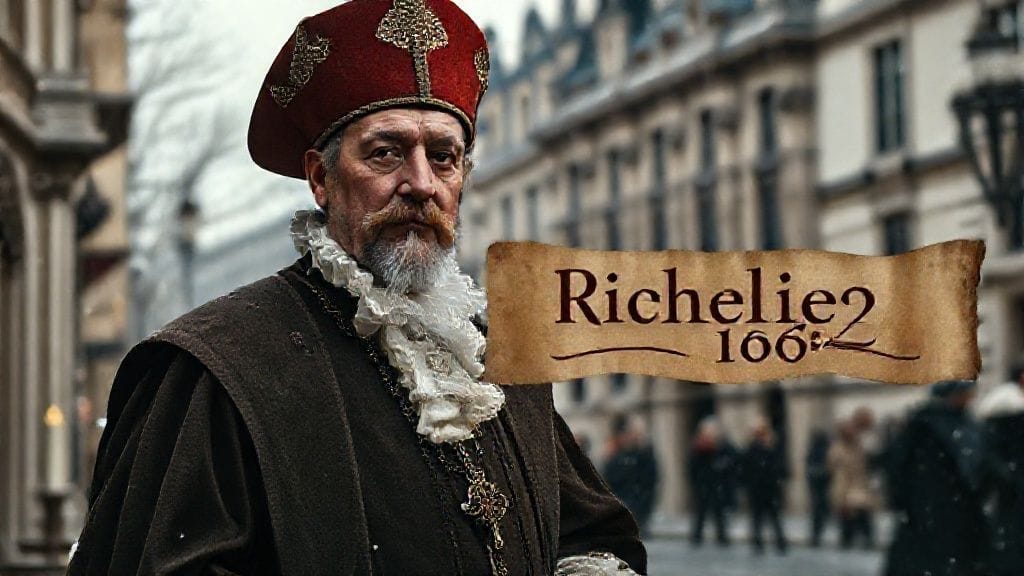
On a cold December day in 1642, the towering presence of Cardinal Armand Jean du Plessis de Richelieu receded quietly into the shadows of history. The capital of France, Paris, waited anxiously, carrying the weight of anticipation and uncertainty. It was as if the very pulse of the kingdom paused, holding its breath for the final moments of the man who had reshaped the French state as none before him. The air was thick with the scent of burning beeswax candles, their flickering flames casting long shadows over the Cardinal’s chamber in the Palais-Cardinal. As his breath grew shallow and the grandeur of his life collided with the frailty of his body, witnesses recalled a mixture of awe, sorrow, and apprehension. The death of Cardinal Richelieu was not simply the passing of a man but the closing of a decisive chapter in the saga of France’s rise to modernity.
Few historical deaths resonate so powerfully as Richelieu’s, for he was not merely a priest or a courtier—he was the architect of absolute monarchy, a man who wielded faith and force with equal mastery. His demise marked a turning point, setting France on a course toward centralization, conflict, and eventual glory under Louis XIV. To understand the depths of December 4, 1642, is to plunge into a world of intrigue, power struggles, and personal resolve, where the fate of nations hinged on the health of a single individual.
The Final Hours of a Cardinal: December 4, 1642
The morning of December 4, 1642, was fraught with tension and whispered prayers in the Palais-Cardinal. Richelieu’s health had been deteriorating for weeks. Tuberculosis, a cruel and slow-consuming illness, gnawed at his lungs and strength, yet his mind remained sharp—often unnerving in its clarity. As his physicians tended to him, the Cardinal remained composed, issuing final instructions and reflecting on his legacy with a somber gravity.
Witnesses describe the scene as intensely intimate; family, servants, and close advisors stood vigil, while Richelieu's breathing grew intermittent, punctuated by moments of lucidity. He spoke little, but when he did, his words cut through the thick air like a blade, addressing the future of France’s governance and urging loyalty to King Louis XIII. His hand, once commanding armies and councils, now trembled on the edge of life and death.
The Great Architect of Power: Richelieu’s Rise to Prominence
Armand Jean du Plessis, born in 1585 into minor nobility, climbed the church’s ladder with an unyielding ambition and a keen political mind. By 1624, he had become the King’s chief minister, a position he transformed into the crucible of France’s political and religious reforms. He viewed the monarchy not just as a dynastic rule but as a vessel for national unity and strength.
His strategy was revolutionary and ruthless: suppress the rebellious Huguenots, curb the power of the nobility, and expand royal authority. Richelieu was at once a cardinal of the Catholic Church and the Iron Duke of French politics — a man whose influence extended beyond pulpit or throne to the very fabric of European diplomacy.
Paris in the Mid-17th Century: A City on the Brink
Richelieu’s Paris was a city alive with contradictions. On the surface, it shimmered with the grandeur of renaissance palaces and bustling marketplaces. Beneath, however, were simmering tensions—religious conflicts, economic disparity, and the looming threat of foreign wars. The capital was the epicenter of political power but also the boiling pot for unrest.
The Cardinal’s reforms had often alienated powerful factions. Nobles who once wielded local power now saw their influence wane, fueling simmering resentment. Meanwhile, the growing bourgeoisie sought opportunity amidst changing times. Richelieu’s ambitious urban projects reflected his desire to control not only the state machinery but also the very landscape of Paris.
Richelieu's Politics: Balancing Religion and Statecraft
Richelieu’s unique position as a cardinal and prime minister meant he constantly navigated treacherous waters between spiritual duty and political necessity. His unwavering Catholicism aligned with his conviction that religion was a tool to unify France, yet his approach was pragmatic rather than dogmatic.
He orchestrated measures against Protestant strongholds in France, yet his diplomacy extended to Protestant powers abroad when it suited French interests—most notably in the Thirty Years’ War. Richelieu personified the emerging modern statecraft: secular power buttressed by religious authority but ultimately guided by raison d’état, or the reason of the state.
The Fronde’s Foreshadowing: Seeds of Unrest
Long before the Fronde rebellions erupted after his death, Richelieu’s policies had laid the groundwork for such upheavals. The centralization of royal power meant that traditional nobles felt their privileges eroding. Discontent brewed quietly in the salons and court chambers.
Though Richelieu suppressed open revolt during his lifetime, the strains of his rule—taxation, limitation of noble autonomy, and increasing royal absolutism—would soon surface violently after his passing. The Cardinal’s death thus signaled not only a change of leadership but the ignition of latent conflicts within French society.
The Cardinal’s Illness: A Slow Fade from Power
Tuberculosis did not afford Richelieu a swift or graceful exit. For months, he battled a wasting disease that left him weakened and bedridden. Yet, even as his physical strength failed, his mental acuity never faltered. Advisers came and went, presenting him with reports and state affairs, only to hear the Cardinal’s sharp critiques and final decisions.
This painful decline contrasted starkly with the image of omnipotence he projected during his reign. It humanized a man often perceived as cold and ruthless, revealing a spirit grappling with mortality while confronting the fate of a kingdom he had shaped.
Anecdotes from Richelieu’s Deathbed
Several eyewitness accounts provide poignant glimpses into Richelieu’s final moments. One story tells of his refusal to receive excessive hospital comforts, insisting instead on simple fare and prayers. Another describes his bewildering clarity during a long night, as he dictated letters and instructions, as if aware that every word might carry him beyond life.
His attendants reportedly overheard him murmuring reflections on power, faith, and the price of rulership. These moments, filled with quiet dignity, contrast with the often harsh portrayal of Richelieu as a Machiavellian mastermind, offering a more complex portrait of a man confronting the inevitable.
The Immediate Aftermath: A Power Vacuum in Paris
With Richelieu’s passing, Paris and the French court faced an uncertain transition. The Cardinal’s position as chief minister was unrivaled, and no obvious successor had his stature. Political actors scrambled to assert influence.
King Louis XIII, ailing himself, struggled to maintain control. The vacuum sparked jockeying among courtiers and ministers, setting the stage for Cardinal Mazarin’s eventual rise. Paris, restless and divided, waited for a new order to emerge — but in the meantime, anxiety and factionalism intensified.
The Mourning of a Minister: Public and Private Reactions
Despite Richelieu’s ruthless methods, many mourned his death deeply. Royalty, clergy, and common citizens expressed grief. The court held solemn vigils, and the city reflected a mixture of respect and apprehension.
Public opinion was complex: some viewed him as a tyrant, others as a visionary who protected France’s interests. His death became a moment for reflection on the costs and benefits of centralized authority and the heavy toll of religious and political wars.
Richelieu’s Will and Testament: Legacy in Writing
Before he died, Richelieu composed a detailed testament, both legal and political. It addressed his vast estates, ecclesiastical duties, and insistence on loyalty to the crown. The testament revealed a man deeply invested in the preservation of the state he had forged.
His last words emphasized the importance of unity and order, underscoring his lifelong mission. The document became a key source for historians, offering insight into his priorities and fears at life's end.
The Role of King Louis XIII in Richelieu’s Final Days
King Louis XIII was a shadow figure during Richelieu’s death. Weakened by ailments and political fatigue, he depended largely on his cardinal minister throughout his reign. Their relationship—complex, sometimes fraught but largely cooperative—defined French governance at the time.
In Richelieu’s last days, the King reportedly showed moments of emotion, signaling the intertwined fates of ruler and servant. Louis XIII’s own passing shortly after in 1643 compounded France’s crisis of leadership.
Richelieu’s Death and Its Impact on French Domestic Policy
With the death of the cardinal, France’s internal politics entered a period of fragility. Richelieu’s policies of nobility subjugation and religious unity faced challenges, as his successors tried to maintain his legacy amid mounting opposition.
Tax reforms, centralized administration, and military campaigns continued but without Richelieu’s iron will. The consequences of his death rippled through the domestic fabric, contributing in part to the upheavals of the subsequent Fronde period.
The Cardinal’s Influence on the Thirty Years’ War
Richelieu’s foreign policy was pivotal in shaping the prolonged and bloody conflict engulfing Europe—the Thirty Years’ War (1618-1648). Despite his Catholic faith, he aligned France indirectly with Protestant powers to weaken Habsburg dominance.
His death created uncertainty about the continuation of these policies, but Mazarin and Louis XIV’s regency chose to persist. Richelieu’s vision of France as a dominant European power lived on, even as the costs of war mounted.
Succession Struggles: Mazarin and the Future of France
Cardinal Mazarin, Richelieu’s protégé, emerged as the key figure after the cardinal’s demise. His ascent was not immediate nor uncontested. The gap left behind allowed various factions to push their agendas, though Mazarin eventually consolidated control.
This period of transition was critical for France’s political evolution. Mazarin’s leadership mirrored Richelieu’s in many ways but had to confront the growing social tensions that his predecessor had quietly suppressed.
Public Memory and Historical Interpretations Through the Centuries
Over centuries, Richelieu’s death became a symbol as much as an event. Historians debated his methods—tyrant or visionary? Builder of modern France or oppressor of liberties? His death was a poignant moment that influenced these narratives.
From Enlightenment thinkers to Romantic writers, Richelieu’s legacy was refracted through changing political and cultural lenses, shaping the collective memory of France and beyond.
Richelieu in Literature and Arts: From Contempt to Admiration
The cardinal’s personality and death inspired countless artists and writers. From the cynical portrayals by Molière to Dumas’s glorifications in The Three Musketeers, Richelieu remained a compelling figure, embodying power’s dual nature.
His death, dramatized in theaters and paintings, became a metaphor for the fragility of human authority and the immutable march of history.
The Cardinal’s Tomb: Symbolism and Burial in Paris
Richelieu’s burial in the Chapel of the Sorbonne in Paris was solemn and symbolic. The tomb’s elaborate design reflected the cardinal’s status and the intertwining of church and state he championed.
Over time, the site became a place of homage and reflection, inviting visitors to consider the man who had so profoundly shaped their nation.
Lessons from Richelieu’s Death for Modern Statecraft
The passing of Cardinal Richelieu teaches profound lessons about leadership, the burden of power, and the delicate balance of governance and human frailty. His final days underscore how individual health can alter history’s course.
Modern leaders and scholars explore Richelieu’s blend of pragmatism and idealism, drawing from his life and death to understand the complexities of political authority.
The Long Shadow of 1642: France on the Cusp of Transformation
December 4, 1642, was more than a date of death—it was a hinge moment for France. As the nation mourned one of its most formidable architects, it also braced for the storms and transformations that would shape the coming century.
From monarchy to revolution, from war to culture, Richelieu’s legacy endured—etched in the streets of Paris, the tomes of history, and the spirit of a nation always in flux.
Conclusion
Cardinal Richelieu’s death on December 4, 1642, marks a profound juncture where the flame of an era flickered and passed on the torch to future custodians of power. His life was a masterclass in the ruthless but necessary consolidation of authority—his death, a deeply human moment reminding us that even titans fall.
His passing shook the foundations of French society, igniting tension and transition, but it also crystallized the vision of a France unified and strengthened by central authority. In observing his final breath, we glimpse the paradox of history: where unavoidable mortality aligns with the birth of enduring legacies.
History judges Richelieu not solely on his iron fist or political cunning but on his complex humanity, his dedication to a vision of France that still fascinates and informs us today. The cardinal, stoic to the last, left behind a kingdom transformed—and a reminder that power, however absolute, always rests atop the fragile scaffold of human life.
FAQs
Q1: What were the main causes behind Cardinal Richelieu’s death?
A1: Cardinal Richelieu died primarily of tuberculosis, a chronic and debilitating lung disease that eroded his health over several months before his death in December 1642.
Q2: How did Richelieu’s death affect French politics at the time?
A2: Richelieu’s death created a power vacuum, leading to political instability and struggles within the court. His protégé, Cardinal Mazarin, eventually succeeded him, but France experienced significant turmoil, including uprisings like the Fronde.
Q3: Who succeeded Richelieu as chief minister, and how was the transition managed?
A3: Cardinal Mazarin succeeded Richelieu after a period of political maneuvering. The transition was complicated, with factions vying for influence, but Mazarin ultimately secured the position and continued many of Richelieu’s policies.
Q4: What was Richelieu’s relationship with King Louis XIII during his final days?
A4: Louis XIII and Richelieu shared a close working relationship marked by mutual dependence. The King was weakened by illness, and Richelieu’s death deeply affected him, as the cardinal had been central to his reign.
Q5: How did Richelieu’s death influence France’s role in the Thirty Years’ War?
A5: Although Richelieu died before the war’s conclusion, his policies—supporting anti-Habsburg alliances—even with Protestant powers, were maintained by Mazarin and the King’s regency, ensuring France’s eventual dominance.
Q6: In what ways has Richelieu’s death been represented in literature and art?
A6: Richelieu’s death has been dramatized as a symbol of mortality and power’s transience. From Molière’s critical takes to Dumas’s heroic portrayals, the event remains a fertile ground for artistic and literary interpretation.
Q7: Where is Cardinal Richelieu buried, and what is the significance of his tomb?
A7: Richelieu is buried in the Chapel of the Sorbonne in Paris. His tomb’s design reflects his dual identity as a churchman and statesman, symbolizing his lasting influence on French religion and governance.
Q8: What lessons does Richelieu’s death hold for contemporary leadership?
A8: Richelieu’s death reminds leaders that personal vulnerability can shape history’s course. It highlights the necessity of succession planning and balancing the weight of power with humility and foresight.