Table of Contents
- The Silent Threat Beneath the Waves: Setting the Stage for the Cascadia Tsunami
- The Dawn of January 26, 1700: An Ocean’s Fury Unleashed
- The Cascadia Subduction Zone: Nature’s Sleeping Giant
- Indigenous Oral Histories: Voices from the Shoreline
- Tremors Across the Pacific: Japan’s Recorded Tsunami Without an Earthquake
- The Earthquake that Shook a Continent: Magnitude and Mechanisms
- Coastal Devastation: A Landscape Changed Forever
- The Haida Warriors and the vanishing Villages: Human Tales of Survival and Loss
- Geological Evidence: Tree Rings, Sediments, and the Stratigraphy of Disaster
- The Cascadia Tsunami in Scientific Perspective: Filling the Historical Void
- Reawakening Awareness: Modern Risks in the Pacific Northwest
- Early Warning Systems and Preparedness: Learning from the Past
- The Impact on Ecology and Landscape: Nature’s Slow Recovery
- Cultural Resonance: The Tsunami in Art, Story, and Memory
- Political and Cross-Border Collaboration: Managing Cascadia’s Future
- The Role of Science in Disaster Preparedness and Climate Change Context
- Cascadia’s Legacy: What 1700 Teaches Us Today
- Conclusion: The Quiet Lesson of a Violent Wave
- FAQs: Unraveling the Mysteries of the 1700 Cascadia Tsunami
- External Resource: Further Reading
- Internal Links: Visit History Sphere
The eruption of nature’s raw power, marked by an earthquake and a towering tsunami, lies etched not just in the earth but in the collective memory of those who dwell beside the Pacific's restless edge. On a cold January night in 1700, the Cascadia Subduction Zone—a vast fault stretching over 1,000 kilometers from Northern California to British Columbia—awoke from its slumber. What followed was a cataclysmic earthquake, one so powerful it toppled forests, reshaped coastlines, and sent towering waves racing across the Pacific Ocean. Yet, oddly, this monumental event left no direct written record among the European settlers—the region being sparsely populated at the time—but it was chronicled vividly through indigenous oral traditions and the distant lands of Japan.
The Cascadia Tsunami story begins in the silent depths beneath the Pacific Northwest, where tectonic plates grind together, building tension over centuries. When that silent tension broke, it generated a tsunami powerful enough to nullify the concept of distance, to strike coastal communities thousands of miles away, and to send ripples through history that scientists would only piece together centuries later. This is the harrowing story of the Cascadia Tsunami of January 26, 1700—a natural disaster whose waves still echo in the Pacific’s endless rhythm.
The Silent Threat Beneath the Waves: Setting the Stage for the Cascadia Tsunami
Long before the 1700 tsunami struck, the Pacific Northwest's coastline had been shaped by millennia of geological activity. The Cascadia Subduction Zone, where the Juan de Fuca Plate slides beneath the North American Plate, harbors immense energy thrust that accumulates silently over centuries. These tectonic forces are invisible but colossal, waiting for the moment to release their pent-up strength.
Unlike other seismically active areas like California’s San Andreas Fault, the Cascadia fault was long thought inert or of minor concern, overshadowed by the frequent tremors of the Pacific Rim’s “Ring of Fire.” Yet, beneath the ocean bed, pressure built relentlessly, storing enough energy to generate a megathrust earthquake potentially reaching magnitude 9.0 or greater—a scenario capable of reshaping coastlines along both the American and Canadian West Coasts.
The Dawn of January 26, 1700: An Ocean’s Fury Unleashed
The night of January 26, 1700, was eerily calm along the shallow inlets and dense forests bordering the Pacific. Suddenly, the earth began to roar, a deep and unrelenting shaking that no human or animal could ignore. The Cascadia Subduction Zone ruptured violently along nearly 1,000 kilometers, sending ground and sea into convulsions.
Entire forests, including ancient western red cedars, fell, and land instantly dropped near the coastlines, submerging villages and estuaries. The earthquake lasted roughly four to six minutes—an eternity in such chaos—and was followed almost immediately by a massive tsunami. This wave, racing faster than a jet plane, swept across the Pacific, devastating nearby shores and drastically altering distant coasts across the ocean.
The Cascadia Subduction Zone: Nature’s Sleeping Giant
The Cascadia Subduction Zone is a colossal undersea fault line running from northern California through Oregon and Washington and into southern British Columbia in Canada. This “sleeping giant” has a well-documented history of ruptures every 300 to 600 years, though the exact timing is uncertain.
When the Juan de Fuca Plate dives beneath the North American Plate, it doesn’t do so smoothly; instead, the edges snag and lock, like a wound-up spring. Gradually, immense stress builds until it releases as a violent slip—the megathrust earthquake that creates both ground shaking and massive tsunamis.
The 1700 earthquake is believed to be the last in a series of megaquakes from this fault, reminding us that the zone remains dangerously active and unpredictable.
Indigenous Oral Histories: Voices from the Shoreline
For centuries, before the arrival of European settlers, indigenous peoples living along the Pacific Northwest—such as the Coast Salish, Kwakwaka’wakw, and Nuu-chah-nulth—held memories of the 1700 event through oral traditions. These stories speak of “the shaking earth,” great waves consuming entire villages, and the displacement of peoples.
One Kwakwaka’wakw account describes the land trembling and “the waters rising up to the sky,” swallowing homes and forests alike. Anthropologists and historians have come to recognize these oral histories not as myth, but as poignant testimonies of cultural memory passed down through generations.
Tremors Across the Pacific: Japan’s Recorded Tsunami Without an Earthquake
One of the most fascinating clues about the 1700 Cascadia earthquake comes from an unusual source thousands of miles away: Japan.
On January 27, 1700 (Japanese time), coastal communities in Japan were hit by a devastating tsunami. However, intriguingly, no local earthquake had been recorded. This “orphan tsunami” baffled scientists until geologists and historians correlated it with the Cascadia event the night before in North America.
By matching the timing and wave profiles, researchers concluded that the powerful quake in the Pacific Northwest must have generated the tsunami across the ocean basin—an astonishing discovery that bridged cultures through a shared encounter with nature’s overwhelming power.
The Earthquake that Shook a Continent: Magnitude and Mechanisms
Estimates place the 1700 Cascadia earthquake between magnitude 8.7 and 9.2, making it one of the largest recorded earthquakes in North America’s history. The rupture likely spanned about 1,000 kilometers, with fault displacement reaching up to 20 meters vertically.
This earthquake was a “megathrust” event—one of the most energetic types—occurring at a subduction interface where oceanic and continental plates converge. Its seismic waves propagated through the continent, causing widespread shaking, landslides, and ground subsidence.
For communities near the coast, the earthquake was apocalyptic. The sudden drop of land caused inundation, while landslides and collapsing trees added to the destruction immediately before the tsunami waves arrived.
Coastal Devastation: A Landscape Changed Forever
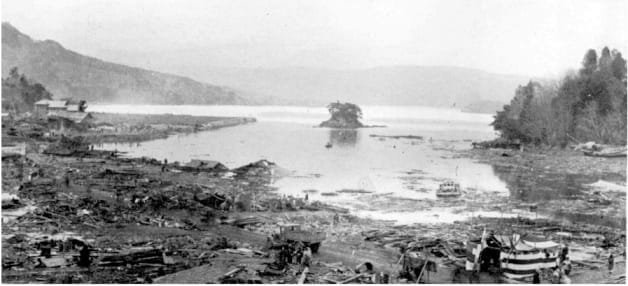
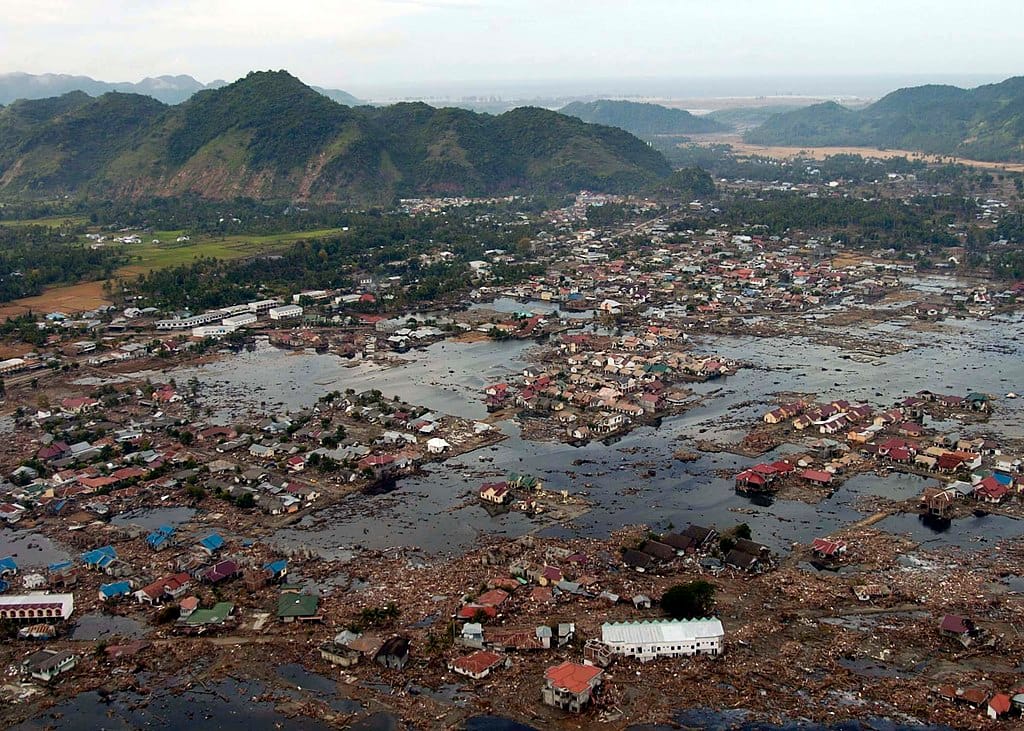
Along the Pacific Northwest coast, the earthquake’s devastation was immediate and long-lasting. Entire villages were destroyed; shorelines submerged; forests flattened along hundreds of kilometers.
Geological evidence shows “ghost forests” where ancient trees died abruptly, submerged by saltwater as the land dropped meters in elevation. Archaeological sites reveal sudden abandonment around this time, indicating displaced or devastated Indigenous populations.
Low-lying estuaries flooded permanently, altering ecosystems and wiping out fertile lands that had supported generations.
The Haida Warriors and the Vanishing Villages: Human Tales of Survival and Loss
Among the Indigenous peoples affected, the stories of survival and tragedy are both haunting and inspiring. The Haida and other coastal nations recount legendary battles fought before the earthquake in some traditions, followed by devastating loss when the tsunami swept through.
Villages vanished, fishing economies collapsed, and survivors were forced to adapt or migrate. Some survivors fled to higher ground as the water receded, while others were caught unprepared beneath the wall of water.
These human stories remind us that beyond geological data, the event left lives forever altered—families broken, communities displaced, and cultures challenged.
Geological Evidence: Tree Rings, Sediments, and the Stratigraphy of Disaster
Scientists piecing together the Cascadia event rely on an array of geological clues. Dendrochronology (tree ring dating) from “ghost forests” pinpoints the sudden death of trees to precisely 1700. Buried layers of sand and marine sediments inland reveal tsunami deposits, while submerged coastal marshes confirm land subsidence.
Such evidence forms an unassailable narrative: a huge seismic rupture followed by massive tsunami inundation. Boreholes, sediment cores, and seafloor mapping all contribute to reconstructing the mechanics and scale of the disaster.
The Cascadia Tsunami in Scientific Perspective: Filling the Historical Void
Before modern science, the history of great earthquakes in the Pacific Northwest was obscured by a sparse written record. The 1700 event was mostly forgotten until the late 20th century when geology, archaeology, and Japanese archives converged.
This multidisciplinary detective work revolutionized understanding of seismic risks in the region, revealing that “megathrust” earthquakes were not just possible but inevitable—and potentially devastating.
It also shifted emergency planning and urban development awareness, remembering that the Pacific Northwest sits atop a volatile fault line with a known history of great seismic events.
Reawakening Awareness: Modern Risks in the Pacific Northwest
Today, the specter of a Cascadia repeat looms large. Cities like Seattle, Portland, Vancouver, and smaller coastal communities fall within the danger zone. Experts warn that a similar event could cause thousands of deaths, massive infrastructure damage, and economic disruption.
Efforts to map risk, improve early warning systems, and enforce building codes aim to mitigate future disaster impacts. Public education on tsunami evacuation routes and preparation continues to intensify.
Yet, challenges persist: cascading infrastructure failures, population growth, and the unpredictability of exact timing keep the threat vivid and immediate.
Early Warning Systems and Preparedness: Learning from the Past
Inspired by the lessons of 1700, authorities have developed sophisticated seismic and tsunami detection networks. The U.S. Geological Survey (USGS) and Canadian partners invest heavily in real-time data monitoring.
Tsunami buoys, GPS stations measuring ground movement, and integrated alert systems promise critical minutes of warning—a lifesaving gift in case of a megathrust quake.
Community drills, resilient infrastructure designs, and public education campaigns work to ensure that when—and not if—the next Cascadia quake strikes, loss of life might be minimized.
The Impact on Ecology and Landscape: Nature’s Slow Recovery
In addition to human suffering, the tsunami wrought profound ecological changes. Saltwater intrusion transformed marshes, wiped out intertidal habitats, and altered fish breeding grounds.
Forests ravaged by shaking and flooding recovered over decades, with the so-called “ghost forests” standing as eerie monuments to sudden mortality.
Yet nature’s resilience is astonishing. Over centuries, ecosystems rebounded, adapting to changed landscapes—reminding us that life endures, even after cataclysm.
Cultural Resonance: The Tsunami in Art, Story, and Memory
The Cascadia tsunami’s legacy survives not just through science but cultural expression. Indigenous art, songs, and ceremonies convey the tragedy and respect for natural forces.
Modern artists and writers draw inspiration from the event’s drama, completing the arc between history and contemporary reflection.
These narratives ensure the tsunami is not simply a geological past event but a profound human story woven into the cultural fabric of the Pacific Northwest.
Political and Cross-Border Collaboration: Managing Cascadia’s Future
Given that the Cascadia fault cuts across international boundaries, cross-border cooperation between the U.S. and Canada is essential. Joint initiatives focus on hazard mapping, emergency response coordination, and resource sharing.
The Pacific Northwest Emergency Management agencies liaise regularly, developing unified plans for evacuation and recovery.
Such collaboration is critical for preserving life and managing the aftermath when the fault next awakens.
The Role of Science in Disaster Preparedness and Climate Change Context
Understanding the Cascadia tsunami also carries implications in climate change discussion. Rising sea levels and altered weather patterns could exacerbate future tsunami impacts.
Scientists emphasize integrating seismic hazard knowledge into broader climate resilience strategies, promoting sustainable coastal development that respects geological risks.
This intersection of natural sciences and policy highlights the urgency of proactive, informed action rooted in history.
Cascadia’s Legacy: What 1700 Teaches Us Today
The 1700 Cascadia tsunami stands as a silent reminder of nature’s dual role as creator and destroyer. It teaches humility before forces beyond human control and the necessity of preparedness, science, and cultural memory.
It challenges communities to remember the past while building adaptive resilience for a future inevitably touched by the earth’s evolving rhythms.
History, geology, culture, and science intertwine in Cascadia’s story—a narrative as powerful and restless as the waves themselves.
Conclusion
The Cascadia Tsunami of January 26, 1700, was more than a geological phenomenon: it was a chapter in humanity’s deep history, carved into the earth and minds of those who witnessed it. Though centuries have passed, the lessons remain urgent and vivid. The silent rupture, followed by a wave that traversed the vast Pacific, illustrates nature’s boundless power and the fragile thread on which human life clings.
Today, as cities rise along the Pacific Northwest shores, the ghost of that night rides the waves of memory and science alike, calling us to heed its warning. In understanding the 1700 tsunami, we gain not only knowledge but an inspiration—to respect the earth’s forces, to preserve stories from those who came before, and to prepare wisely for the inevitable, yet unpredictable, future.
The Pacific waits, patient and vast, but never still.
FAQs
1. What caused the 1700 Cascadia Tsunami?
The tsunami was triggered by a megathrust earthquake along the Cascadia Subduction Zone when the Juan de Fuca Plate slipped beneath the North American Plate, generating a powerful fault rupture that caused massive coastal subsidence and displaced ocean water.
2. How strong was the earthquake associated with the tsunami?
Estimates suggest a magnitude between 8.7 and 9.2, making it one of the largest earthquakes in recorded North American history.
3. Why is the 1700 Cascadia tsunami considered an “orphan tsunami”?
Because the tsunami was recorded in Japan without an accompanying local earthquake, it initially baffled scientists until linked to the Cascadia earthquake across the Pacific.
4. How do Indigenous oral histories contribute to understanding the event?
Indigenous peoples have passed down detailed stories describing ground shaking, flooding, and tsunami waves, preserving crucial eyewitness accounts predating European scientific documentation.
5. What is the risk of a similar event happening today?
The Cascadia Subduction Zone is still active and overdue for another major rupture, posing significant risk to millions of people along the Pacific Northwest coast.
6. What measures are in place now to mitigate tsunami risks?
Early warning systems, seismic monitoring, public education, evacuation planning, and resilient infrastructure are key components of regional preparedness.
7. How did the landscape change after the tsunami?
Land subsidence, flooding of coastal areas, burial of forests, and long-term ecological transformation occurred, creating “ghost forests” and altered estuaries.
8. How does the 1700 event influence modern earthquake science?
It revolutionized understanding of megathrust earthquakes in North America and informed seismic hazard assessments, improving prediction and mitigation efforts.