Table of Contents
- A New Dawn: The Day ChatGPT Changed the World
- Origins of the AI Revolution: From Research Labs to Global Phenomenon
- The Visionaries Behind the Curtain: OpenAI’s Bold Gamble
- November 30, 2022: ChatGPT Goes Live — A Digital Awakening
- First Impressions: Public Reactions and Viral Curiosity
- The Architecture Beneath the Magic: GPT-3.5 and Beyond
- A New Kind of Conversation: Human-AI Interaction Reimagined
- Controversies and Ethical Quandaries Emerge
- Educational Landscapes Transformed — A Double-Edged Sword
- Economic Ripples: From Jobs to New Industries
- ChatGPT in the Hands of Creators and Innovators
- Governments and Institutions Respond: Regulation vs Innovation
- Global Impact: Bridging Gaps or Widening Divides?
- Cultural Phenomena and Memes: ChatGPT in Popular Imagination
- The Evolution Continues: From ChatGPT to GPT-4 and Beyond
- Reflections from the AI Community: Triumphs and Trials
- Stories Shared: Users and Their Unexpected Journeys
- The Philosophical Debate: What Does It Mean to Be “Intelligent”?
- Behind the Screens: The Human Labor Powering AI
- The Future of Language and Knowledge in the Age of ChatGPT
- Conclusion: The Enduring Legacy of ChatGPT’s Launch
- FAQs about ChatGPT and Its Impact
- External Resource
- Internal Link
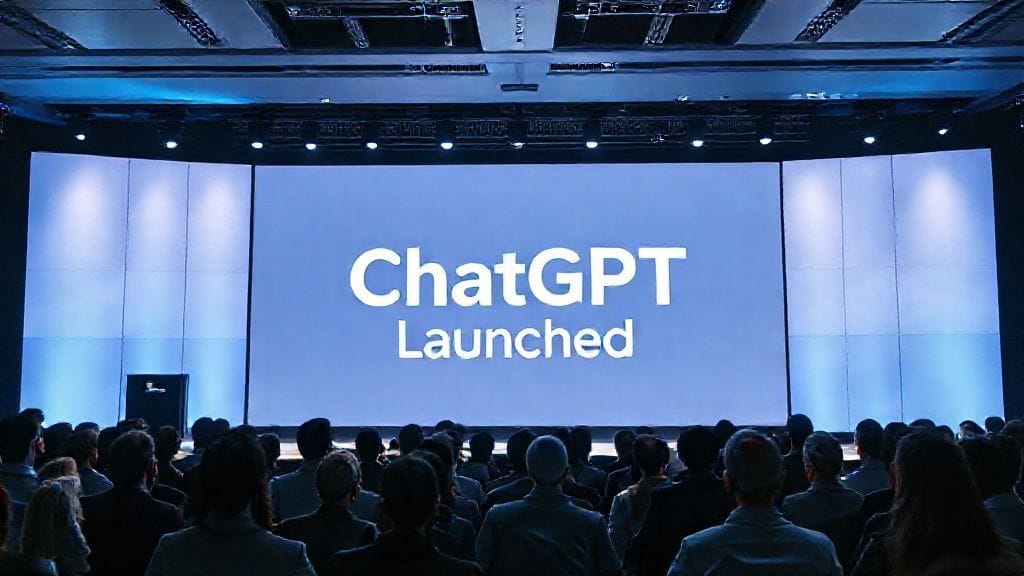
On a crisp late autumn morning of November 30, 2022, something extraordinary happened — a new kind of intelligence flickered to life on millions of screens across the world. ChatGPT, a chatbot powered by artificial intelligence and developed by OpenAI, would soon become a symbol not just of technological innovation, but also of the hopeful, anxious, and deeply human experience of grappling with machines that can speak, reason, and somehow understand us. It was a launch that quietly rippled outwards, altering how humanity would envision language, creativity, and knowledge itself.
But this was not just the unveiling of a tool — it was the beginning of a narrative where technology and humanity intertwined, creating challenges and opportunities no one quite expected. Let us journey back to understand the deep roots and expansive branches of this epochal event.
Origins of the AI Revolution: From Research Labs to Global Phenomenon
Artificial intelligence, once the province of science fiction writers and academic dreamers, had been quietly maturing for decades. The seeds sown in the mid-20th century — with landmark concepts like the Turing Test and the first neural networks — grew unevenly but persistently. Researchers, inspired equally by biology, linguistics, and mathematics, labored to build machines that could mimic human cognition. The 2010s witnessed a surge in data availability, computational power, and a different approach to AI called deep learning, turning the once-fragile visions into powerful reality.
Yet, what truly set the stage for ChatGPT was a mindset shift in creating models focused on “understanding” and generating human language. The earlier iterations of language models struggled with coherence and context. But OpenAI, founded in 2015 as a nonprofit with the ambitious goal of ensuring that AI benefits all humanity, dared to dream bigger. Their breakthroughs with the “Generative Pre-trained Transformer” (GPT) architecture, particularly GPT-3 in 2020, stunned the world with its astounding ability to produce text indistinguishable from that written by humans.
Behind those advances lay a passionate belief: AI should not just perform tasks; it should engage, converse, and inspire.
The Visionaries Behind the Curtain: OpenAI’s Bold Gamble
OpenAI’s story is as fascinating as its creations. Founded by luminaries including Elon Musk and Sam Altman, it began as a counterweight to fears that AI might be monopolized by powerful corporations or misused. The organization’s mission blended idealism and pragmatism: accelerating AI capabilities with transparency and ethical constraints. Behind this vision stood a coalition of engineers, ethicists, linguists, and dreamers.
The launch of ChatGPT was a defining moment for OpenAI. Unlike previous models released as research previews or APIs, ChatGPT was intended for mass public interaction. It needed to be not just powerful, but safe, reliable, and usable by millions. This gamble came with risks — errors, biases, and unpredictable outputs — but also with an invitation to a vast audience to experience AI firsthand.
As Sam Altman remarked during the launch, “We’re opening a new frontier of collaboration between humans and machines — not to replace us, but to amplify our creativity and understanding.”
November 30, 2022: ChatGPT Goes Live — A Digital Awakening
The exact moment the virtual doors opened, countless digital conversations began. Early users ranged from curious students and professionals to writers hungry for ideas and technophiles eager to explore. The interface was deceptively simple: a chat window where any question, task, or prompt could spark a dialogue with a seemingly sentient interlocutor.
Within hours, the genius and limitations of ChatGPT became apparent. The AI’s ability to craft essays, answer complex queries, compose poetry, or explain scientific concepts astounded users, stirring a worldwide wave of awe and excitement. In the echo chambers of Twitter, Reddit, and forums, thousands shared screenshots of mind-blowing conversations, setting viral wheels in motion.
But the day was also dotted with laughter at the AI’s occasional baffling mistakes or bizarre responses — reminders it was not human but something radically new.
First Impressions: Public Reactions and Viral Curiosity
As ChatGPT’s capabilities spread through social networks, the public faced a paradox: here was a machine that could emulate empathy, wit, and insight — yet it lacked feelings, understanding, and consciousness. Headlines ranged from “AI Writes Like Shakespeare” to “Is This the End of Traditional Education?”
Educators wondered whether students would misuse the tool; journalists debated the future of their profession; programmers saw a new co-worker, while creators imagined new forms of art.
One Twitter user wrote, “I just had a conversation with a machine that felt more profound than my chats with friends today.” Another, more skeptical, cautioned, “Beware the seduction of flawless text — it can hide a dangerous emptiness.”
The Architecture Beneath the Magic: GPT-3.5 and Beyond
What powered this digital interlocutor? ChatGPT built upon its predecessor GPT-3, but was refined into GPT-3.5, a hybrid of neural network scale, training on vast amounts of internet data, and a training technique called reinforcement learning with human feedback (RLHF). This method fine-tuned the model to better understand queries and respond more coherently and safely.
Behind the scenes, billions of parameters analyzed syntax, semantics, and context to predict and generate one word after another. This probabilistic dance created fluid narratives yet remained blind to truth or morals.
Technologists marveled at the engineering feat: leveraging enormous supercomputers and distributed data to create a model accessible to all via a simple web interface. The product was proof that AI wasn’t just for specialists anymore – it was for everyone.
A New Kind of Conversation: Human-AI Interaction Reimagined
ChatGPT introduced a novel dynamic — a “conversation” where users could not only receive information but refine, challenge, and reframe inquiries in real time. Rather than static encyclopedias or keyword searches, it felt like dialogue, with fluidity and adaptability.
This changed the very nature of knowledge access. People could ask follow-up questions, explore hypotheticals, compose drafts, or even roleplay scenarios. Education shifted from passive reception to interactive exploration.
Yet, this relational technology also raised questions: Do machines understand us or simply mimic? What responsibilities do users have when interacting with AI?
Controversies and Ethical Quandaries Emerge
No groundbreaking technology escapes ethical dilemmas. ChatGPT’s launch was shadowed by worries over misinformation, biases reflected in its training data, and potential misuse for malicious purposes like generating fake news, phishing emails, or academic dishonesty.
Experts sounded alarms on privacy, the opacity of AI decisions, and the risk of amplifying existing inequalities due to differential access.
OpenAI responded with ongoing updates, content filters, and user guidelines, but debates about transparency and accountability quickly became part of the public discourse.
Educational Landscapes Transformed — A Double-Edged Sword
Educators faced an unprecedented challenge. ChatGPT could effortlessly write essays, summarize complex texts, or assist in coding — a temptation for cheating, but also a potential tutor and partner in learning.
Some schools banned the tool; others embraced it as a pedagogical aid. The conversation became a reflection on teaching strategies and the meaning of knowledge in the digital age.
Chalkboards and lecture halls gave way to workshops on critical thinking and digital literacy. As one professor put it, “We must teach students not just to find answers, but to ask good questions — even when AI can answer for them.”
Economic Ripples: From Jobs to New Industries
While skeptics feared automation’s impact on employment, ChatGPT sparked new opportunities. Industries reimagined customer service, content creation, programming, and more. Freelancers used it to enhance creativity and productivity.
Yet, the transition was uneven. Certain sectors faced disruption, and workers confronted reskilling demands. Economists debated the balance between innovation-driven growth and social disruption.
In all, ChatGPT became a bellwether for a future economy intertwined with AI partners.
ChatGPT in the Hands of Creators and Innovators
Writers composed novels inspired by AI collaborations; programmers coded with AI assistants that debugged in real-time; entrepreneurs launched startups offering AI-enhanced services.
This co-creative process was revolutionary. ChatGPT was not just a tool but a muse, coauthor, and ally. Artists puzzled out new aesthetics, musicians explored lyrical themes, and game designers imagined adaptive narratives.
The AI held a mirror to human creativity — expanding what was possible without replacing the irreplaceable spark of imagination.
Governments and Institutions Respond: Regulation vs Innovation
ChatGPT’s global reach presented challenges for policymakers. How to harness innovation while protecting citizens from harm? Governments moved cautiously, balancing tech encouragement with privacy and security programs.
International forums debated AI standards, ethical frameworks, and the possibility of “AI arms races.” Public hearings and testimonies brought AI developers before lawmakers, highlighting the tension between speed of innovation and societal readiness.
Global Impact: Bridging Gaps or Widening Divides?
Access to ChatGPT was initially free but limited by internet infrastructure, language barriers, and digital literacy. This raised concerns about deepening the digital divide. Wealthier, English-speaking countries enjoyed greater benefits; marginalized communities risked exclusion.
Activists and educators pushed for inclusive access, localized models, and AI literacy programs. The hope remained that technology would bridge gaps, not reinforce old inequalities.
Cultural Phenomena and Memes: ChatGPT in Popular Imagination
Memes exploded — from jokes about AI’s existential angst to playful debates on whether ChatGPT could pass the Turing Test. Social media buzzed with conversations both humorous and philosophical.
TV shows, podcasts, and art responded to the new AI interlocutor. ChatGPT became a cultural icon — representing the hopes, fears, and curiosities of a society confronting a radical new presence in daily life.
The Evolution Continues: From ChatGPT to GPT-4 and Beyond
The launch was only the prologue. OpenAI and others continued pushing boundaries. GPT-4, released later, offered improved understanding, factual accuracy, and multimodal capabilities.
Each upgrade raised new possibilities and concerns. Researchers sought to balance power with alignment — ensuring AI’s behavior matched human values.
The narrative of ChatGPT was, in many ways, a story about continuous evolution.
Reflections from the AI Community: Triumphs and Trials
AI researchers and ethicists reflected on ChatGPT as both a technological marvel and a cautionary tale. The launch accelerated conversations about AI’s role in society, the need for interdisciplinary collaboration, and the importance of humility in shaping such powerful tools.
OpenAI’s transparency and community engagement were hailed as milestones, yet challenges remained profound.
Stories Shared: Users and Their Unexpected Journeys
From students overcoming language barriers to entrepreneurs transforming businesses, thousands shared personal stories of how ChatGPT affected their lives.
One writer credited the AI with saving her during a writer’s block. Another engineer found a co-developer who never slept. These narratives revealed the human heart beating beneath silicon codes.
The Philosophical Debate: What Does It Mean to Be “Intelligent”?
ChatGPT’s ability to generate coherent text sparked renewed questions about consciousness, understanding, and intelligence. If a machine can simulate empathy and wisdom, what distinguishes human thought?
Philosophers pondered the difference between mimicry and genuine cognition. Linguists examined the nature of meaning. Psychologists explored human reactions to interacting with AI “others.”
This dialogue between mind and machine reshaped fundamental ideas about identity and knowledge.
Behind the Screens: The Human Labor Powering AI
A less visible story involved millions of hours from researchers, data labelers, ethicists, and server operators who made ChatGPT possible. Many of these workers often remain anonymous — the unsung architects supporting AI’s star.
Acknowledging this human dimension reminds us that AI is not autonomous magic but a collective human endeavor.
The Future of Language and Knowledge in the Age of ChatGPT
ChatGPT launched a new era where language is simultaneously tool and collaborator. It challenges traditional gatekeepers of knowledge, democratizes access, and invites new forms of expression.
At the same time, it compels society to rethink trust, authenticity, and the pathways through which we learn.
The journey ahead is uncertain but filled with promise — a testament to humanity’s ceaseless quest to understand itself through its own creations.
Conclusion
ChatGPT’s launch on November 30, 2022, was more than a technological milestone — it was a moment of profound transformation. Like the printing press, the telephone, or the internet before it, ChatGPT reshaped communication and knowledge. It opened a dialogue about the very nature of intelligence, creativity, and connection.
Yet, the journey remains human at its core. The AI does not replace us; it challenges us to reflect on what makes us uniquely human. It invites us to collaborate and co-create, to envision futures where technology is an extension of our highest aspirations. ChatGPT was a promise — and a responsibility — to cultivate a smarter, more empathetic world.
As we continue to write this unfolding story, one truth stands clear: the launch was not just the birth of a chatbot, but the dawn of a new chapter in humanity’s ever-evolving conversation with itself.
FAQs
Q1: What exactly is ChatGPT and why was its launch significant?
A1: ChatGPT is an AI-powered chatbot developed by OpenAI, capable of generating natural language conversations. Its launch brought AI language capabilities into the mainstream, transforming public interaction with machines and raising questions about the future of communication and knowledge.
Q2: Who were the key figures behind ChatGPT’s development?
A2: OpenAI’s team, including CEO Sam Altman and lead researchers, played central roles. Founders like Elon Musk inspired the initial vision, but the development involved hundreds of engineers, scientists, and ethicists.
Q3: How did ChatGPT impact education?
A3: It transformed learning by providing instant, tailored assistance but also created challenges related to academic integrity and reliance on AI. Educational institutions grappled with integrating AI responsibly.
Q4: What ethical concerns arose from ChatGPT’s launch?
A4: Concerns included potential misuse, biases in training data, misinformation, privacy issues, and the digital divide. OpenAI implemented safeguards but the debate continues.
Q5: How has ChatGPT influenced culture and creativity?
A5: It became a co-creator in art, literature, and entertainment, inspiring new genres and media formats while simultaneously sparking philosophical and humorous discussions in popular culture.
Q6: What role did governments play following ChatGPT’s launch?
A6: Policymakers began exploring AI regulations, aiming to balance innovation with challenges like security, ethical use, and societal impact.
Q7: Is ChatGPT conscious or truly intelligent?
A7: No. While it can simulate understanding and conversation, ChatGPT lacks consciousness or genuine comprehension — it operates through pattern recognition and data probabilities.
Q8: What is the legacy of ChatGPT’s launch today?
A8: It marked an inflection point in AI accessibility, shaping the interaction between humans and technology and laying the foundation for successive AI advancements with profound social implications.