Table of Contents
- The Calm Before the Catastrophe: Valdivia in Early May 1960
- A Tremor Felt Around the World: The Prelude to Disaster
- May 22, 1960: The Great Chilean Earthquake Strikes
- The Ground Breaking Apart: Nature’s Unleashing in Valdivia
- From Rupture to Wave: Birth of the Pacific Tsunami
- The Tsunami’s Unrelenting March Across the Pacific Ocean
- Hawaii and Japan: The Tsunami’s Twin Temples of Devastation
- Emergency in Chile: Rescue and Recovery During Chaos
- The Human Stories Beneath the Ruins: Heroism and Tragedy
- Global Response and Aid: A World United in Crisis
- Geology of the Disaster: Understanding the Megathrust Earthquake
- The Chilean Earthquake in Scientific Perspective: A Turning Point
- Political and Social Aftershocks: The Earthquake’s Impact on Chilean Society
- Reconstruction and Resilience: Chile’s Long Road to Recovery
- Environmental Transformation: Landscape Changes and Lasting Scars
- Lessons Learned: Tsunami Warning Systems and Preparedness
- Remembering 1960: Memorials and Collective Memory in Chile
- The Chilean Earthquake and Tsunami in Global Disaster History
- Modern Reflections: How Technology Changed Disaster Response
- Conclusion: The Indomitable Spirit Beneath the Waves
- FAQs
- External Resource
- Internal Link
The morning of May 22, 1960, dawned over the lush greenery and rushing rivers of Valdivia, Chile—a city nestled in the southern part of the country, surrounded by dense forests and the whisper of the Pacific Ocean. It was a day like any other, the air heavy with the scent of pine and sea salt, but beneath the surface, the Earth was preparing a violent awakening—a primordial rupture that would shake the very foundations of human understanding and reshape the lives of millions for decades to come.
This is the story of the Great Chilean Earthquake and the Pacific Tsunami of 1960, the most powerful seismic event ever recorded, a catastrophic force of nature that unleashed unimaginable power beneath the ocean floor and sent towering waves crashing across the Pacific Rim. More than a historical fact, this event was a human drama of survival, loss, resilience, and scientific breakthrough, emblematic of our fight against nature's most fearsome expressions.
The Calm Before the Catastrophe: Valdivia in Early May 1960
For weeks leading up to the disaster, life in Valdivia carried on with its usual rhythm. The city, known for its Germanic architecture and close-knit communities, was an industrial and agricultural hub—its heart beating quietly along the banks of the Calle-Calle River. Fishingboats dotted the coastline, and the people knew instinctively the always-present risks of living beside the volatile Pacific "Ring of Fire." Yet complacency crept in, as the earth showed no sign of the looming menace beneath.
Chile rested uneasily on a series of complex tectonic boundaries: the Nazca Plate pressing beneath the South American Plate, an inexorable tectonic ballet with a deadly potential. Yet, in the early morning light, not even the most seasoned seismologist could have predicted a magnitude 9.5 earthquake, a seismic titan whose reverberations would be felt across the globe.
A Tremor Felt Around the World: The Prelude to Disaster
Early on May 21, subtle tremors began rattling parts of southern Chile. Minor quakes, easily dismissed by locals as routine geological murmurs, foreshadowed the cataclysm. Internationally, microseismic activity caught the attention of observatories, but communication was slower in that era, and the true scale was yet unknown.
Seismographs registered activity south of Valdivia, where the subduction zone lurked. A tension had been building steadily over centuries—a slow accumulation of strain along an immense fault line. The Earth's crust, like a coiled spring, was preparing to snap.
May 22, 1960: The Great Chilean Earthquake Strikes
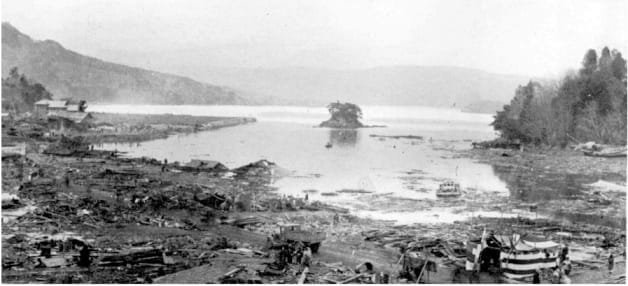
At 3:11 pm local time, the ground convulsed with an unimaginable force. The earthquake lasted approximately 10 minutes, but the horror stretched far beyond those moments of shaking. Buildings that had stood for decades crumbled like sandcastles. Bridges snapped, roads buckled, and entire neighborhoods were swallowed by fissures and landslides.
Valdivia was ground zero of this monstrous rupture. Eyewitnesses spoke of a sky darkened by dust, trees ripped from their roots, and rivers briefly running backward—a surreal and terrifying spectacle. The Earth's crust along a seismogenic fault, spanning over 1000 kilometers, abruptly shifted, releasing colossal energy.
The Ground Breaking Apart: Nature’s Unleashing in Valdivia
The land itself fractured—thousands of aftershocks following the main quake underscored the volatility. In some places, the terrain subsided by several meters, turning fertile fields to marshlands and swallowing homes. The Cordillera of the Andes trembled, while the Pacific Plate plunged beneath the continent in a historically unprecedented release.
Amid the chaos, fires broke out, waterways were disrupted, and the local infrastructure was shattered. The immediate threat was far from over.
From Rupture to Wave: Birth of the Pacific Tsunami
What happened in the depths of the ocean would prove deadly far beyond Chile’s shores. The massive displacement of the seabed generated infamously high tsunami waves—some exceeding 20 meters (65 feet) in height—that sped across the Pacific Ocean at hundreds of kilometers per hour.
These tsunamis arrived quickly, a grim vanguard of destruction that caught many coastal populations by surprise.
The Tsunami’s Unrelenting March Across the Pacific Ocean
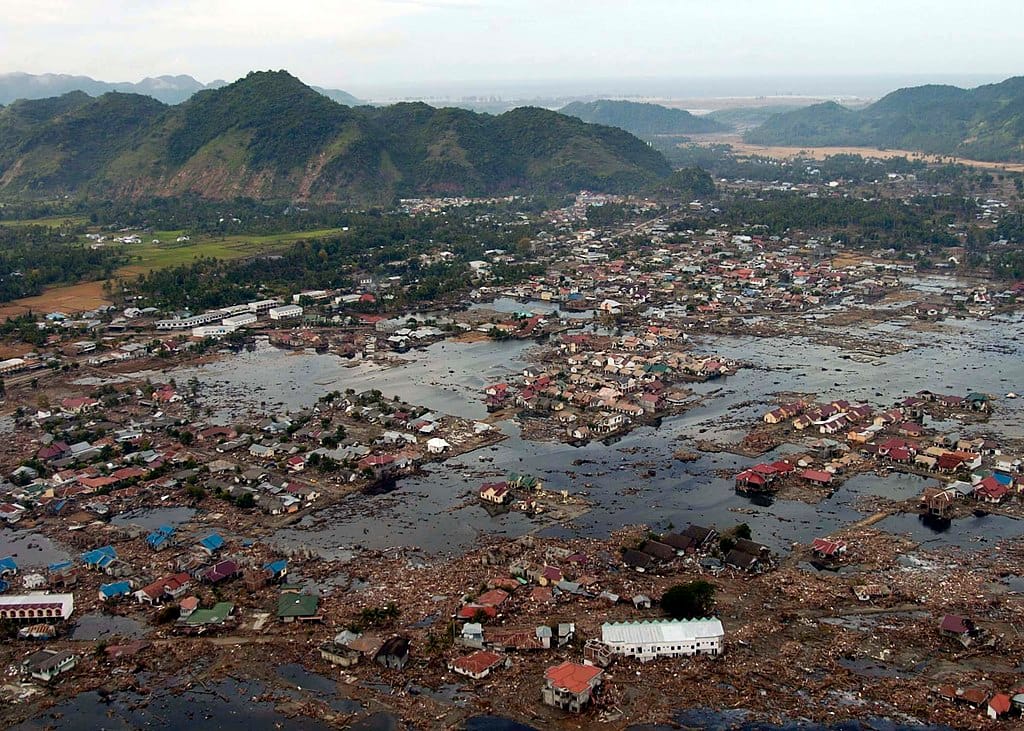
As waves surged onward, the scale of tragedy expanded. Hawaii, nearly 10,000 kilometers away, bore the brunt with devastating effects—the towns of Hilo and other coastal communities saw significant damage and loss of life, despite some warning due to the quake’s report.
Japan, far on the opposite Pacific Rim, also faced deadly waves. Entire fishing villages were washed out, lives were lost, and ports destroyed. The tsunami crossed thousands of miles, a reminder that Earth’s disturbances respect no borders.
Hawaii and Japan: The Tsunami’s Twin Temples of Devastation
In Hilo, the Pacific’s fury upended the town’s rhythm. Streets flooded, boats were torn from moorings, and buildings collapsed. More than 60 lives were lost. News footage of the moment captured immense waves swallowing the shoreline—a spectacle simultaneously terrifying and mesmerizing.
Japan, with its own complex history of seismic disasters, experienced waves that destroyed homes and killed more than 140 people. The 1960 tsunami was a stark reminder that the Pacific Basin was an interconnected zone of risk.
Emergency in Chile: Rescue and Recovery During Chaos
Back in Chile, relief efforts began under desperate conditions. Communication networks were down, roads treacherous, and many areas inaccessible. Yet, the people of Valdivia and across the south banded together—neighbors rescuing neighbors, makeshift hospitals set amidst ruins.
Aid from the Chilean government and international organizations poured in, but the scale of destruction meant that basic services were hard to restore. Thousands became displaced, and entire communities vanished.
The Human Stories Beneath the Ruins: Heroism and Tragedy
Among the despair, stories of courage emerged. Firefighters battled infernos, fishermen warned others despite their own losses, and children survived under collapses. Heartbreaking accounts of families torn apart sat alongside tales of neighbors sheltering the vulnerable.
Maria Perez, a nurse in Valdivia, recalled, “We worked without rest; every life saved was a triumph against the overwhelming night.”
Such personal accounts add a human face to what might otherwise be dry statistics.
Global Response and Aid: A World United in Crisis
The disaster drew immediate international attention. Aid agencies from multiple countries offered assistance—medical personnel, food supplies, and reconstruction expertise.
The event also marked one of the first truly global responses to a natural disaster of this scale. It highlighted the need for international cooperation in the face of such humanitarian crises.
Geology of the Disaster: Understanding the Megathrust Earthquake
The 1960 Valdivia earthquake was a megathrust event along the Peru-Chile trench, where one tectonic plate slides beneath another. Its magnitude, officially recorded at 9.5, remains the largest instrumentally measured earthquake.
Scientific investigations afterward revealed the earthquake ruptured over a 1,000 km fault zone—a staggering scale—and displaced the sea floor by as much as 20 meters in places.
This unleashed the massive tsunami and redefined scientific theories about earthquake potential.
The Chilean Earthquake in Scientific Perspective: A Turning Point
Before 1960, few understood the full implications of megathrust quakes. The data gathered from Valdivia revolutionized seismology, tsunami science, and risk assessment.
The event underscored the imperative for early warning systems, land-use planning, and public education to mitigate future disasters.
Political and Social Aftershocks: The Earthquake’s Impact on Chilean Society
Politically, the disaster struck during a period of social tensions. The government's response was criticized in some quarters, triggering public debate about state preparedness and infrastructure investment.
Societally, the earthquake prompted migration from rural devastated areas to urban centers, fostering demographic shifts. The nation grappled with long-term rebuilding alongside rebuilding national identity and spirit.
Reconstruction and Resilience: Chile’s Long Road to Recovery
Reconstruction took years. Entire towns were relocated, infrastructure upgraded, and modern building codes adopted. Chile’s experience became a case study in resilience, blending tradition with innovation.
The city of Valdivia was rebuilt with an eye toward earthquake resistance, while community solidarity remained a bulwark against despair.
Environmental Transformation: Landscape Changes and Lasting Scars
Nature itself was altered. Land subsidence created new wetlands; rivers changed courses; some forests were decimated by landslides.
These changes affected ecosystems and agriculture, forcing locals to adapt to a new environment forged by catastrophe.
Lessons Learned: Tsunami Warning Systems and Preparedness
In the aftermath, the international community invested heavily in tsunami research and warning systems. The Pacific Tsunami Warning Center was established in Hawaii, heralding an era where science sought to prevent loss of life from such events.
Public awareness campaigns encouraged evacuation drills, improved coastal hazard mapping, and intergovernmental cooperation.
Remembering 1960: Memorials and Collective Memory in Chile
Decades later, the Great Chilean Earthquake remains etched in national memory. Memorials, museums, and literature preserve its legacy, honoring victims and celebrating resilience.
Annually, Chile commemorates this moment, ensuring that lessons are not forgotten and that the human cost of natural disasters is always recognized.
The Chilean Earthquake and Tsunami in Global Disaster History
Globally, the 1960 event serves as a benchmark in disaster history—not merely for its magnitude but for what came after. It forged a path for global disaster awareness, science-driven response, and humanitarian cooperation.
Its story informs contemporary responses to catastrophic natural events, emphasizing respect for nature’s immense power.
Modern Reflections: How Technology Changed Disaster Response
Today, satellites, real-time sensors, and global telecommunications mean that if such a quake happened again, warnings would be faster, saving countless lives.
The Chilean disaster is a stark reminder of the advances made and challenges remaining.
Conclusion
The 1960 Chile–Pacific Tsunami remains one of humanity’s most humbling encounters with nature’s indifferent might. Yet, amid the rubble and sorrow, it illuminated the undying spirit of communities bound by fate and forged in adversity.
Valdivia and its people teach us that while we cannot control the Earth’s wrath, through knowledge, cooperation, and resilience, we can rise, rebuild, and remember—transforming tragedy into a beacon for future generations.
FAQs
Q1: What caused the 1960 Valdivia earthquake and tsunami?
A1: The earthquake was caused by the sudden release of accumulated strain along the subduction zone where the Nazca Plate slides beneath the South American Plate. This megathrust rupture triggered a massive tsunami.
Q2: How powerful was the 1960 Chile earthquake?
A2: With a magnitude of 9.5, it is the largest earthquake ever recorded by modern instruments.
Q3: How far did the tsunami generated by this earthquake travel?
A3: The tsunami traveled across the entire Pacific Ocean, impacting countries as far away as Hawaii, Japan, the Philippines, and even New Zealand.
Q4: What were the immediate human consequences of the earthquake and tsunami?
A4: Approximately 1,600 to 6,000 people died, with tens of thousands injured or displaced. Entire cities were devastated, and infrastructure was destroyed.
Q5: How did this disaster influence seismic research and tsunami warning systems?
A5: It was pivotal in advancing understanding of megathrust earthquakes and led to the foundation of the Pacific Tsunami Warning Center and other disaster preparedness systems worldwide.
Q6: What lasting changes did the earthquake bring to Chile’s geography?
A6: The ground subsided in many areas, new wetlands formed, river courses shifted, and large landslides reshaped the landscape.
Q7: How is the 1960 earthquake remembered in Chile today?
A7: Through annual commemorations, memorials, museums and education programs that honor victims and promote disaster preparedness.
Q8: Were there heroic acts during the disaster?
A8: Yes; countless stories of bravery, from rescuers, medical workers, and ordinary citizens, highlighted human solidarity amidst the catastrophe.