Table of Contents
- The Moment the Earth Roared: The Chirinkotan Eruption’s Explosive Dawn
- Setting the Stage: The Geology of the Kuril Islands
- Chirinkotan Island: A Wild Frontier of Fire and Ice
- The Quiet Before the Storm: Pre-eruption Signs and Tensions
- The Day the Volcano Awoke: A Narrative of 2013’s First Blast
- Capturing Chaos: Eyewitnesses and Scientific Observations
- Into the Sky: Ash Clouds and the Threat to Air Traffic
- The Fury Beneath: Understanding Magma and Eruption Mechanics
- Volcanic Impacts on Local Ecosystems and Marine Life
- Human Presence and the Limits of Survival in the Kurils
- Russia’s Monitoring Efforts: Science Meets Nature’s Wrath
- Global Implications: From Air Routes to Climate Patterns
- Voices of the Volcano: Scientists, Historians, and Eyewitness Accounts
- Stories From the Edge: Tales of Isolation and Resilience
- The Aftermath: Assessing Damage and Natural Recovery
- Volcanoes as Time Capsules: Chirinkotan and Geological Legacy
- The Kuril Islands in the Balance: Geopolitical Context and Environmental Challenges
- Lessons Learned: Advances in Volcanology Post-2013 Eruption
- The Ever-Present Threat: Chirinkotan’s Past and Future Eruptions
- Remembering 2013: A Landmark Event in Pacific Volcanism
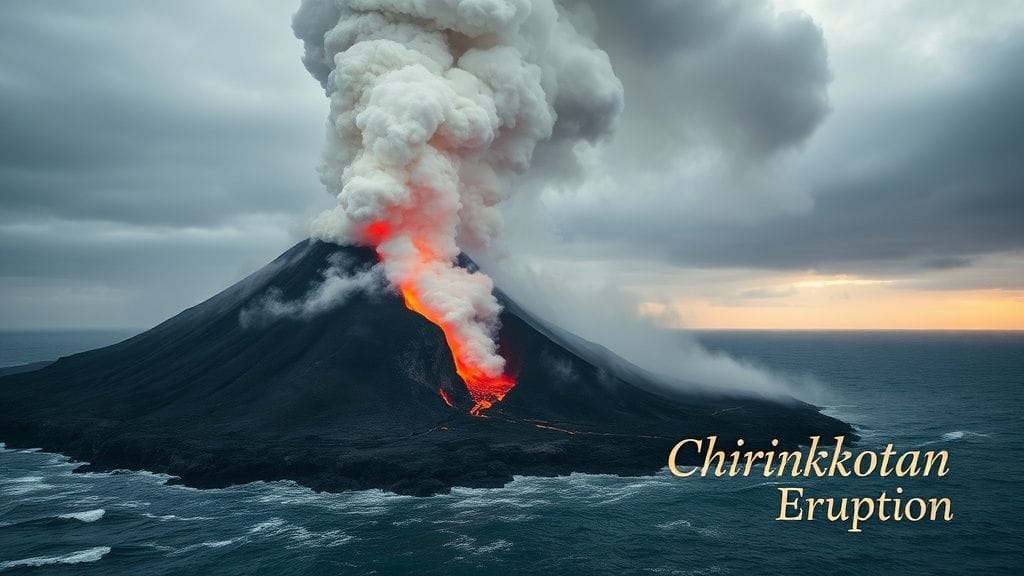
The moment the earth declared its restless spirit was not heralded by fanfare, but by a sudden, deafening roar that shattered the eerie calm of the northern Pacific. In August 2013, Chirinkotan, a small uninhabited volcanic island in the heart of the Kuril archipelago, belched fire and ash into skies that had just begun to soften under the blush of dawn. It was a spectacle simultaneously terrifying and mesmerizing, a living testament to the ceaseless power coaxed from the earth's molten heart. But this eruption was more than a natural display; it was a vivid chapter in an ongoing geological story, one that threads together science, history, and human curiosity.
Setting the Stage: The Geology of the Kuril Islands
The Kuril Islands form a fiery necklace stretching nearly 1,300 kilometers from Russia’s Kamchatka Peninsula to Japan’s Hokkaido. Forged in the crucible of the Pacific Ring of Fire, they represent one of Earth's most volatile volcanic chains. Beneath their rugged, often snow-capped peaks, tectonic plates vault beneath each other in a deadly dance. This subduction gives birth not just to mountains but to a suite of active volcanoes, with Chirinkotan among the most enigmatic.
This volcanic arc was sculpted over millions of years by the relentless collision of the Pacific Plate descending beneath the Eurasian Plate. The resulting magma chambers bubble just beneath the surface, sometimes breaking through in violent fits of activity. Chirinkotan itself is a product of these vast geological forces—an island born not of gentle accumulation but of fiery, cataclysmic upheaval.
Chirinkotan Island: A Wild Frontier of Fire and Ice
Small, rugged, and remote, Chirinkotan measures barely five kilometers across, shaped like a jagged cone rising from the depths. Its slopes are cloaked in barren rock and sparse tundra, devoid of permanent human settlements yet rich in volcanic history. To stand on Chirinkotan is to witness the raw immediacy of nature’s power—where every breath of wind carries the subtle hint of sulfur, where the ground beneath whispering secrets from ancient lava flows.
Despite its seeming desolation, the island is part of a larger ecosystem. Seabirds nest along its cliffs, sea lions haul out on its shores, and beneath its waves, marine life thrives in the mineral-rich waters. Yet, this fragile balance teeters precariously in the face of volcanic awakening.
The Quiet Before the Storm: Pre-eruption Signs and Tensions
In the weeks leading up to August 2013, subtle tremors rippled through Chirinkotan’s volcanic heart. Seismic stations, though sparse, caught faint rumbles—a language only geologists could begin to translate. Gas emissions increased, painting the sky with faint plumes of sulfur dioxide, signaling magma's slow but inevitable rise.
Such indicators, while ominous, did not immediately threaten human settlements, given the island’s unpopulated status. Yet for scientists and local authorities, they cast a shadow of concern. The Kurils have a history of unpredictable eruptions; a quiet volcano could awaken as suddenly as a sleeping giant disturbed.
The Day the Volcano Awoke: A Narrative of 2013’s First Blast
August 2013 arrived like any other day amid the remote Kurils—fog hung low and cold winds swept the island chain. Then came the eruption: a towering column of ash and smoke blasted into the sky, visible from afar and disrupting the placid surface of the sea around it. The explosion shattered the silence, replacing it with the roar of nature unleashed.
Volcanic bombs rained upon the slopes, molten rock carving new paths down the flanks. Ash darkened the skies, drifting with the prevailing winds across the northern Pacific. The eruption escalated quickly but retreated just as mysteriously, leaving a transformed landscape crowned with fresh volcanic deposits.
Capturing Chaos: Eyewitnesses and Scientific Observations
Given Chirinkotan’s inhospitable nature, eyewitness reports were limited, filtered mostly through the lens of scientific instrumentation and remote sensing. Satellites captured vivid thermal images, revealing the glowing heart beneath the ash. Seismic stations recorded the eruption's violent pulse, allowing researchers to piece together its intensity and chronology.
Scientists from the Kamchatka Volcanic Eruption Response Team and other institutions scrambled to interpret the data, balancing natural curiosity with the urgency of monitoring an unpredictable force.
Into the Sky: Ash Clouds and the Threat to Air Traffic
The eruption’s ash plume soared high into the troposphere, quickly becoming a navigational hazard. Commercial and military air routes over the northern Pacific faced sudden closures or rerouting, given the capacity of volcanic ash to scour jet engines and jeopardize flights.
International aviation authorities issued warnings as ash dispersed eastward, highlighting the global implications of such remote volcanic events. It was a stark reminder that even isolated islands like Chirinkotan can influence far-reaching networks and economies.
The Fury Beneath: Understanding Magma and Eruption Mechanics
To grasp the Chirinkotan eruption is to peer deep into the mechanisms fueling such display. Magma—molten rock mingled with volatile gases—accumulated beneath the volcano, its pressure mounting until a critical threshold was breached.
The eruption in 2013 was likely of the vulcanian or strombolian type, characterized by explosive bursts that expel ash, bombs, and gases in violent fits rather than steady lava flows. These patterns code into the petrology of the island’s rocks and the seismic signature recorded that summer.
Volcanic Impacts on Local Ecosystems and Marine Life
Although no human settlements suffered directly, the eruption fundamentally disturbed local ecological webs. Ash fall altered water chemistry and sunlight penetration, while shockwaves affected marine mammals and fish populations in the surrounding seas.
Yet ecosystems on Chirinkotan are resilient; in time, volcanic soils often rejuvenate plant life, fostering new biological niches. The aftermath weaves a complex tale of destruction and rebirth, where nature’s cycles rewrite themselves.
Human Presence and the Limits of Survival in the Kurils
The Kuril Islands, including Chirinkotan, have long posed challenges for habitation—harsh weather, seismic instability, and isolation define them. Indigenous Ainu peoples once traversed these lands, but permanent settlements are rare.
The 2013 eruption underscored these vulnerabilities: even modern technology struggles when faced with nature’s sudden fury in such remote locales. Emergency response is limited, underscoring ecological and human fragility.
Russia’s Monitoring Efforts: Science Meets Nature’s Wrath
Post-2013, Russian volcanic monitoring intensified, blending satellite surveillance with ground-based seismographs. The Russian Academy of Sciences and agencies like the Kamchatka Volcanic Eruption Response Team enhanced their capabilities, aiming to reduce risks to air traffic and anticipate future outbursts.
This event exemplified the balance between scientific foresight and humbling unpredictability.
Global Implications: From Air Routes to Climate Patterns
While Chirinkotan’s 2013 eruption was relatively localized, it carried ripples beyond the archipelago. Ash clouds disrupted trans-Pacific flights, reminding global aviation of volcanic vulnerabilities. Furthermore, volcanic emissions of sulfur dioxide injected particles into the atmosphere, influencing short-term regional climate.
Though this particular eruption did not trigger profound climate shifts, it demonstrated how even isolated volcanic events contribute cumulatively to global atmospheric chemistry.
Voices of the Volcano: Scientists, Historians, and Eyewitness Accounts
In the wake of the eruption, experts recounted a shared awe. “Watching from satellite data, you feel both humbled and privileged,” noted volcanologist Dr. Svetlana Petrova.
Historians placed Chirinkotan’s 2013 eruption within a long timeline of Pacific Ring of Fire activity, drawing parallels to other significant events like the 2009 eruption of Kasatochi nearby.
Eyewitness accounts, though sparse, conveyed a quiet reverence for a world shaped by elemental forces.
Stories From the Edge: Tales of Isolation and Resilience
The Kurils, often perceived as a stark wilderness, are also a place of human endurance. From sparse fishing expeditions to scientific outposts, people who navigate these islands carry stories of adaptation amid volatility.
The 2013 eruption added a dramatic chapter—a reminder that survival in such environments demands respect for the land’s caprices.
The Aftermath: Assessing Damage and Natural Recovery
Though damage was limited, the eruption’s footprint was undeniable. Satellite imagery revealed changed landscapes; new lava flows redefined Chirinkotan’s surface. Recovery would be slow, dictated by weather and ongoing volcanic activity.
Scientists monitor for aftershocks, new vents, and resurgent activity, mindful that volcanoes rarely rest long.
Volcanoes as Time Capsules: Chirinkotan and Geological Legacy
Each eruption writes a new layer in a geological archive. Chirinkotan’s 2013 event adds to a timeline chronicling earth’s evolving crust. Studying these layers provides insights into mantle processes, climatic interaction, and planetary change over millennia.
In this way, the eruption is both an ending and a beginning—a chapter in an ancient story.
The Kuril Islands in the Balance: Geopolitical Context and Environmental Challenges
The Kurils remain a geopolitical flashpoint between Russia and Japan, with implications for sovereignty and resource rights. Natural disasters such as volcanic eruptions further complicate management and environmental stewardship.
The 2013 eruption, though natural, became part of a larger narrative shaped by human politics and ecological uncertainty.
Lessons Learned: Advances in Volcanology Post-2013 Eruption
In the eruption’s aftermath, research efforts yielded new understandings of volcanic precursors and eruption dynamics. Improved remote sensing, seismic monitoring, and gas emission detection have advanced predictive models.
The Chirinkotan event underscored the necessity of continued investment in monitoring remote volcanoes within global safety frameworks.
The Ever-Present Threat: Chirinkotan’s Past and Future Eruptions
History reminds us this was not the first such eruption; Chirinkotan has periodically awakened, each time reshaping local geography and ecosystems.
Scientists anticipate future eruptions, knowing that preparedness hinges on respect for nature’s rhythms. Chirinkotan remains a symbol of the planet’s fiery heartbeat.
Remembering 2013: A Landmark Event in Pacific Volcanism
The 2013 eruption stands as a defining moment in recent volcanic history. It reinvigorated scientific interest in the Kurils and spotlighted the challenges posed by remote natural disasters.
For all who observed or studied it, Chirinkotan’s violent outburst became a vivid reminder of Earth’s living, breathing geology—ever dynamic, often dangerous, eternally fascinating.
Conclusion
The Chirinkotan eruption of 2013 was far more than a geological event confined to a remote island chain. It was a dramatic exclamation point in the narrative of Earth’s restless forces, a powerful reminder of the planet’s ongoing dialogue between fire and stone. From the quiet rumblings beneath the surface to the breathtaking explosion that sent ash high into the sky, this event drew together threads of science, history, and human experience.
Though devoid of permanent human settlements, Chirinkotan’s awakening touched global networks—disrupting air traffic, reshaping ecosystems, and challenging our ability to predict and adapt. It stands as a testament not only to nature’s raw power but also to humanity’s humility in the face of such grandeur.
Volcanoes like Chirinkotan do more than reshape landscapes; they forge our understanding of the Earth’s past and future. Each eruption is a story etched into rock, a moment in time where the planet speaks, commanding attention and respect.
In remembering 2013, we honor the volatile beauty of our world and recommit to watching, learning, and coexisting with the powerful forces that shape our shared home.
FAQs
1. What caused the Chirinkotan eruption in 2013?
The eruption was caused by the subduction of the Pacific tectonic plate beneath the Eurasian plate, which leads to magma rising and building pressure until it explosively vents through the earth’s crust. Increased seismic activity and gas emissions preceded the eruption, signaling magma movement.
2. Were there any human casualties or damages from the eruption?
No human casualties or significant damages occurred, primarily because Chirinkotan is uninhabited. However, the eruption posed risks by disrupting air traffic and affecting marine ecosystems.
3. How was the eruption monitored and studied?
Russian geological institutions used seismic stations, satellite remote sensing, gas emission measurements, and aerial surveillance to monitor Chirinkotan before, during, and after the eruption.
4. What is the significance of Chirinkotan within the Kuril Islands?
Chirinkotan is a notable volcano in the volatile Kuril chain, exemplifying the region’s ongoing tectonic activity and serving as an important natural laboratory for studying volcanic processes.
5. How did the eruption affect air traffic in the region?
The ash plume reached altitudes that posed hazards to aircraft, leading to flight disruptions, rerouting, and aviation warnings over the northern Pacific.
6. What ecological effects did the eruption have?
Ash fall and marine changes impacted local plant and animal life, temporarily disturbing ecosystems but also laying groundwork for regeneration through volcanic soil nutrients.
7. How does the 2013 eruption compare to past Chirinkotan eruptions?
It was consistent with historic patterns of periodic but explosive eruptions, reinforcing knowledge of the volcano’s behavior and the importance of ongoing monitoring.
8. What lessons have volcanologists learned from this eruption?
The event highlighted the value of integrating satellite data with ground-based observations, improving eruption forecasting, and enhancing responses to volcanic hazards in remote areas.

