Table of Contents
- A Fiery Awakening: The Cleveland Volcano Comes to Life
- The Aleutian Archipelago: A Volcanic Frontier
- Historical Footprints: Cleveland’s Past Explosive Episodes
- The Geological Secrets Beneath the Surface
- The Calm before the Storm: Early Signs in 2011
- The First Eruption: April’s Sudden Fury
- From Ash Clouds to Air Travel Disruptions: Immediate Impact
- Monitoring the Sleeping Giant: Scientific Efforts and Challenges
- The Human Element: Local Communities and Emergency Preparedness
- Environmental Reverberations: Ecosystems Under Siege
- The Volcano’s Voice: Seismic Activity and Volcanic Plumes
- Media Coverage and Public Perception: Fear and Fascination
- The Complex Dance with Nature: Volcanic Benefits and Risks
- Lessons from the Aleutians: Advances in Volcanology
- The Aftermath: Quiet Resilience Amidst the Ash
- Cleveland’s 2011 Eruption: A Case Study in Modern Disaster Management
- Global Connectedness: The Ripple Effect on Aviation and Climate
- Personal Stories: Eyewitness Accounts and Scientific Narratives
- The Favor of Silence: What Followed the Fiery Outburst
- Looking Forward: The Future of Cleveland and the Aleutian Volcanoes
- Commemorating a Natural Wonder: Memory and Scientific Inquiry
1. A Fiery Awakening: The Cleveland Volcano Comes to Life
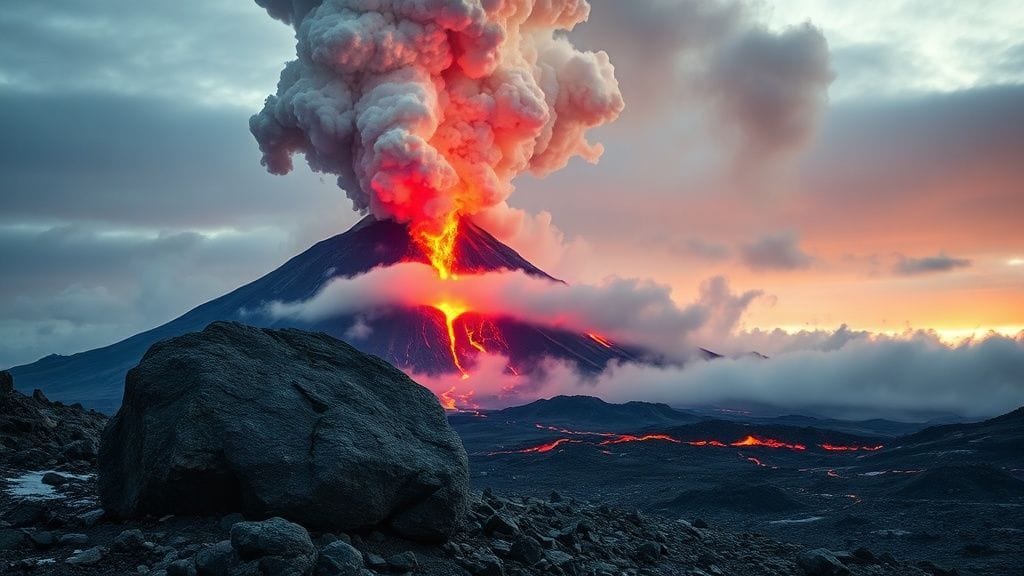
On a chilly spring day in 2011, the starkly beautiful Aleutian Islands, stretching like a line of emerald jewels over the North Pacific, were suddenly veiled in a veil of ash. From the rugged slopes of Mount Cleveland—a volcano both revered and feared—rose a towering plume of smoke, sulphur, and rock debris, signaling one of the most dynamic volcanic episodes in recent Alaskan history. It wasn’t a spectacle witnessed by bustling cities or crowded streets but by the relentless ocean winds and the quiet monitors of the United States Geological Survey (USGS).
The eruption was as sudden as it was powerful. Dense gray clouds swirled into the sky, blotting the blue canvas and shifting the Aleutian horizon into a landscape from a primordial Earth. This outburst was a vivid reminder of the restless nature beneath the Earth’s crust and the delicate balance that shapes our planet’s surface. It was a day when science, nature, and human vigilance came face to face.
2. The Aleutian Archipelago: A Volcanic Frontier
Stretching over 1,200 miles, the Aleutian Islands form a narrow volcanic arc—the westernmost extension of the Ring of Fire, where the Pacific Plate slips below the North American Plate. This collision crafts fierce geological drama with over 80 volcanoes spaced like sentinels across the islands, half of which are active.
Among them, Mount Cleveland stands as one of the most persistently active but also one of the least accessible. Located on uninhabited Chuginadak Island, it is isolated, encircled by the unforgiving sea and harsh weather—a place where only the hardiest birds and occasional scientific expeditions dare to tread. Yet despite its remoteness, its eruptions can have far-reaching effects, especially on trans-Pacific air routes and local ecosystems.
3. Historical Footprints: Cleveland’s Past Explosive Episodes
While the 2011 eruption is the focal point of this narrative, Cleveland’s volcanic temperament is far from new. Historical observations date back to the early 19th century when explorers and native Aleut populations first chronicled dark smoke rising from its summit. Over the decades, intermittent explosive eruptions marked its history, most notably a strong eruptive sequence in the mid-20th century.
However, before the satellite era offered real-time data, much of Cleveland’s activity remained shrouded in mystery. Intermittent tremors and occasional ash clouds were often the only clues of the mountain’s internal unrest. This volatile history set the stage for a more detailed scrutiny of future eruptions.
4. The Geological Secrets Beneath the Surface
Beneath the imposing peak lies a complex magma chamber fed by subducted oceanic crust, heated and pressurized to the breaking point. This geodynamic process propels molten rock upward, breaking through the crust with explosive energy.
Cleveland’s eruptions are typically Strombolian to Vulcanian in nature—a violent burst of gas and ash mixed with incandescent rock fragments. The frequent activity suggests a dynamic magmatic system, with frequent pressure buildup and release cycles rather than massive, infrequent cataclysms.
Volcanologists view Cleveland as a natural laboratory where the mechanics of volcanic eruptions can be observed, modeled, and better understood.
5. The Calm before the Storm: Early Signs in 2011
In early 2011, preliminary records showed an uptick in seismic activity beneath Cleveland. Small tremors rattled the island, subtle ground deformations teased sensors, and minor emissions hinted at deeper unrest. Such precursors, while not uncommon, carried a silent urgency—a brewing storm of volcanic force waiting to converge.
Scientists monitoring the volcano through satellite imagery, seismic stations, and remote sensing grappled with interpreting these signs. Could they anticipate a full-scale eruption? The challenge was immense given the volcano’s isolation and the unpredictability of volcanic behavior.
6. The First Eruption: April’s Sudden Fury
On April 25, 2011, the slumber shattered. Without much warning, Mount Cleveland erupted with a dramatic expulsion of ash and pyroclasts skyward. Lava fragments glowed against the gray sky, and the plume rose rapidly, reaching thousands of meters into the atmosphere.
The eruption, although not cataclysmic, was forceful and persistent. It released ash clouds, volcanic gases, and rock fragments, painting the sky and impacting the fragile Aleutian environment. At no point was there a human casualty threat due to the isolation of the island, but the aviation sector took immediate notice.
7. From Ash Clouds to Air Travel Disruptions: Immediate Impact
A moment’s eruption hundreds of miles away could halt flights, reroute commercial airlines, and disrupt cargo transportation. The venomous ash plume posed severe risks for aircraft engines, capable of corroding and seizing turbines mid-flight. The Federal Aviation Administration (FAA) issued airspace advisories, re-routing flights thousands of miles.
In a world increasingly dependent on rapid global movement, Cleveland’s eruption was a force to reckon with. It was a reminder that Earth’s ancient forces counterbalance modern technology, compelling humility and adaptation.
8. Monitoring the Sleeping Giant: Scientific Efforts and Challenges
Monitoring Cleveland is no easy feat. The volcano’s remote location makes physical installation and maintenance of equipment arduous. Scientists rely heavily on remote sensing technology—satellite imagery, infrared sensors, and seismic networks—each providing pieces of the volcanic puzzle.
This hybrid approach—combining human insight with technological innovation—helps track activity in near real-time, though uncertainties persist. The 2011 eruption underscored the need to enhance observation tools and establish robust rapid-response strategies.
9. The Human Element: Local Communities and Emergency Preparedness
Although Chuginadak Island itself is uninhabited, the broader Aleutian region includes native communities with deep cultural ties to the land and sea. These populations have coexisted with volcanic threats for millennia, blending traditional knowledge with modern risk management.
In 2011, emergency services coordinated with the USGS and aviation authorities to monitor the eruption’s downstream effects. Communication drills, alert systems, and contingency plans sought to mitigate disruption and reassure local people living hundreds of miles away but still within affected zones.
10. Environmental Reverberations: Ecosystems Under Siege
Volcanic eruptions, as violent as they are, play a paradoxical role in nature’s cycles. The initial ash fall can devastate plant life, alter soil chemistry, and disrupt marine habitats through ash deposition in the surrounding ocean.
But over time, volcanic soils enrich biodiversity, creating fertile grounds for unique ecosystems. The 2011 eruption’s ecological footprint was closely studied to understand resilience patterns—the temporary hardship leading to eventual ecological renewal.
11. The Volcano’s Voice: Seismic Activity and Volcanic Plumes
The eruptions were punctuated by a chorus of tremors—earthquake swarms, harmonic tremors signaling magma movement, and explosive bursts. Seismographs painted a picture of the volcano’s rhythmic pulse, while plume height and composition analysis allowed scientists to decode eruption intensity.
Each ash column was both a warning and a wonder: a dynamic message from Earth’s interior.
12. Media Coverage and Public Perception: Fear and Fascination
Volcanic eruptions are dramatic—they inspire awe and anxiety. In 2011, global media outlets broadcast images of the billowing ash, sparking curiosity and concern alike. Yet, the Aleutian remoteness kept public attention faint compared to eruptions near populated areas.
Nonetheless, volcanic alerts entered aviation bulletins worldwide. This event was a touchstone in how remote geological activity can influence global networks.
13. The Complex Dance with Nature: Volcanic Benefits and Risks
Volcanoes like Cleveland embody paradox. They shape landscapes and fuel natural cycles but also threaten life and infrastructure. Their eruptions are reminders of nature’s dualism—destruction and creation fused in molten rock.
Understanding this balance is crucial for coexistence, as human reach extends into ever-riskier geographies.
14. Lessons from the Aleutians: Advances in Volcanology
The 2011 eruption accelerated investment in volcanic research. Techniques for ash plume tracking improved, satellite monitoring became more precise, and models predicting eruption phases gained credibility.
Cleveland became a flagship case study in the growing field of hazard mitigation that melds geology, atmospheric sciences, and emergency planning.
15. The Aftermath: Quiet Resilience Amidst the Ash
After the ash settled, silence returned to Cleveland, but the volcano’s festering restlessness remained. Scientists continued scrutiny, communities maintained vigilance, and airspace authorities refined protocols.
The eruption was a momentary outburst in a timeline measured across centuries—a reminder that Earth’s power is measured not in hours or days but in epochs.
16. Cleveland’s 2011 Eruption: A Case Study in Modern Disaster Management
Despite the hostile setting, the eruption was managed with relative calm. Technologies enabled real-time tracking; international organizations collaborated for aviation safety; local knowledge interfaced with global science.
This synergy marked a turning point in how remote natural hazards affect interconnected societies.
17. Global Connectedness: The Ripple Effect on Aviation and Climate
Volcanic ash plumes, even from isolated locations, can disrupt air traffic across continents. The 2011 Cleveland activity triggered reassessments in flight scheduling, airspace mapping, and dust filtering systems.
Though the eruption’s climate impact was minimal compared to super-eruptions, it contributed valuable data on aerosol dispersal, offering insights into atmospheric interactions.
18. Personal Stories: Eyewitness Accounts and Scientific Narratives
Few saw Cleveland’s eruption firsthand, but satellite operators, volcanologists, and aviators aboard rerouted flights became witnesses to this elemental event. Interviews reveal a mix of scientific fascination and cautious respect—a testament to human curiosity encountering volcanic mystery.
19. The Favor of Silence: What Followed the Fiery Outburst
Volcanic activity waned after months, leaving behind a volcanic edifice altered but standing tall. The periodic signs of unrest persisted but with less intensity, reminding observers that the mountain’s story was far from over.
20. Looking Forward: The Future of Cleveland and the Aleutian Volcanoes
Climate change, evolving technology, and geopolitical interests converge in the Aleutians. Scientists foresee continuous study, improved monitoring, and deeper integration of indigenous knowledge to predict and respond to eruptions.
Cleveland remains a sentinel, its legacy a blend of danger, discovery, and awe.
21. Commemorating a Natural Wonder: Memory and Scientific Inquiry
The 2011 eruption enriched the tapestry of human understanding and respect towards our planet’s fiery heart. It joins a lineage of moments where reaction and reflection meet—prompting renewed dedication to coexistence with the Earth’s restless forces.
Conclusion
The 2011 eruption of Mount Cleveland was a dramatic reminder that even the most remote corners of the world pulsate with Earth’s fiery breath. It revealed nature’s unpredictable power yet also humanity’s growing capacity to observe, anticipate, and adapt. While the Aleutian volcanoes burn silently beneath the wild seas, their stories ripple across continents, touching aviation routes, ecosystems, and scientific horizons. The eruption etched a tale of elemental fury and human resilience, embroidered onto the vast tapestry of geological time. It is an invitation to both humility and curiosity—an eternal dialogue with a planet alive beneath our feet.
FAQs
Q1: What causes Mount Cleveland’s frequent eruptions?
A1: Mount Cleveland’s eruptions are driven by the subduction of the Pacific Plate beneath the North American Plate, which generates magma that rises explosively through the crust. Frequent pressure buildup fuels recurrent Strombolian-type eruptions.
Q2: How did the 2011 eruption affect air travel?
A2: The 2011 eruption sent ash plumes high enough to threaten aircraft safety, prompting FAA to reroute flights, issue warnings, and temporarily close airspace in the North Pacific, impacting transcontinental flights between Asia and North America.
Q3: Are there human populations directly threatened by Mount Cleveland’s eruptions?
A3: The volcano resides on an uninhabited island, so direct human risk is minimal; however, nearby Aleutian communities monitor activity closely, and the wider region can be impacted by ash fall and air quality changes.
Q4: What technologies are used to monitor such a remote volcano?
A4: Monitoring primarily relies on satellite remote sensing (thermal infrared imaging, ash plume tracking), seismic networks, infrasound detectors, and occasionally airborne reconnaissance missions.
Q5: How does the eruption impact local ecosystems?
A5: Ash fall can initially harm plants and marine life, altering soil and water chemistry, but volcanic soils also promote long-term biodiversity and ecological renewal, offering a complex environmental legacy.
Q6: What lessons did volcanologists learn from the 2011 Cleveland eruption?
A6: The event underscored the importance of continuous satellite surveillance, rapid data sharing across agencies, and integrating indigenous knowledge with modern science in hazard preparedness.
Q7: Has Mount Cleveland erupted since 2011?
A7: Yes, Mount Cleveland is one of the most active volcanoes in the Aleutians, with subsequent smaller eruptions and unrest episodes monitored continually by USGS and partner agencies.
Q8: How is the 2011 eruption remembered within the scientific community?
A8: It is regarded as a landmark example of remote volcano monitoring and emergency response, shaping protocols for managing geohazards in isolated regions.

