Table of Contents
- A Fiery Dawn: The Colima Eruption of January 1913
- Mexico on the Brink: The Political and Social Climate Before the Disaster
- The Silent Giant: Understanding the Colima Volcano
- Forewarnings and Local Legends: Voices From the Foothills
- The First Tremors: January 10-12, 1913
- The Eruption Unleashed: January 13, 1913
- Fire, Ash, and Destruction: The Immediate Impact on Colima and Surroundings
- The Human Face of Catastrophe: Stories of Survival and Loss
- The Government’s Response Amid Revolution
- Science in Chaos: Early Volcanology and the Colima Event
- The Aftermath: Relief Efforts and Rebuilding
- Cultural Echoes: How the Eruption Shaped Local Identity
- Political Turmoil Meets Natural Disaster: Mexico’s Broader Upheaval
- Legacy in Ash: The Eruption’s Lasting Environmental Impact
- Colima in Memory: Commemorations and Historical Perspectives
- International Attention: The Eruption’s Place in Global Geological Studies
- Lessons Learned: Disaster Management Then and Now
- Colima Volcano Today: Monitoring and Modern Threats
- The Volcano as a Character: Symbolism in Mexican History
- Conclusion: Flames of the Past Lighting the Future
- FAQs on the 1913 Colima Eruption
- External Resource
- Internal Link
1. A Fiery Dawn: The Colima Eruption of January 1913
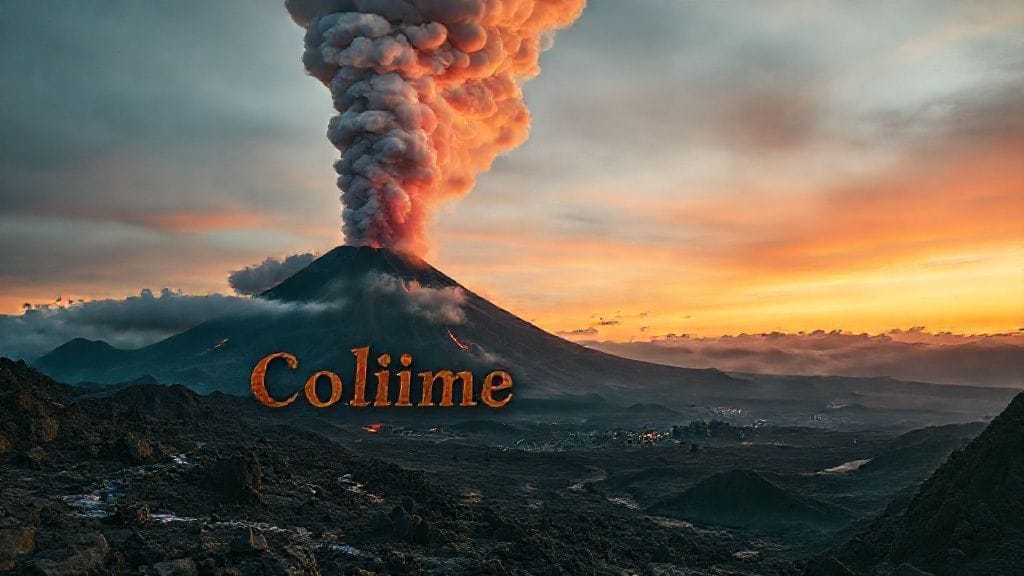
In the early hours of January 13, 1913, a monstrous roar shattered the quiet dawn over the western state of Colima, Mexico. A towering column of smoke and ash spiraled upwards into the already smoky sky—a herald of destruction that would etch itself into the memories of thousands. From the sleepy villages clinging to the volcano’s base to the bustling city of Colima nestled nearby, the earth trembled with violent fury. Flames curled upwards, rivers of molten lava snaked down the slopes, burying everything in incandescent rage. It was a moment frozen in time: nature’s catastrophic outburst amid one of Mexico’s most turbulent eras.
This eruption was not merely a geological event but a profound human tragedy, a pivot point that underscored the precarious coexistence between humans and the volatile forces of the Earth. Stories of terror, bravery, loss, and resilience emerged alongside the burning ash clouds—and despite its relative obscurity today, the 1913 Colima eruption offers a vivid lens into the interplay of natural disasters and history itself.
2. Mexico on the Brink: The Political and Social Climate Before the Disaster
The year 1913 in Mexico was anything but calm. The country was in the grip of revolutionary fervor; Victoriano Huerta had seized power by violent means after the assassination of President Francisco I. Madero. The Mexican Revolution was splintered with factions battling for control—crushing lives, destabilizing governance, and exhausting national resources. In this period of profound political upheaval, the eruption of Colima promised to be yet another blow to a nation already battered by chaos.
Colima, a quiet state renowned for coffee plantations and agricultural productivity, bore witness to turmoil that extended beyond the countryside. Its citizens felt the pulse of a country at war with itself even as they grappled with the specter of a seemingly awakened ancient giant nearby. The social tensions of the revolution layered atop the natural threat, creating an intoxicating mix of fear and uncertainty during those fateful days.
3. The Silent Giant: Understanding the Colima Volcano
Colima Volcano, also known as Volcán de Fuego, is one of Mexico’s most active volcanoes and one of the most prominent in North America. Towering at roughly 3,820 meters (12,533 feet), its imposing form has watched over the region for millennia. Prior to the 1913 eruption, the volcano had been relatively tranquil but with recorded eruptions dating back to the 16th century.
Geologists classify Colima as a stratovolcano—a volcano built from layers of hardened lava and tephra, notorious for explosive eruptions. The volcanic system includes two peaks: the older Nevado de Colima and the younger, still-active Volcán de Colima. The restless nature of this geological behemoth had long captured the attention of early Spanish colonial chroniclers and indigenous peoples alike.
4. Forewarnings and Local Legends: Voices From the Foothills
Long before modern science could predict volcanic activity, local indigenous communities and settlers lived in close dialogue with Colima’s moods. Oral traditions spoke of “the mountain that breathed fire,” warnings shrouded in myth and metaphor. For years preceding the eruption, residents reported increased seismic activity—earth tremors that rattled homes and unsettled animals.
Yet the precise signs were fragmented and often dismissed as routine. A farmer from a small village later recalled how the earth “exploded with a terrible noise, like the wrath of the gods unleashed.” These testimonies offer a human dimension to natural phenomena, illustrating how communities interpret and adapt to the threatening rhythms of their environment.
5. The First Tremors: January 10-12, 1913
The eruption did not begin abruptly. Instead, it was preceded by a series of tremors and minor ash emissions starting around January 10. Seismographs in nearby regions, recently installed in a fledgling scientific effort, recorded unusual seismic vibrations. Yet, communication limitations meant warnings were slow to spread, and many locals were caught unprepared.
As the tremors increased in intensity, villagers noted subtle changes in springs, odd smells in the air, and the sky growing thick with ash. These were the ominous signals of nature’s growing unrest. Meanwhile, amid the political chaos, state officials struggled to prioritize civil defense measures, with many paying little heed to the volcano’s wake-up call.
6. The Eruption Unleashed: January 13, 1913
At dawn on January 13, a colossal explosion tore through the mountain. The summit crater blew apart, sending a towering column of ash and volcanic gas 10 to 15 kilometers (6 to 9 miles) into the sky. Pyroclastic flows—fast-moving avalanches of hot gas, ash, and rock—rushed down the volcano's flanks with lethal speed.
Villages on the volcano’s slopes were engulfed in darkness as ash blanketed the land, and thick smoke choked the air, making breathing difficult and eyesight near impossible. The cacophony of earth’s fury—rumbling, booming, and crackling—could be heard for dozens of miles. It was a surreal, terrifying symphony.
7. Fire, Ash, and Destruction: The Immediate Impact on Colima and Surroundings
The eruption devastated large swaths of the state: farmland was incinerated, homes buried under meters of ash and volcanic debris. Coffee plantations, the lifeblood of the region's economy, were obliterated. Rivers became blocked or fouled with sediment, disrupting water supplies.
The city of Colima itself suffered ash fall but was spared the worst of the pyroclastic rushes, due mainly to its position relative to the prevailing winds and the volcano’s topography. However, the air quality dropped dramatically, with many inhabitants suffering respiratory distress.
8. The Human Face of Catastrophe: Stories of Survival and Loss
The human stories emerging from the eruption paint a picture of both harrowing loss and remarkable resilience. Ranchers who lost their herds, mothers shielding children from choking ash, and firefighters attempting desperate rescues all define the tragedy in personal terms.
One particularly vivid account tells of a young woman who escaped with her family carrying only a few precious possessions as their village was engulfed. Stories like hers remind us that beneath the sweeping geological and political narratives are individual human acts of courage and despair.
9. The Government’s Response Amid Revolution
Mexico’s fractured political state complicated relief efforts. With government resources stretched thin by the ongoing revolution, organized responses were slow and patchy. Local militias and community groups took primary roles in rescue and recovery.
Though some limited aid arrived in the days following, many survivors were left to their own devices, deepening the suffering. The eruption exposed vulnerabilities in civil governance and highlighted the difficult intersection of natural disasters with political instability.
10. Science in Chaos: Early Volcanology and the Colima Event
Though modern volcanology was still in its infancy, the 1913 eruption spurred scientific interest. Mexican geologists and international observers sought to document the eruption’s characteristics, ash composition, and seismic signatures.
These early studies laid groundwork for understanding volcanic activity in the region and informed some of the first systematic volcano monitoring in Mexico. Yet, the breakneck pace of the eruption meant many observations were made under hazardous conditions, underscoring the perils faced by these pioneering scientists.
11. The Aftermath: Relief Efforts and Rebuilding
In the weeks and months after the eruption, relief volunteers organized food distributions, erected temporary shelters, and began working to clear ash to resume agricultural production. The social fabric of affected communities was tested but not broken.
Rebuilding efforts inevitably clashed with ongoing political unrest, yet they also fostered cooperation across factional lines. International aid trickled in, with neighboring states and foreign entities contributing materials and expertise, recognizing the scale of the human tragedy.
12. Cultural Echoes: How the Eruption Shaped Local Identity
The eruption became more than a natural disaster; it entered the cultural consciousness of Colima’s people. Annual commemorations emerged, blending indigenous and Catholic traditions, invoking the volcano as both a destructive force and a source of fertility and rebirth.
Local art, literature, and oral histories speak of the event with a mixture of reverence and mourning. This fusion of nature and culture creates a rich tapestry through which descendants continue to make sense of their history.
13. Political Turmoil Meets Natural Disaster: Mexico’s Broader Upheaval
The Colima eruption did not occur in isolation but against the backdrop of violent national upheaval. Revolutionary battles raged, and social divisions ran deep. The disaster exposed fissures in governance and infrastructure that delayed response and complicated recovery.
Yet, paradoxically, in the ashes of destruction, there was a renewed sense of community solidarity, showing how human resilience often surfaces most starkly during times of multiform crisis.
14. Legacy in Ash: The Eruption’s Lasting Environmental Impact
Volcanic ash—rich in minerals—transformed the soil, but the immediate environmental damage was severe. Forests were burned, waterways altered, and local climates temporarily shifted. The volcanic landscape itself was reshaped, with new lava domes and fissures.
These changes influenced agricultural practices for decades, forcing adaptation and sometimes migration. The environmental scars deepen the historical footprint of the eruption, linking geology and human fate.
15. Colima in Memory: Commemorations and Historical Perspectives
Over a century later, the 1913 Colima eruption remains etched in regional memory. Museums preserve artifacts, while historians debate the event’s place within Mexico’s revolutionary era.
Annual memorial events invite reflection both on nature’s power and on human vulnerability. These acts of remembrance foster a continued dialogue between past and present, disaster and renewal.
16. International Attention: The Eruption’s Place in Global Geological Studies
Though overshadowed globally by other events of the era, the Colima eruption garnered international scientific interest. Comparative studies with eruptions such as Krakatoa or Mount St. Helens highlight Colima’s significance as an active stratovolcano.
The eruption contributed to early 20th-century volcanology, emphasizing the need for timely monitoring and risk assessment—a lesson reverberating to our present day.
17. Lessons Learned: Disaster Management Then and Now
The 1913 disaster laid bare deficiencies in communication, preparedness, and emergency response. In the century since, Mexico has developed sophisticated volcano monitoring systems, early warning protocols, and disaster relief frameworks.
The tragic lessons from Colima underscore the importance of integrating scientific knowledge with social and political will to mitigate risks inherent in living alongside volatile landscapes.
18. Colima Volcano Today: Monitoring and Modern Threats
Colima remains one of Mexico’s most active volcanoes, with eruptions recorded regularly throughout the 20th and 21st centuries. Modern technology, including seismographs, satellite surveillance, and gas detectors, help monitor its restless heart.
Communities remain vigilant, aware that beneath the picturesque slopes lies a potential agent of both devastation and renewal—a haunting legacy of 1913’s fiery dawn.
19. The Volcano as a Character: Symbolism in Mexican History
Beyond geology, Colima Volcano has assumed a symbolic role in Mexican history and culture—a force of nature representing both destruction and regeneration.
Writers and artists invoke the volcano as a metaphor for upheaval—the eruption mirroring political revolutions, societal ruptures, and personal transformation. In this, nature and history reflect and enrich each other.
20. Conclusion: Flames of the Past Lighting the Future
The Colima eruption of January 1913 stands as a powerful testament to nature’s unpredictable and profound impact on human lives. More than a tale of ash and fire, it is a story woven with sorrow, resilience, and the enduring spirit of communities caught between earth and sky.
In the shadows of volcanic smoke, history reminds us of our shared vulnerability—and of the capacity to rebuild and remember, forging meaning from destruction. The flames that scorched Colima were both an end and a beginning, illuminating the fragile beauty of life amid chaos.
FAQs on the 1913 Colima Eruption
Q1: What caused the 1913 eruption of the Colima volcano?
A: The eruption was caused by the movement of magma beneath the volcano, which built up pressure until it violently released through explosive activity typical of stratovolcanoes like Colima.
Q2: How did the eruption impact local populations?
A: Thousands were displaced, many lost homes and livelihoods, especially farmers and coffee plantation workers. The eruption caused severe respiratory issues due to ash and destroyed infrastructure crucial for survival.
Q3: Was the eruption linked to Mexico’s political situation at the time?
A: While a natural event, the eruption’s timing amid the Mexican Revolution complicated relief efforts and exposed governmental weaknesses during a period of intense political fragmentation.
Q4: Did the 1913 eruption have lasting environmental effects?
A: Yes, it altered landscapes, soil composition, and local ecosystems, some changes persisting for decades, influencing agricultural patterns and biodiversity in the region.
Q5: How is the eruption remembered today in Colima?
A: Through annual commemorations, local legends, museum exhibits, and cultural expressions that acknowledge both disaster and renewal.
Q6: What advances in volcanology were spurred by the eruption?
A: It encouraged more systematic recording of volcanic activity in Mexico, improved understanding of pyroclastic flows, and highlighted the necessity of early warning and monitoring.
Q7: Is Colima still active today?
A: Yes, Colima is one of Mexico’s most active volcanoes, regularly monitored to protect nearby populations from future eruptions.
Q8: How can modern societies prepare for volcanic eruptions like Colima’s?
A: Through robust monitoring technologies, effective communication systems, emergency evacuation planning, and community education to respond swiftly to volcanic threats.

