Table of Contents
- The Dawn of a New Age: December 9, 1964, at Stanford
- The World Before the Mouse: Human-Computer Interaction in the Early 1960s
- Douglas Engelbart: The Visionary Behind the Device
- The Idea Takes Shape: From Concept to Prototype
- Building the First Mouse: Materials, Mechanics, and Challenges
- The Mouse’s First Movement: Demonstrating a New Reality
- The NLS Project: Context for Innovation and Collaboration
- The Role of Stanford Research Institute (SRI) in the Mouse’s Birth
- Why the Mouse? Limitations of Keyboards and Early Interfaces
- Reception and Skepticism: Early Reactions to the New Device
- The Mouse’s Quiet Revolution: Transforming Computing Paradigms
- Xerox PARC and the Mouse’s Second Life
- From Obscurity to Ubiquity: Apple’s Macintosh and Mass Adoption
- The Mouse’s Evolution: From Wooden Shell to Optical Precision
- The Cultural Impact: How the Mouse Changed Work, Play, and Creativity
- The Mouse in the Digital Age: Touch Screens and Beyond
- Counting Clicks: Statistics on Mouse Usage and Computing Growth
- Personal Anecdotes: Remembering the First Time Users
- The Human Side: Engelbart’s Philosophy on Augmenting Human Intellect
- The Legacy of December 9, 1964: A Small Device, A Giant Leap
- Modern Reflections: What the Mouse Teaches Us About Innovation
- Technology’s Dance with Humanity: The Mouse as a Symbol
- The Mouse’s Place in History: Ranking Among the Greatest Inventions
- FAQs About the Computer Mouse and Its Invention
- External Resources and Further Reading
The Dawn of a New Age: December 9, 1964, at Stanford
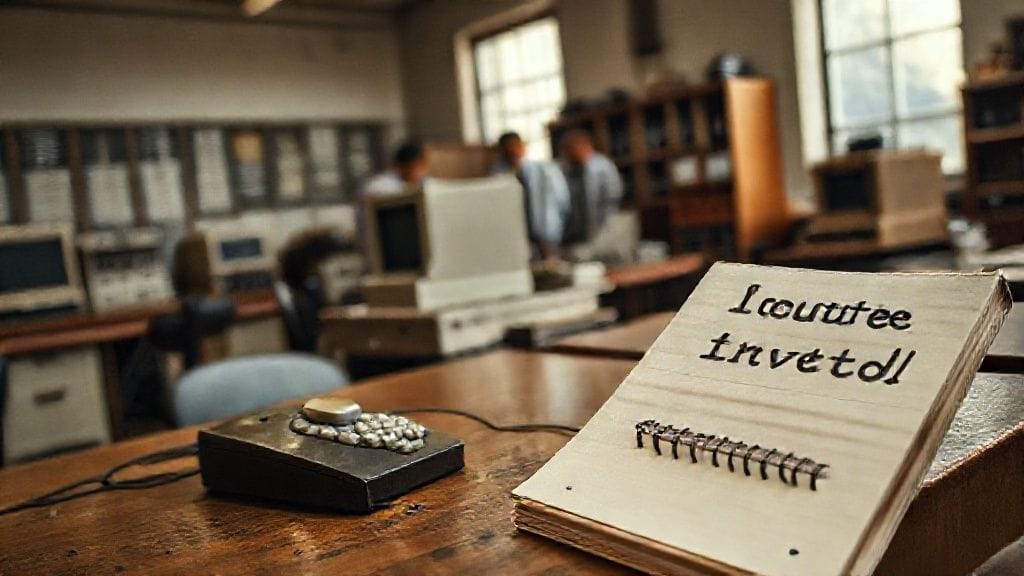
Picture a chilly winter morning in California, the kind that brushes the skin with a quiet sharpness yet promises sunlight and discovery. It was December 9, 1964 — a date that may not dominate history books but that marks an extraordinary inflection point in human interaction with machines. At the Stanford Research Institute (SRI), south of Palo Alto, a small wooden block, scarcely larger than a deck of cards, poised to reshape the digital world.
This unassuming object was the first computer mouse.
Clutched gently by its inventor Douglas Engelbart, the device stirred barely a ripple at the time — but beneath its modest exterior lay the potential to bridge human intention and computational power like never before. Picture the slight, almost fragile structure with two perpendicular wheels turning silently as a cursor pirouetted across a screen — a performance that promised to change everything about how humans would command machines.
But this was not a sudden miracle. It was the fruit of an intense journey — a quest to overcome daunting limitations and to envision a new interface between man and machine.
The World Before the Mouse: Human-Computer Interaction in the Early 1960s
Before that early winter day, computers were monoliths of complexity, armed with punch cards, endless streams of code, and command lines that required memorization rather than intuition. If you wanted to tell a machine what to do, you typed cryptic instructions, hoping for the right response.
The idea of directly manipulating a computer’s output — that is, moving a pointer across a screen and clicking with a device — was unheard of. The keyboard was king; the computer screen was a passive recipient of text, not a canvas. For many, computers remained inscrutable beasts, tools for scientists and mathematicians, distant from everyday human use.
Yet, the seeds of change were planted by pioneers who dared to imagine a more natural, fluid way to communicate with these machines — to harness their powers without being burdened by arcane interfaces.
Douglas Engelbart: The Visionary Behind the Device
Douglas Engelbart, an American engineer and inventor, was no ordinary scientist. Born in 1925 in Oregon, Engelbart’s vision extended beyond code and circuits. He dreamed of “augmenting human intellect,” not simply automating tasks but enhancing how we think and solve problems.
Engelbart was moved by a profound question: Could computers become tools to amplify collective intelligence, connecting minds in ways never before possible?
At a time when computers filled entire rooms and were understood by only a handful, Engelbart envisioned a future where ordinary people could interact seamlessly, access knowledge instantly, and collaborate across distances.
His groundbreaking research at SRI, supported by visionary funding from the U.S. government, culminated in the development of the NLS (oN-Line System)—a revolutionary platform integrating hypertext, video conferencing, and the device that would become the computer mouse.
The Idea Takes Shape: From Concept to Prototype
It wasn’t a flash of inspiration to waltz into existence as the first mouse, but a slow, deliberate process fueled by necessity. Engelbart and his team realized that keyboards didn’t offer enough flexibility. They needed a device that could move freely, intuitively, and directly control a cursor on a screen.
In 1963, engineer Bill English, inspired by Engelbart’s sketches, took on the practical challenge of building the prototype. The first versions used two perpendicular wheels to track motion on a surface—translating hand movement into pointers dancing across the glowing screen.
That original mouse—crafted from wood, with a single button on top—felt more like a carpenter’s tool than a high-tech instrument. There were no optical sensors, no lasers—just mechanical ingenuity capturing a quiet revolution.
Building the First Mouse: Materials, Mechanics, and Challenges
Engelbart’s mouse was truly humble in appearance and construction. Hard wood shaped into a small box, with a button on top, and attached to the computer via a cumbersome cable. The two perpendicular wheels inside detected motion on the x and y axes, translating hand movements into digital signals.
But crafting the mouse was a technical challenge. Engineers had to overcome issues such as accurately translating analog movement to digital commands, ensuring the device's reliability, and making it comfortable enough for repetitive use.
It took persistence. The early prototypes sometimes faltered, the wheels slipping on certain surfaces, or the button responding sluggishly. Yet ingenious minds kept refining it, knowing this primitive device carried the promise of something far greater.
The Mouse’s First Movement: Demonstrating a New Reality
The defining moment came on that December day in 1964. The team demonstrated the mouse moving a cursor across a digital screen—an act so simple to us now but revolutionary then.
Engelbart himself later recalled the scene with wonder: as the cursor glided, controlled by this new device, “It was as if the tool came alive,” a bridge built between human will and machine reflex.
The demonstration was a quiet one, shared among colleagues and researchers. It lacked pomp, yet those present understood they were witnessing the first step toward transforming how humans would command computers.
The NLS Project: Context for Innovation and Collaboration
The mouse was not an end but a means—an interface designed to leverage the power of the NLS (oN-Line System), Engelbart’s ambitious software suite.
NLS incorporated hypertext—a system of linked documents precursing the World Wide Web—along with collaborative tools like shared screens and real-time editing, all unheard of at the time.
The mouse acted as a magic wand for NLS, allowing users to interact dynamically with the digital content, select text, navigate menus, and trigger commands without cryptic keyboard instructions.
Together, NLS and the mouse embodied Engelbart’s vision: computers as tools for augmenting human intellect, collaboration, and creativity.
The Role of Stanford Research Institute (SRI) in the Mouse’s Birth
Stanford Research Institute was more than a backdrop; it was the breeding ground for invention.
SRI nurtured Engelbart’s research with both intellectual support and practical resources, fostering an environment where outside-the-box thinking was valued.
This institution became the crucible where hardware met software, theory met practice, and where the dream of democratizing computing began to take tangible form.
Without SRI’s open culture and engagement with government funding programs such as ARPA, the first mouse might never have moved across a screen.
Why the Mouse? Limitations of Keyboards and Early Interfaces
Why was the keyboard insufficient?
The answer lies in human ergonomics and intent.
A keyboard is a linear, text-based device—exceptionally efficient at typing but poor at spatial navigation or direct manipulation. Searching through graphical interfaces or arranging windows was essentially impossible without a pointing device.
Engelbart perceived the mouse as an extension of the human hand, translating subtle directional inputs naturally, reducing cognitive load, and enhancing precision.
In hindsight, this intuitive leap was monumental. The mouse converted users from typists reciting commands to active pilots steering machines through cyberspace.
Reception and Skepticism: Early Reactions to the New Device
As with many innovations, the mouse initially struck some as a curious gimmick.
Colleagues in engineering circles debated its practicality—some questioned whether people would want or need such a device. After all, keyboards were already entrenched.
Critics said the mouse was too fragile, too niche, or merely a novelty in the shadow of terminal-based interaction.
But Engelbart persevered, convinced that the device’s benefits would become apparent as more complex computing needs arose.
The Mouse’s Quiet Revolution: Transforming Computing Paradigms
The 1960s and early 1970s were a period of furious innovation—yet the mouse remained a secret whispered within research labs.
However, it quietly laid the foundation for a seismic shift—from command-line operations to graphical user interfaces (GUIs).
This paradigm shift empowered users beyond programmers and engineers, paving the way for personal computing.
The mouse’s role was not just functional but symbolic: a bridge from the alien world of machines to something humans could intuitively master.
Xerox PARC and the Mouse’s Second Life
The mouse’s broader journey truly accelerated in the 1970s at Xerox Palo Alto Research Center (PARC).
Here, researchers combined Engelbart’s ideas with advanced graphical interfaces, demonstrating the mouse as an essential input device for GUIs.
Xerox’s Alto workstation, though commercially limited, inspiringly showcased windows, icons, menus, and pointers controlled by the mouse—recasting the computer as a personal, approachable machine.
Although Xerox failed to capitalize fully, their work directly inspired computing giants to embrace the mouse.
From Obscurity to Ubiquity: Apple’s Macintosh and Mass Adoption
In 1984, Apple launched the Macintosh, the moment the mouse – once confined to labs and demos – entered millions of homes and offices.
Steve Jobs admired Xerox PARC’s innovations and saw the mouse as critical to making computers accessible.
Apple’s commercialization made the mouse a household object, unlocking new modes of interaction, creativity, and productivity.
Suddenly, manipulating documents, graphics, and data with simple clicks and drags was no longer a dream but a fact of life.
The Mouse’s Evolution: From Wooden Shell to Optical Precision
Over decades, the mouse evolved from its wooden prototype to plastic shells, ball tracking, optical sensors, and finally wireless designs.
Each technological leap increased precision, reliability, and comfort. The single button metamorphosed into multiple buttons and scroll wheels.
Yet, despite these changes, the core concept—the manipulation of a pointer by hand movement on a surface—remains immortal.
The Cultural Impact: How the Mouse Changed Work, Play, and Creativity
Beyond the technical realm, the mouse reshaped culture.
It democratized computer use, spawned entire industries—graphic design, gaming, desktop publishing—and influenced how we perceive and interact with digital space.
The mouse became synonymous with control, choice, and fluidity—an extension of human creativity in the digital era.
The Mouse in the Digital Age: Touch Screens and Beyond
As touch screens, voice commands, and gesture controls emerge, one might wonder: Is the mouse obsolete?
Yet, the mouse remains a vital tool, particularly in precision tasks like graphic design, gaming, and professional environments.
More than a tool, it symbolizes the evolving dialogue between humans and machines—a reminder of the ongoing quest for intuitive interaction.
Counting Clicks: Statistics on Mouse Usage and Computing Growth
Did you know that the average office worker clicks a mouse thousands of times daily?
According to recent surveys, desktop users click roughly 6,000 times per day, translating to millions over a career.
Globally, billions of mice are used, reflecting the enduring legacy of Engelbart’s creation.
Personal Anecdotes: Remembering the First Time Users
Many of us carry memories of the first time we touched a mouse—a moment of discovery and wonder.
Sarah, a graphic designer, recalls her childhood Christmas of 1990, when her family’s first computer had a mouse. “It felt like magic, moving the pointer and opening pictures with just a click. I was hooked.”
Such stories underline the mouse’s human side—its intimacy embedded in memory and daily life.
The Human Side: Engelbart’s Philosophy on Augmenting Human Intellect
Engelbart’s invention was rooted in a profound belief: that technology could elevate human potential.
In a 1962 paper, he wrote of “augmenting the human intellect to approach complex problem-solving.”
The mouse, humble in design, was emblematic of this dream—a bridge enabling us to shape ideas and information more naturally.
The Legacy of December 9, 1964: A Small Device, A Giant Leap
Looking back, December 9, 1964, was less a standalone breakthrough than the dawn of a new era.
From a wooden box with two wheels emerged a tool that redefined computing and, by extension, modern life.
Engelbart’s mouse was not just a device but a symbol of human ingenuity and the perpetual quest to harmonize man and machine.
Modern Reflections: What the Mouse Teaches Us About Innovation
Today, amid AI and quantum computing, the mouse reminds us innovation often begins with simple ideas—crafted with vision, patience, and humanity.
It shows that tools aren’t just instruments but extensions of ourselves, shaping how we think, work, and connect.
Technology’s Dance with Humanity: The Mouse as a Symbol
The mouse’s story reflects the dance between technology and human adaptation—a cycle of imagination shaping reality, and reality inspiring imagination.
It illustrates the deep desire to make technology accessible, friendly, and useful.
The Mouse’s Place in History: Ranking Among the Greatest Inventions
Despite its modest size, the mouse stands shoulder to shoulder with the printing press, the telephone, and the internet.
Its invention reshaped society, work, and culture—quietly but irrevocably.
Conclusion
The computer mouse invented on December 9, 1964, at Stanford was far more than a mere gadget. It was a silent revolution unfolding in winter light, a breakthrough in the language between humans and machines. Douglas Engelbart’s creation was not merely about moving a cursor; it was about expanding human capability and imagining a more collaborative future.
From its wooden prototype, humble and fragile, emerged a device that transformed global communication, work, and expression. Its legacy endures in every click, drag, and scroll—a testament to human ingenuity and the power of vision.
In a world racing toward ever-smarter machines, the mouse remains a profound reminder: true innovation is about empowering people, making complexity manageable, and forging tools that become natural extensions of ourselves.
FAQs
Q1: Who invented the computer mouse and when?
The computer mouse was invented by Douglas Engelbart and his team at the Stanford Research Institute on December 9, 1964.
Q2: What was the original design of the mouse like?
It was a wooden block with two perpendicular wheels to detect movement and had a single button on top.
Q3: Why was the mouse necessary given existing keyboards?
Keyboards were good for typing but limited in spatial navigation and direct interaction with graphical interfaces; the mouse allowed intuitive pointer control.
Q4: How did the mouse contribute to the development of graphical user interfaces?
It became the primary input device for manipulating visual elements on the screen, enabling windows, icons, and menus.
Q5: When did the mouse become widely used by the public?
It gained mass adoption with Apple’s Macintosh launch in 1984.
Q6: How has the computer mouse evolved over time?
From wooden prototypes to ball-tracking devices, then optical sensors, wireless designs, and multi-button setups.
Q7: Is the mouse still relevant in the era of touchscreens and voice control?
Yes. It remains crucial for precision tasks and professional work despite the rise of alternative input methods.
Q8: What was Douglas Engelbart’s overarching vision beyond inventing the mouse?
To augment human intellect and improve collaborative problem-solving through technology.