Table of Contents
- The Eve of a New Order: Europe in Turmoil Before Vienna
- The Collapse of Napoleon: Prelude to the Congress
- Vienna Beckons: Setting the Stage for Diplomatic Drama
- The Grand Architects Arrive: Key Figures of the Congress
- A Powder Keg of Ambitions: Conflicting Agendas Emerge
- The Restoration Dilemma: Monarchy, Revolution, and Legitimacy
- Drawing the Lines: Redrawing Europe’s Map, One Border at a Time
- The Balance of Power: Seeking Stability in Fragile Peace
- The Silk Curtain of Diplomacy: Protocols, Negotiations, and Intrigue
- The Territorial Chessboard: Poland, Saxony, and the German Confederation
- The Italian Question: Kingdoms, Duchies, and Dynastic Hopes
- Colonial Reverberations: How Vienna Shaped Global Empire Politics
- The Social Undercurrent: Voices of Discontent and Quiet Resistance
- The Role of Minor Powers: Sweden, Portugal, and Beyond
- Lasting Legacies: How the Congress Shaped Modern Europe
- The Congress Spirit: Concert of Europe and Collective Security
- Failures and Foreshadows: Seeds of Future Conflicts
- Anecdotes from the Viennese Salons: Wit, Opulence, and Espionage
- The Cultural Renaissance: Vienna as a Hub of 19th Century Thought
- Conclusion: An End and a Beginning for Europe’s Destiny
- FAQs: Unveiling Intrigues, Outcomes, and Historical Significance
- External Resource: Dive Deeper into the Congress of Vienna
- Internal Link: Visit History Sphere for More Historical Treasures
The Eve of a New Order: Europe in Turmoil Before Vienna
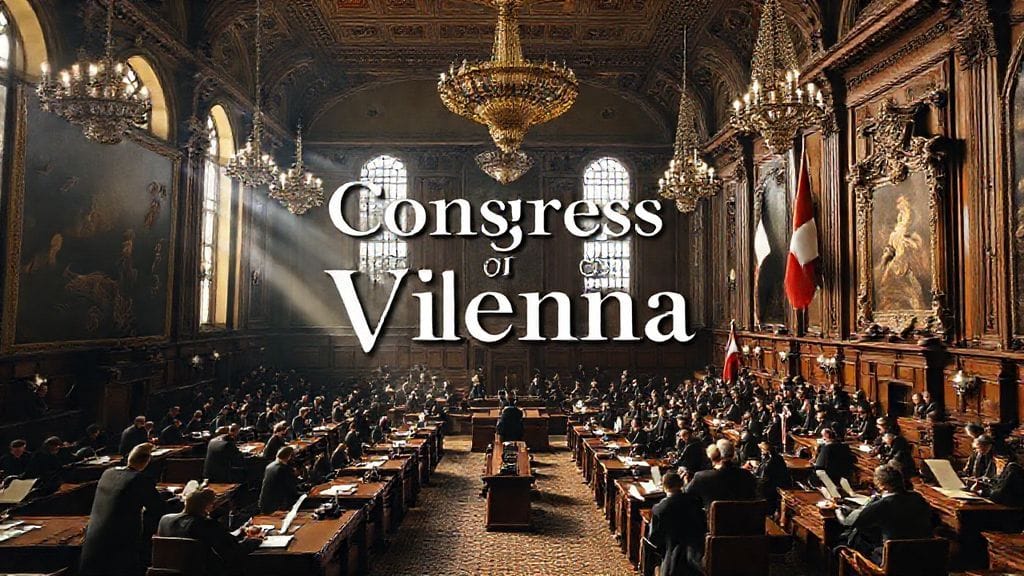
November 1st, 1814. Vienna awakens with a restless hum, the city’s grand palaces and ornate streets brimming with a sense of portent. Outside, the chill of early winter pierces the air, but inside the gilded salons, the atmosphere pulses with urgency and tension. Diplomats, generals, monarchs, and ministers – all converge in this imperial capital of the Austrian Empire to embark on a monumental mission: to reshape Europe after the cataclysmic upheaval wrought by Napoleon Bonaparte’s wars. This is the Congress of Vienna, a gathering of giants whose decisions would echo through the corridors of history for decades, forging peace but also planting the seeds of future turmoil.
The scene is almost theatrical—grand ballrooms transformed into frenetic forums of negotiation, where the fates of nations pivot on whispered conversations, lengthy debates, and the strategic placement of cups of coffee and brandy. The enormity of responsibility weighs heavily on all present. Europe is exhausted yet anxious; empires tremble on the edge of transformation, old orders strive to maintain their grip, and new ideas threaten to erupt beyond control.
But this was not simply a diplomatic conference; it was an epic drama played on a continent’s canvas, where personalities collided and patience ran thin. It was a crossroads not just of geography, but of history itself.
The Collapse of Napoleon: Prelude to the Congress
To grasp why Vienna became the crossroads of Europe in 1814, one must understand the turbulent tides that brought the continent to its knees. Napoleon Bonaparte, once a general of the French Revolution, had transformed himself into Emperor and carved out an empire stretching across much of the continent. His campaigns reshaped borders, culture, and even language. Yet, his relentless drive for domination had exacted a staggering toll on Europe’s peoples and powers.
By 1812, the tide began to turn. The catastrophic Russian campaign shattered the aura of invincibility surrounding Napoleon’s Grande Armée. Defeats followed: the Battle of Leipzig in 1813 marked a decisive coalition victory. By April 1814, Paris had fallen, and Napoleon was exiled to Elba, his empire in ruins. The Bourbon monarchy was restored in France, and the European powers, exhausted but triumphant, faced the daunting task of rebuilding and stabilizing a fractured continent.
Europe’s rulers recognized the dangers of leaving a power vacuum—or worse, allowing one nation to dominate unchecked again. Thus, the Congress of Vienna was conceived, not merely as a peace conference but as a historic attempt to forge a lasting order.
Vienna Beckons: Setting the Stage for Diplomatic Drama
Vienna itself was far from a neutral backdrop. As the capital of the Habsburg Empire, it was steeped in tradition and imperial grandeur. The city’s palaces—most notably the Hofburg—became the nerve center of negotiation. Streets and hotels swelled with delegations from Britain, Russia, Prussia, Austria, France, and dozens of smaller states.
The sheer logistics of hosting such an assembly were staggering. Ambassadors arrived with entourages, endless correspondence, and keen eyes on every move. Balls and banquets were staged not just for entertainment but as crucial venues for informal discussion and alliance-building. Observers likened the Congress to a theatrical performance where every smile, every slight, was a message.
Yet, beneath the surface of civility, tensions brewed. The wounds of war remained fresh. Distrust between powers operated alongside fragile alliances. The Congress became a crucible where old rivalries, national pride, and personal ambitions would all be tested.
The Grand Architects Arrive: Key Figures of the Congress
The Congress was dominated by four towering statesmen whose vision and personalities shaped its course: Austrian Chancellor Prince Klemens von Metternich, British Foreign Secretary Viscount Castlereagh, Russian Tsar Alexander I, and Prussian Prince Karl August von Hardenberg.
Metternich, the mastermind behind the Congress, embodied conservative order and the desire to restore traditional monarchy and hierarchy. He viewed Napoleon’s turmoil as a warning against revolutionary ideals, aiming to safeguard the Habsburg Empire and maintain balance in Europe.
Castlereagh, representing Britain, sought to prevent any single power from dominating the continent, preserving British interests and maritime supremacy. He was pragmatic and cautious, advocating a stable but flexible order.
Tsar Alexander I presented a complex figure: a seemingly idealistic ruler who dreamt of a “Holy Alliance” based on Christian principles, yet was also a shrewd politician keen on territorial gains, especially in Poland.
Hardenberg represented an ascendant Prussia, eager to expand influence and status after years of relative weakness.
Their dialogues were a fascinating blend of philosophy, realpolitik, and personal interplay, setting the stage for shaping Europe’s future.
A Powder Keg of Ambitions: Conflicting Agendas Emerge
Though all sought peace, their visions of Europe diverged starkly. Russia desired a Poland under its control, Prussia eyed Saxony and the Rhineland, Austria was vigilant about Italian states, and Britain wished to curb French power but avoid excessive expansion of rivals.
One of the core debates centered on the restoration of old dynasties — the question of “legitimacy.” Should all dethroned monarchs be reinstated or only those compatible with a lasting peace? Metternich championed legitimacy as the bulwark against revolution; others feared it might provoke dissent.
Behind these grand themes were lesser powers—smaller German states, Italy’s patchwork kingdoms, Scandinavian monarchies—each lobbying zealously, aware that their survival might depend on subtle compromises.
The Congress morphed into endless negotiations where agendas clashed, alliances shifted, and strategic patience was crucial.
The Restoration Dilemma: Monarchy, Revolution, and Legitimacy
The ideological backdrop of the Congress was sharpened by the fear of revolutionary ideals unleashed by the French Revolution and Napoleonic rule. Monarchs and nobles envisioned restoring a Europe ruled by divine right, aristocracy, and suppressed nationalism.
Yet, the revolutionary spirit could not simply be undone. Across Europe, burgeoning middle classes and nationalist movements pressed for constitutional reforms and self-determination. The Congress sought to stitch back the old order—but the fabric was not whole.
This tension manifested in Poland, where the question of nationhood and sovereignty clashed with Russian and Austrian imperial ambitions. Similarly, parts of Italy yearned for unity and independence, while many German states bristled under domination by larger neighbors.
The dilemma was profound: balancing reactionary restoration and revolutionary change without igniting fresh wars.
Drawing the Lines: Redrawing Europe’s Map, One Border at a Time
The partitioning of Europe’s territories was a Herculean task demanding delicate balancing acts. Enlargement of Prussia, compensation of Austria with Italian provinces, expansion of Russian influence—each redrawn border was a compromise born from powermongering and diplomatic finesse.
The German Confederation was created, a loose association intended to replace the dissolved Holy Roman Empire, blending autonomy and unity but sowing seeds of future nationalist aspiration.
Italy was divided into spheres controlled by Austria and other dynasties, frustrating Italian unification but preserving imperial interests.
The Kingdom of the Netherlands combined former Dutch Republic lands with Austrian Netherlands (modern Belgium), engineering a buffer state between France and central Europe.
Meanwhile, France was restored within its 1792 borders but treated leniently—to prevent resentment and further conflict.
This cartographic reimagining aimed to prevent hegemonic domination but often created cumbersome, artificial arrangements.
The Balance of Power: Seeking Stability in Fragile Peace
Central to the Congress was the principle of the "balance of power" — no single state would be allowed to dominate Europe again, thus securing peace.
This articulated a new diplomatic philosophy: collective security enforced by cooperation rather than conquest. Great powers agreed on spheres of influence and mutual guarantees that would shape European diplomacy for the next century.
Yet balance was an elusive ideal, requiring constant vigilance and negotiation.
The Silk Curtain of Diplomacy: Protocols, Negotiations, and Intrigue
Behind closed doors, negotiations unfolded in a subtle dance. Salons became stages of whispered deals; ambassadors exchanged coded notes; personal rivalries and friendships influenced statecraft.
Metternich’s reputation as an exquisite negotiator was forged here. He balanced charm and pressure, subtlety and firmness, weaving consensus where none seemed possible.
Stories abound of nights spent in drawn-out talks, or casual strolls in Viennese gardens serving as backdrops for critical decisions.
Even as the Congress presented a united front, leaks of frustration and suspicion persisted.
The Territorial Chessboard: Poland, Saxony, and the German Confederation
Few issues proved as contentious as Poland’s fate. Russia wanted a large Polish kingdom under its thumb; Austria and Prussia feared Russian overreach.
After fierce bargaining, the Congress created the “Congress Kingdom” of Poland, a constitutional monarchy under Russian influence—a solution as uneasy as the Polish patriots’ hopes.
Similarly, Saxony was reduced in size, some territories passing to Prussia, hinting at future conflicts within the German states.
The German Confederation, formed of 39 states, was a compromise blending sovereignty and cooperation but leaving nationalistic frustration unaddressed.
The Italian Question: Kingdoms, Duchies, and Dynastic Hopes
Italy was splintered into states ruled by Austria (Lombardy-Venetia), the Papal States, the Kingdom of Sardinia, and small duchies.
Metternich ensured Austrian dominance, seeing Italy as a strategic buffer and realm of influence.
Italian liberals and nationalists, meanwhile, saw the Congress’ outcome as a betrayal of their aspiration for unity and independence—a bitterness that would fuel revolutions in decades to come.
Colonial Reverberations: How Vienna Shaped Global Empire Politics
Though focused on Europe, the Congress’ decisions rippled across the world.
Britain secured naval supremacy and colonial possessions; France retained its overseas colonies; Russia gained influence over Ottoman territories in the Black Sea.
This shaping of imperial boundaries impacted the global balance, intensifying rivalry in Asia, Africa, and the Americas, as European powers jockeyed for advantage.
The Social Undercurrent: Voices of Discontent and Quiet Resistance
Amid aristocratic debates, the wider populations experienced uncertainty.
Restoration policies often rolled back liberal gains. Censorship, repression, and surveillance increased.
Yet, nascent nationalist clubs, secret societies, and thinkers planted ideas that would later burst into open revolt.
Vienna itself became a crucible of cultural ferment, even as political voices were controlled.
The Role of Minor Powers: Sweden, Portugal, and Beyond
Amid giants, smaller states exerted influence.
Sweden gained Norway as compensation for losing Finland to Russia.
Portugal’s interests, virtually overshadowed on the continental stage, were nonetheless protected by Britain.
The Congress showed the complexity of preserving sovereignty while balancing great-power interests.
Lasting Legacies: How the Congress Shaped Modern Europe
The Congress of Vienna did not merely end a war; it crafted the architecture of modern Europe.
It established the Concert of Europe, a system of cooperation that maintained relative peace for nearly four decades.
It also set precedents in international law, diplomacy, and the recognition of sovereign states.
Yet its failures—the neglect of nationalist aspirations, the entrenchment of conservatism—eventually eroded the constructed order.
The Congress Spirit: Concert of Europe and Collective Security
The “Congress Spirit” embodied ideals of multilateral diplomacy and collective peacekeeping.
Regular congresses and consultations became mechanisms to resolve disputes without war.
Though imperfect, this system influenced future alliances and concepts like the League of Nations.
Its echoes reverberate in modern international relations.
Failures and Foreshadows: Seeds of Future Conflicts
Despite success, the Congress failed to resolve underlying tensions.
Nationalism, colonial competition, and rival ambitions persisted.
Revolutions in 1830 and 1848, the unification of Germany and Italy, and eventually World War I, all trace roots back to challenges left unaddressed.
The fragile peace was, in a sense, a temporary lull.
Anecdotes from the Viennese Salons: Wit, Opulence, and Espionage
Behind the austere political façade, Vienna was a city of vibrancy.
Diplomats danced with nobles, exchanged gossip, and engaged in subtle espionage.
Anecdotes recall tables turning during card games as allegiances shifted, or clandestine meetings held over waltzes and fine wines.
This human dimension brings alive the Congress as not just policy but a lived drama.
The Cultural Renaissance: Vienna as a Hub of 19th Century Thought
The Congress coincided with Vienna’s blossoming as a cultural capital.
Artists, musicians like Beethoven, writers, and philosophers mingled with diplomats.
This fusion of politics and culture helped shape 19th-century European identity and intellectual life.
Conclusion: An End and a Beginning for Europe’s Destiny
As the final protocols were signed and the delegations dispersed, Europe entered an era defined by balance, concert, and uneasy peace.
The Congress of Vienna was a monumental act of collective will, a testament to diplomacy’s power amid chaos.
Yet, more than restoration, it was a moment of transition—a hinge between the old world and the new, filled with hope, contradiction, and deep human complexity.
FAQs
1. Why was the Congress of Vienna convened?
To restore order to Europe after the Napoleonic Wars, redraw borders, and establish a lasting peace among the major powers.
2. Who were the key players at the Congress?
Prince Klemens von Metternich (Austria), Viscount Castlereagh (Britain), Tsar Alexander I (Russia), and Prince Hardenberg (Prussia) were the primary architects.
3. What was the principle of legitimacy, and why was it controversial?
Legitimacy meant restoring pre-revolutionary monarchs; controversial because it ignored revolutionary and nationalist currents.
4. How did the Congress affect smaller states?
Many smaller states saw their sovereignty protected, altered, or compromised through compromises but had limited leverage.
5. What was the “Concert of Europe”?
A system of great powers cooperating to maintain peace and resolve conflicts through diplomacy post-Congress.
6. Did the Congress prevent future wars?
It delayed large-scale conflicts for about four decades but failed to resolve underlying tensions that led to later wars.
7. How did the Congress impact nationalism?
It suppressed nationalist movements initially but indirectly fueled them by denying self-determination.
8. Why is the Congress of Vienna historically significant today?
It laid foundations for modern diplomacy and international relations frameworks still influential.