Table of Contents
- The Final March: Conquest of Herzegovina, 1482
- A Land on the Edge: The Balkans in the Late 15th Century
- The Ottoman Empire’s Ambitions: From Rumelia to the Adriatic
- Herzegovina: Jewel of contested sovereignties
- Blagaj and Trebinje: Strategic nodes in a volatile landscape
- The Players: Ottoman leaders and local nobles
- Prelude to Battle: The political and military build-up
- The Siege of Blagaj: Clash of empires and cultures
- Trebinje Falls: The turning point in the Herzegovinian campaign
- The Role of Local Populations: Loyalties and survival
- The Architectural and Cultural Impact of the Conquest
- Ottoman Strategies: Warfare, diplomacy, and assimilation
- The End of the Kosača Rule: From dukes to Ottoman beys
- The Human Cost: Soldiers, civilians, and displacement
- Aftermath: The Ottoman Administration and Reconfiguration
- Economic Shifts: Trade routes, taxation, and agrarian change
- Religious and Social Transformations in Herzegovina
- Herzegovina in Ottoman Chronicles and European Accounts
- The Conquest’s Influence on Wider Balkan Politics
- Legacy through Centuries: Memory and modern identity
- Conclusion: When Empires Met and History Shifted
- FAQs about the 1482 Herzegovina Conquest
- External Resource
- Internal Link
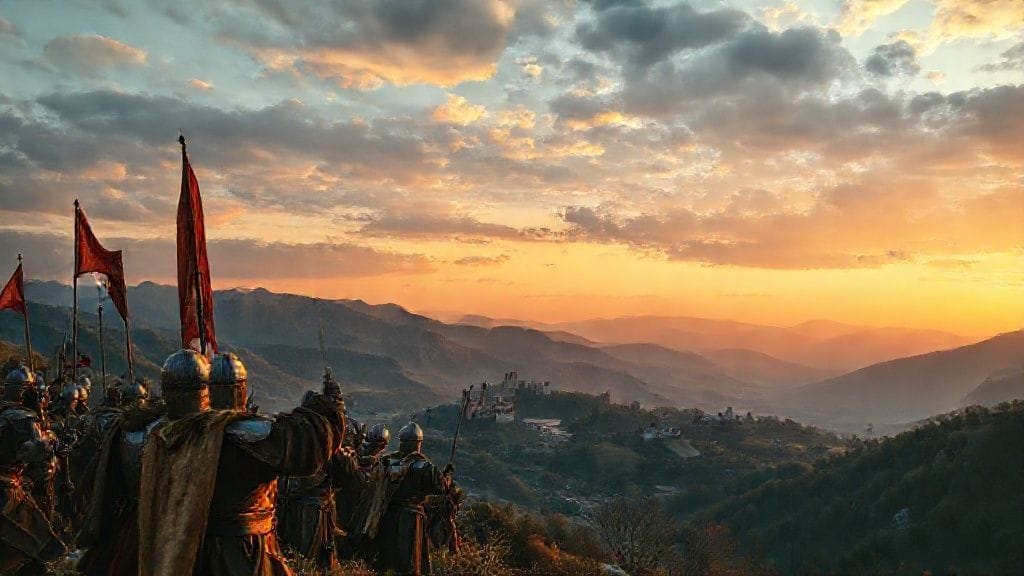
The late summer sun cast long shadows over the rugged hills of Herzegovina in 1482. Smoke curled gently from village hearths while distant bells tolled, summoning monks and townsfolk alike. Yet beneath this serene veneer, the ground trembled with the thunder of marching armies. The conquest of Herzegovina, a fiercely contested landlocked gem nestled between mountains and coasts, was at its climax. Blagaj and Trebinje, ancient bastions guarding ancient roads and cultures, teetered on the brink of irrevocable change. By the time winter cloaked the Balkans, the Ottoman flag would flutter above these fortresses, completing a campaign emblematic of the empire’s relentless expansion – but also a moment that forever altered the lives and identities of the land’s people.
A Land on the Edge: The Balkans in the Late 15th Century
To understand why 1482 shook Herzegovina’s foundations, one must step back into the turbulent realm of the late medieval Balkans. The peninsula was a mosaic of fragmented principalities, dynastic ambitions, and shifting alliances, all overshadowed by the inexorable rise of Ottoman power. The Kingdom of Bosnia, once a vibrant polity, had weakened under internal strife and external pressures. Neighboring powers such as Venice and Hungary probed its borders, while local nobility like the Kosača family held sway over Herzegovina, clinging fiercely to their semi-independent status.
Ottoman conquests across Rumelia transformed the Balkans from a buffer zone into the frontline of empire-building. The pulsating tension between Christian states and the Muslim Ottoman administration framed every skirmish, negotiation, and betrayal.
The Ottoman Empire’s Ambitions: From Rumelia to the Adriatic
By the late 1470s, the Ottoman strategy became unmistakably clear: to secure passage to the Adriatic Sea, controlling key coastal and inland hubs. Herzegovina’s rugged territory, though mountainous and fortified, was a necessary prize. The Ottomans had already captured most of Bosnia by the early 1480s, but Herzegovina remained a stubborn holdout under the ducal family of Kosača.
Sultan Mehmed II’s successors pursued relentless campaigns to finish what had begun under the “Conqueror.” The year 1482 saw a concentrated military thrust aimed explicitly at Herzegovina, intending to sever any Christian foothold veering towards Venetian or Hungarian influence.
Herzegovina: Jewel of Contested Sovereignties
Herzegovina was more than a region; it was a symbol of resilience against external domination. Named after Stjepan Vukčić Kosača, its powerful duke who had styled himself “Herceg” (Duke), Herzegovina straddled cultural and ideological fault lines: Orthodox, Catholic, and Islamic communities interwove their lives in complex relations.
This land’s rocky terrains and hidden valleys were as much a military advantage as a curse—supply lines were perilous, and loyalties fickle. Controlling Herzegovina meant dictating commerce and warfare in the southern Balkans.
Blagaj and Trebinje: Strategic Nodes in a Volatile Landscape
Blagaj, perched spectacularly on the Buna spring, was both a spiritual and military bastion. Its fortress dominated river access and trade routes, while Trebinje lay further south, close to the Adriatic hinterland, controlling mountain passes and routes to the coast.
The fall of these two centers would cripple Herzegovina’s defenses and herald full Ottoman domination. Their sieges became cauldrons where empire clashed with local pride.
The Players: Ottoman Leaders and Local Nobles
In 1482, the Ottoman army was commanded by powerful viziers and regional governors skilled in siege warfare, including Ferhad Pasha Sokolović, himself of Balkan origin. Opposing them were the Kosača dukes and their network of vassals, enriched by centuries of local traditions and formidable fortresses.
Local leaders faced agonizing choices: fight to the death for autonomy, negotiate precarious terms, or flee into exile.
Prelude to Battle: The Political and Military Build-up
Early preparations included months of reconnaissance, diplomatic overtures, and covert alliances. The Ottomans amassed artillery and troops, pioneering their use of cannons in mountainous terrains, while local defenders reinforced walls and stockpiled provisions.
Reports from Venetian envoys indicate growing anxiety as Ottoman banners appeared in neighboring counties, signaling the beginning of the end.
The Siege of Blagaj: Clash of Empires and Cultures
Blagaj’s fortress was a marvel of medieval military architecture. The Ottomans encircled it with disciplined formations, bombarding walls with cannons new to Balkan warfare. Defenders held out fiercely, motivated by memories of their forebears and hopes to repel the Islamizing tide.
Yet, after weeks of siege, supply shortages and exhaustion led to bitter negotiations. Stories tell of envoys walking through lines of musketeers, imparting terms that sealed the town’s fate.
Trebinje Falls: The Turning Point in the Herzegovinian Campaign
Trebinje’s surrender followed closely, after a swift but brutal offensive. Ottoman forces exploited weaknesses in fortifications and fractured local alliances. Historical chronicles reveal that Trebinje’s fall shattered the Kosača dominion and demoralized remaining resistance pockets.
It was not only a military victory but a psychological blow, signaling the near-complete Ottoman consolidation of Herzegovina.
The Role of Local Populations: Loyalties and Survival
The conquest uprooted centuries-old communities. Orthodox Christians, Catholics, Magdalene heretics, and Muslims found themselves pawns in a larger geopolitical game. Some welcomed Ottoman rule, attracted by promises of stability and religious tolerance under the millet system; others resisted or fled.
Eyewitness accounts portray the chaos of massacres, forced conversions, and migrations that followed the flag change.
The Architectural and Cultural Impact of the Conquest
Ottoman architectural styles began to transform Herzegovina’s skylines almost immediately. Mosques, bazaars, and administrative buildings replaced and repurposed medieval Christian structures. Yet, synagogues and churches survived, reflecting a complex mosaic of coexistence.
This cultural layering enriched the region but also marked a shift from Western Latin to Eastern Islamic influences.
Ottoman Strategies: Warfare, Diplomacy, and Assimilation
The conquest was not mere brute force. The Ottomans were master strategists employing both military might and shrewd diplomacy. They co-opted local elites, offered religious protections, and integrated Herzegovina into a larger imperial economy.
Such policies would lay the foundations for nearly four centuries of Ottoman presence.
The End of the Kosača Rule: From Dukes to Ottoman Beys
The ducal house of Kosača lost sovereignty but retained some status as Ottoman clients initially. Over decades, the old nobility either assimilated, emigrated, or diminished in influence.
This transition encapsulated the larger fate of Balkan aristocracies under Ottoman rule.
The Human Cost: Soldiers, Civilians, and Displacement
War always demands sacrifice. Contemporary sources refer to thousands of deaths, widespread destruction, and the displacement of entire villages. Families were split, and economic hardships compounded the trauma.
The conquest was not just a political shift but a human tragedy etched into local memory.
Aftermath: The Ottoman Administration and Reconfiguration
Herzegovina was reorganized into administrative units (sanjaks), linked to the empire’s centralized system. Taxation was standardized, conscription formalized, and new laws introduced.
While some locals benefited from inclusion in the imperial system, many resentments simmered beneath.
Economic Shifts: Trade Routes, Taxation, and Agrarian Change
The Ottomans redirected trade flows towards imperial centers. New taxes on agriculture and commerce altered land use, incentivizing cash crops and integrating Herzegovina into broader markets.
These changes disrupted traditional economies but also introduced new opportunities.
Religious and Social Transformations in Herzegovina
One of the most profound legacies was religious pluralism under Ottoman millet policy. Islamic institutions expanded; Catholic and Orthodox churches endured, though often marginalized.
Social hierarchies evolved, with new Muslim elites ascending.
Herzegovina in Ottoman Chronicles and European Accounts
Ottoman historians chronicled the conquest as a glorious expansion, emphasizing justice and order. European observers, meanwhile, lamented the loss of Christian lands but often misunderstood local complexities.
Comparing narratives reveals a rich tapestry of perspectives.
The Conquest’s Influence on Wider Balkan Politics
Herzegovina’s fall reverberated beyond its borders. Venetian, Hungarian, and Habsburg courts recalibrated their Balkan strategies, recognizing that the Ottoman grip on the southern Balkans tightened irrevocably.
The conquest accelerated the transformation of the peninsula’s political geography.
Legacy through Centuries: Memory and Modern Identity
In modern Bosnia and Herzegovina, memories of 1482 are infused with layered meanings: as a moment of loss, adaptation, and identity formation. Folk songs, legends, and historical commemorations reflect the ongoing negotiation with this past.
Herzegovina today still carries the imprint of its Ottoman conquest, woven into its cultural fabric.
Conclusion
The conquest of Herzegovina in 1482 was far more than a military campaign; it was a seismic moment where empires touched, clashed, and irrevocably altered the course of history. From the trembling walls of Blagaj to the mountain passes near Trebinje, warriors fought not only for territory but for survival, identity, and legacy.
What remains remarkable, centuries later, is the resilience of Herzegovina’s people, who absorbed the shockwaves of conquest and yet crafted new realities amid upheaval. In this story of loss and renewal, we see how history is not merely a record of battles won or lost, but a living tapestry shaped by human hopes, fears, and enduring courage.
FAQs about the 1482 Herzegovina Conquest
Q1: What sparked the Ottoman push to conquer Herzegovina in 1482?
The conquest was part of the Ottoman Empire’s broader strategy to secure the Balkans and access the Adriatic coast. Herzegovina, controlled by the semi-independent Kosača dukes, was a key obstacle.
Q2: Who were the main Ottoman leaders involved in the campaign?
Ferhad Pasha Sokolović was a prominent Ottoman commander with Balkan origins who led operations in the region, supported by the centralized Ottoman military and political apparatus.
Q3: How did local populations react to the conquest?
Reactions varied: some resisted fiercely, others fled, and some adapted, benefiting from Ottoman religious tolerance and administrative reforms.
Q4: What were the immediate effects on Herzegovina’s political structure?
The Kosača dukes lost sovereignty, and the region was incorporated into the Ottoman sanjak system, aligning Herzegovina administratively with the empire's governance style.
Q5: Did the conquest change the region’s cultural and religious landscape?
Yes, the Ottoman period introduced Islamic institutions alongside existing Christian ones, fostering a pluralistic society under the millet system.
Q6: How is the 1482 conquest remembered in contemporary Herzegovina?
It is viewed as both a moment of military loss and cultural transformation; local memory is complex, blending pride in resilience with mourning for lost independence.
Q7: What role did Blagaj and Trebinje play in the conflict?
They were strategic forts controlling trade routes and access points, whose fall marked the collapse of local resistance.
Q8: How did this conquest influence Balkan politics more broadly?
It signaled the diminishing power of Christian principalities and the rise of the Ottoman Empire as the dominant Balkan power, affecting regional alliances and rivalries.

