Table of Contents
- Fire in the Oasis: Setting the Stage for Khaybar, 628
- Oases and Empires: Khaybar before the Armies Arrived
- Medina on the Rise: From Persecuted Community to Emerging Power
- Broken Alliances and Smoldering Grievances after the Trench
- From Hudaybiyyah to Khaybar: A Truce that Freed the Sword Hand
- Mustering the Banner: The Muslim Army Marches North
- Fortresses in the Palm Groves: The Strategic Landscape of Khaybar
- Opening Blows: Skirmishes, Raids, and the First Shock at Khaybar
- The Fall of Na‘im and al‑Qamus: Day‑by‑Day Inside the Siege Lines
- Ali’s Standard and the Broken Gate: Heroism and Legend at the Walls
- Fear, Faith, and Hunger: The Human Experience of the Conquest
- Surrender in the Date Groves: Negotiating the Future of Khaybar
- Land, Tribute, and Law: How Khaybar Reshaped Islamic Governance
- Jewish Communities after Khaybar: Coexistence amid Uneasy Memory
- Echoes in Qur’an, Hadith, and Early Chronicles
- From Desert Battle to Global Symbol: Khaybar in Later Politics and Imagination
- Archaeology and the Elusive Traces of an Oasis War
- Khaybar’s Legacy in Law, Strategy, and Collective Memory
- Conclusion
- FAQs
- External Resource
- Internal Link
Article Summary: In the year 628, on the stony plains and fertile groves of northern Arabia, the conquest of khaybar marked a dramatic turning point for the young Muslim community in Medina. The campaign unfolded amid a wider struggle between shifting tribal alliances, Jewish agricultural strongholds, and the distant shadow of empires like Rome and Persia. This article traces how the Prophet Muhammad led a calculated expedition against the fortified oasis of Khaybar, transforming not only the political map of the Arabian Peninsula but also the economic foundations of the nascent Islamic state. Through detailed narrative, we follow the march from Medina, the sieges of Khaybar’s towering forts, key figures such as Ali ibn Abi Talib, and the anxious negotiations that followed the surrender. Yet behind the battlefield heroics, the conquest of khaybar also left a long and often painful legacy in relations between Muslims and Jewish communities, in religious memory, and in political rhetoric centuries later. We examine how early historians, jurists, and storytellers preserved and reshaped this episode, weighing devotion, triumph, and trauma in their accounts. By exploring social life, military tactics, law, and archaeology, the article shows how the conquest of khaybar became far more than a single battle—it became a symbol of survival, sovereignty, and faith. And still today, when slogans and memories evoke Khaybar, they reach back to that tense moment when a small oasis war helped decide the fate of a burgeoning world religion.
Fire in the Oasis: Setting the Stage for Khaybar, 628
The year 628 of the Common Era—6 AH in the Muslim calendar—opened over the Arabian Peninsula like a held breath. Sandstorms swept across the volcanic black rock north of Medina, between scattered oases where palms bent to harsh winds and water meant life or death. In that harsh landscape lay Khaybar, an oasis system of clustered forts and fields, long known to caravans and tribes as a place of abundance amid desert scarcity. Yet by 628, Khaybar was no longer simply a stop on trade routes: it had become a looming question mark over the future of the Prophet Muhammad’s community in Medina. The conquest of khaybar would not be a sudden explosion of violence, but the outcome of years of tension, alliance, betrayal, hope, and fear.
When Muhammad and his followers had emigrated to Yathrib—soon to be called Medina—less than a decade earlier, they were a persecuted minority fleeing Mecca. By 628, they had survived assassination plots, open warfare, and siege. Medina had changed from refuge to power center, and its leader had become not only a prophet, but also a statesman and commander to whom tribes pledged allegiance. Khaybar, meanwhile, remained a wealthy Jewish agrarian stronghold, watched uneasily by its neighbors. Its thick-walled fortresses rose above palm groves and barley fields, their silhouettes appearing like stone ships in a green sea. Caravans passing through saw more than towers; they saw a community that had long wielded economic power and possessed arms, armor, and alliances.
No one in either settlement could have guessed exactly how the months ahead would unfold: how small skirmishes, broken pacts, and back-channel talks would spiral into a full military campaign. But the air itself seemed charged. Rumors traveled faster than caravans—whispers that Quraysh in Mecca were exhausted after years of war, that large tribes were reconsidering their loyalties, that Jewish clans displaced from Medina still dreamed of revanche. Somewhere in that swirl of stories, the name “Khaybar” began to mean more than place. It became an obstacle, a risk, an opportunity.
For the Muslim community, the conquest of khaybar would be remembered as a sign of divine favor, confirming that the promise of victory after hardship was not just a verse, but a lived reality. For many of Khaybar’s Jewish inhabitants, the same event would mark a catastrophic rupture: the loss of independence, lands, and certainty. Between those two memories, historians walk a tightrope, sifting legend from record, devotion from description. Yet standing, in imagination, between the black volcanic ridges and the green of the date palms, one thing is clear: Khaybar’s fall was never inevitable. It was constructed, step by step, by choices, fears, and hopes on all sides.
Oases and Empires: Khaybar before the Armies Arrived
To understand why Khaybar mattered, we must first see it as its inhabitants saw it, long before war banners appeared on the horizon. Khaybar was not a single town but a constellation of settlements and forts scattered across a broad oasis basin, some 150 kilometers north of Medina. Fed by underground water and seasonal rains, its palm groves, orchards, and fields made it a rare patch of sustained fertility in northwestern Arabia. Caravans en route between the Hijaz and the Levant knew its wells and storehouses; Bedouin tribes nearby understood that whoever held Khaybar held leverage over trade, tribute, and the supply of food in a hungry land.
By the 7th century, Khaybar’s population was predominantly Jewish, the product of centuries of migration and settlement. Various Jewish tribes and lineages occupied its fortified quarters, such as al-Natat, al-Shiqq, and al-Qamus, each with its own leaders and rivalries. They were not the only powers in the region, nor always united among themselves, but as a bloc they formed a formidable presence. Skilled in agriculture, armed and organized, they forged agreements with nearby Arab tribes—some as allies, some as clients. Their scribes recorded contracts; their markets rang with speech in Arabic and, for some, echoes of older tongues and traditions.
Beyond Khaybar ran invisible lines to far greater powers. To the north, the Byzantine Empire (Rome’s eastern heir) watched the caravan routes that channeled goods from Arabia to its cities, while the Sasanian Persians vied for influence further east. Arabia was not sealed off from these empires; it was a porous frontier, a landscape of minor polities, tribal confederations, and economically vital oases like Khaybar and Tayma. Merchants carried not just spices and leather but ideas—religious, political, legal. Judaism, Christianity, and local paganisms overlapped and sometimes clashed in these spaces, long before Islam entered the picture.
Within that mosaic, Khaybar’s Jewish communities developed a distinctive identity. They were not the isolated victims of later polemic, but active agents in their world—trading, farming, fighting, negotiating. Their scribes and elders likely knew of distant Rabbinic debates, even if fragmentarily; their legal customs blended inherited traditions and local practice. A traveler arriving there before 622 might have seen scribes marking weights of dates on wax tablets, farmers pruning palm fronds, and armed men patrolling the walls of stone towers. Children would have heard stories of ancient Israel alongside tales of recent raids by Bedouin tribes.
And far to the south, in Mecca and then Medina, a new revelation was descending, verse by verse. It would eventually bring Khaybar’s independent chapters in regional history to a close and write them into a different book: the expanding chronicle of the Islamic community. But in those earlier decades, Khaybar’s people likely thought of Medina as just another city among many, its prophets and politics another rumor among the dust and wind. That illusion of distance would not last.
Medina on the Rise: From Persecuted Community to Emerging Power
While Khaybar quietly harvested dates and weighed alliances, events in Medina were reshaping the balance of power in western Arabia. When Muhammad and his followers made the Hijra—the migration—from Mecca around 622, they carried little more than faith, a few possessions, and the memory of persecution. In Mecca, they had been mocked, economically boycotted, beaten, and in some cases killed. In Yathrib, however, an opening appeared: local Arab tribes exhausted by internal conflict invited Muhammad to serve as an arbitrator and leader. Yathrib became “Madinat al-Nabi”—the City of the Prophet—and the Hijra marked Year One of a new calendar.
Medina’s early years were fragile. The community was a coalition of Meccan emigrants (Muhajirun), local supporters (Ansar), neutral or hostile factions, and significant Jewish tribes, such as Banu Qaynuqa, Banu Nadir, and Banu Qurayza. The Prophet Muhammad navigated a labyrinthine web of tribal loyalties, blood feuds, and economic interests, codifying some relations in what later tradition calls the “Constitution of Medina.” This document, whether recorded as a single charter or evolving over time, envisioned Muslims and Jews as distinct communities but part of one polity, bound to mutual defense and justice. For a moment, coexistence seemed possible.
Yet the winds from Mecca were not kind. Quraysh, furious at the Prophet’s preaching and the defection of many of its own people, launched a series of campaigns to crush the new community. The battles of Badr (624), Uhud (625), and the Trench or Confederates (627) were more than military engagements; they were existential crises. At Badr, a small Muslim force improbably routed a larger Meccan army, setting off waves of conversion and fear. At Uhud, the Muslims nearly broke Mecca’s power but suffered a painful reversal when archers abandoned their posts for spoils. At the Trench, Medina faced a coalition of tribes, including allied elements near Khaybar; the city ringed itself with a defensive ditch and endured a siege broken only by storms, divisions, and attrition.
Each of these episodes reshaped internal relations in Medina. As pressure mounted, trust between the Prophet and some of Medina’s Jewish tribes deteriorated, fueled by accusations of betrayal, secret communications with enemies, and breaches of pact. Banu Qaynuqa and Banu Nadir were expelled; Banu Qurayza, accused of conspiring with the besieging Confederates, faced a devastating judgment that left their power irreparably broken. Many survivors found their way north to places like Khaybar, where they carried not just their belongings but stories of humiliation, vengeance, and unfinished conflict.
By 628, then, Medina was no longer just a besieged city. It was an emergent state with a hardened leadership, battle-tested warriors, and a new sense of collective identity. The Qur’an’s revelations—speaking of patience, struggle, and eventual victory—were being woven into lived reality. And from Khaybar’s vantage point, this rising power to the south must have looked increasingly dangerous. Ousted leaders from Medina’s Jewish tribes, now among Khaybar’s notables, remembered lost homes and honored slain kin. Their grievances would soon become part of Khaybar’s strategic calculus—and of Muhammad’s.
Broken Alliances and Smoldering Grievances after the Trench
The campaign that would culminate in the conquest of khaybar cannot be understood without the shadow of the Battle of the Trench (al-Khandaq) in 627. Mecca, enraged by years of stalemate and humiliated by setbacks, had mobilized an unprecedented coalition of tribes to surround Medina. Among those who lent support, according to Islamic sources, were elements based in Khaybar or allied with its leaders. To the Medinan Muslims, this looked dangerously like a regional attempt to strangle their community in its cradle.
As the confederate armies encircled Medina, the city dug a trench along its most vulnerable front—a tactic unfamiliar in Arabian warfare, reportedly suggested by Salman al-Farsi, drawing on Persian experience. Weeks of tension followed. Provisions dwindled. The city’s children and women huddled in makeshift shelters while scouts watched dust clouds on the horizon. In these desperate days, rumors circulated that Banu Qurayza, a powerful Jewish tribe within Medina, might break their pact and open a second front. The sources are contested and emotive here, but the Muslim community’s sense of betrayal was profound; later, a harsh judgment fell upon Banu Qurayza when the siege finally broke.
From Khaybar’s perspective, these events had a double resonance. Exiled leaders from Banu Nadir, including men like Huyayy ibn Akhtab, had reportedly traveled among tribes, urging them to join the coalition against Muhammad. Their presence in Khaybar, and their influence among its chiefs, fed a perception in Medina that Khaybar was a center of plotting and incitement. While our surviving sources, largely Muslim, present events from one side, they clearly convey that Khaybar was not considered a neutral party. It was perceived as a political and military threat.
When storms and internal divisions finally forced the confederate army to withdraw from Medina, the Prophet and his followers breathed, for the first time in years, in something like safety. According to one famous report, Muhammad is said to have declared, “Now we will attack them; they will not attack us.” Whether or not the wording is precise, the sentiment captures a shift. The young community would no longer wait passively for its enemies to assemble. It would act preemptively to remove existential threats.
The aftermath of the Trench left deep wounds. Khaybar’s leaders knew that Medina held them responsible, at least partially, for the coalition’s birth. They also knew that Mecca’s ability to sustain large-scale campaigns was waning. The question was stark: Should Khaybar seek new accommodations with the upstart state in Medina, taking its survival into account, or double down on older alliances and host resentful exiles? In the smoky rooms of the forts, under hanging oil lamps, men debated strategy. Some probably argued for caution and diplomacy; others, shaped by memories of expulsion and execution, could not imagine compromise with Muhammad. History remembers the path they collectively took because, in 628, the armies marched.
From Hudaybiyyah to Khaybar: A Truce that Freed the Sword Hand
While Khaybar deliberated, another decisive development unfolded to the south: the Treaty of Hudaybiyyah. In 628, Muhammad led a large group of Muslims toward Mecca, not in battle array but as pilgrims intending to perform the ‘umrah, the minor pilgrimage. The Quraysh, unnerved by the prospect of their former foes entering the sanctuary city, barred their way at a place called Hudaybiyyah near Mecca. Tense negotiations followed. At one point, emissaries moved back and forth between the dusty encampments, while rumors spread that fighting might break out at any moment.
The resulting treaty seemed, to many Muslims at the time, an unbalanced compromise. The Prophet agreed to turn back that year without entering Mecca, to resume the minor pilgrimage the following year, and to recognize a ten-year truce between Medina and Quraysh. He accepted conditions that some companions found humiliating, such as returning certain Meccan fugitives. Yet through the eyes of statecraft, the agreement was a masterstroke. It neutralized the single greatest military threat to Medina—Quraysh itself—and gave Muhammad breathing space.
It is within this diplomatic maneuver that the conquest of khaybar becomes truly intelligible. Freed from the constant danger of a Meccan attack, the Medinan leadership could finally focus on other threats, including Khaybar. The truce meant that an expedition north would not risk an immediate flank attack from Quraysh. Resources—both human and material—could be concentrated for a northern campaign.
The psychological impact of Hudaybiyyah also mattered. At first, some companions struggled to see its wisdom. But Qur’anic verses soon framed the treaty as a “clear victory” (fath mubin), shifting how believers understood political patience and gradual strategy. This reorientation—victory not only in battlefield triumphs but in wise restraint—helped cement Muhammad’s status as a shrewd leader whose decisions, however painful in the moment, served a larger divine plan.
In the months following Hudaybiyyah, emissaries and letters went out to tribes and neighboring rulers, extending invitations to Islam and exploring alliances. Meanwhile, rumors spread of Khaybar’s continued hostility, its harboring of those who had incited against Medina, and its potential to rally opposition again. The logic of preemption, already planted after the Trench, now had the diplomatic cover and logistical feasibility to turn into action. The road to Khaybar was opening.
Mustering the Banner: The Muslim Army Marches North
When the decision finally came to march on Khaybar, it was, according to the early sources, not announced as a public call to total war but organized with cautious deliberation. The exact size of the army is debated, with estimates in traditional narratives ranging from 1,400 to 1,800 fighters, along with mounts, pack animals, and camp followers. Whatever the precise number, for a young community whose earlier battles had often been fought with stark numerical disadvantage, this was a significant force.
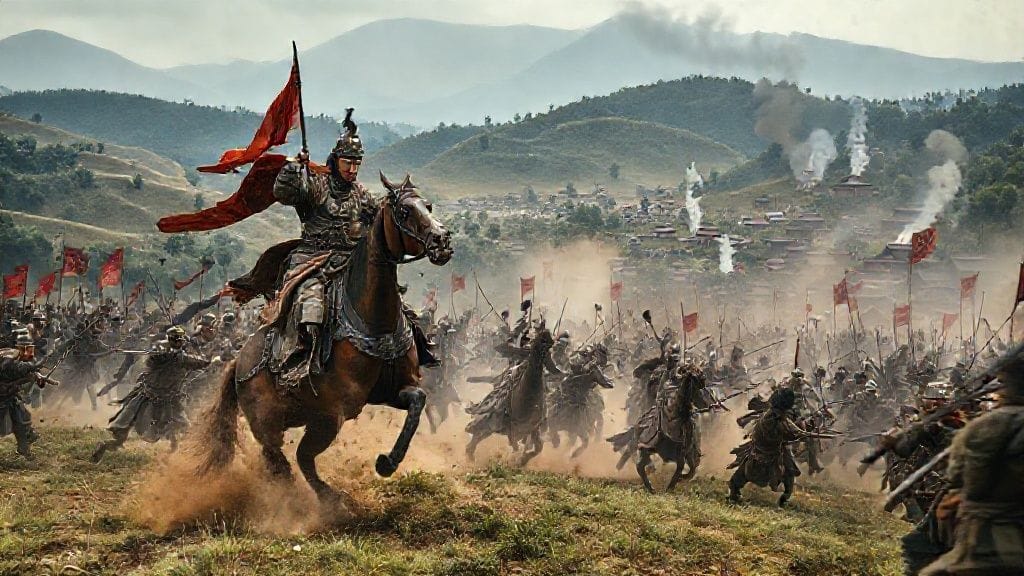
The departure from Medina would have been a striking sight. Dust rose from hundreds of hooves and sandals as columns formed: veteran warriors who had stood at Badr and Uhud, newly converted tribesmen eager to prove their loyalty, and men whose families had suffered at the hands of those now said to reside in Khaybar. Standards snapped in the wind; armor and weapons clinked. Women and children watched from Medina’s outskirts—some in dread, some in pride, most in a mixture of both. For many, livelihood and future depended on the outcome. Victory at Khaybar promised spoils and security; defeat could expose Medina to revenge.
The march north traversed harsh volcanic plains known as harra—jagged black basalt formations, interspersed with valleys and sparse vegetation. The army would have moved at a measured pace, conserving water and energy. Scouts probed ahead, watching for ambushes or raiding parties. The Prophet Muhammad, as commander, oversaw discipline and strategy but also spiritual morale. The sources recall prayers, invocations of God’s help, and a sense that this was not merely a tribal raid, but a campaign with religious stakes.
Secrecy played a role. Early Muslim reports emphasize that the destination was not loudly announced at first, perhaps to prevent Khaybar from calling distant allies before the Medinan force arrived. Still, in an interconnected tribal world, rumors likely preceded the army. Caravans turned aside; shepherds vanished from exposed ridges. Somewhere along the northern routes, word must have reached Khaybar’s leaders: “Muhammad is on his way.” The phrase would have carried the weight of recent history—of expelled tribes, broken coalitions, and cities that had underestimated him.
As the army closed in, its mood would have been tense but hardened by years of conflict. Many had lost kin in battles where allies of Khaybar had fought; now, they walked toward those strongholds with blades sharpened. Yet even among the rank and file, there was likely awareness that conquest—not annihilation—was the aim. The Prophet’s previous conduct after victories, offering terms and alliances, would have been known. Still, the question hung over them all: Would Khaybar submit or fight to the end?
Fortresses in the Palm Groves: The Strategic Landscape of Khaybar
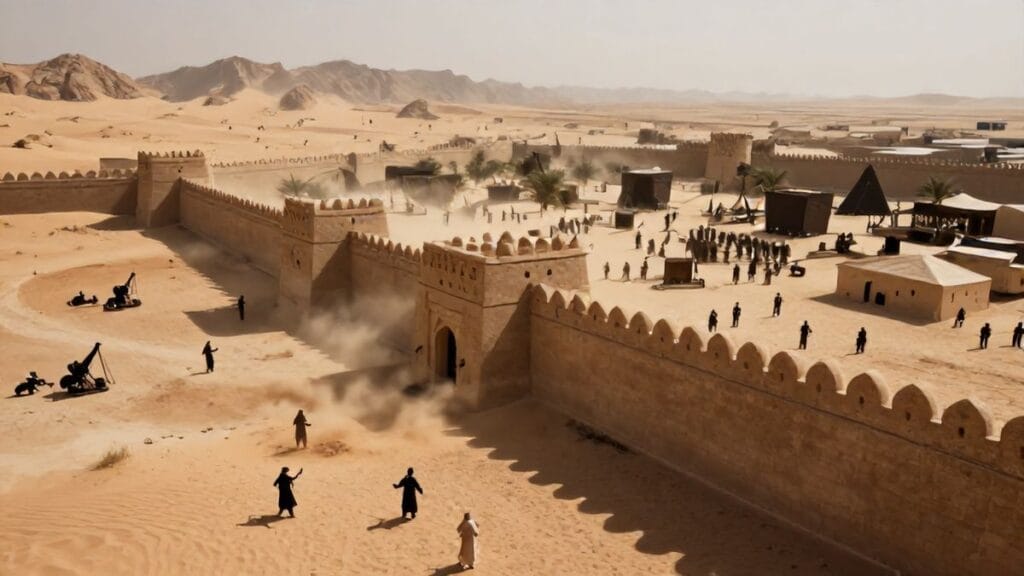
Approaching Khaybar, the stark drama of its setting came into view. The oasis lay cradled amid basaltic hills and valleys, its green palms a startling contrast against the dark stone. Above the undulating groves, stone fortresses thrust into the sky—rectangular towers and curtain walls built on elevated outcrops, commanding approaches and fields. Each major cluster—al-Natat in the north, al-Shiqq and al-Katiba in the center, al-Qamus and other forts to the south—functioned as both refuge and base of operations for the various Jewish clans.
These were not symbolic structures; they were hardened positions, stocked with grain, weapons, and water. Defenders could rain arrows and stones down upon attackers struggling up narrow approaches. Gates could be sealed. In times of danger, farmers could retreat from the fields up into the safety of stone. For generations, these forts had deterred minor raiding parties and allowed Khaybar’s inhabitants to survive in a competitive, often violent environment.
To an experienced commander, though, the layout also presented vulnerabilities. The forts were strong but divided. If besieged or neutralized one by one, the defenders could not easily concentrate their forces or succor neighbors under sustained attack. Moreover, Khaybar could not easily be resupplied once surrounded. While its water and local food stores were advantages, the pressure of a well-conducted siege could threaten morale, exhaust provisions, and force negotiations.
The Muslim army encamped within striking distance of this fortified archipelago, likely choosing positions that balanced access to water with defensible terrain. Night fires flickered beyond the palm lines; watchmen strained their eyes across moonlit groves. Inside the forts, defensive preparations accelerated. Arrows were counted, shields inspected, gates reinforced. Elders convened in urgent councils, some insisting on resistance, others perhaps favoring a negotiated arrangement similar to those heard of in other conflicts with Muhammad.
Political fault lines inside Khaybar added complexity. Families of exiled leaders from Medina’s Jewish tribes were now interwoven with local elites, bringing with them tales of Muhammad’s tenacity and uncompromising monotheism. Some may have pressed for a final showdown, believing that defeat would mean the end of their identity and honor. Others, more attuned to shifting regional power, might have sensed that Medinan victory was increasingly likely, given Mecca’s recent setbacks and the Hudaybiyyah truce. In those torch-lit debates, the fate of an oasis was being decided even before the first arrow flew.
Opening Blows: Skirmishes, Raids, and the First Shock at Khaybar
When violence finally broke over Khaybar, it began not with a theatrical charge against towering walls but with swift, calculated strikes. Sources describe early-morning attacks on outlying agricultural areas, catching some workers and guards by surprise. Imagine the first light of dawn filtering through palms, dew still on the fronds, as farmers set out to tend irrigation channels and date clusters—only to see armed men on the horizon, banners lifting in the breeze.
One famous report, preserved in later Muslim collections, has some inhabitants of Khaybar crying out in alarm, “Muhammad and his army!” upon sighting the Medinan forces, realizing that the campaign they had long feared had arrived at their very gates. Panic and confusion followed. Those near the fields fled toward the forts, trying to outrun mounted raiders; others stood briefly to fight and were quickly overrun. The raiding tactics of Arabian warfare—fast strikes to gain momentum and disrupt enemy logistics—were fully on display.
The Prophet is portrayed in Islamic narratives as tightly controlling the conduct of his army. Reports describe prohibitions against killing women and children, and guidance regarding treatment of captives and property. At the same time, the stark reality of war in 7th-century Arabia cannot be sanitized. There were casualties, prisoners, and the seizure of livestock and supplies. The initial clashes served not only to weaken Khaybar’s ability to sustain a drawn-out fight, but also to send a clear message: the siege had begun, and the attackers were not to be taken lightly.
As days passed, the campaign shifted from mobile skirmishing to positional warfare. The Muslims began investing individual forts, cutting off access, probing approaches with small assaults, and testing defensive responses. Arrows hissed through the groves; shouted insults and challenges carried between walls and siege lines. For many rank-and-file defenders, this was likely their first experience under sustained assault by a disciplined, cohesive force loyal to a single leader claiming divine backing.
In the midst of these early engagements, the spiritual dimension was ever present. For the Medinan fighters, this was not only a campaign to neutralize a political threat, but also a struggle in which success was intertwined with faith. Prayers punctuated preparations; verses were recited; the promise that “God will grant victory to those who support Him and His Messenger” resonated in tired hearts at night. For Khaybar’s Jewish inhabitants, whose scriptures also spoke of covenant, land, and trials, the irony must have been bitter: another monotheist community now besieged them, claiming fulfillment and correction of earlier revelations.
The Fall of Na‘im and al‑Qamus: Day‑by‑Day Inside the Siege Lines
The siege of Khaybar unfolded not as a single clash but as a sequence of engagements targeting its various fortified strongholds. Early Muslim sources name several: Na‘im, al-Sa‘b ibn Mu‘adh, al-Natat, al-Shiqq, al-Katiba, and al-Qamus, among others. The order and details differ between accounts, but a broad picture emerges of a campaign in which the Medinan forces systematically isolated, attacked, and compelled the surrender of these positions.
Fort Na‘im is often described as among the first to fall. Positioned to protect parts of the oasis and its approaches, it proved unable to withstand sustained assault and psychological pressure. The defenders, aware that no large allied relief force was coming—Mecca bound by truce, regional tribes cautious—faced a grim calculus. Could they hold out long enough to starve or discourage the besiegers? Or would prolonging resistance only lead to harsher terms once the inevitable surrender came?
Day after day, war routines set in. On the Muslim side, detachments rotated through front-line duty, while others foraged, maintained equipment, or tended the wounded. Inside Khaybar’s forts, families huddled in cramped spaces. Food supplies were carefully rationed; water was guarded jealously. Children cried in the night at the sound of distant shouts or the thud of projectiles striking walls. Women likely took on exhausting work—cooking, tending injured relatives, maintaining some semblance of normalcy amid the stress of siege.
As one fort after another was neutralized, either by storming or negotiated capitulation, the remaining strongholds felt the walls of fate closing in. Among these, al-Qamus, associated in the sources with the leading clan of Banu Nadir exiles, looms large. It is portrayed as a particularly formidable fortress, and its fall as a dramatic turning point in the conquest of khaybar. Defenders there, many of whom carried fresh memories of expulsion from Medina and the execution of their kin, had powerful incentives to resist. Surrender risked not only land but retribution.
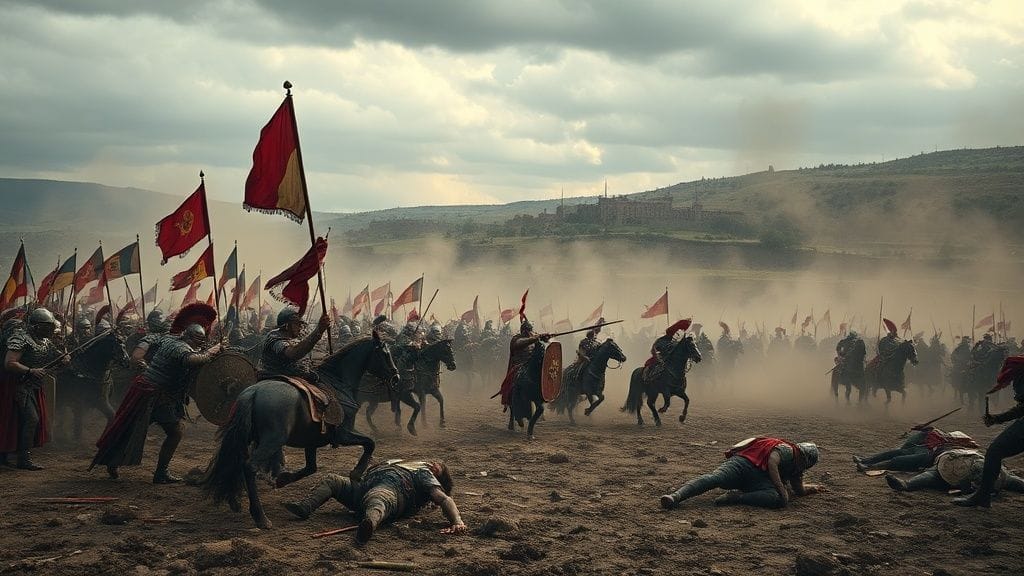
The day al-Qamus finally fell, according to Muslim tradition, was marked by intense close-quarters fighting at its gate and approaches. Stories of individual duels, heroic stands, and sudden routs circulated among the victors afterward, becoming part of the community’s shared lore. And with al-Qamus’ collapse, the psychological backbone of Khaybar’s resistance snapped. One by one, remaining pockets of defiance recognized that their city—so long a bastion of security—could no longer stand as it once had.
In one early Muslim chronicle, Ibn Ishaq’s biography of the Prophet (as transmitted by Ibn Hisham), the narrative rhythm at Khaybar slows at these key moments, dramatic detail emphasizing not just the tactical progression but the sense of divine orchestration felt by the believers. Later historians, like al-Tabari, would weave these battlefield vignettes into broader annalistic histories, placing the siege within the grand sweep of Islam’s expansion. But on the ground, for those who lived and died there, Khaybar was not yet a symbol. It was a home under fire.
Ali’s Standard and the Broken Gate: Heroism and Legend at the Walls
Among the most vivid and frequently retold episodes of the conquest of khaybar is the story surrounding the final assaults on key forts and the role of Ali ibn Abi Talib, the Prophet’s cousin and son-in-law. In Muslim memory—particularly but not exclusively within Shi‘a traditions—Ali’s bravery at Khaybar became legendary, his name inseparable from the last, decisive phase of the siege.
One oft-cited report describes the Prophet, on the eve of a crucial assault, declaring that he would give the battle standard the next day to a man who loved God and His Messenger and was loved by them, a man through whose hands God would grant victory. The companions spent a restless night wondering who would be chosen. In the morning, Muhammad reportedly called for Ali, who was suffering from an eye ailment. After the Prophet applied his saliva to Ali’s eyes—a detail that blends piety with miracle—they were said to have healed, and the banner was entrusted to him.
Leading the charge, Ali is depicted engaging in fierce combat near the fortress gate, dueling prominent defenders, and driving the attack forward under heavy resistance. In some later narrations, he is even said to have torn the great gate of the fort from its hinges and used it as a shield, an image that borders on the mythic, capturing not literal reportage so much as a community’s awe at his perceived strength and courage. Historians debate where factual memory ends and hagiographic embellishment begins, but the narrative power is unmistakable.
Through such stories, the conquest of khaybar became more than a set of dates and tactical maneuvers; it became a theater in which key figures of early Islam displayed virtues admired by later generations: unwavering faith, physical courage, loyalty, and humility in victory. For Shi‘a Muslims, who revere Ali as the rightful successor to the Prophet, Khaybar is one of several events that showcase his special status. For Sunnis as well, the reports of the Prophet’s praise at Khaybar affirm Ali’s closeness to the prophetic household.
Yet behind the legends, there were real men on both sides who fought, bled, and died at those walls. For the Jewish defenders, the figures who opposed Ali and other Muslim champions were not nameless villains but clan heroes, protectors of families and fields. Their stories, for the most part, are preserved only indirectly in the sources of those who defeated them. It is one of history’s recurring tragedies that the voices of the vanquished reach us mostly through the pens of their rivals. Still, by reading carefully between the lines, we can sense the valor and despair that animated their last stands.
Fear, Faith, and Hunger: The Human Experience of the Conquest
Strip away the banners and battle reports, and the conquest of khaybar reveals itself as a deeply human event. Consider what it meant for an ordinary woman of Khaybar, perhaps in her thirties, married to a farmer or minor guard, with children who had never known life outside the oasis. As the siege tightened, she would have helped move precious stores of grain into fortified storerooms, comforted frightened children, and listened to the debates of elders and warriors with mounting anxiety.
At night, the cold wind would slip through cracks in the stone walls of the fort, carrying distant shouts in Arabic—snatches of the attackers’ prayers, their laughter, their commands. Fear for her children’s future would mingle with religious trust; as a Jew deeply attached to her traditions, she might have recited familiar psalms under her breath, seeking reassurance in words spoken by ancestors facing other sieges, other trials. The paradox of faith meeting catastrophe is not unique to any one religion. It manifests in different languages but shares a common core of bewilderment and hope.
On the other side, an ordinary Medinan foot soldier might have been equally haunted. He may have lost a brother at Uhud, seen comrades killed in night raids, and believed firmly that victory at Khaybar would secure the community’s survival. Still, as he crouched behind a palm trunk under arrow fire, or lay awake on his cloak after a day of fighting, questions would come. Would he live to return to his family? Were his motives pure, or mixed with desire for spoils? Early Muslim literature preserves sayings in which the Prophet warns his followers that intentions matter—that fighting for God is different from fighting only for plunder or pride. Those teachings would have weighed on minds under the indifferent desert stars.
Hunger, too, shaped experience. Khaybar’s wealth lay in its dates, grains, and livestock. As the siege disrupted regular harvesting and trade, both sides had to husband resources carefully. The Muslim army relied partly on what it could capture and what it had brought; the defenders drew down stored reserves. Accounts speak of exhaustion and hardship, of men fighting despite fatigue, of disputes arising over distribution of captured food. War, then as now, was not simply shots and charges, but logistics and stomachs.
Children, bewildered by the sudden disruption of their routines, would ask questions their parents found hard to answer: “Why are they attacking us?” “When will it be over?” For some, the end brought captivity or displacement; for others, it meant adjusting to new overlords under arrangements negotiated between leaders. These children grew into adults carrying complex memories—of terror and mercy, of loss and unexpected continuities. Through their lives, the conquest of khaybar lived on as something more intimate than an episode in official chronicles: it was the hinge on which personal fortunes turned.
Surrender in the Date Groves: Negotiating the Future of Khaybar
As Khaybar’s forts fell one after another, the military endgame gave way to political negotiation. The Muslim forces had achieved their primary objective: they had broken organized armed resistance, neutralized Khaybar as a base for hostile plotting, and demonstrated Medina’s capacity to project power far beyond its immediate environs. The next steps would determine whether the oasis’s population would be scattered, enslaved, or integrated into a new political order.
Contrary to the expectation of total dispossession, the settlement that emerged was complex and, in some respects, pragmatic. The Prophet Muhammad and his commanders, aware of Khaybar’s agricultural value and the expertise of its inhabitants, agreed to allow many of the Jewish residents to remain on their lands under a new arrangement: they would work the fields and orchards but cede ultimate ownership and pay a significant share—usually described as half—of the produce to the Muslim state. This system, known in later legal terminology as mukābara or sharecropping-like arrangements, became a precedent in Islamic jurisprudence concerning conquered agricultural lands.
The decision achieved several goals at once. Economically, it ensured that Khaybar’s productivity would not collapse through the sudden removal of its skilled farmers. For the Muslim treasury, it created a steady stream of revenue in dates and grains. Politically, it signaled that surrender opened a path to continued residence—even if under subordination—rather than automatic expulsion. Spiritually, many Muslims interpreted the arrangement as a merciful alternative to more severe outcomes common in pre-Islamic tribal warfare.
For Khaybar’s inhabitants, the settlement was both relief and trauma. On one hand, they had avoided the worst: complete evictions or mass enslavement of the entire population. They remained in their familiar homes and fields, still able to observe their religious practices and maintain community life, at least for the time being. On the other hand, they had lost sovereignty. The land they had considered theirs was now legally recognized as belonging to the conquerors. Their freedom of political action was drastically curtailed; their security now depended on the goodwill and stability of the Medinan leadership.
Negotiations likely unfolded amid battered groves and within still-standing halls of the forts, around tables where dates, bread, and water were shared between former enemies. Translations moved legal and religious concepts across linguistic and cultural boundaries. Oaths were sworn; registers of who was allowed to stay and under what conditions were mentally, if not yet fully textually, compiled. It’s astonishing, isn’t it, how quickly the machinery of everyday life reasserts itself in the wake of battle—how people move from killing one another to arranging taxes and harvests?
Yet this new equilibrium was fragile. Over the following years, tensions would flare; suspicions and grievances did not vanish with the ink on oral agreements. Later Muslim sources note eventual expulsions of Jewish communities from certain regions, including Khaybar, under the caliphate of ‘Umar. Whether driven by security concerns, economic calculations, or religious policies, these later actions meant that the arrangement forged in the date groves of 628 was not permanent. Still, as a moment, it illustrates how the conquest of khaybar was not simply a clash of arms but also a negotiation over how different communities would coexist—if only temporarily—under an expanding Islamic state.
Land, Tribute, and Law: How Khaybar Reshaped Islamic Governance
The aftermath of the conquest of khaybar reverberated far beyond the basalt ridges of the oasis, deeply influencing how the nascent Islamic state understood land, taxation, and the treatment of conquered peoples. In the technical language of later jurists, Khaybar became a case study—a precedent invoked in debates from Kufa to Cordoba about how Muslims should manage annexed territories.
One key question was ownership of conquered land. Should land seized in war be distributed as private property (gahnima) among the soldiers, as was common in Arabian tribal practice? Or should it be held more broadly for the benefit of the community, perhaps as public or state-administered land, with inhabitants paying taxes or rent? The arrangement reached at Khaybar—allowing the Jewish residents to remain as cultivators while surrendering a substantial share of produce—helped crystallize the notion that not all lands seized by force needed to be broken up into small fiefdoms. Instead, they could be managed as enduring sources of revenue for the broader polity.
This distinction fed into later doctrinal discussions about kharaj (land tax) and jizya (poll tax on non-Muslim subjects), both of which became central to the fiscal structure of expanding Islamic empires. Khaybar was often cited in legal manuals and commentaries as an early example of a non-Muslim community retaining local control of agriculture under Muslim sovereignty. As such, the oasis—in all its tangible specificity—was abstracted into principle: a chapter in the evolving Islamic theory of governance.
Militarily, Khaybar offered lessons in siege warfare, intelligence, and logistic planning that later commanders would study, explicitly or tacitly. The decision to neutralize a hostile stronghold through a combination of force and negotiated settlement, rather than pursue absolute destruction, would echo in campaigns across Syria, Iraq, and beyond. In early Islamic historiography, one can almost see a template forming: hostile center identified, power projected, resistance broken, terms imposed, population integrated or relocated, economy harnessed.
Politically, the conquest strengthened Muhammad’s hand in dealing with tribes still wavering between allegiance and opposition. The shock of Khaybar’s fall sent a clear message: fortified positions and agricultural wealth were no guarantee against the Medinan state, whose cohesion and perceived divine backing were now undeniable. Tribes that had sat on the fence began reaching out to Medina, seeking treaties or exploring conversion. The center of gravity in western Arabia tilted decisively toward the Prophet’s city.
Even internally, Khaybar affected Medina’s social fabric. The distribution of movable spoils—livestock, weapons, and other goods taken at Khaybar—helped alleviate poverty among the faithful and reward those who had stood by Muhammad in difficult years. At the same time, it generated debates over fairness and priority; those who had participated in earlier, harsher campaigns felt entitled to a greater share, while newer converts sometimes pressed for equal treatment. Managing these competing claims further pushed the Medinan leadership toward formal rules and recorded shares, another step on the road from charismatic movement to structured state.
Jewish Communities after Khaybar: Coexistence amid Uneasy Memory
For the Jewish communities of Khaybar and the wider Arabian Peninsula, the year 628 marked the beginning of a fraught and evolving new chapter. In the immediate aftermath, those who remained in Khaybar under the sharecropping-like agreement attempted to rebuild everyday routines under fundamentally altered conditions. Fields still needed tending; festivals and sabbaths still punctuated the calendar; children still learned ancestral stories. Yet the knowledge that ultimate power now resided with a Muslim authority colored all of these activities.
Relations between Muslims and Jews in the region were neither uniformly hostile nor entirely harmonious. In Medina itself, Jewish individuals and families continued to live alongside Muslims after the major tribal expulsions and executions, as attested in some legal traditions and anecdotes. Trade, personal friendships, and scholarly exchanges persisted in some contexts. However, the large autonomous Jewish tribal entities that had characterized parts of pre-Islamic western Arabia were now broken. Khaybar’s partial autonomy was the exception rather than the rule, and even that exception was, as later events showed, temporary.
Over time, many Jewish inhabitants left Khaybar, whether by forced relocation or voluntary migration, relocating to other parts of the Middle East where Jewish communities had deeper, more stable roots—Syria, Iraq, Yemen, and beyond. Their memories of Khaybar, if recorded at all, would have entered the broader tapestry of Jewish diaspora history, overshadowed by later catastrophes but still representing a moment when a proud oasis society lost its independence to a neighboring monotheist power.
Islamic memory, for its part, preserved the Jews of Khaybar ambiguously—as both opponents of the Prophet and later, in some narratives, as subjects under his protection. Later generations of Muslim scholars and storytellers would sometimes focus on instances of betrayal and treachery, citing them as justification for Khaybar’s conquest; others would highlight the Prophet’s mercy in allowing them to remain and share in the land’s fruits. The figure of Safiyya bint Huyayy, a noblewoman of Banu Nadir taken captive at Khaybar and later married to Muhammad, became a particularly poignant bridge between communities—both a symbol of former enmity and of incorporation into the Prophet’s household.
Centuries later, polemical literature—both Muslim and Jewish, and later Christian—would sometimes seize upon Khaybar as emblematic. For some Muslim authors, it demonstrated divine vindication over those who, in their view, had rejected the final prophet. For some of Islam’s critics, Khaybar was cited as evidence of early Islamic aggression. These retrospective uses often simplified the complex human reality of 628 into slogans and accusations, erasing the nuances of local politics, previous alliances, and the harsh norms of warfare then prevalent across the region.
Between these contesting memories, historians today attempt a more balanced reconstruction. Drawing on the early Muslim sources while acknowledging their perspective, and scrutinizing later echoes, they recognize the pain that must have accompanied the loss of Khaybar for its Jewish inhabitants. At the same time, they situate that pain within a wider context in which many communities—Arab pagan, Christian, Jewish, and eventually Muslim—experienced conquest, displacement, and negotiation under shifting imperial orders. The story of Khaybar’s Jews is therefore not an isolated morality tale but one thread in a long, tangled history of coexistence and conflict in the Middle East.
Echoes in Qur’an, Hadith, and Early Chronicles
The conquest of khaybar did not fade quietly into the past; it was inscribed into the Muslim community’s sacred and historical literature in ways that ensured its enduring presence. While the Qur’an does not name Khaybar explicitly, many Muslims have read certain verses about victory, spoils, and divine support—particularly in Surah al-Fath (The Victory)—as applicable to the period surrounding Hudaybiyyah and Khaybar. The sense that God was turning the tide in favor of the believers, after years of hardship, resonated powerfully with the oasis’s fall.
Hadith collections—reports about the sayings and actions of the Prophet—contain numerous references to Khaybar. Some focus on legal and economic aspects, such as the share of spoils allocated to fighters, the status of land, or the terms arranged with the Jewish inhabitants. Others highlight moral and spiritual lessons: the virtues of certain companions displayed at Khaybar, the importance of correct intention in battle, or the Prophet’s conduct toward captives and non-combatants. Together, these narrations ensured that Khaybar was not merely a matter of historical curiosity but a living reference point for Muslim ethics, law, and identity.
Early biographical works like Ibn Ishaq’s Sirat Rasul Allah (as edited by Ibn Hisham) present an extended narrative of the campaign, weaving battlefield episodes with dialogue, revelation, and communal reactions. Later universal historians such as al-Tabari incorporated these accounts into larger annals, sometimes offering variant reports or additional details. Modern historians, reading these texts critically, note their theological framing and the tendency to emphasize divine intervention and prophetic foresight. Still, they provide invaluable information about the sequence of events, key figures, and the atmosphere of the time.
One modern scholar, for example, observes that “Khaybar stands as a watershed between the defensive wars of the early Medinan period and the more confidently expansionist campaigns that followed,” an assessment that captures the campaign’s significance beyond its immediate locale. Such secondary analyses, building on classical sources, help contemporary readers situate Khaybar within evolving patterns of Islamic statehood and regional politics.
It is important to recognize that these sources are not neutral. They were written by believers who saw history as unfolding according to a divine plan. Yet even within this framework, there are glimpses of nuance: discussions of contested decisions, sympathy for some of the defeated, and acknowledgment of complex motives. The historian’s task is to listen attentively to these voices without either uncritical acceptance or cynical dismissal—understanding that memories of Khaybar, like memories of any foundational conflict, carry both illumination and shadow.
From Desert Battle to Global Symbol: Khaybar in Later Politics and Imagination
As centuries passed, the name “Khaybar” gradually detached itself from its physical oasis and took on a life of its own in the political and symbolic imagination of the Muslim world—and, increasingly, beyond it. Medieval poetry, sermons, and storytelling referred back to the conquest of khaybar as an example of God’s support for the faithful and the Prophet’s triumph over those portrayed as treacherous or obstinate. The actual features of the oasis—the basalt ridges, the fort walls—faded behind metaphor. Khaybar became shorthand for a decisive victory of Islam over opponents who were, in these narratives, frequently identified as archetypal foes.
In various later conflicts, particularly those involving Muslim polities and powers identified as Jewish or allied with Jews, propagandists drew on Khaybar as a rallying cry. The phrase “Khaybar, Khaybar” appeared in slogans and chants, compressing a complicated 7th-century campaign into a stark symbol of inevitable Muslim victory over Jewish enemies. This process of symbolization often ignored the nuanced realities of early Muslim–Jewish relations, flattening historical actors into caricatures. It also neglected the fact that the Prophet’s own policy at Khaybar combined force with treaty, and that the immediate outcome was not extermination but regulated coexistence.
Modern scholarship, Jewish and Muslim alike, has wrestled with this afterlife of Khaybar. Some Jewish historians view it primarily as a traumatic episode in the long history of Jewishminority life under various rulers, worthy of remembrance as one more example of loss and adaptation. Some Muslim intellectuals critique the politicized use of Khaybar as a chant of hatred, arguing that it betrays the more complex ethical heritage of Islamic tradition regarding non-Muslim communities. Others, however, continue to invoke it as a symbol of strength and resilience against perceived threats, sometimes far removed from the specifics of 7th-century Arabia.
This contest over meaning highlights a broader truth: historical events do not simply “happen” once and then vanish. They are constantly reinterpreted, re-narrated, and redeployed in light of new circumstances. The conquest of khaybar, once a regional conflict between an emerging city-state and a fortified oasis, now functions in some discourses as a global metaphor—used in discussions of Middle Eastern geopolitics, interfaith relations, and identity politics. In such contexts, careful historical understanding can serve as an antidote to slogan-driven simplifications.
Revisiting Khaybar with empathy for all its participants—Muslim and Jewish, victorious and vanquished—does not erase the real power asymmetries or the pain of loss. But it can complicate inherited narratives in constructive ways, reminding us that early Muslims were not cardboard heroes, nor early Jews simple villains; they were human beings making hard choices in a harsh world. Recognizing this may not neutralize modern conflicts that sometimes invoke Khaybar, but it can at least challenge the instrumentalization of the past in the service of present-day hatred.
Archaeology and the Elusive Traces of an Oasis War
Given the dramatic role Khaybar plays in textual histories, one might expect its soils and stones to be thick with archaeological evidence of the 628 campaign. In reality, the material traces are far more elusive. Access restrictions, environmental challenges, and the fragility of mudbrick and stone structures over fourteen centuries have limited systematic excavation. Still, satellite imagery, surveys, and scattered studies suggest that the historical Khaybar region was indeed a complex of fortified settlements and agricultural installations, in line with the textual descriptions.
Researchers have identified remnants of old dams, irrigation systems, and settlement mounds that speak to sophisticated water management and long-term habitation. Some visible ruins of fort-like structures correspond roughly to locations named in early Muslim sources, though caution is essential in making direct identifications. Without robust stratigraphic excavation and datable artifacts securely linked to the late 6th and early 7th centuries, it remains challenging to tie specific walls or towers to the siege recounted in chronicles.
Nevertheless, the broader archaeological picture confirms that Khaybar was no mere cluster of tents. It was a structured oasis environment, with investment in defensive and agricultural infrastructure that would have taken generations to build. This long arc of development underscores the scale of what was at stake in 628: the fall of Khaybar was not the loss of a temporary encampment but the subordination of an entrenched micro-civilization with deep roots in the land.
Comparative archaeology from similar oases in the Arabian Peninsula and the Levant helps flesh out what life at Khaybar might have looked like. Multi-room houses with shared courtyards, storage jars for grain and dates, simple oil lamps, and modest ritual objects paint a picture of everyday life that resonates across time. Children playing in dusty alleys, elders sitting in the shade discussing news, artisans working metal or textiles—the rhythms of daily existence that persisted until disrupted by raids, sieges, or political transformation.
Future archaeological work, if circumstances ever permit more extensive exploration, could further illuminate Khaybar’s story. It might reveal evidence of destruction layers corresponding to the 7th century, shifts in pottery styles or building techniques reflecting new rulers, or inscriptions shedding light on local governance before and after the conquest. Such findings would not replace the textual narratives but could complement or complicate them, grounding memory in material reality and offering new angles on an event that has often been discussed more in ideological than empirical terms.
Khaybar’s Legacy in Law, Strategy, and Collective Memory
Standing back from the details, we can see why the conquest of khaybar looms so large in the imagination of believers, historians, and polemicists. On a practical level, it removed a persistent threat to the Prophet’s community, solidified Medina’s economic base, and offered a template for the management of conquered agricultural lands. It marked a shift from reactive defense toward proactive strategy, signaling that the young Islamic state had moved beyond simple survival into a phase of calculated expansion.
Legally, Khaybar became a touchstone. Debates over the status of conquered territories, the rights and obligations of non-Muslim subjects, and the ethical limits of warfare repeatedly turned back to the oasis and its post-surrender arrangements. Muslim jurists of various schools invoked Khaybar in arguing for or against particular policies, whether concerning land tax regimes or the permissibility of certain kinds of sharecropping contracts. In this sense, the oasis lived on not as a battlefield but as a set of legal precedents shaping the daily lives of farmers, officials, and taxpayers for centuries across the Islamic world.
Strategically, Khaybar demonstrated the power of combining diplomacy, timing, and military force. The sequence—Hudaybiyyah’s truce with Mecca, followed by a concentrated campaign against a northern stronghold—showed an acute awareness of regional balances. Later Muslim states, from the Umayyads to the Ottomans, would likewise seek to neutralize major foes through treaties before striking at other targets. Whether consciously modeled on the Prophet’s example or independently rediscovered, this pattern found an early, clear expression at Khaybar.
In collective memory, however, the conquest of khaybar is most vividly remembered not for these structural contributions but for its human dramas: Ali hoisting the banner, Safiyya’s transformation from captive to “Mother of the Believers,” the anxious nights of siege, the tense negotiations in the date groves. These stories, retold in sermons, children’s books, and scholarly works, have helped define for many Muslims an image of their foundational generation as courageous, principled, and ultimately triumphant against long odds.
At the same time, responsible historical reflection requires acknowledging the suffering entailed in that triumph: the families uprooted or subordinated, the lives lost on both sides, the dreams extinguished alongside those newly realized. To say that Khaybar was, in Islamic terms, a victory of God’s cause does not erase the human cost; nor does acknowledging that cost negate the sincerity and faith of those who fought under Muhammad’s banner. Holding these truths together—recognizing both the meaning and the pain of the conquest of khaybar—is perhaps the surest way to honor the complexity of the past.
Conclusion
In the barren north of the Arabian Peninsula, where rugged black stone meets sudden swathes of green, the events of 628 turned an ancient oasis into a perpetual point of reference. The conquest of khaybar was more than a clash between an emerging Muslim state and a fortified Jewish community; it was a crucible in which strategies, laws, identities, and memories were forged. From the perspective of Medina, it represented the fulfillment of promises whispered in the darkest days of siege—that patience and steadfastness would culminate in security and abundance. From the vantage point of Khaybar’s inhabitants, it was the abrupt end of a long-standing autonomy, the redefinition of home under new masters.
We have traced how the road to Khaybar ran through earlier battles like Badr and the Trench, through broken alliances and embittered exiles, and through the diplomatic gamble of Hudaybiyyah that freed Muhammad to strike north. On the ground, we have glimpsed the fortresses rising above the palm groves, heard the cries of alarm at dawn, and followed the slow grind of siege that eroded resistance fort by fort. We have watched as negotiations reshaped ownership and obligation, turning a land of independent cultivators into a revenue-generating province of a growing Islamic polity, while leaving its people in a liminal space between defeat and continuity.
We have also seen how Khaybar echoed outward: into Islamic legal theory on taxation and land, into the valorized narratives of early companions, into Jewish memories of loss, and into modern political rhetoric that often oversimplifies the past to serve present causes. Between hagiography and denunciation lie the human realities of fear, hunger, courage, compromise, and faith—realities that connect Khaybar’s people, victors and vanquished alike, to our own age of contested narratives and fraught encounters between communities.
To revisit the conquest of khaybar with nuance is not to strip it of religious meaning for believers, nor to deny the profound transformations it set in motion. It is, rather, to recognize that divine providence, for those who affirm it, works through intensely human stories—stories of leaders making calculated choices, of ordinary people enduring extraordinary circumstances, of societies reweaving their fabric after the shock of war. In that recognition lies a quiet lesson: that history, at its most honest, resists being weaponized into a simple slogan. It asks us instead to listen carefully, remember responsibly, and approach even our most cherished or painful pasts with a measure of humility.
FAQs
- What was the main cause of the conquest of Khaybar?
The principal cause was the perceived strategic threat that Khaybar posed to the Muslim community in Medina. Leaders and exiles based in Khaybar were seen, in early Muslim sources, as having helped instigate the coalition that besieged Medina at the Battle of the Trench. After securing a truce with Mecca at Hudaybiyyah, the Prophet Muhammad moved to neutralize this northern stronghold, both to prevent future coalitions and to stabilize the region under Medinan authority. - How large was the Muslim army that attacked Khaybar?
Exact numbers are uncertain, but traditional Muslim accounts generally place the size of the army between about 1,400 and 1,800 fighters. These figures include many veterans of earlier battles such as Badr and Uhud, along with some newly converted tribesmen. Whatever the precise count, it was a substantial force for the time and region, reflecting the growing military capacity of the Medinan state. - What happened to the Jewish inhabitants of Khaybar after the conquest?
After organized resistance collapsed, many of Khaybar’s Jewish inhabitants were allowed to remain in the oasis under a new arrangement. They continued to cultivate their lands but ceded ultimate ownership and agreed to give a significant portion—often described as half—of the produce to the Muslim state. Over time, especially under later caliphs, many Jews left or were relocated, and Khaybar ceased to function as a semi-autonomous Jewish stronghold. - Why is Ali ibn Abi Talib’s role at Khaybar so famous?
Ali’s role is celebrated because of reports that the Prophet gave him the battle standard for a decisive assault, praising him as one who loved God and His Messenger and was loved by them. Narratives describe Ali leading a successful charge against a key fortress and, in some traditions, performing heroic feats such as tearing its gate from its hinges. These stories became central to Muslim memory of Khaybar, especially in Shi‘a tradition, where they underscore Ali’s spiritual and martial preeminence. - Did the conquest of Khaybar change Islamic law or governance?
Yes, Khaybar became an important precedent in Islamic legal and political thought. The decision to keep much of the land as a kind of state-administered property, worked by its original inhabitants in exchange for tribute, influenced later doctrines on land tax (kharaj) and the status of conquered territories and non-Muslim subjects. Jurists frequently cited Khaybar when debating questions of land distribution, taxation, and agreements with conquered peoples. - Is Khaybar mentioned in the Qur’an by name?
No, Khaybar is not mentioned by name in the Qur’an. However, many Muslims understand certain verses, especially in Surah al-Fath (The Victory), as referring to the broader period surrounding the Treaty of Hudaybiyyah and the subsequent victories, including Khaybar. Early Muslim commentators sometimes linked these verses to the sense of vindication and expansion experienced after years of hardship. - How reliable are the historical sources about the conquest of Khaybar?
The primary sources are early Muslim texts—biographies of the Prophet, hadith collections, and universal histories—compiled several generations after the events. They were written by believers and reflect theological as well as historical concerns. While they contain valuable information and consistent narrative cores, historians approach them critically, comparing variant reports, considering their chains of transmission, and situating them within broader patterns of early Islamic historiography. - What is the significance of Khaybar in modern times?
In modern times, “Khaybar” has often been used symbolically in political rhetoric, especially in the context of Arab–Israeli and broader Muslim–Jewish tensions. Slogans referencing Khaybar are sometimes invoked as calls for victory over perceived enemies. At the same time, scholars and interfaith activists emphasize the need to understand Khaybar historically rather than use it as a simplistic symbol, noting that the original event involved complex causes, negotiations, and outcomes not captured by modern slogans. - Was the conquest of Khaybar unique compared to other early Islamic battles?
It was distinctive in several ways: it focused on a fortified agricultural oasis rather than a primarily tribal field force; it followed closely on the heels of the politically pivotal Treaty of Hudaybiyyah; and it resulted in a sharecropping-style settlement that provided a long-term revenue base for the Medinan state. While it shares features with other early campaigns—such as the mixture of military action and negotiated terms—Khaybar’s combination of strategic, economic, and legal consequences makes it particularly significant. - How did the conquest of Khaybar affect the wider Arabian Peninsula?
Khaybar’s fall sent a powerful signal to tribes across western and northern Arabia that Medina was now the dominant regional power, capable of taking fortified centers and reshaping their governance. Many tribes, seeing Mecca bound by truce and Khaybar subdued, reconsidered their positions and moved toward alliances or conversion. In this sense, Khaybar helped accelerate the process by which the Arabian Peninsula was politically and religiously unified under the Prophet Muhammad’s leadership.
External Resource
Internal Link
Other Resources
- Encyclopaedia Britannica – general search for the exact subject
- Google Scholar – academic search for the exact subject
- Internet Archive – digital library search for the exact subject