Table of Contents
- A Beacon in the Storm: The Dawn of the Cádiz Constitution
- Spain on the Brink: The Napoleonic Occupation and National Crisis
- The Seeds of Reform: Enlightenment Ideas and Spanish Intellectual Ferment
- The Furious War: The Peninsular Struggle Against French Domination
- The Siege of Cádiz: A City Defiant Amid Desperation
- Convening the Cortes: Revolutionaries, Exiles, and the Birth of a New Assembly
- Crafting a Constitution: The Ideals, Debates, and Battles Within the Cortes
- The Liberal Dream: Features and Innovations of the 1812 Charter
- Scene of Change: How Cádiz Became a Symbol of Resistance and Renewal
- Opposition and Obstacles: Royalists, Clergy, and Foreign Powers
- The Role of Key Figures: From José Bonaparte to Agustín de Argüelles
- Beyond Spain: The Constitution’s Impact on Spanish America
- The End of the First Spanish Liberal Era: Repression and Reversal
- Echoes Through Time: The Constitution’s Legacy in Modern Spain
- The Global Context: Constitutionalism in the Age of Empires and Revolutions
- Remembering Cádiz: How History Commemorates March 19, 1812
- Lessons from Cádiz: Liberty, Sovereignty, and the Fragility of Reform
A Beacon in the Storm: The Dawn of the Cádiz Constitution
On a blustery March morning in 1812, as waves battered the inhospitable shores of the city of Cádiz, a parchment emerged from the desperate embattled heart of Spain. The Constitution of Cádiz was promulgated—a gleaming ideal amid the rubble of war and occupation, a statement that liberty, order, and popular sovereignty could coexist even in the darkest shadows of imperial conquest. The air in the Spanish city was thick—not only with the salt-tang of the sea or the smoke of cannons, but with an electric hope for renewal. For a nation fractured by Napoleonic invasion and internal strife, this moment signaled a radical departure from centuries-old absolutism. Cádiz, surrounded and besieged by French troops yet unbowed, became the birthplace of one of Europe's earliest and most progressive liberal constitutions.
This was no mere legal document. The Cádiz Constitution was a manifesto that crystallized the fervent aspirations of a people and their representatives, a defiant shout against tyranny that would resonate across oceans and generations. To understand the profound weight of that day, one must immerse oneself in the tumultuous history that shaped it—a story of war, ideology, identity, and the relentless quest for sovereignty.
Spain on the Brink: The Napoleonic Occupation and National Crisis
By 1808, Spain was a country teetering on the precipice of collapse. The once-mighty Bourbon monarchy, ruled by Charles IV and later his son Ferdinand VII, had been compromised and humiliated by the invasion of Napoleon Bonaparte’s Grand Armée. Triggered by political intrigue and betrayal, the abdications of Bayonne reduced the Spanish throne to a pawn in the hands of the French emperor. Napoleon’s installation of his brother, Joseph Bonaparte, as king plunged the Iberian Peninsula into a violent upheaval.
The Spanish population reacted with overwhelming resistance—the Peninsular War erupted into a brutal conflict marked by guerrilla warfare, sieges, and profound suffering. The legitimate monarchy was displaced, and with it, the familiar social and political order. Yet, in the chaos, the Spaniards’ indomitable spirit was kindled. From the northern mountain passes to the southern plains, factions aligned and fractured, with patriots and pragmatists envisioning a new Spain, free from absolutist chains and foreign boots.
The Seeds of Reform: Enlightenment Ideas and Spanish Intellectual Ferment
Long before the cannons roared, Spain had been simmering with the ideas of the Enlightenment. The 18th century brought philosophers and jurists influenced by Montesquieu, Rousseau, and Voltaire, who questioned divine right and absolute monarchy. Spanish reformers such as Jovellanos and Campomanes advocated for rational governance, economic modernization, and limitations on royal power.
However, the Inquisition and the entrenched aristocracy fiercely resisted these currents, maintaining a rigid social hierarchy. The invasion, paradoxically, opened cracks in the ancien régime’s armor. Intellectuals and reformers saw an opportunity to sweep away corruption and tyranny under the guise of national salvation. This unfolding ideological transformation set the stage for constitutionalism that was both radical and deeply Spanish—a synthesis of liberalism and patriotism.
The Furious War: The Peninsular Struggle Against French Domination
The Peninsular War, often called the “Spanish Ulcer,” was a grinding conflict defined by asymmetric warfare. Spanish guerrillas harassed Napoleon’s forces, while the British, under the command of Arthur Wellesley (the future Duke of Wellington), landed on Iberian soil to assist the fight. The war devastated the countryside and tore communities apart. Yet it also forged a collective national identity rooted in resistance.
Amid this violence, the war forced Spain’s fragmented political factions to unite—however imperfectly—around the cause of sovereignty. Local juntas, councils formed to coordinate resistance, proliferated, wresting authority from the monarchy’s collapse. These juntas would ultimately converge in Cádiz, the last major Spanish city free from French control, to articulate a national political response.
The Siege of Cádiz: A City Defiant Amid Desperation
From 1810 to 1812, Cádiz emerged as a unique locus of freedom—fortified by its position on the coast and protected by the Royal Navy, it became a sort of island of resistance. French forces besieged the city but never breached its walls. Inside, a cosmopolitan mix of military officers, merchants, exiled politicians, and intellectuals filled the streets.
Despite shortages and fatigue, the atmosphere was electric. The city housed the Cortes Generales, the new national parliament, summoned to replace the defunct royal government. Under the pall of bombardments, these men and women debated the future of Spain—debates that would culminate in a foundational legal text aimed at restoring order and embracing freedom.
Convening the Cortes: Revolutionaries, Exiles, and the Birth of a New Assembly
The Cádiz Cortes was a watershed moment in Spanish political life. Delegates represented not only peninsular Spain but also the vast and fractious Spanish Empire—Americas included. This diverse assembly included liberals pushing for sweeping reforms, conservatives fiercely loyal to tradition, and moderates seeking compromise.
Deciding whether to uphold Ferdinand VII or to create a new constitutional order became the central dilemma. The assembly embraced the latter, a radical rejection of absolute monarchy in favor of popular sovereignty rooted in the nation’s collective will. This choice reflected an emerging European trend, as constitutional assemblies and revolutions spread from the Atlantic to the Mediterranean.
Crafting a Constitution: The Ideals, Debates, and Battles Within the Cortes
Between 1810 and early 1812, the deputies wrestled with every detail. The document’s inspiration drew heavily from the democratic hopes of the French Revolution and the liberal American experiment. Yet, it was uniquely Spanish in character.
The constitution declared national sovereignty resided in the people, not the monarch. It established a single-chamber parliament (the Cortes), affirmed freedom of the press, abolished feudal privileges, and proclaimed universal male suffrage (a revolutionary notion at the time). The Catholic religion was declared the state religion, intertwining tradition with reform.
Yet these changes were fiercely contested: clergy and conservatives feared secularization and loss of privileges; royalists saw treason; liberals hoped to birth a modern state amidst ruin.
The Liberal Dream: Features and Innovations of the 1812 Charter
The Constitution of 1812, often called La Pepa, was astonishingly progressive for its era. It was one of the first constitutions to call for:
- Sovereignty residing explicitly in the nation.
- Separation of powers into legislative, executive, and judicial branches.
- Equality before the law and the abolition of special privileges for nobility or clergy.
- Universal male suffrage, removing property-based restrictions traditional in Europe.
- Secular laws while maintaining the Catholic Church’s privileged status.
Its commitment to liberty, equality, and legal modernity represented a breakthrough but was carefully calibrated to Spain’s realities—a balancing act between revolution and tradition.
Scene of Change: How Cádiz Became a Symbol of Resistance and Renewal
Cádiz glowed as a beacon. Poets, pamphleteers, and political activists promulgated La Pepa as the dawn of a new Spain. It was celebrated as a triumph of constitutionalism, sovereignty, and the fight against oppression. Foreign observers watched closely—this was more than a local matter, but a tipping point for monarchy and liberalism in Europe.
But the city’s role was bittersweet: besieged and isolated, caught in war and recession, many Spaniards remained skeptical or hostile. The success of Cádiz was therefore fragile, dependent on a political tide shifting beyond its shores.
Opposition and Obstacles: Royalists, Clergy, and Foreign Powers
The promulgation did not end conflict but instead intensified political battles. Ferdinand VII’s supporters, restored by Napoleon’s defeat but opposed to constitutional limits, viewed the Cádiz Constitution as an existential threat.
The Church, wary of its drastically reduced power, alarmed peasants and conservatives alike. European monarchies, fearing revolutionary contagion, called for reaction and repression. In 1814, when Ferdinand returned, he abolished La Pepa, restoring absolutist rule and imprisoning reformers.
These reversals underscored the fragility of constitutional liberalism in a Europe still dominated by ancien régime monarchies.
The Role of Key Figures: From José Bonaparte to Agustín de Argüelles
History remembered personalities entwined with La Pepa’s birth. Agustín de Argüelles, a fiery liberal deputy, was instrumental in drafting the text. Another vital figure was Francisco Martínez de la Rosa, whose speeches steered debates.
Opposite them stood Joseph Bonaparte—the imposed monarch—and ultra-royalist factions who saw the constitution as a betrayal. The tension between these personalities illustrated the ideological showdown within Spain: modernity versus tradition, liberty versus order.
Beyond Spain: The Constitution’s Impact on Spanish America
The 1812 Constitution resonated deeply in the Americas. For many colonies in revolt, it symbolized hope for legal equality and self-rule within the Spanish empire’s framework.
Provinces in Latin America adopted revolutionary rhetoric and even aspects of the Cádiz Constitution, influencing independence movements from Mexico to Argentina. The document paradoxically became both a beacon for autonomy and a tool for imperial control, as Spain attempted to preserve territorial unity under new principles.
The End of the First Spanish Liberal Era: Repression and Reversal
Ferdinand VII’s return marked a dark turn. The king’s repudiation of the Constitution ushered in the “Ominous Decade” of absolutist repression. Liberal leaders were imprisoned or exiled; freedoms curtailed; reform projects dismantled.
However, the ideals remained alive beneath the surface. Recurrent uprisings and political agitation throughout the 19th century revived La Pepa’s spirit, shaping Spain’s turbulent fight between monarchy and constitutionalism that would last decades longer.
Echoes Through Time: The Constitution’s Legacy in Modern Spain
Despite its ephemeral enforcement, the 1812 Constitution became a cornerstone of Spanish political culture. It inspired subsequent constitutions in 1837, 1869, and beyond. Its principles permeated Spain’s continuing struggles toward democracy and rule of law.
The date of its promulgation—March 19—became a symbol of citizenship, liberty, and progress. Today, historians recognize Cádiz 1812 as a pioneering moment: a first attempt to transform a fractured nation into a modern state committed to legal rights and popular sovereignty.
The Global Context: Constitutionalism in the Age of Empires and Revolutions
The Cádiz Constitution’s promulgation occurred amid a global wave of constitutional experiments—from the American founding to the French Revolution and the nascent Latin American republics. It both influenced and was influenced by this matrix of revolutions, upheaval, and empire.
Spain’s version blended traditional Catholic and monarchical elements with radical Enlightenment ideals. In doing so, it mapped a distinctive path in the worldwide age of revolutions, presaging the 19th-century struggles for democracy and national identity.
Remembering Cádiz: How History Commemorates March 19, 1812
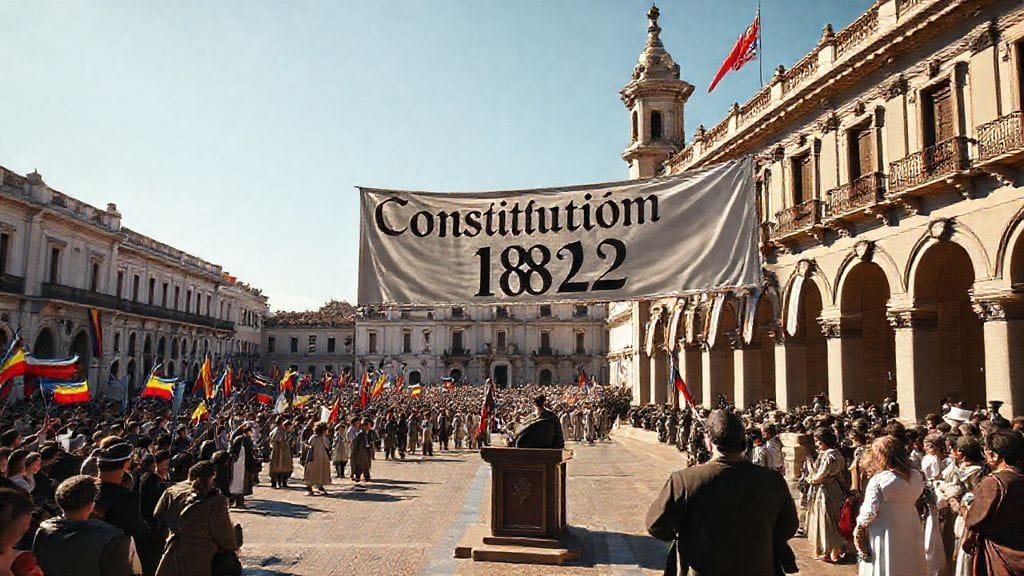
Each year, Cádiz reveres March 19 with ceremonies, speeches, and cultural events. Plaza de la Constitución and other landmarks celebrate the enduring importance of La Pepa. Academic gatherings revisit its significance, while artists and writers draw inspiration from its hopeful and tragic narrative.
The constitution remains a powerful symbol of resistance to tyranny and the pursuit of popular sovereignty—timeless themes still echoing in Spain and beyond.
Lessons from Cádiz: Liberty, Sovereignty, and the Fragility of Reform
The Constitution of Cádiz reminds us that freedom is hard-won and fragile. It reveals how war, catastrophe, and ideology can forge extraordinary political moments. It teaches the peril of reaction and the persistence of ideas even against harsh suppression.
From a battered Spanish city under siege emerged a text that declared a new contract between rulers and subjects. It dared to ask: what is the source of legitimate power, and how do we protect liberty in troubled times?
More than two centuries later, its lessons remain urgent, its spirit alive—a beacon in the ongoing human quest for justice and dignity.
Conclusion
The promulgation of the Constitution of Cádiz on March 19, 1812, was an astonishing beacon blazing amid one of Spain’s darkest hours. From the clamor of war, siege, and occupation emerged a manifesto that dared to redefine sovereignty, liberty, and the law. La Pepa was both a product of its tumultuous epoch and a blueprint for future generations. Though its immediate effect was curtailed by royalist reaction, its influence reverberated across Spain and Latin America for decades.
This document symbolized the resilient yearning of a people to forge new political realities, to contain monarchy within legal limits, and to assert the primacy of the nation and its citizenry. More than forgotten parchment, it remains a living testament to the possibility of change even when the world seems locked in chaos.
Cádiz in 1812 teaches us that liberty and constitutionalism are not merely ideas but struggles—complex, painful, and necessary. The echoes of its enactment call us to remember that democracy, though fragile, can rise victorious from darkness through courage and faith in collective will.
FAQs
1. Why was the Constitution of Cádiz considered revolutionary for its time?
It introduced national sovereignty vested in the people, universal male suffrage, separation of powers, and legal equality, which challenged the entrenched absolutist monarchy and aristocratic privileges prevalent in early 19th-century Europe.
2. What role did the Peninsular War play in the creation of the Constitution?
The war fragmented royal authority, mobilized local juntas, and created political urgency. The siege of Cádiz made the city a refuge for liberal deputies who drafted the constitution as a response to foreign invasion and internal collapse.
3. How did the Constitution of Cádiz impact Spanish colonies in the Americas?
Its liberal principles inspired many independence movements by promoting ideas of legal equality and popular sovereignty, although the Spanish crown used it also as a tool to retain control over colonies demanding reform.
4. Why was the Constitution repealed shortly after its promulgation?
Ferdinand VII, restored to power after Napoleon’s defeat, rejected the limitation of his authority and abolished the Constitution in 1814, reestablishing absolutist monarchy and persecuting liberals.
5. Who were some prominent figures involved in drafting or opposing the Constitution?
Key supporters included Agustín de Argüelles and Francisco Martínez de la Rosa. Opponents featured royalists loyal to Ferdinand VII and the Catholic Church, along with Joseph Bonaparte as the illegitimate monarch imposed by Napoleon.
6. What lasting legacy did the Constitution of Cádiz leave in Spanish history?
Despite its short life, it established foundational liberal ideals that influenced future Spanish constitutions and became a symbol of resistance, sovereignty, and democratic aspirations well into modern times.
7. How is the Constitution remembered and commemorated today?
March 19 is celebrated in Cádiz with ceremonies and cultural events, honoring the document as an emblem of constitutionalism and freedom. It is studied by scholars and revered as a historic step in Spain’s path toward democracy.
8. In what ways did the Constitution of Cádiz reflect broader European and global trends?
It was part of a transatlantic wave of constitutionalism and enlightenment doctrine emerging after the American and French revolutions, integrating liberal ideals with Spanish political realities.