Table of Contents
- The Dawn of Disaster: Early Signs at Copahue Volcano
- Geological Context: The Fiery Heart of the Andes
- Communities on Edge: Lives Intertwined with the Volcano
- The Prelude: Months Leading to the Eruption
- March 2012: The Volcano Roars to Life
- The First Explosive Eruptions: Ash Clouds Over Borders
- Cross-Border Response: Chile and Argentina Unite Against Nature’s Wrath
- The Evacuations: Fear, Flight, and Uncertainty
- Ashfall and its Aftermath: Silent Threats to Life and Livelihood
- Scientific Eyes in the Sky and on the Ground
- Copahue’s Historical Fury: Comparing Past Eruptions
- Media’s Role: Narrating a Natural Drama
- Economic Tremors: Tourism, Agriculture, and Recovery
- Cultural Reverberations: Myths, Memories, and Modernity
- Environmental Impacts: Forests, Rivers, and Atmosphere
- Lessons Learned: Disaster Preparedness and International Cooperation
- The Volcano’s Whisper: Ongoing Activity and Monitoring
- Resilience Amid Ruins: Stories of Survival and Solidarity
- The Legacy of 2012: How Copahue Changed Lives and Policies
- Reflections on Human Vulnerability and Nature’s Power
The earth shuddered beneath the borderlands of Chile and Argentina in early 2012 as Copahue volcano awoke from a restless slumber. Veiled in white snow and towering over the Andes, this fiery giant had long been a silent guardian—and, sometimes, a merciless destroyer. On the morning of March 25th, a sudden explosion shattered the delicate silence, sending columns of ash hurtling into a cloud-choked sky. For those who lived in its shadow, the eruption was not just a geological event; it was a visceral confrontation with the unpredictable might of the planet. This is the story of Copahue’s 2012 eruption—an epic tale of nature’s force, human resilience, and the fragile ballet between life and the volatile earth.
The Dawn of Disaster: Early Signs at Copahue Volcano
In the days and weeks before March 2012, signs of unrest at Copahue began to surface quietly but unmistakably. Telltale seismic tremors shook beneath the volcano’s summit, registering as uneasy murmurs of magma moving beneath the surface. Locals reported sulphurous smells carried on the crisp mountain air, and slicks of hot mud gathered around the crater lake, hinting at the brewing turmoil.
Despite the quietness, these signals were harbingers of change—nature’s early warning system that the sleeping giant was stirring once again. The scientists who monitored Copahue knew these tremors all too well; they recognized a pattern that had preceded past eruptions. Yet even with careful observation, the timing and scale remained unpredictable, a reminder of the inherent uncertainty in living alongside an active volcano.
Geological Context: The Fiery Heart of the Andes
Copahue’s dramatic activity cannot be understood without feeling the pulse of the Andes—the world’s longest mountain range and a fiery spine along South America’s western edge. Born from the relentless tectonic clash where the Nazca Plate subducts beneath the South American Plate, the Andes are dotted with volcanoes—Copahue among the most formidable.
Geologically, Copahue is a stratovolcano—a tall, layered cone built over millennia by successive eruptions of molten rock and ash. Its name, meaning “sulphur waters” in the local Mapuche language, reflects the sulfur-rich hot springs and fumaroles that steam from its rugged flanks. Sitting right on the Chile-Argentina border, it commands both landscapes and lives, a sentinel whose peaks pierce the clouds at over 3,000 meters.
Communities on Edge: Lives Intertwined with the Volcano
The fertile soil left in Copahue’s wake has nurtured settlements like the town of Caviahue in Argentina and villages on the Chilean side. These communities, blessed by thermal springs and a rugged beauty, have always lived in a delicate balance with their volatile neighbor. Farmers and artisans, tour guides, hot spring enthusiasts—all depend on the land that Copahue shaped and simultaneously threatens.
Here, folklore and faith intermingle with science; the volcano occupies a spiritual presence as much as a physical one. Indigenous peoples, chiefly the Mapuche, have long regarded it as a sacred place, a realm of both creation and destruction. Their stories carry the echoes of past eruptions, reminding future generations of the mountain’s moods.
The Prelude: Months Leading to the Eruption
By late 2011, instruments began to register subtle but increasing activity—small earthquakes, rising gas emissions, and ground deformation hinting at magma ascent. Authorities raised alert levels cautiously, wary of causing unnecessary panic but determined to stay vigilant.
Local residents noticed increased fumarolic activity—thicker sulfurous plumes and hot water bubbling more aggressively in volcanic springs. Meanwhile, scientists intensified their surveillance, deploying seismographs, gas analyzers, and drone reconnaissance. This steady crescendo was a ticking clock threading anxiety through daily life.
March 2012: The Volcano Roars to Life
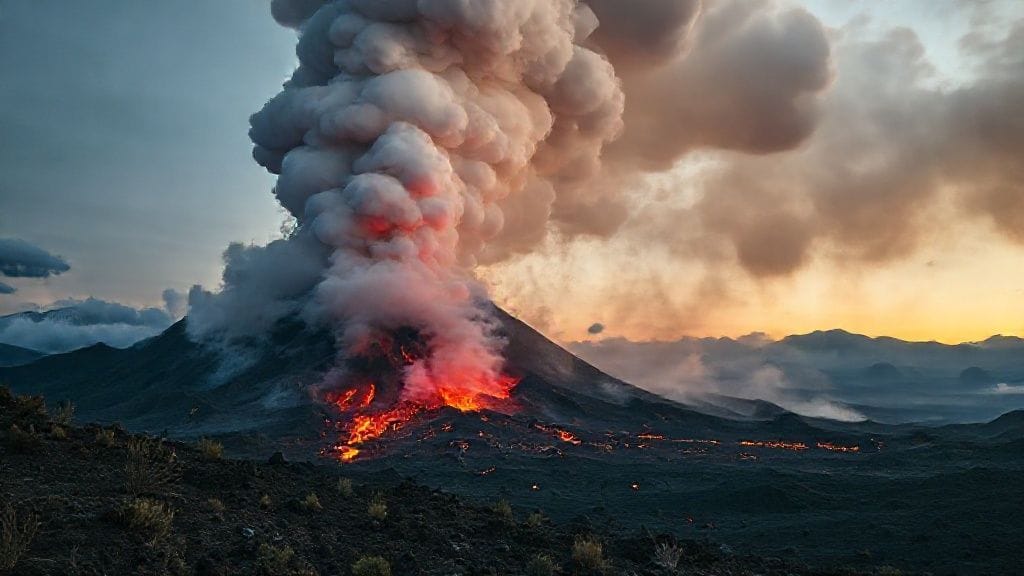
The breakthrough came in March. On the 25th, Copahue blasted a spectacular eruption plume rising up to 3 kilometers into the atmosphere. The explosion was forceful, sending incandescent rock fragments and fine ash drifting downwind. Its sound echoed like a gunshot across the remote valleys.
This initial eruption triggered a chain reaction of geological events—phreatic explosions as groundwater heated suddenly, plus pyroclastic flows that skirted the crater edges. Smoke and steam billowed, masking the serene snow-capped silhouette and turning daylight into twilight.
The First Explosive Eruptions: Ash Clouds Over Borders
The ash cloud was a grey tempest that did not respect human boundaries. Carried by prevailing winds, the ash crossed the fragile border between Chile and Argentina, blanketing villages, fields, and roads in a suffocating shower of volcanic dust. Airports closed temporarily, hoping to avoid the peril of ash to aircraft engines.
Visibility plummeted; crops were coated in abrasive fine particles, threatening the harvest seasons. The inhabitants faced a dual enemy—first, the immediate fear of eruption, and second, the lingering effects of ash contamination. This aerial assault transformed the familiar landscape into a surreal, alien terrain.
Cross-Border Response: Chile and Argentina Unite Against Nature’s Wrath
One of the most remarkable aspects of the 2012 Copahue eruption was the cooperation between Chilean and Argentine authorities. Recognizing that nature’s fury ignored political lines, the two governments coordinated evacuation protocols, shared scientific data, and synchronized public alerts.
Joint commissions deployed experts from both nations to forecast the eruption’s evolution. Emergency services worked side-by-side to prepare shelters and coordinate communications. This cross-border solidarity exemplified how disaster response transcends nationalism when confronting a common threat.
The Evacuations: Fear, Flight, and Uncertainty
In Argentina, the residents of Caviahue and nearby settlements received evacuation orders as ash thickened and tremors intensified. Families packed what they could carry, leaving behind livestock, belongings, and the comfort of home. Roads swarmed with vehicles amid confusion and hope, as people sought safety.
Yet evacuation brings trauma that statistics cannot measure—the ache of separation from land and community, the fear of the unknown, and the precarious waiting. Many questioned how long the eruption would last, how deep the damage might go, and if their lives would ever return to normal.
Ashfall and its Aftermath: Silent Threats to Life and Livelihood
The visible spectacle of ashfall belied its more insidious consequences. Ash particles, fine and abrasive, infiltrated homes, contaminated water supplies, and affected respiratory health, particularly among children and the elderly. Agriculture suffered as crops were smothered under layers of dust, soil chemistry altered, and grazing pastures rendered inhospitable.
Local economies, heavily reliant on tourism and farming, faced immediate downturns. Yet amidst this crisis, communities began organizing cleanup efforts, mutual aid networks, and strategies for recovery—showcasing resilience alongside vulnerability.
Scientific Eyes in the Sky and on the Ground
Scientists took to the skies with helicopters and drones to map the eruption’s progression. Satellite imagery captured ash plumes extending over hundreds of kilometers, while ground teams mapped fissures, measured gas emissions, and documented changes in thermal activity.
This eruption yielded invaluable data, improving understanding of Copahue’s behavior and leading to advancements in eruption prediction models. Notably, the integration of multi-national research enriched the field of volcanology, illustrating the essential bridge between science and society.
Copahue’s Historical Fury: Comparing Past Eruptions
Copahue’s 2012 outburst was not an isolated incident. Historical records date back centuries to eruptions in the 20th century, with notable events in 1932 and 1988. Each left marks on the geography and on collective memory.
Comparing these episodes reveals both similarities and evolutions—in volcanic patterns, emergency responses, and social preparedness. While technology provided 2012’s era with superior tools, the human experience of fear and uncertainty remained profound and timeless.
Media’s Role: Narrating a Natural Drama
News outlets from both countries covered the eruption intensely, bringing images of ash clouds and evacuations into living rooms thousands of miles away. Social media buzzed with updates, photos, and eyewitness accounts.
The media played a critical role in informing the public and shaping the narrative—sometimes fueling anxiety, sometimes fostering solidarity. This digital dialogue transformed the eruption into a shared experience, one where scientific facts and human stories intertwined.
Economic Tremors: Tourism, Agriculture, and Recovery
Prior to the eruption, Copahue’s geothermal spas attracted thousands annually. Tourism was a vital economic pillar, supplemented by local artisan industries and agriculture. The eruption shuttered businesses, diminished visitor numbers, and stalled investment.
Post-eruption recovery was uneven, taking years. Government aid, emergency funding, and community initiatives aimed to rebuild infrastructure, restore farmland, and revive tourism. Ultimately, the eruption acted as a harsh but galvanizing force in regional economic planning.
Cultural Reverberations: Myths, Memories, and Modernity
In the months after the eruption, stories emerged—a village shaman interpreting the event as a spiritual message, families recounting ancestral warnings, schoolchildren learning about volcano science alongside folklore.
The eruption reinforced cultural bonds and identity, bridging ancient beliefs with modern challenges. For the Mapuche and other locals, Copahue remained not only a geological presence but a living narrative woven into their heritage.
Environmental Impacts: Forests, Rivers, and Atmosphere
Ashfall blanketed forests, stripping leaves and contaminating soils, stressing local ecosystems. Rivers and lakes received a sulfur-rich deluge, altering pH levels and threatening aquatic species.
Meanwhile, the eruption released vast amounts of gases—sulfur dioxide and carbon dioxide—into the atmosphere, contributing to regional air quality issues and subtly impacting climate patterns. These environmental dynamics underscored how a single eruption radiates effects far beyond its immediate vicinity.
Lessons Learned: Disaster Preparedness and International Cooperation
The 2012 eruption tested and ultimately strengthened disaster preparedness mechanisms. Authorities revised evacuation routes, improved communication strategies, and expanded monitoring networks.
Critically, the joint efforts of Chile and Argentina demonstrated the value of international collaboration in confronting natural calamities. This cooperation became a template for other border regions facing volcanic risks worldwide.
The Volcano’s Whisper: Ongoing Activity and Monitoring
Though the major explosions subsided by mid-2012, Copahue never fell silent. Low-level activity continued—a reminder that volcanoes inhabit a long, uncertain timeline.
Seismologists and geologists remain vigilant, their instruments attuned to every shift and murmur. This constant watchfulness is a testament to humanity’s respect for nature’s might and a commitment to safeguarding lives.
Resilience Amid Ruins: Stories of Survival and Solidarity
Amidst desolation, acts of kindness, courage, and community spirit blossomed. Neighbors shared food, volunteers cleaned ash from roofs, and displaced families found shelter with relatives.
These human stories resonate beyond the statistics and science, illustrating that disaster is as much about collective resilience as it is about destruction. The strength drawn from shared hardship carved a path towards healing.
The Legacy of 2012: How Copahue Changed Lives and Policies
The eruption left an indelible mark—on landscapes, policies, and psyches. It prompted investments in scientific infrastructure, reinforced cross-border ties, and elevated awareness of volcanic hazards.
For affected communities, 2012 became a reference point, a reminder of vulnerability and a foundation for future vigilance. Copahue’s fiery assault was a painful upheaval but also a turning point.
Reflections on Human Vulnerability and Nature’s Power
Watching the giant awaken, spewing ash and gas, witnessing evacuations and destruction, one is reminded of humankind’s fragile place within Earth’s vast theatre. The Copahue eruption is a powerful allegory: technology and science illuminate paths to safety, yet nature retains an unpredictable sovereignty.
This episode urges humility, respect, and preparedness—qualities that transcend borders and generations. It teaches that while humans cannot control the planet’s inner fire, they can choose how to respond when it roars.
Conclusion
The 2012 eruption of Copahue volcano stands as a poignant chapter in the story of human interaction with a restless Earth. It was an eruption that tore across landscapes and lives, yet also wove together communities, scientists, and nations in pursuit of understanding and survival. From the first trembling underground signals to the lingering ash on the leaves, this natural event was more than geology—it was a vivid drama of power, fear, resilience, and hope.
In the face of Copahue’s fiery breath, people reconnected with the primal forces of the planet, reminding us all how closely life depends on the fragile balance between creation and destruction. The lessons learned echo far beyond the Andes, inspiring broader reflection on our place in the natural world and the enduring strength of human spirit.
FAQs
1. What caused the 2012 Copahue eruption?
The eruption was caused by magma rising through cracks in the Earth’s crust along the Copahue stratovolcano, itself part of the Andean volcanic belt shaped by tectonic plate subduction.
2. How did Chile and Argentina cooperate during the eruption?
Both countries coordinated emergency responses, shared scientific monitoring data, executed joint evacuation plans, and communicated closely to manage the cross-border hazards.
3. What were the main dangers posed by the eruption?
Ashfall contaminated air and water, threatened agriculture, caused respiratory health issues, and forced large-scale evacuations due to lava and pyroclastic flows.
4. How did local communities cope with the disaster?
Residents relied on evacuation orders, mutual aid networks, cleanup efforts, and cultural resilience to confront both immediate dangers and longer-term recovery.
5. What scientific advances resulted from studying the 2012 eruption?
Improved monitoring techniques, better eruption forecasting models, and enhanced understanding of phreatic explosions and gas emissions were key outcomes.
6. How has the eruption impacted regional tourism and economy?
Tourism declined sharply during and after the eruption but gradual recovery efforts focused on rebuilding infrastructure and promoting geothermal attractions.
7. What is the cultural significance of Copahue volcano?
For indigenous Mapuche and local populations, Copahue holds spiritual importance as a sacred site and features in myths that integrate volcanic activity into their worldview.
8. Is Copahue still active today?
Yes, low-level activity continues, and scientists maintain ongoing monitoring to anticipate any future eruptions.

